
On the morning of May 8, 2019, the Troy (NY) Fire Department was dispatched to Alpha Lanes, an 82-year-old bowling alley on Fifth Avenue, after multiple callers reported heavy black smoke pouring from the roof and windows. What followed became a widely-shared example of how fast conditions can turn on an interior crew — and why the line between backdraft and flashover isn't always obvious in the moment.
How the Incident Unfolded
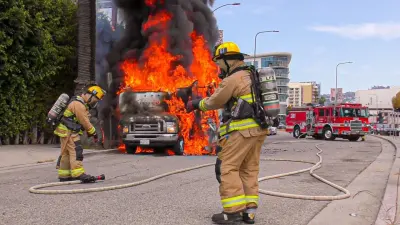
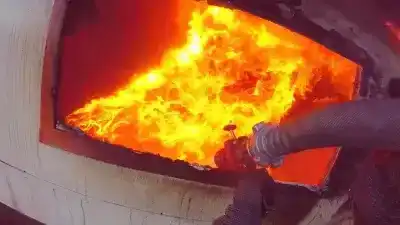
Crews stretched a 2½-inch handline for an aggressive interior attack, but nearby hydrant flushing by the local utility left them short on supply pressure. As smoke banked down to street level and visibility collapsed, command pulled the interior crew out. Seconds after they began evacuating, the front windows failed and a violent explosion of fire and smoke rolled into the street — the kind of event that gets debated afterward as either a backdraft or a flashover, depending on which indicator you weight most heavily.
Backdraft or Flashover — Why It's a Real Question
The distinction matters tactically, not just academically. A backdraft is an oxygen-starved fire reigniting explosively the moment fresh air reaches it — commonly tied to signs like pressurized smoke, staining on windows, and a sudden pulse of smoke before ignition. A flashover is the near-simultaneous ignition of everything in a compartment once radiant heat pushes all surfaces to ignition temperature — usually preceded by rollover, rapidly dropping ceiling height of smoke, and climbing heat that's felt through gear. This incident shows elements that could support either read, which is exactly why crews reviewing it afterward didn't all agree on a single label.
What Made the Difference That Day
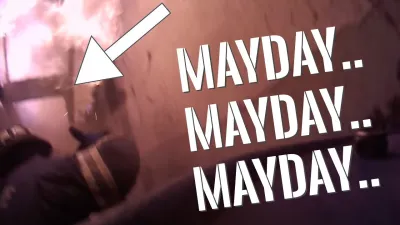
A firefighter who was first into the building declared a Mayday when conditions deteriorated and made it out safely. The department shifted to a defensive, master-stream operation and called in mutual aid from Watervliet, Cohoes, Green Island, and Albany. No civilians were in the building, and no firefighters were seriously hurt — outcomes that owe a lot to command pulling crews before the failure point, not after.
The footage is worth studying less for a definitive answer and more for the timeline: the water supply problem, the smoke conditions that triggered withdrawal, and the seconds between that call and the explosion at the windows.

Comments 0
No comments yet. Be the first to share your thoughts on this video!
Leave a Comment