Ertuğrul Öz is a career firefighter serving with the Ankara Metropolitan Municipality Fire Department since 2011, currently holding the rank of Firefighter Sergeant (İtfaiye Çavuşu). He has responded to more than 1,000 structural fire incidents and served across three major earthquake response operations in Turkey, as well as numerous flood and water rescue deployments. He holds an associate degree in Civil Defense and Firefighting from Çankırı Karatekin University (on-campus program) and a bachelor\'s degree in Public Administration from Anadolu University (open education). His certifications include Basic Firefighter, Intermediate Search and Rescue (USAR), Hazmat/CBRN Response, First Aid, and Fire Instructor Levels 1 through 4. He has delivered 50+ firefighter training courses and serves as one of AllFirefighter\'s two editorial leads.
Tool-first pillar for ladder and apparatus planning: use Aerial Ladder Reach tools with practical setup guidance, target selection, and safety checks. Built to support training, preplans, and fast decision-making.
All five NFPA 220 building construction types from a firefighter's operational perspective: fire resistance, collapse risk, fire spread patterns, tactical implications, and the lightweight construction warning every firefighter needs to know.
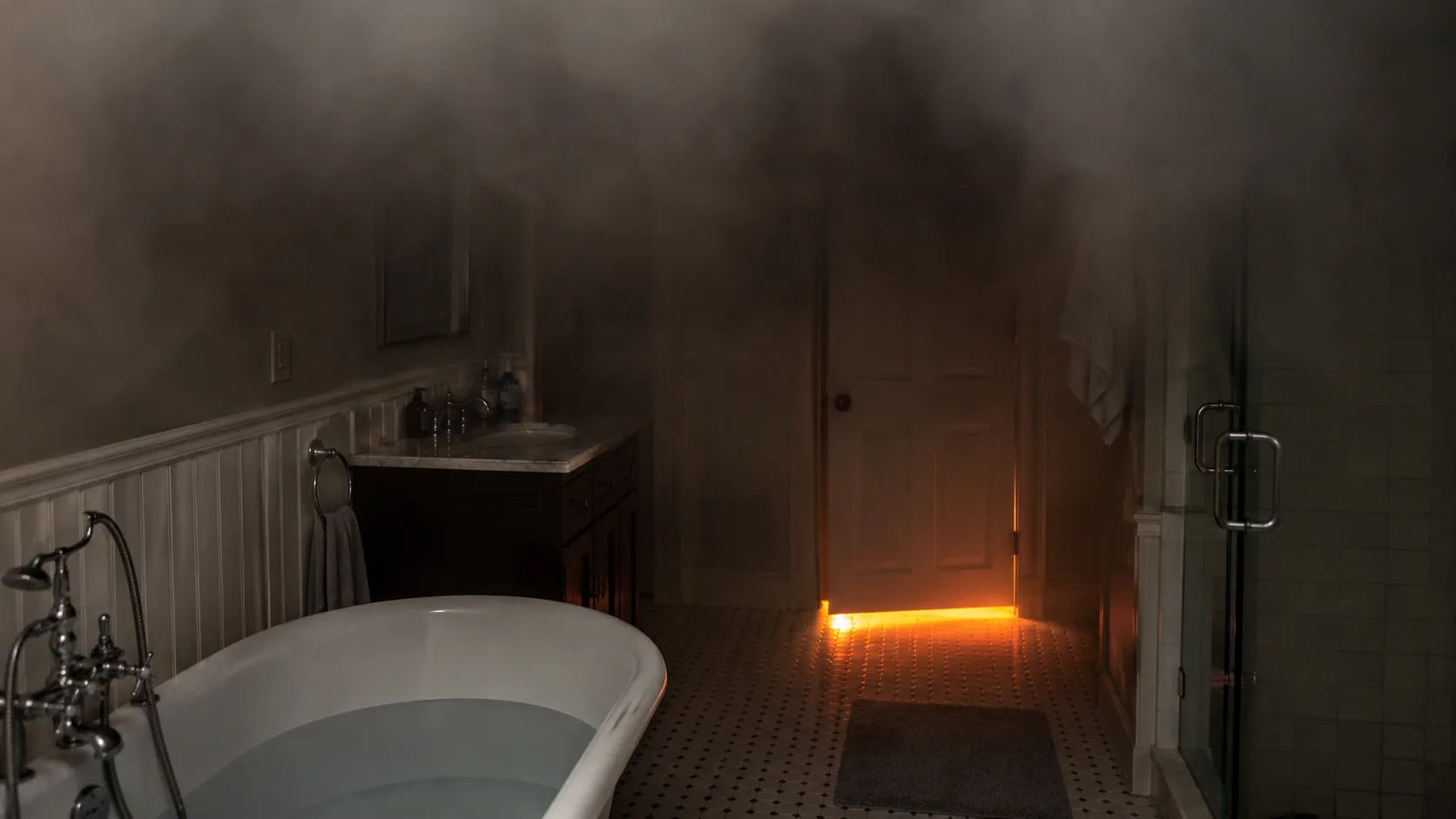
The bathtub myth — that sitting in a filled tub protects you during a house fire — is wrong in every way that matters. About 75% of fire deaths are caused by smoke inhalation and carbon monoxide, neither of which the bathtub does anything to stop. This breaks down exactly why the myth fails, what shelter-in-place actually looks like, and where firefighters find survivors.
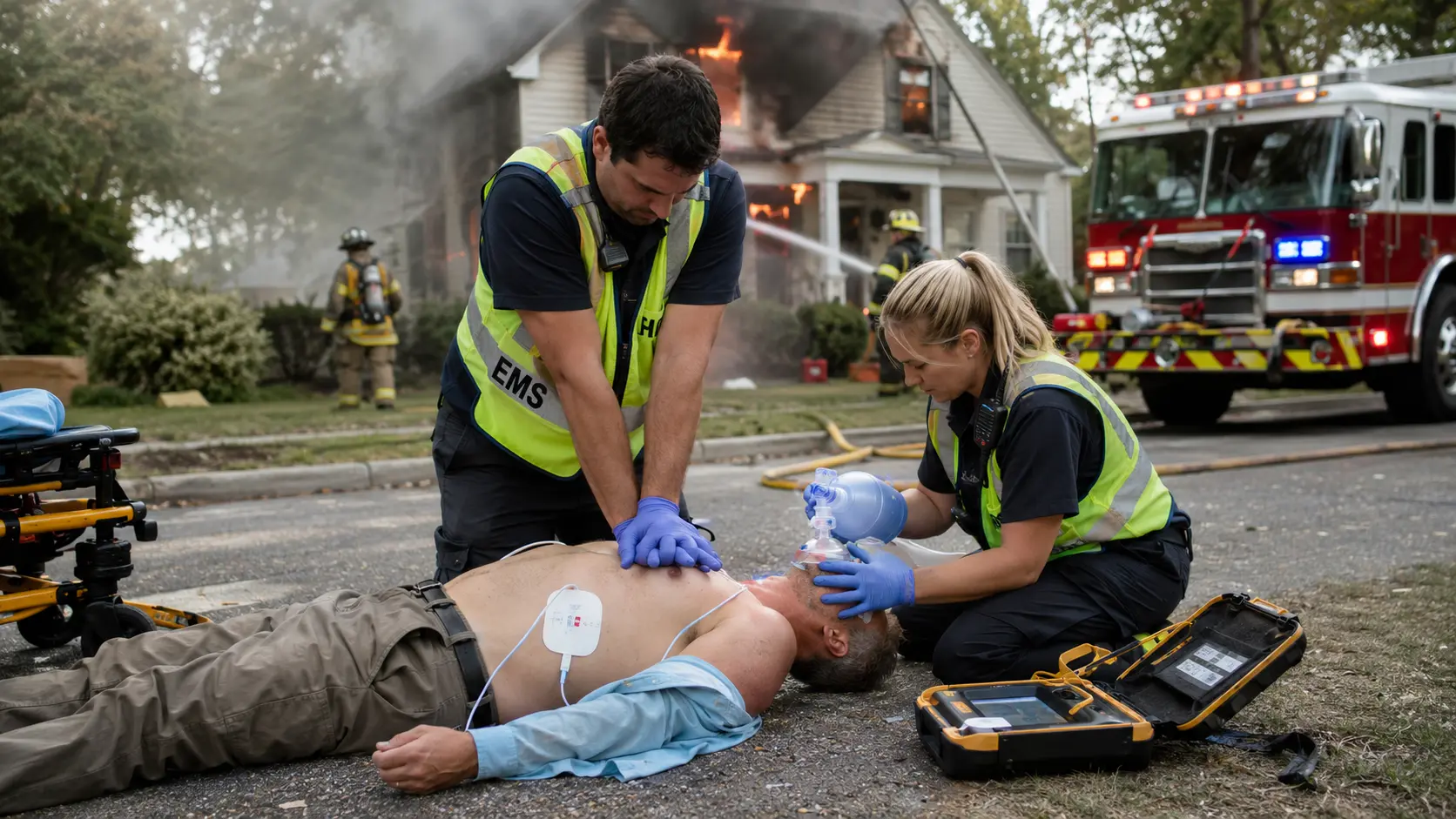
Cardiac arrest at a fire scene involves three distinct patient populations — occupants pulled from the structure, bystanders who collapse from the stress of witnessing the incident, and firefighters whose cardiac events represent the leading cause of line-of-duty deaths. Each has a different clinical context. In all three, the one variable that most predicts survival is time to CPR — not time to ALS, not time to the hospital. This covers the physiology of cardiac arrest in fire scenarios, bystander CPR deployment, AED access at scenes, the specific challenge of cardiac arrest in a firefighter, post-resuscitation management, and the survival data by response interval.
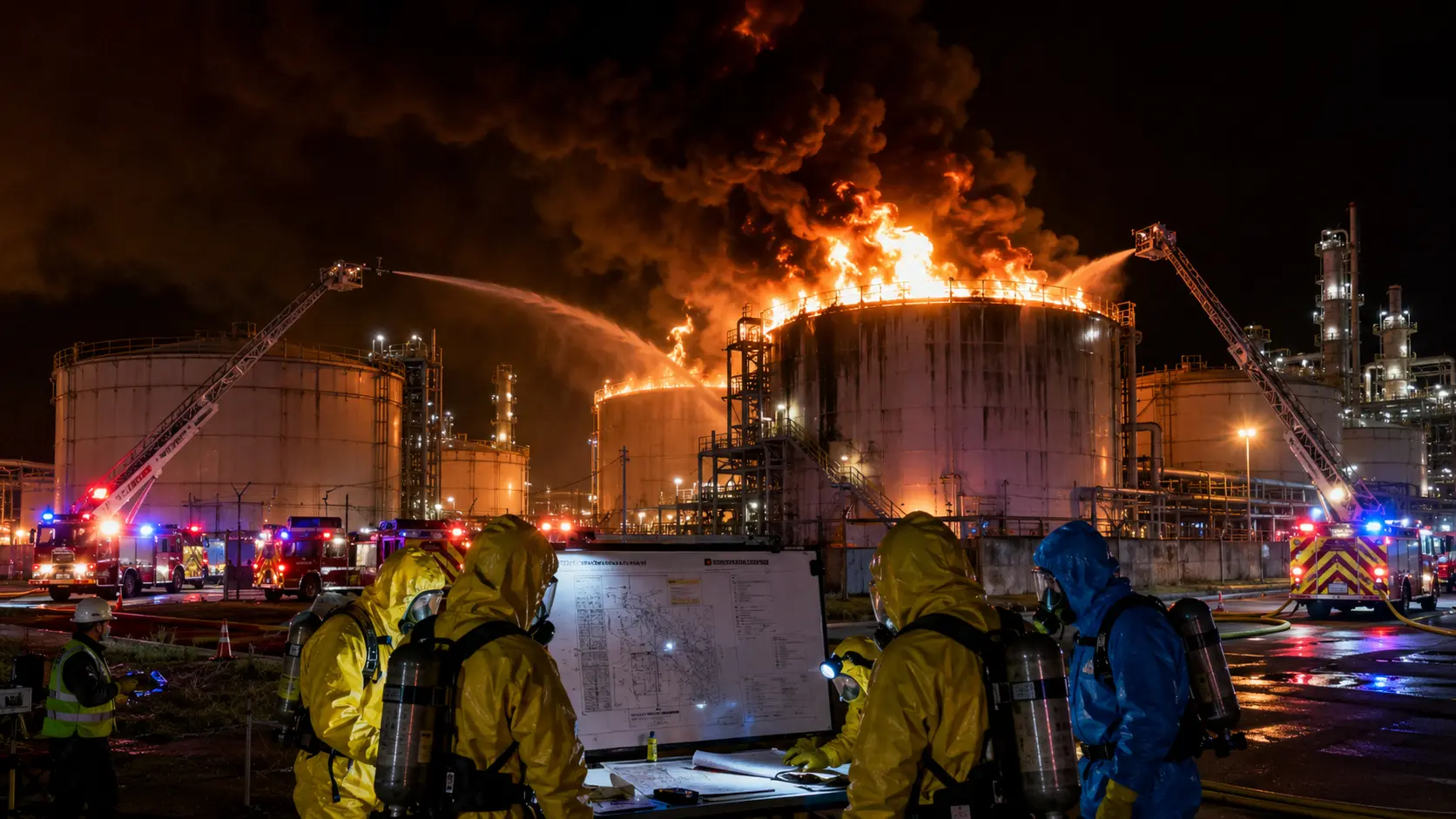
A fire at a chemical plant is not a structural fire with hazardous materials nearby — it is a hazmat incident with fire involvement, and the tactical priorities are inverted from a standard fire response. The first question is not 'how do we extinguish this' but 'what is burning, what pressure vessels are involved, and is this defensible or a let-it-burn scenario.' This covers unified command with plant management, BLEVE risk assessment, the defensive-first decision framework, boilover in petroleum storage, foam operations, exposure protection, runoff containment, and what pre-incident planning looks like for facilities that have it.
What actually goes wrong when you fight fire in extreme cold: frozen hydrants, SCBA regulator freeze-up, ice-covered hose, turnout gear that stops breathing, and how experienced crews prepare before the temperature drops. Real operational problems with real fixes.
More than 60 percent of confined space fatalities are would-be rescuers — people who entered without monitoring the atmosphere and died within feet of someone else who also died. Confined space rescue requires atmospheric testing, mechanical ventilation, a retrieval system, and a trained attendant before anyone goes in. This covers the three atmospheric hazards, the permit-required confined space framework, the rescue sequence, and the historical incidents that changed the protocols.
A decontamination corridor is the controlled pathway between the hot zone and the cold zone — the physical space where every person and piece of equipment that has been in the contamination area is processed to remove hazardous material before it can transfer to the cold zone, other responders, or the public. A decon corridor that is inadequately set up, bypassed under time pressure, or staffed by personnel who do not know the sequence produces secondary contamination: the hazardous material exits the hot zone on the bodies and gear of the responders who were supposed to contain it. This covers the layout, each station's function, PPE removal sequence, the difference between emergency and technical decon, mass decon for civilian casualties, and why decon water containment is as important as the decon process itself.