
24/48 vs 24/72 Firefighter Shift Schedule: Which Is Better?
The shift schedule debate is one of the most active conversations in the American fire service right now. More departments are moving from the traditional 24/48 schedule to a 24/72 model, and firefighters — from recruits to veterans — have strong opinions about which is better. The honest answer is: it depends on what you value most. This guide gives you the full numbers and an honest look at every dimension of the comparison.
Jump to:How each schedule works · Annual hours and days off · Family life · Second jobs · Fatigue and health · Department perspective · The trend toward 24/72 · Which is right for you · FAQ
How Each Schedule Works
The 24/48 Schedule
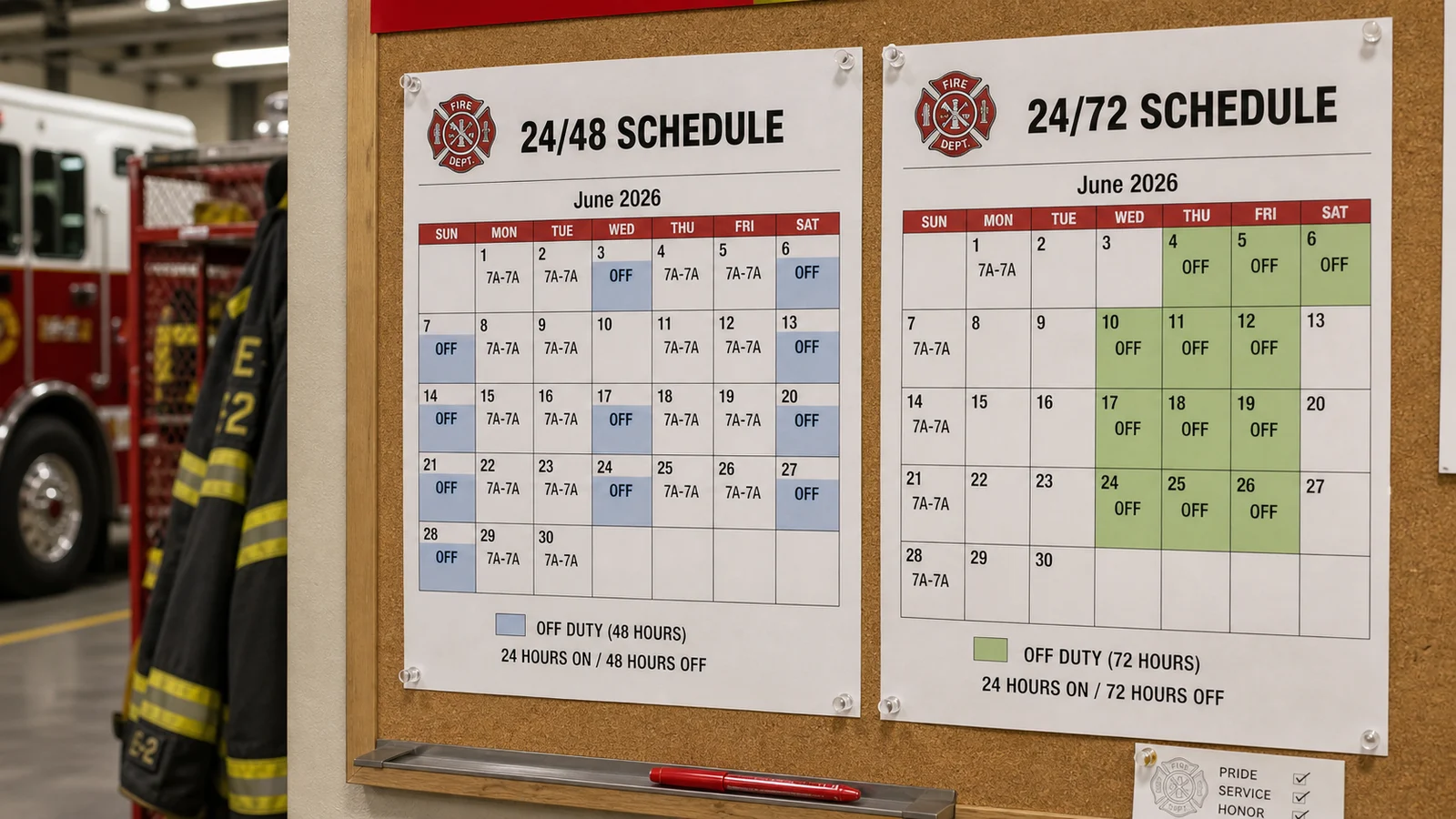
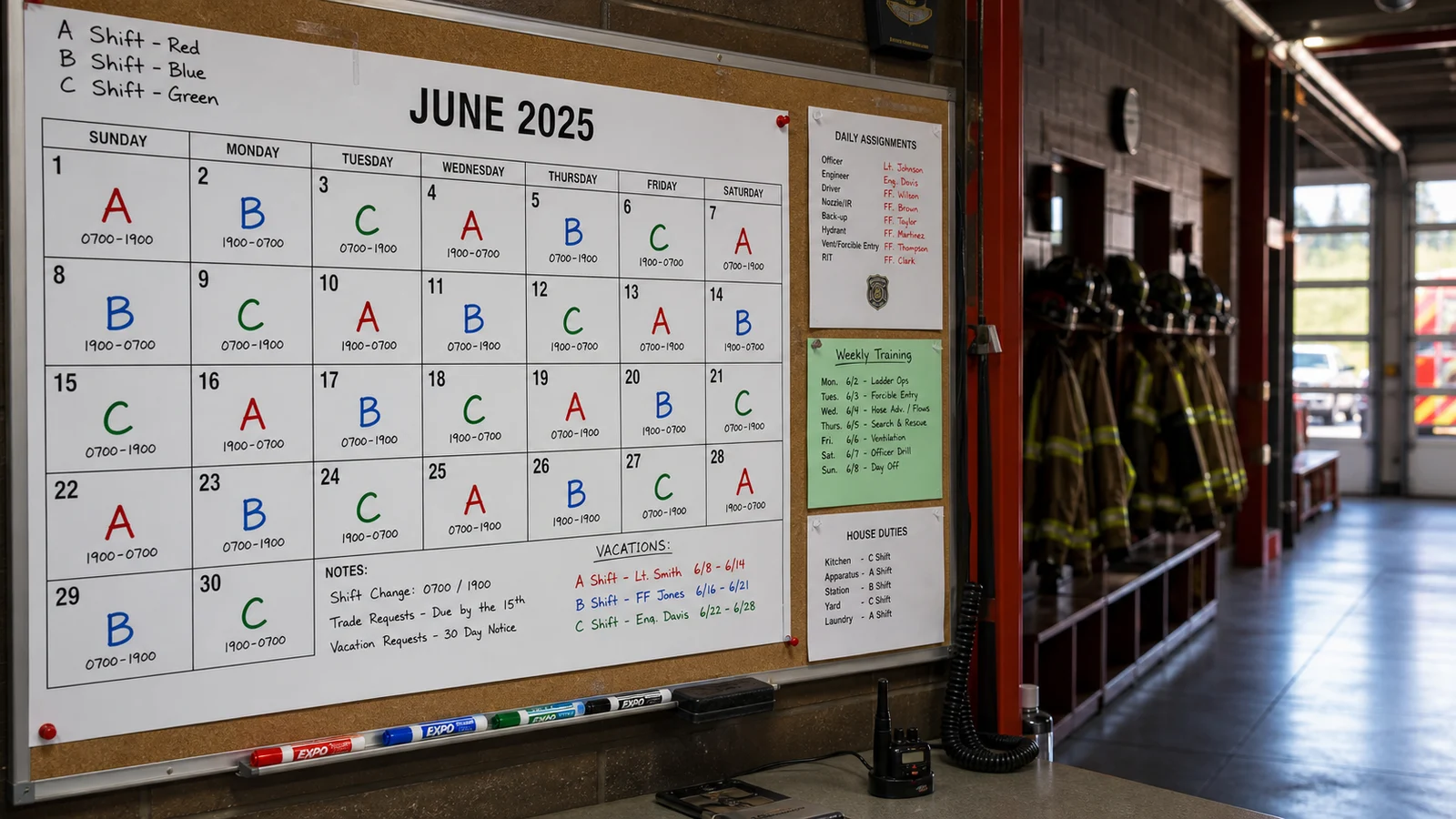
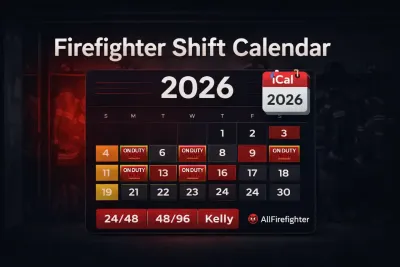
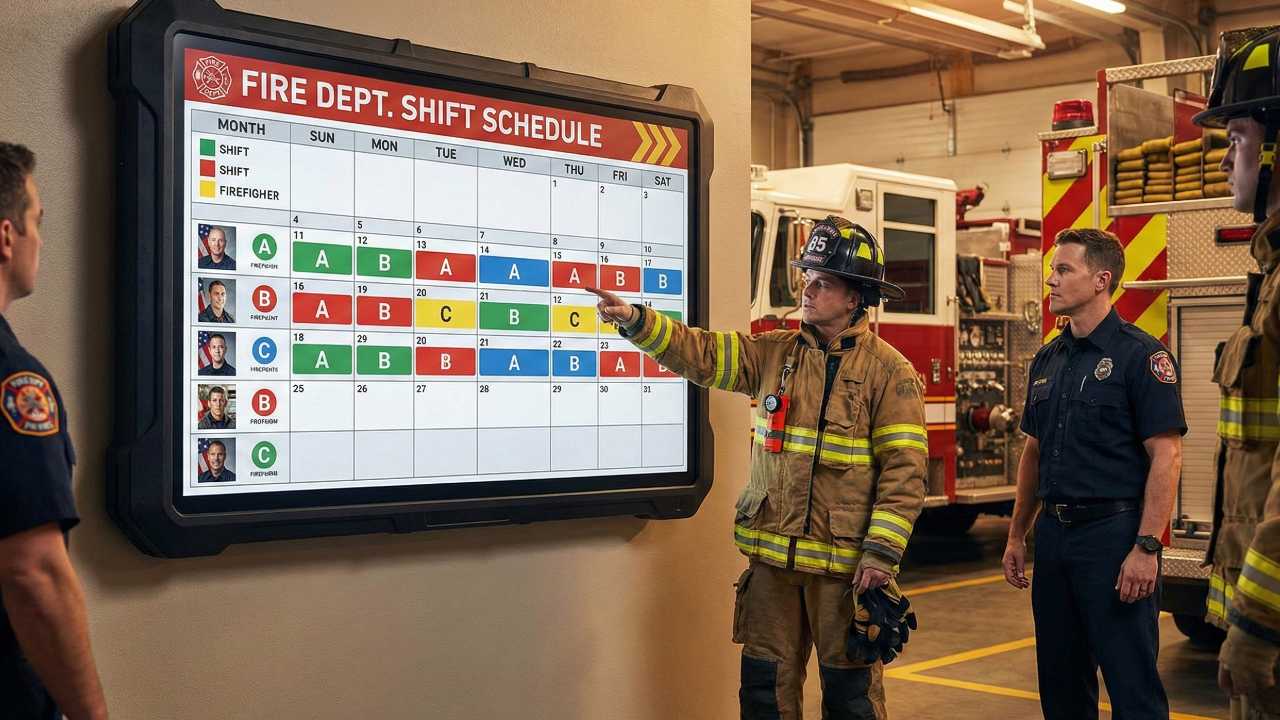
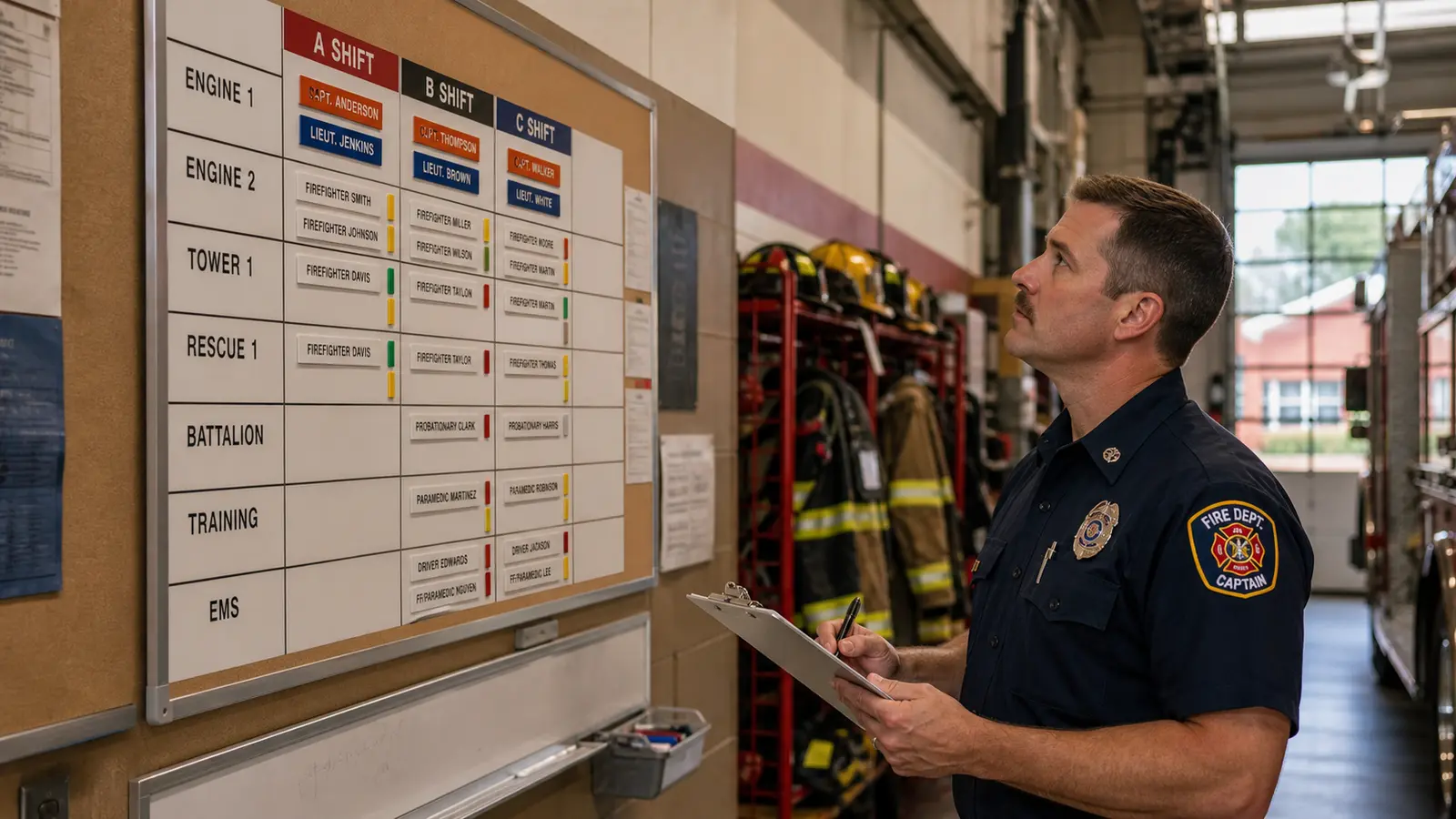
Work 24 hours on, then 48 hours off. This creates a repeating 3-day cycle — one day on, two days off, one day on, two days off — and typically uses three shifts (A, B, C) to cover continuous 24/7 operations. Each shift works every third day.
The 24/72 Schedule
Work 24 hours on, then 72 hours (3 days) off. This typically uses a rotating Kelly schedule or a modified 4-platoon system. Each firefighter works fewer total shifts per year with longer stretches of consecutive days off. A common variant is the "modified 24/72" where firefighters work one 24-hour shift, have 72 hours off, then repeat — often with slight variations to distribute holiday and weekend coverage equitably.
Annual Hours and Days Off: The Real Numbers
| Metric | 24/48 Schedule | 24/72 Schedule |
|---|---|---|
| Shifts worked per year | ~121 shifts | ~91 shifts |
| Hours worked per year | ~2,912 hours | ~2,184 hours |
| Days off per year | ~243 days | ~274 days |
| Consecutive days off between shifts | 2 days | 3 days |
| Average work week equivalent | ~56 hours/week | ~42 hours/week |
| Overtime eligibility (FLSA 207k threshold) | Overtime kicks in over 212 hrs per 28 days | Well below threshold — more OT opportunity |
Key figure: The 24/72 schedule produces approximately 31 more days off per year than the 24/48. That is more than a full extra month of free time annually.
Family Life
24/48 Family Impact
- Two days off between every shift means frequent short breaks
- Harder to plan multi-day family trips without using vacation days
- Weekday coverage more consistent for childcare scheduling
- Predictable cycle — family adapts to the 3-day rhythm
24/72 Family Impact
- Three consecutive days off allows longer family time blocks
- Easier to plan vacations, camping trips, family events
- Less frequent shift changes means more stable home presence
- More recovery time between shifts reduces fatigue at home
Firefighters with young children consistently report that the 24/72 schedule is superior for family life — the three consecutive days off allow meaningful stretches of present, rested parenting rather than constantly transitioning in and out of a two-day window. The extra 31 days off per year translates to significantly more school pickups, weekends, and vacations.
Second Jobs and Side Income
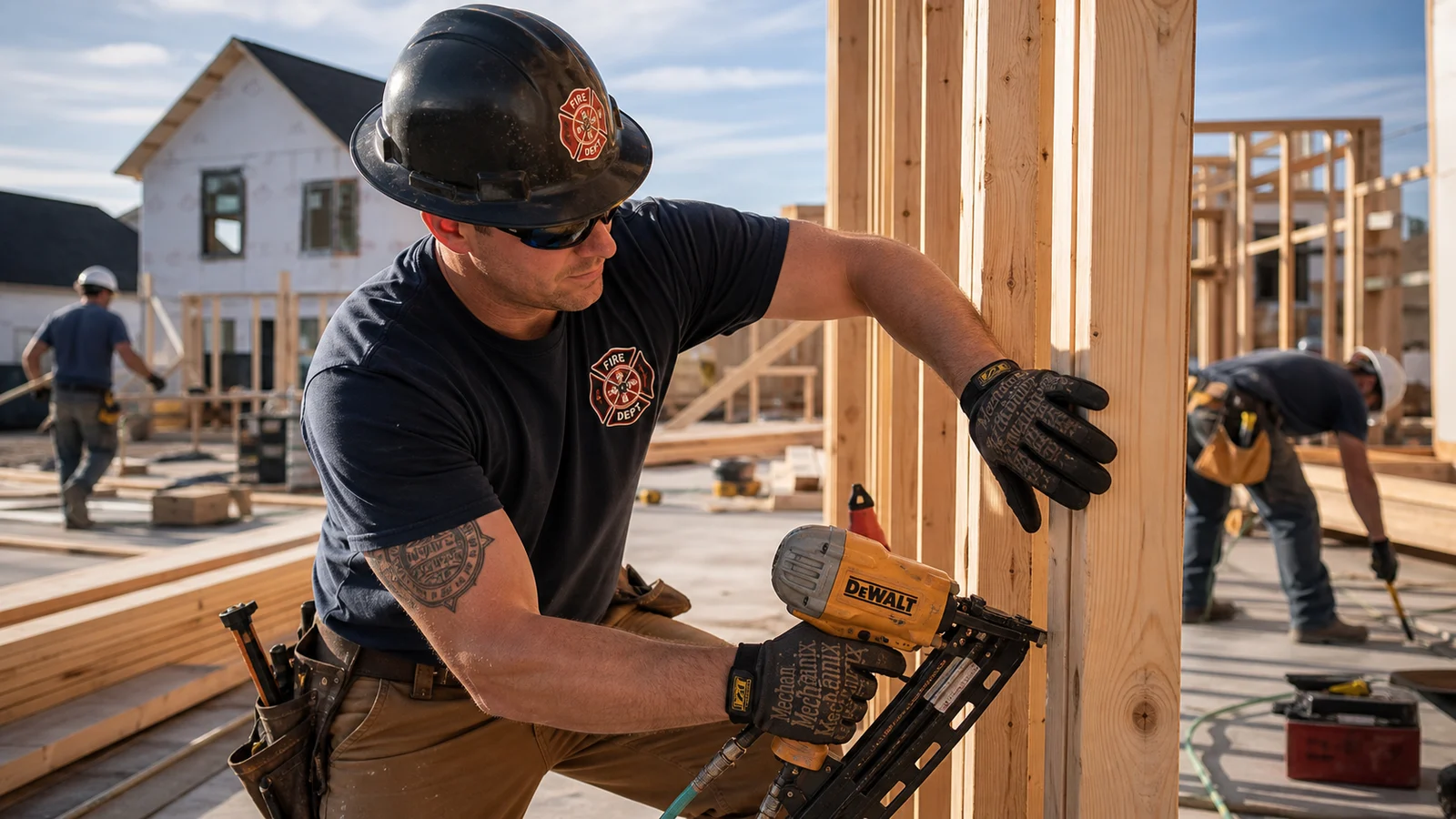
The fire service has a strong culture of secondary employment — many firefighters work second jobs in construction, EMS, instruction, or running their own businesses. The shift schedule directly determines how much time you have available for this.
24/48 Second Job
- Two-day windows limit shift-length second jobs
- Enough time for part-time work, gig jobs, small business
- More shifts worked means less time available overall
- Harder to commit to consistent scheduling for employer
24/72 Second Job
- Three consecutive days allows two full workdays at another job
- Easier to commit to consistent schedule for employer
- More total days off annually means more earning potential
- Better for running a business or taking on contract work
Fatigue, Health, and Recovery
This is where the data increasingly favors the 24/72 schedule. Research on firefighter health and shift work consistently shows that the recovery time between shifts is critical for:
- Cardiovascular health: Adequate sleep and recovery between demanding shifts reduces chronic cardiovascular stress — already the leading cause of firefighter line-of-duty deaths
- Cognitive performance: Firefighters on 24/48 schedules report higher rates of chronic fatigue, which impairs decision-making and situational awareness on the fireground
- Injury risk: Fatigue is a significant contributor to traumatic injuries on the fireground and during apparatus operations
- Mental health: More recovery time between shifts reduces cumulative stress and improves sleep quality
Important caveat: The 24/72 schedule produces fewer total work hours per year, which means more time to work overtime shifts. Firefighters who regularly pick up overtime on their off days may negate the fatigue benefits entirely. The schedule only helps if you actually rest on your days off.
The Department's Perspective
Departments moving to 24/72 schedules do so primarily for recruitment and retention — the schedule is a significant quality-of-life benefit that costs the department little to implement. The tradeoff for the department is that fewer firefighters are working on any given day, which can require additional overtime spending to maintain minimum staffing levels on busy or short-staffed shifts.
Departments on 24/48 schedules sometimes resist moving to 24/72 precisely because of overtime budget concerns. In departments with high call volume and tight staffing, the math sometimes does not work in the 24/72's favor from an administrative cost perspective.
The Trend Toward 24/72
The fire service is clearly trending toward 24/72. Major departments that have made the switch in recent years report improved morale, reduced turnover, and no measurable decline in emergency response quality. Departments still on 24/48 increasingly face recruiting pressure — candidates compare schedules when evaluating job offers, and 24/72 is a genuine competitive advantage in a tight labor market.
Which Schedule Is Right for You?
If you have the choice between two otherwise equal departments, the 24/72 is the stronger personal choice for most firefighters based on the quality-of-life advantages. However, do not let schedule preference drive you away from a significantly better pension, higher pay, stronger union representation, or superior career advancement opportunities. The schedule is one factor among many.
If you are already on a 24/48 and your department is considering moving to 24/72, support the change — the data on fatigue and health strongly supports it, and the additional days off represent a significant improvement in quality of life that compounds over a 25-year career.
Frequently Asked Questions
How many days off do firefighters get on a 24/72 schedule?
Approximately 274 days off per year, compared to about 243 days on a 24/48 schedule. The 24/72 schedule provides roughly 31 additional days off annually — more than a full extra month compared to the traditional schedule.
Do firefighters on 24/72 make less money than 24/48?
The base salary is the same — it is a scheduling difference, not a pay difference. Firefighters on 24/72 work fewer regular hours, which means they may earn less overtime pay if the department pays overtime by hours worked. However, the reduced hours also mean they fall below the FLSA 207k overtime threshold earlier in the pay cycle, making overtime shifts potentially more available.
Is the 24/72 schedule better for firefighter health?
Research supports the conclusion that additional recovery time between shifts benefits cardiovascular health, cognitive performance, injury risk, and mental health. However, the benefit is negated if firefighters regularly pick up overtime shifts on their days off, effectively working the same hours as a 24/48 schedule.
What other firefighter shift schedules exist besides 24/48 and 24/72?
Other schedules used in the fire service include the 48/96 (two consecutive 24-hour shifts followed by four days off), the 10/14 split shift system (separate day and night shifts), the traditional 3-platoon system, and various Kelly Day modifications. The 24/48 and 24/72 remain the most widespread in U.S. career departments.


Comments 0
No comments yet. Be the first to share your thoughts!
Leave a Comment