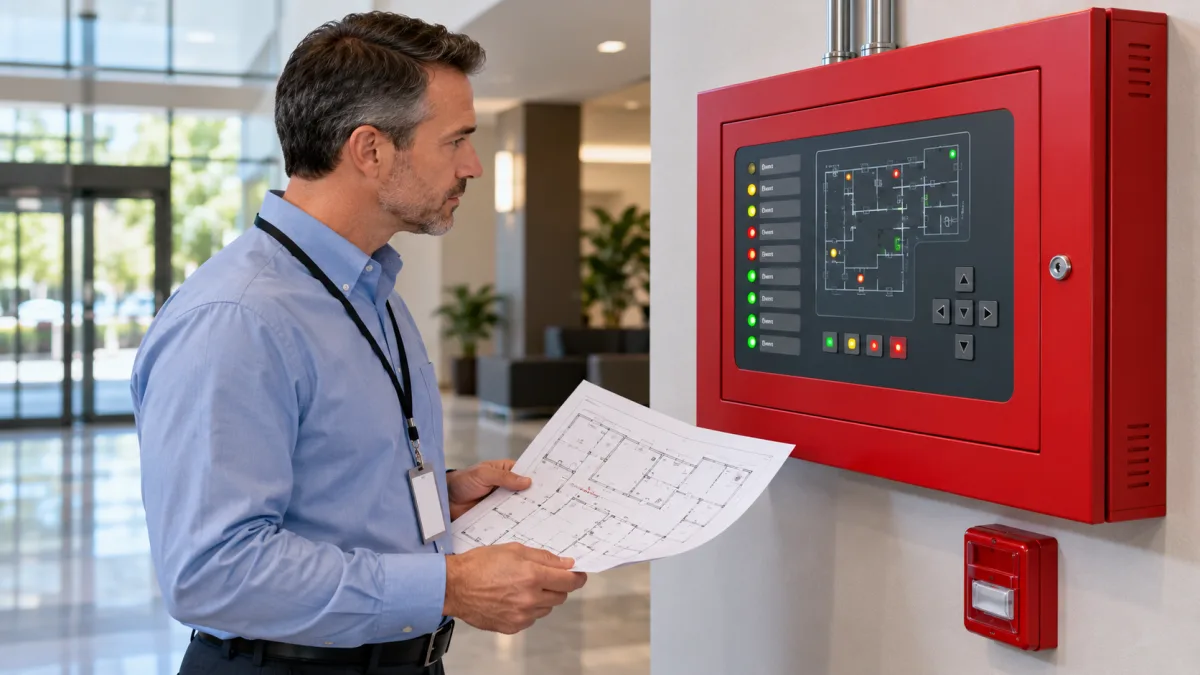
A fire alarm panel can be making noise without displaying a fire alarm. It can also show a fault while the building still has a separate fire alarm elsewhere. The first job is to identify the actual condition and location, not to make the sound stop.
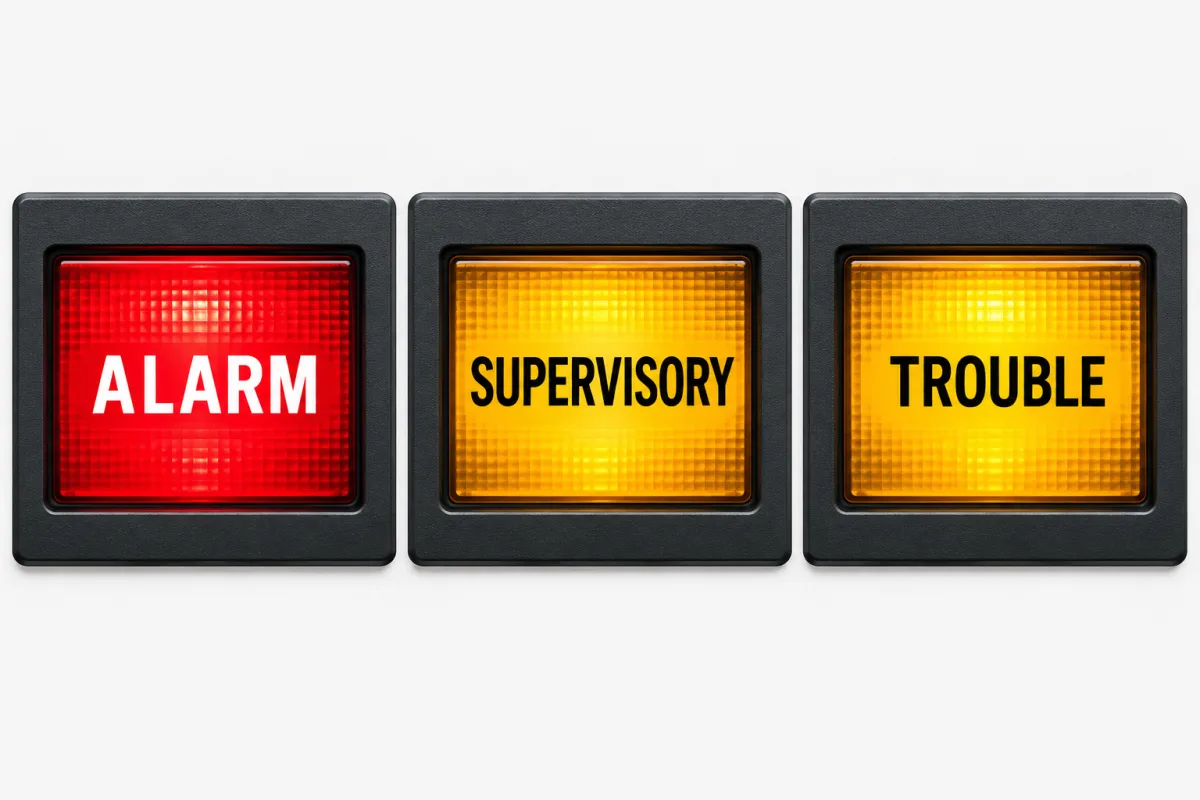
The three terms most building staff need to distinguish are alarm, supervisory and trouble. This guide explains what they communicate, what information to pass on and what to prepare before an incident. It is not a reset, bypass or troubleshooting procedure.
The three signal categories
NFPA's Fire Alarm Basics fact sheet describes the control unit as the system's central point for inputs and outputs. The signal category communicates the kind of condition reported. An alarm can originate from a detector or other initiating device; a supervisory condition relates to monitored equipment; trouble indicates a system fault.
| Panel condition | General meaning | Example | What the message does not prove |
|---|---|---|---|
| Alarm | A reported condition requiring the building's alarm response | A smoke detector or sprinkler waterflow input activates | The display identifies the full extent of a fire. |
| Supervisory | Monitored protective equipment has an off-normal condition | A monitored sprinkler control valve is not in its normal position | There is no fire or no need for follow-up. |
| Trouble | A fault affecting the alarm system or a monitored function | A circuit or power-related fault | Every part of the system has failed—or every part still works. |
Those are categories, not a universal response matrix. The specific device, programmed functions, site emergency plan and local requirements determine the response. Occupants who hear an evacuation signal should follow the building's instructions rather than wait for someone to interpret the panel.
Read the location as carefully as the category
“Smoke detector” is less useful than the exact displayed device label. A building may contain repeated room numbers, multiple wings or several panels. A message that makes sense to the day engineer may mean nothing to an overnight security officer.
Prepare a location cross-reference during normal operations. Match the display wording to the floor plan and to the name staff use for the space. If the panel says “L2 EAST ELEC” but staff call it the second-floor service room, put both names on the reference. Do not rename devices casually; have discrepancies resolved through the building's authorized service process.
Acknowledge, silence and reset are different functions
The words printed on controls matter. Acknowledging a condition, silencing a local panel sounder, silencing notification appliances and resetting equipment are not interchangeable actions. A quieter panel is not evidence that the underlying condition has cleared.
The Simplex 2050/2250 operating guide, for example, describes display and local sounder behavior for that product series. It illustrates why operators must use their own manual and training. A sequence described for one panel is not an instruction for a different model.
Untrained occupants should not manipulate controls. Authorized staff should follow the site procedure and directions from responding personnel. Repeatedly resetting a recurring condition can erase useful context from the immediate display without explaining why the event happened.
The six details worth passing to responders or service personnel
- Site identity: street address, building or wing, callback number and where access is available.
- Exact category: use the panel's term rather than “the alarm is beeping.”
- Exact message: device identifier, location description and any additional displayed text.
- Timing: when it was first noticed and whether new events are appearing.
- Observed conditions: report actual smoke, odor, water, work activity or a known power interruption without treating a guess as a diagnosis.
- Actions already taken: who was contacted and any authorized control action, including its time.
This is an original handover aid. It does not replace an emergency call. If there is smoke, fire or another immediate threat, make the emergency notification and follow the evacuation plan rather than collecting a perfect set of notes.
Three situations that are easy to describe badly
“It's only a valve message”
A supervisory indication involving a sprinkler valve deserves a defined response. Staff should report the actual wording and location. They should not operate a valve simply to make an indication disappear. See the sprinkler systems guide for the relationship between water supply and building protection.
“The power came back, so everything is fine”
A restored utility supply does not answer whether a panel condition remains active. The useful follow-up question is what the installed system now indicates and whether an authorized person has verified restoration. Document the outcome instead of relying on the sound of the room.
“The first message is the only one”
A summary screen is not necessarily a complete event history. Train designated operators to recognize that their equipment may hold multiple conditions and priorities. Avoid improvising navigation instructions during an emergency; make familiarity part of the staff handover beforehand.
Build a panel information pack before it is needed
Keep the current model-specific operating manual, location plans, service contact, monitoring contact and the building's authorized response instructions readily available to the people assigned to use them. Identify the remote annunciator and main control equipment separately if both exist.
A useful desk exercise is to hand an unfamiliar staff member a fictional message and ask them to explain where it refers to, whom they would contact and what information they would provide. Do not generate real alarm events merely to run this discussion. Arrange functional testing through the established inspection and testing process.
For an impaired protective system, the response may extend beyond a service call. Required notifications and temporary measures depend on the impairment and local authority. The fire watch guide addresses that separate decision; a trouble light alone is not a universal fire-watch rule.
Comments 0
No comments yet. Be the first to share your thoughts!
Leave a Comment