Multi-Alarm Fire Operations: Command, Coordination, and Escalation
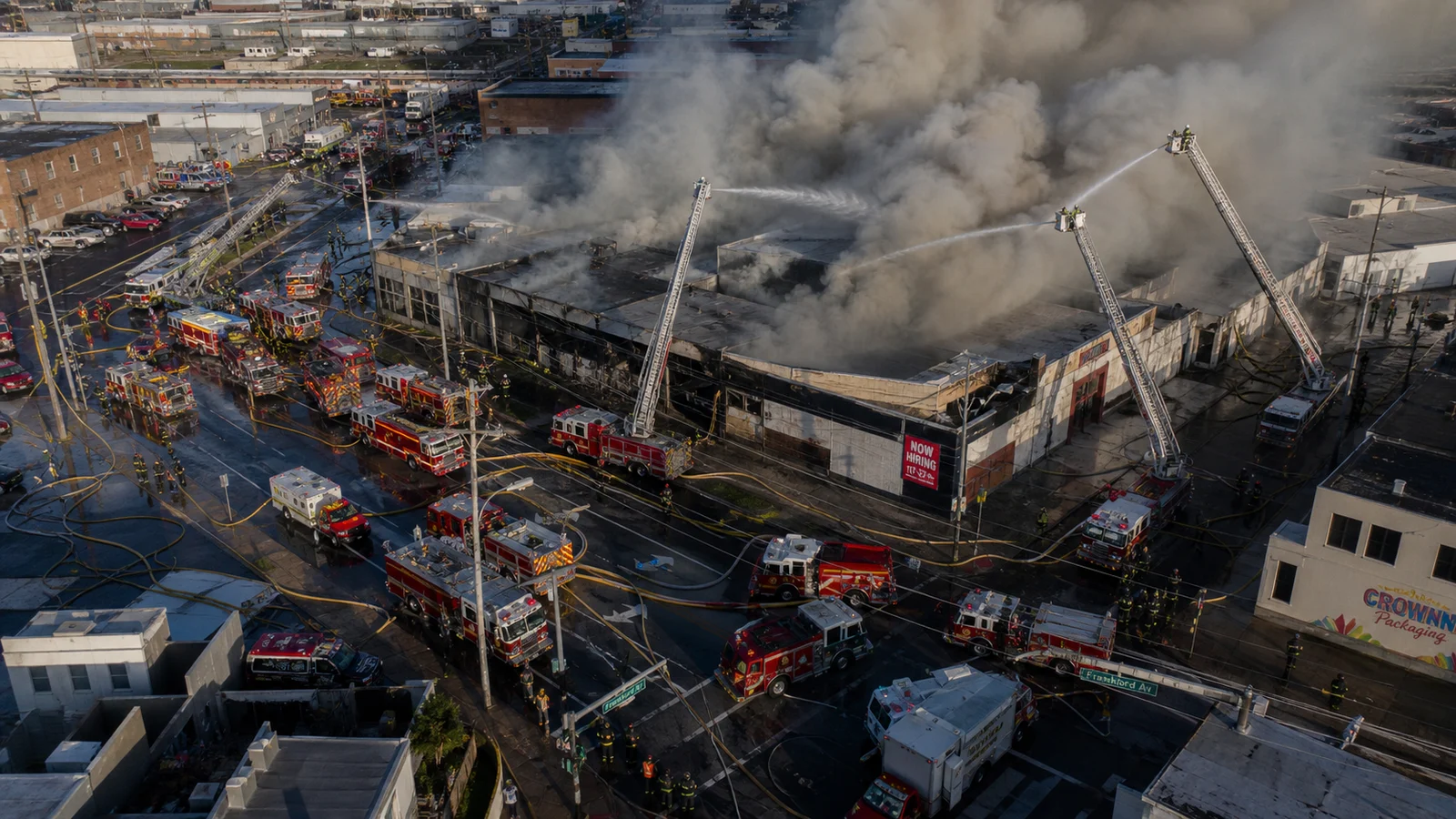
A multi-alarm fire is not just a bigger fire — it is a fundamentally different management problem. The skills that make a company officer effective on a single-alarm working fire are necessary but not sufficient at a 3rd alarm. Command span of control, resource tracking, sector coordination, and communications discipline become the limiting factors on a large incident. This guide covers the organizational and tactical framework for multi-alarm operations from escalation decision through demobilization.
Jump to:When to escalate · ICS structure · Sector assignments · Resource staging · Communications · Mutual aid · Accountability · FAQ
When to Escalate: The Escalation Decision
The decision to transmit a second alarm (or greater) is one of the most consequential an incident commander makes — and the failure mode is almost always escalating too late rather than too early. Resources take time to travel, stage, and deploy. An IC who waits for visible confirmation that first-alarm resources are overwhelmed before requesting the second alarm will always be behind the fire.
Indicators that should trigger escalation consideration at or before the first-alarm arrival:
- Heavy fire showing on arrival across multiple rooms or floors
- Large commercial, industrial, or multi-family structure involved
- Fire showing from multiple levels simultaneously
- First-arriving officer transmits "working fire" with heavy conditions
- First alarm resources committed and fire is not being controlled
- Life safety rescues underway consuming all available personnel
- Water supply is being established from distant sources requiring tankers or relay pumping
Request early, release if not needed. Releasing unused resources from a staging area costs nothing. Waiting too long to request a second alarm when conditions demand it costs everything. Experienced incident commanders err heavily toward early escalation.
ICS Structure for Multi-Alarm Fires
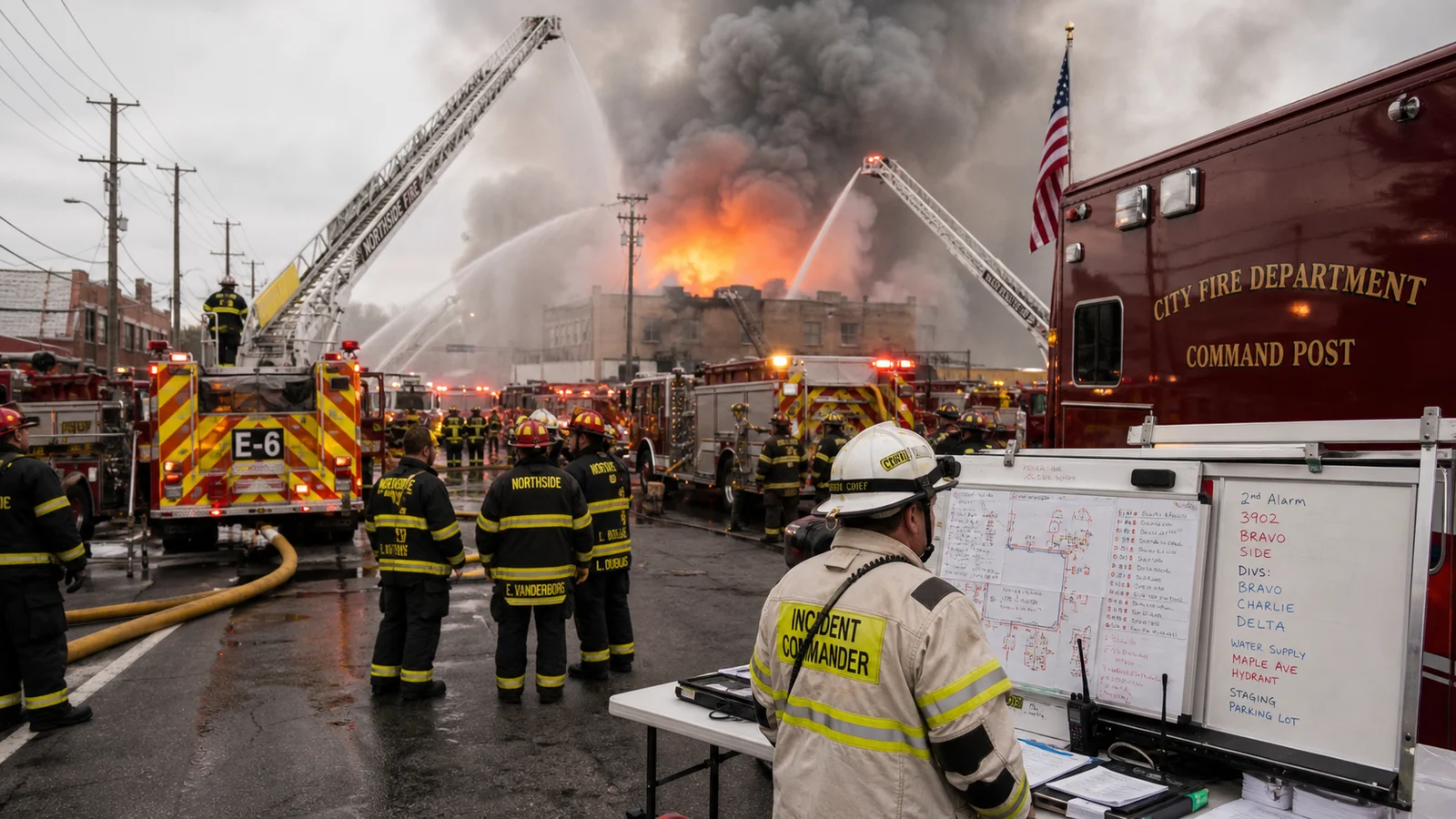
The Incident Command System (ICS) is specifically designed to scale from a single-company response to a complex multi-agency operation. The key principle is span of control: no supervisor directly manages more than 5–7 resources. As alarm levels increase, the ICS structure expands to maintain this ratio.
| Alarm level | Typical resources | ICS positions typically activated |
|---|---|---|
| 1st alarm | 3–5 companies | IC, Safety Officer |
| 2nd alarm | 6–10 companies | IC, Operations, Safety, Staging |
| 3rd alarm | 11–18 companies | + Divisions/Groups, Logistics, PIO |
| 4th alarm+ | 19+ companies | Full ICS; Branches if needed; unified command possible |
At the 2nd alarm, the IC must consider whether to stay in tactical command or expand to a strategic role. The transition from tactical IC (making company-level decisions) to strategic IC (managing the overall operation through operations and division supervisors) is a critical skill that separates effective multi-alarm commanders from those who become overwhelmed.
Sector and Division Assignments
Geographic divisions (typically by side of the building: Alpha/Bravo/Charlie/Delta or North/South/East/West) and functional groups (search, rescue, ventilation, water supply) provide the organizational structure that allows the IC to manage a large incident through supervisors rather than individual companies.
Standard assignments at a large structure fire:
- Division Alpha (front): Attack operations, primary entry, first hoseline advance
- Division Bravo/Charlie/Delta: Exposure protection, secondary search, ventilation from respective sides
- Roof Group: Ventilation operations above (with strict accountability given collapse risk)
- RIT Group: Rapid intervention team, staged and prepared for mayday response throughout operations
- Rehab Sector: Personnel rotation, medical monitoring, SCBA bottle exchange
Resource Staging
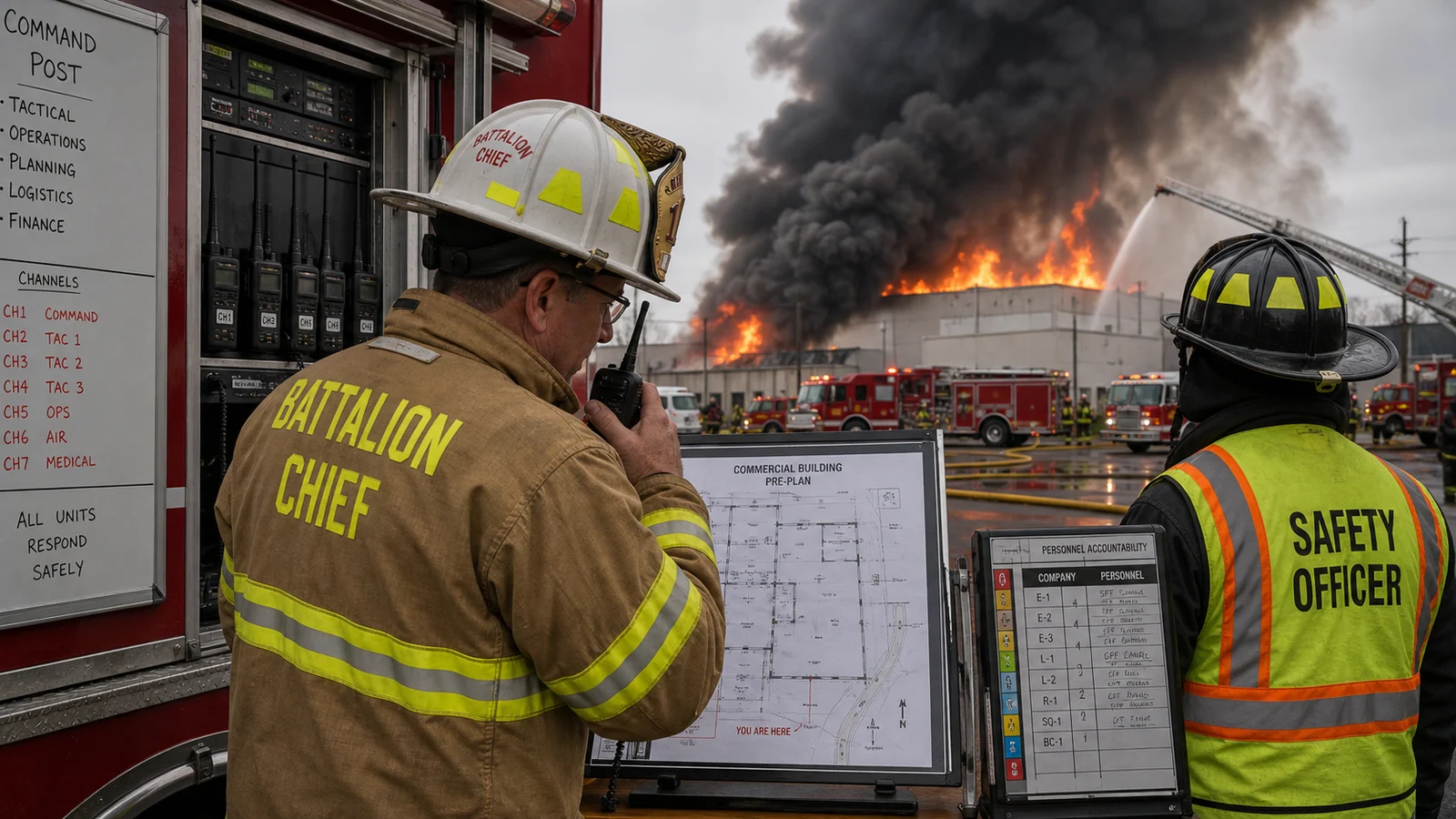
Staging discipline is what separates a well-run multi-alarm from apparatus chaos. Staging protocols:
- Level 1 staging: First-alarm companies stage at the scene and await assignment. Used when resources are anticipated and positions are available.
- Level 2 staging: Additional alarm companies stage at a designated staging area away from the immediate scene — typically 1–2 blocks away on a designated street. A staging manager controls resource release to the scene.
- Establish staging location early — announce it on the radio with every escalation. Arriving companies cannot assume staging location.
- Never allow apparatus to self-assign to positions without IC direction. An unsupervised engine positioning itself without assignment creates water supply conflicts and accountability problems.
Communications Discipline
Radio communication is the nervous system of a multi-alarm operation. As resources and complexity increase, radio discipline becomes increasingly critical:
- Assign separate radio channels for command, tactical, and logistics at 2nd alarm and above
- Face-to-face communication at the command post for complex tactical discussions — do not occupy the command channel
- All progress reports to IC go through division supervisors, not individual companies
- Mayday transmission protocol must be understood by all personnel before operations begin — a mayday on a busy multi-alarm frequency requires immediate channel discipline by all other users
Personnel Accountability at Scale
Personnel accountability systems that work well for a 4-company single alarm become critically strained at a 3rd alarm with 15+ companies from multiple agencies. Key accountability measures for multi-alarm fires:
- Passport/tag system maintained at each entry point — not just the command post
- Division supervisors maintain accountability for companies assigned to their division
- Regular PAR (Personnel Accountability Reports) on a fixed schedule — the IC announces a PAR at intervals, all divisions report in
- Mutual aid companies check in with staging manager and receive passports/accountability tags on arrival
- RIT group maintains a separate copy of all interior operating assignments
Frequently Asked Questions
What triggers a 2nd alarm at a fire?
Heavy fire conditions on arrival at a large or complex structure, first-alarm resources not controlling the fire, life safety rescues consuming all available personnel, or fire involving multiple floors or a large commercial structure. The decision should be made early — it is always better to release unneeded resources from staging than to escalate too late.
How many companies respond to a 3rd alarm fire?
Alarm assignments vary by department and jurisdiction. A typical urban 3rd alarm response might involve 11–18 companies (engines, ladders, and specialty units) plus chief officers. Large metro departments may have more formalized alarm assignments with specific unit lists. Check your department's response plan for the specific resource matrix.
What is the span of control in ICS?
The optimal span of control in ICS is one supervisor to 3–7 resources, with 5 being the standard target. This means that as the number of operating companies increases, the ICS structure must expand by adding supervisory positions (division supervisors, group supervisors, branches) to keep each supervisor's span manageable.

Comments 0
No comments yet. Be the first to share your thoughts!
Leave a Comment