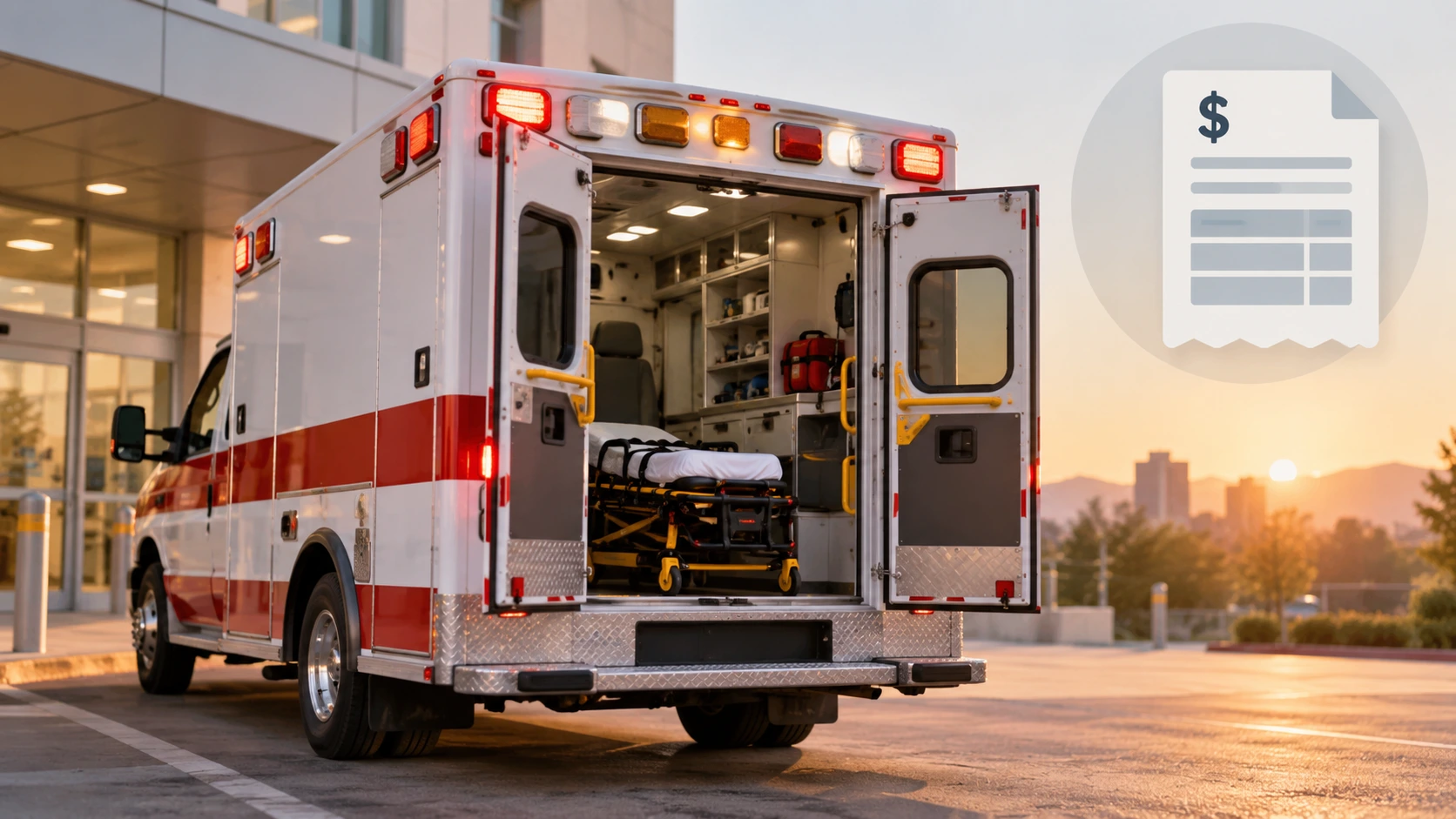

Short answer: Without insurance, a single ambulance ride in the U.S. typically costs anywhere from $500 to $3,600+, depending on your city, the level of medical care provided (Basic Life Support vs. Advanced Life Support), and how far you're transported. There is no single national price — every city and county sets its own ambulance fee schedule.
Ambulances feel like a public service, but in most of the U.S. they're billed closer to a medical procedure than a 911 dispatch. If you don't have insurance — or your insurance doesn't fully cover EMS transport — the bill lands entirely on you. Here's how those bills are actually built, with real fee schedules from major U.S. cities.
In this article:
How Ambulance Bills Are Built
Most ambulance bills are made of two or three separate pieces stacked together:
| Fee component | What it means |
|---|---|
| Base rate (BLS) | Basic Life Support — an EMT-level crew provides monitoring and basic care during transport |
| Base rate (ALS1 / ALS2) | Advanced Life Support — a paramedic-level crew provides IVs, medications, cardiac monitoring, or advanced airway care; ALS2 reflects more intensive interventions |
| Mileage | A per-mile charge for the distance driven to the hospital, commonly $15–$20+ per mile |
| Supplies / oxygen | Smaller add-on charges for oxygen, medications, or disposable supplies used during the call |
Real Ambulance Fee Schedules (Examples)
These are published municipal fee schedules, not estimates — actual amounts owed also depend on mileage and any supplies used.
| City | BLS base | ALS1 base | Mileage |
|---|---|---|---|
| New York City (FDNY) | ~$900 | ~$1,525–$1,680 | ~$15–$20/mile |
| Des Plaines, IL | GEMT-rate based | GEMT-rate based | $15/mile; $250 no-transport fee |
| Chicago | Set municipal rate | Set municipal rate | Billed regardless of insurance status; payment plans available |
Real patient bills often land well above the base rate once mileage and supplies are added — reported uninsured or under-covered bills for a single ride commonly range from roughly $600 to well over $3,000, and some documented cases have run into the tens of thousands for longer transports or specialty care.
Why One Ambulance Ride Can Cost 3x Another
Two people can call 911 for the same street and end up with wildly different bills. The biggest reasons: which agency responds (a municipal fire department, a public hospital-based service, or a private ambulance company all set their own rates), whether the crew classifies the call as BLS or ALS, and how far the hospital is. In some metro areas, multiple private ambulance providers cover different neighborhoods with no way for the patient to choose — so the price you pay can come down to which company happened to be closest that day.
What Happens If You Can't Pay
Ambulance providers generally won't demand payment on the spot — you'll receive a bill in the mail afterward. If you can't pay the full amount, most providers, including municipal fire-department billing offices, will set up a payment plan for a manageable monthly amount rather than sending the account straight to collections. Ignoring the bill, however, can eventually result in it being turned over to a collections agency, which can affect your credit.
How to Lower or Dispute a Surprise Bill
- ✓Ask for an itemized bill and check that the BLS/ALS classification and mileage actually match what happened.
- ✓Call your insurer and appeal if a claim was denied or only partially paid — many denials are overturned on appeal.
- ✓Ask the billing office directly about financial hardship programs — many municipal EMS billing departments have income-based reductions that aren't advertised.
- ✓Set up a payment plan before it reaches collections — this protects your credit and is usually easy to arrange.
Related reading: If you're wondering whether you could have avoided the transport bill altogether, see can you refuse an ambulance after calling 911, and for how the 911 call itself is funded, see is calling 911 free.
Frequently Asked Questions
How much does an ambulance cost without insurance?
Typically $500 to $3,600 or more for a single ride, depending on the city, whether care was Basic or Advanced Life Support, and how far you were transported.
Why did my ambulance bill have separate charges?
Most bills combine a base rate for the level of care (BLS or ALS), a per-mile transport charge, and sometimes smaller fees for supplies or oxygen used during the call.
Can I negotiate an ambulance bill?
Often yes. Many billing offices offer payment plans or hardship reductions if you contact them directly, especially before the bill is sent to collections.
Does insurance cover the full cost of an ambulance?
Not always. You may still owe a deductible, copay, or coinsurance, and if the ambulance provider is out-of-network, you could be responsible for the remaining balance.
Bottom line: Never delay calling 911 for a real emergency because of cost fears — get the care you need first. If a bill arrives afterward, review it carefully, contact the billing office, and ask about payment plans before assuming you have to pay the full amount all at once.






Comments 0
No comments yet. Be the first to share your thoughts!
Leave a Comment