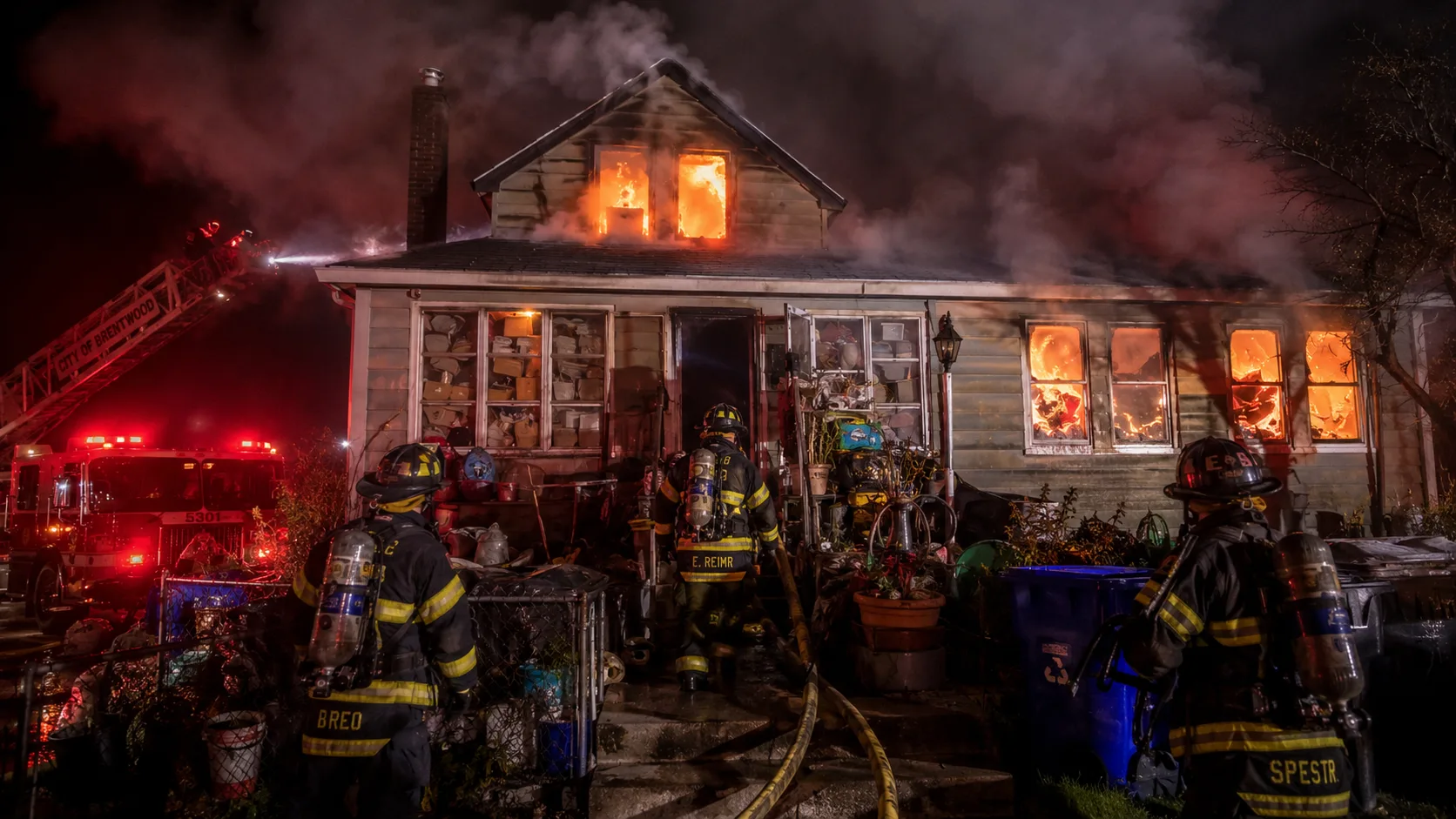

Firefighters who work urban districts long enough develop a feel for certain types of structures before they even step off the rig. A hoarding house has a look from the outside — windows obscured by stacked material, a front door that does not open fully, a driveway with narrow channels between piled items. But the look does not prepare you for what is inside, and the interior is where the decisions get made that determine whether everyone comes out.
Hoarding disorder affects an estimated 2 to 6 percent of the population. Fire departments do not keep a registry of these homes, and there is no pre-fire notification system when a call comes in. The crew arrives, gets on air, and finds out what they are dealing with on the way through the door. What they find changes every calculation they make about how to operate — entry points, water streams, search patterns, crew accountability, and the point at which the incident commander pulls everyone out.
In this article:
- The fuel load problem: what hoarding does to fire behavior
- No clear egress — for occupants and crews
- Structural load and collapse risk
- Thermal imaging in hoarding conditions
- Crew accountability: LUNAR, PAR, and the RIT calculation
- The no-go decision: when commanders pull crews
- What kills occupants in hoarding fires
- Prevention and community engagement
The Fuel Load Problem: What Hoarding Does to Fire Behavior
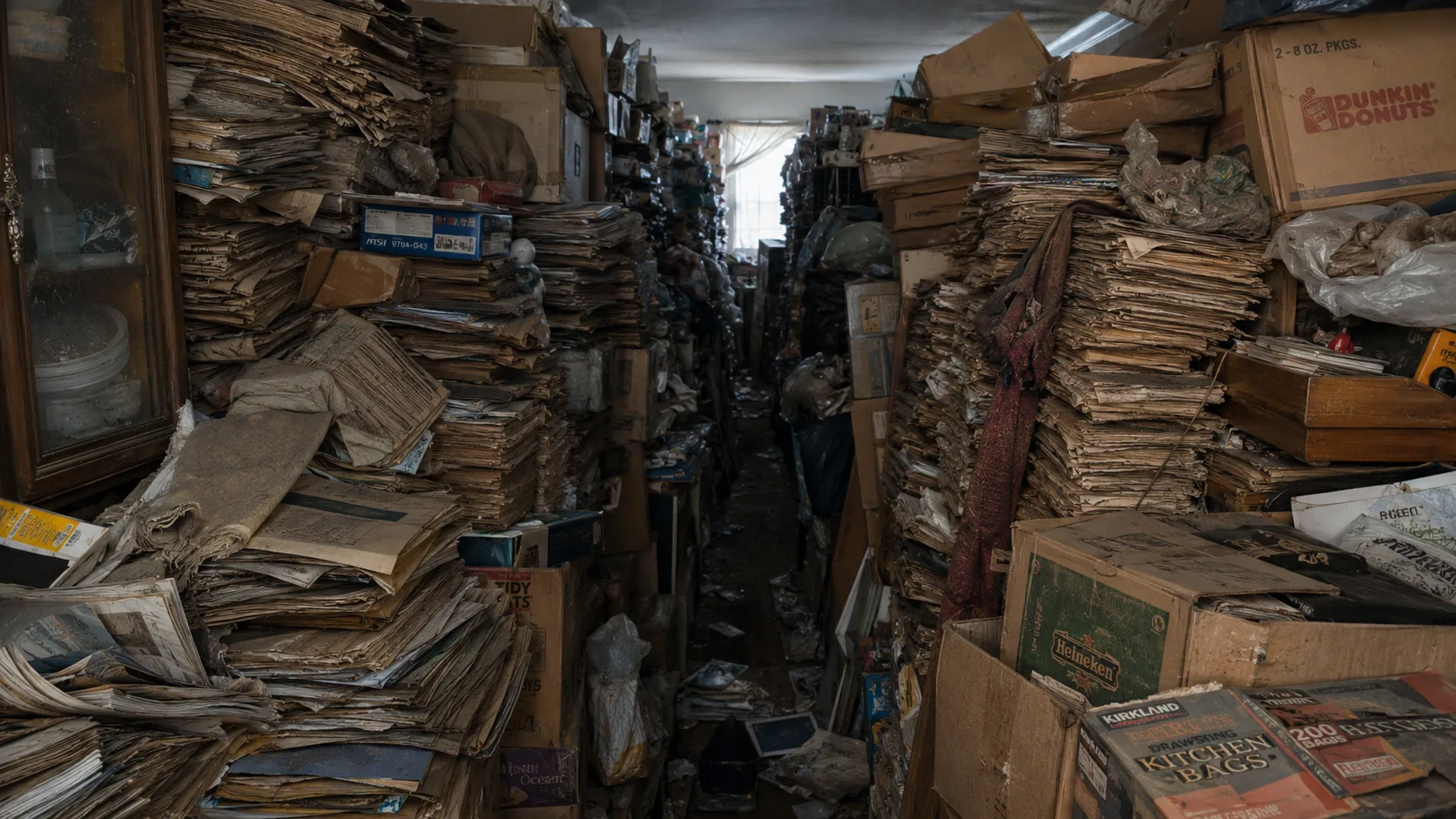
In a standard residential fire, firefighters can estimate fire behavior based on room layout and typical contents. A living room has furniture, drapes, and flooring — the burn pattern is reasonably predictable and the room boundaries provide orientation. In a hoarding structure, neither of those things is true.
The fuel load — combustible material per square foot — in a severely hoarded home can be ten to twenty times higher than in a standard residence. Floor-to-ceiling stacks of newspapers, magazines, cardboard boxes, clothing, and organic material create a sustained heat environment that standard residential construction is not designed to withstand. Walls that would provide compartmentalization in a normal fire are irrelevant when combustible material runs continuously from one room to the next.
The burn pattern also changes. In a room with normal furniture, fire spreads outward from the ignition point in a relatively predictable pattern. In a hoarding environment, the stacked material channels fire in unexpected directions — through gaps between stacks, upward along vertical paper columns, laterally through material that bridges multiple rooms. A crew searching a room may not realize that the fire they are operating above has already traveled past their position.
No Clear Egress — For Occupants and Crews
The majority of occupant deaths in hoarding fires are smoke inhalation deaths — people who could not find their way to an exit in time. In a moderately hoarded home, the paths between stacks are narrow enough that navigating them in zero-visibility smoke conditions is effectively impossible. The exit that the occupant uses every day requires visual confirmation of landmarks — a specific stack, a particular turn — that disappear entirely when smoke drops below the two-foot mark.
For firefighters, the egress problem is operational. Entry teams working in hoarding conditions must maintain continuous awareness of their exit path in a way that is simply not required in a standard structure. The path in is not the same as the path out once material shifts, falls, or burns through. A crew that advances 40 feet into a hoarding structure through a narrow channel has 40 feet of shifting debris between them and the door.
The standard practice on hoarding fires is to pull a guideline — a rope or hose line that provides a physical connection back to the exit. This is used in large industrial fires and high-risk structural searches; in hoarding fires it becomes standard operating procedure even in small residential structures. Without a physical guideline, a disoriented crew member in a hoarding house with zero visibility has no reliable way to navigate out.
A guideline is not optional in confirmed hoarding conditions. In a standard house fire, an experienced crew can navigate by memory and structural cues — doorframes, walls, stair location. In a hoarding structure, those cues are buried under material. The guideline is the difference between a crew that can find its exit and one that cannot.
Structural Load and Collapse Risk
Residential floor systems are designed to carry a live load of approximately 40 pounds per square foot in living areas. A room stacked floor-to-ceiling with books, magazines, and dense material can easily exceed 150 to 200 pounds per square foot — four to five times the design load. In most cases, the floor has been carrying that load for years and the structure has adapted to the chronic overload through deflection and partial failure of subfloor components. That adaptation does not make the floor safe. It makes the floor one additional stress event away from collapse.
The fire itself is that additional stress event. Fire attacking a floor system that is already deflecting under excessive load will cause that floor to fail earlier than fire attack on a structurally sound system — sometimes dramatically earlier. A crew operating on the second floor of a hoarding structure is standing on a floor that may have been approaching its load limit before the fire started.
Incident commanders on hoarding fires establish early collapse zones and restrict interior operations accordingly. The aggressive interior attack that is standard on a working residential fire becomes a risk-benefit calculation on a hoarding fire: the probability of a viable victim rescue weighed against the structural stability of the building and the risk to the crew. This is not a comfortable calculation, and experienced commanders make it explicitly rather than defaulting to standard tactics.
Thermal Imaging in Hoarding Conditions
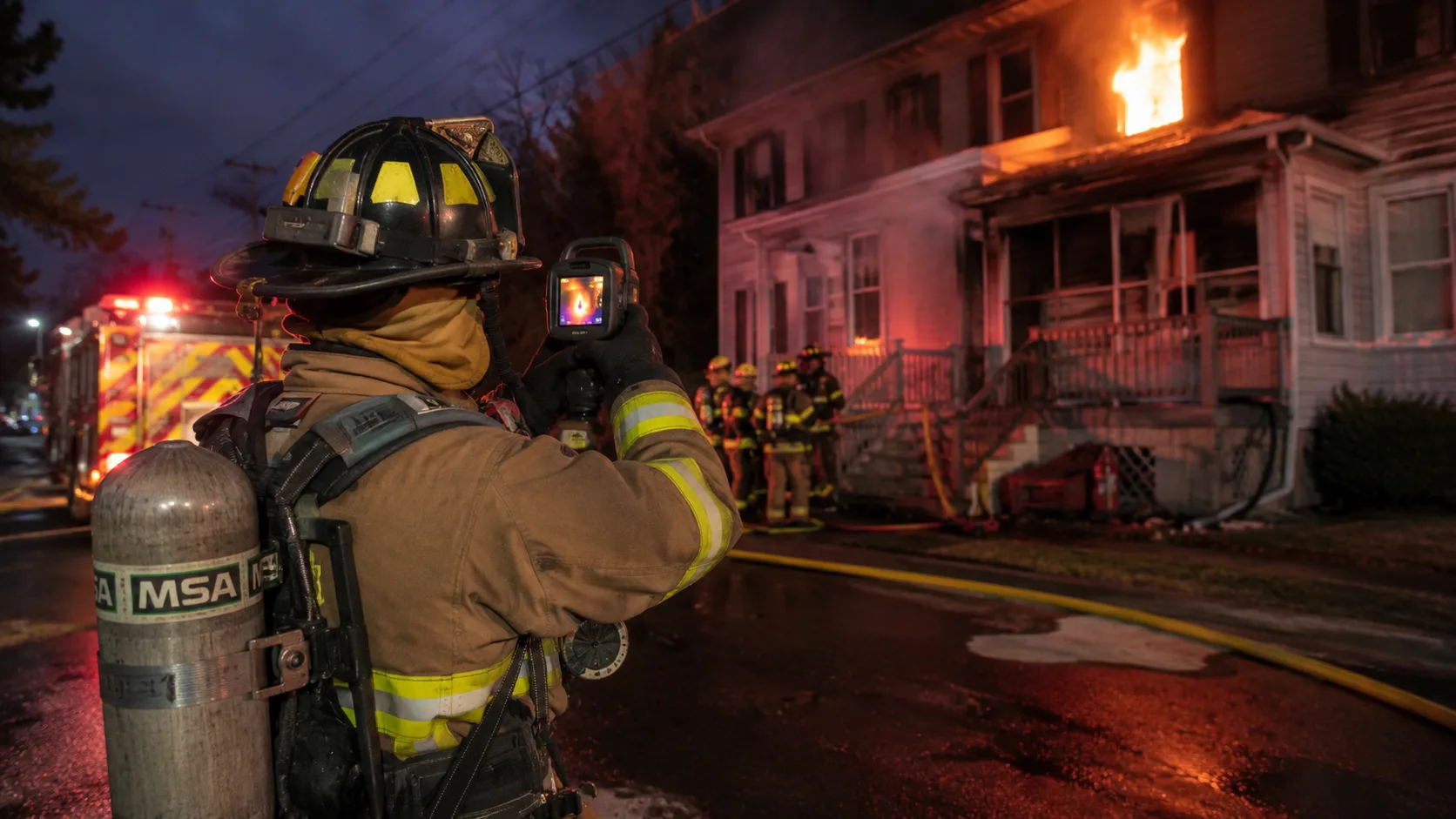
Thermal imaging cameras are among the most valuable tools in a firefighter's kit for interior operations — they reveal victim locations, identify hot spots, and help crews navigate in zero-visibility smoke. In hoarding conditions, their utility drops sharply.
The problem is ambient heat. In a standard structure fire, the thermal camera shows a relatively clear differentiation between the fire source, heated walls, and cooler ambient areas. In a hoarding structure where dense material has been burning for even a short time, everything registers as elevated temperature — the walls, the floor, the material on both sides of the entry channel. A victim lying behind a stack of material at the same elevated temperature as the surrounding environment may not produce a distinguishable signature on the TIC.
The implication for search: crews in hoarding fires cannot rely on thermal imaging for victim location the way they do in standard residential searches. Physical search — systematic, contact-based — becomes the primary method, which takes longer, exposes crews to heat and smoke for more time, and requires more personnel to cover the same area safely.
Crew Accountability: LUNAR, PAR, and the RIT Calculation
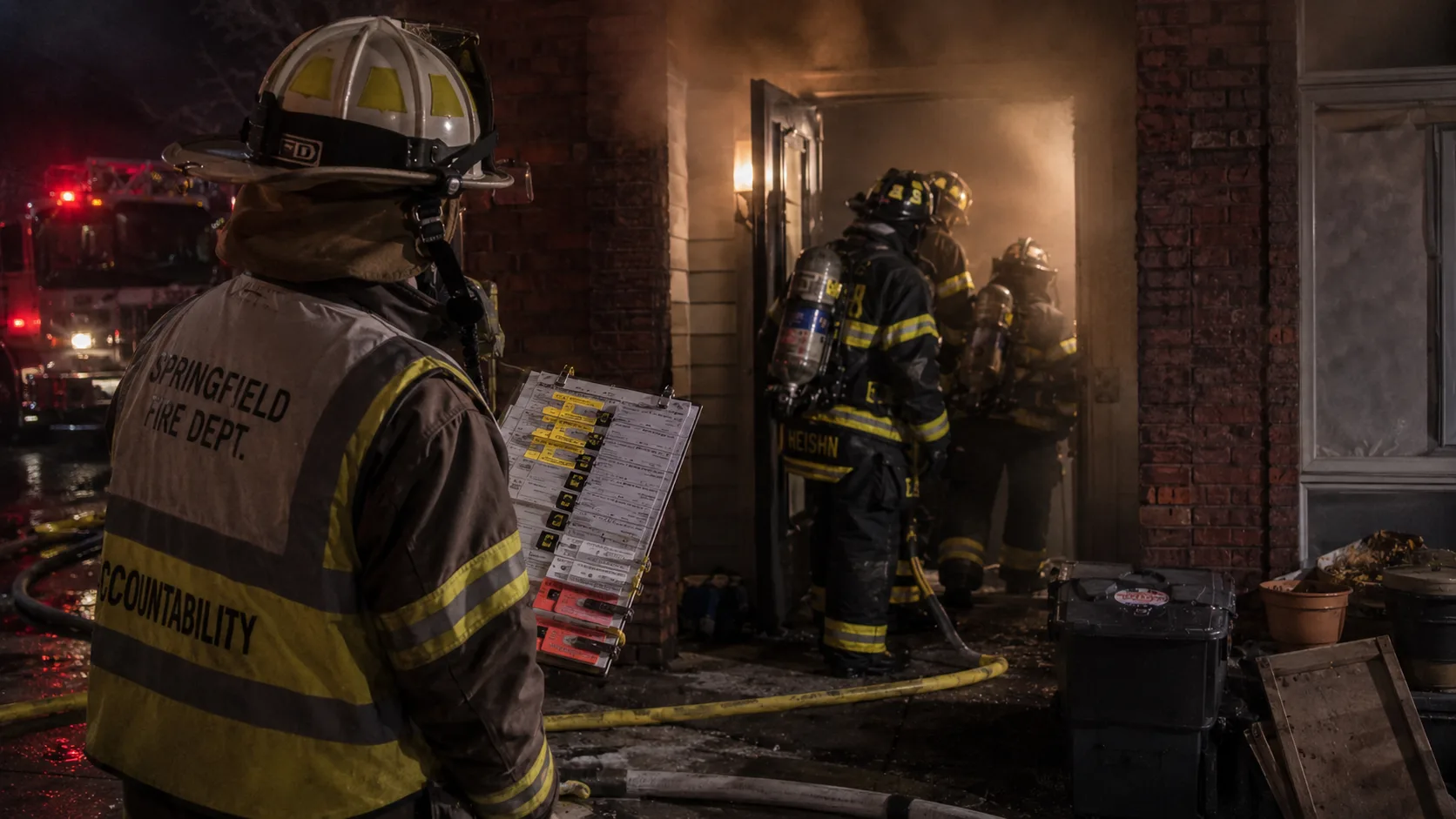
On any working structural fire, crew accountability is continuous. The LUNAR report — Location, Unit, Name, Air (SCBA air supply), Resources needed — is how interior crews communicate their status and position to the incident commander. On a hoarding fire, the frequency of LUNAR reports increases and the information in them becomes more operationally critical.
Air supply is the controlling factor. A crew that entered a hoarding structure on full bottles has a fixed time window — typically 15 to 20 minutes of working air — after which they must exit or be in a position to exit immediately. In a standard structure, 15 minutes is enough to work a significant portion of a small home. In a hoarding structure, 15 minutes may cover two rooms of actual search if the material density and navigation difficulty are high. Incident commanders on hoarding fires set PAR (Personnel Accountability Report) intervals shorter than on standard residential fires — some departments call PAR every five minutes in confirmed hoarding conditions.
The Rapid Intervention Team — the crew staged outside specifically to rescue a downed or trapped interior crew — faces its own calculation on a hoarding fire. RIT entry into a hoarding structure to rescue a downed crew member is among the most dangerous operations in the fire service. The RIT team must navigate the same material that trapped or incapacitated the original crew, while carrying rescue equipment, while managing their own air supply. Departments operating in communities with known hoarding structures often pre-plan for this, staging larger RIT teams and additional air supply as standard on confirmed hoarding responses.
The No-Go Decision: When Commanders Pull Crews
The incident commander's authority to withdraw interior crews is absolute and non-negotiable. On a hoarding fire, the triggers for that decision come earlier and more frequently than on a standard residential fire.
The conditions that typically trigger withdrawal from a hoarding structure: any report of floor deflection or unusual movement underfoot; fire that has advanced past the crews' position and now threatens their exit route; air supply reports that indicate crews cannot complete a viable search and exit safely; any structural sound — cracking, popping, sudden settling — that suggests imminent floor or wall failure; and smoke conditions that degrade to total zero-visibility before a guideline is established.
The transition from offensive interior attack to defensive exterior operations is called "going defensive." On a standard working fire, it is a significant tactical decision that changes the outcome of the incident. On a hoarding fire where no victim has been confirmed and structural integrity is suspect, going defensive is sometimes the right first decision — before interior crews are ever committed. This is not a failure of aggressiveness. It is the application of risk-benefit analysis to a situation where the hazard profile does not support the standard offensive approach.
What Kills Occupants in Hoarding Fires
The occupant death profile in hoarding fires differs from standard residential fire deaths. In a typical residential fire, the most common cause of death is smoke inhalation in a bedroom — the fire started elsewhere, smoke accumulated faster than the alarm woke the occupant, and the occupant could not escape in time.
In hoarding fires, the occupant frequently wakes up or is aware of the fire, and still cannot escape. They know the paths through the material, but those paths exist in daylight with cognitive function intact. In smoke, in the dark, in a panic, the same paths become impassable. People are found in hoarding fire fatalities close to the fire, having moved in the wrong direction, or having been blocked by material that fell across the only usable path.
The secondary factor is the fuel load's effect on fire speed. A hoarding structure fire moves faster than a standard residential fire. The window between ignition and untenable conditions throughout the structure is shorter. A person who woke up at the right time and knew exactly where to go might still not have enough time to cover the distance through the material channels before conditions closed that option.
Prevention and Community Engagement
Fire departments with proactive community engagement programs do pre-fire planning visits to known hoarding structures — usually initiated through social services referrals or neighbor contact — with the goal of identifying residents, noting structure layout, and building a relationship that may eventually support intervention. This is not enforcement-oriented; it is information-gathering that makes a future response less deadly for everyone involved.
At the community level, hoarding disorder is a mental health condition with established treatment approaches. Fire departments are not mental health providers, but they are often the first agency to identify severe hoarding conditions — and the most effective departments have referral relationships with social services agencies that can engage the occupant on a treatment level rather than a compliance level.
For neighbors and family members of someone living in a severely hoarded home: the fire risk is real and the occupant may not be able to assess it clearly. A referral to a social services agency, a mental health professional, or in severe cases an adult protective services contact is not an overreaction. It is an acknowledgment that the situation carries lethal risk that the occupant cannot address alone.

Comments 0
No comments yet. Be the first to share your thoughts!
Leave a Comment