Fire Dynamics in Modern Structures: Heat Release Rate, Fuel Load & Why Today’s Fires Are Faster
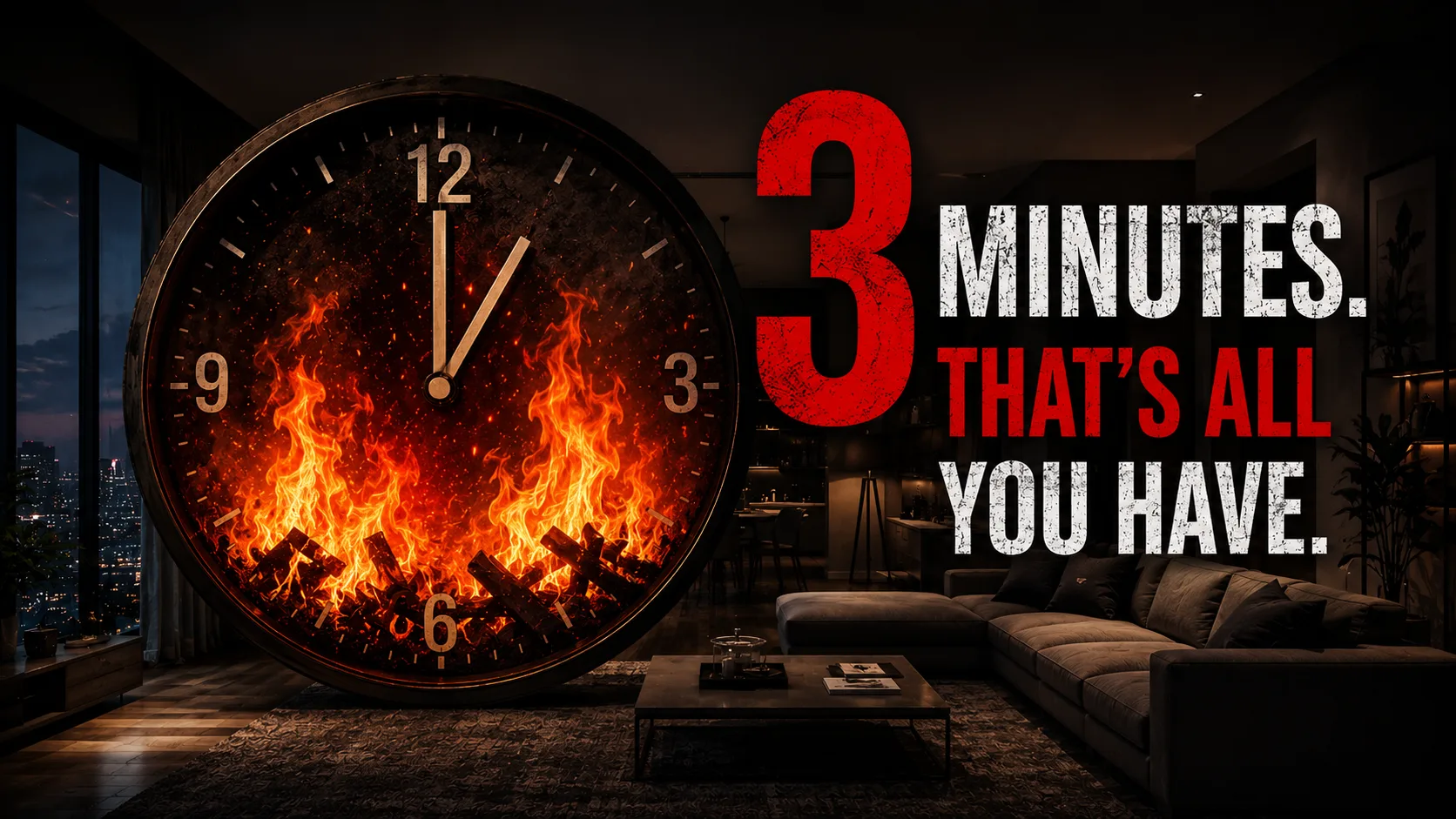
The fires you are fighting today behave fundamentally differently from fires in structures built before 1980. The change is not in the physics of fire — the combustion chemistry is the same — but in the fuel. Modern furnishings, building materials, and construction methods have created a fireground where you have less time to work, fires develop faster, and the energy released per square foot has increased dramatically. Understanding why changes every tactical decision you make.
Jump to:Heat release rate · Old vs. new construction and fuel · Synthetic materials and why they matter · Flashover timeline · Oxygen and ventilation-limited fires · UL and NIST research findings · Tactical implications · FAQ
Heat Release Rate: The Number That Drives Everything
Heat release rate (HRR) is the rate at which a burning material produces energy, measured in kilowatts (kW) or British thermal units per minute (BTU/min). It is the single most important number in predicting fire behavior. HRR determines:
- How fast the hot gas layer descends
- How quickly the gas layer reaches flashover temperature
- How much fire flow (GPM) is needed to achieve suppression
- How long firefighters can operate safely in a room before conditions become untenable
HRR of common materials
| Item | Peak HRR | Time to peak |
|---|---|---|
| Upholstered chair (traditional cotton/wool) | ~300 kW | 10–15 min |
| Upholstered chair (polyurethane foam) | ~2,000 kW | 3–5 min |
| Christmas tree (dry) | ~600 kW | <2 min |
| Mattress (traditional) | ~400 kW | 8–12 min |
| Mattress (modern, synthetic) | ~2,500 kW | 4–6 min |
| Flat-screen TV | ~100–300 kW | Variable |
| Whole furnished room (1980s) | ~1,000–2,000 kW peak | 15–20 min to flashover |
| Whole furnished room (modern) | ~4,000–6,000 kW peak | 3–5 min to flashover |
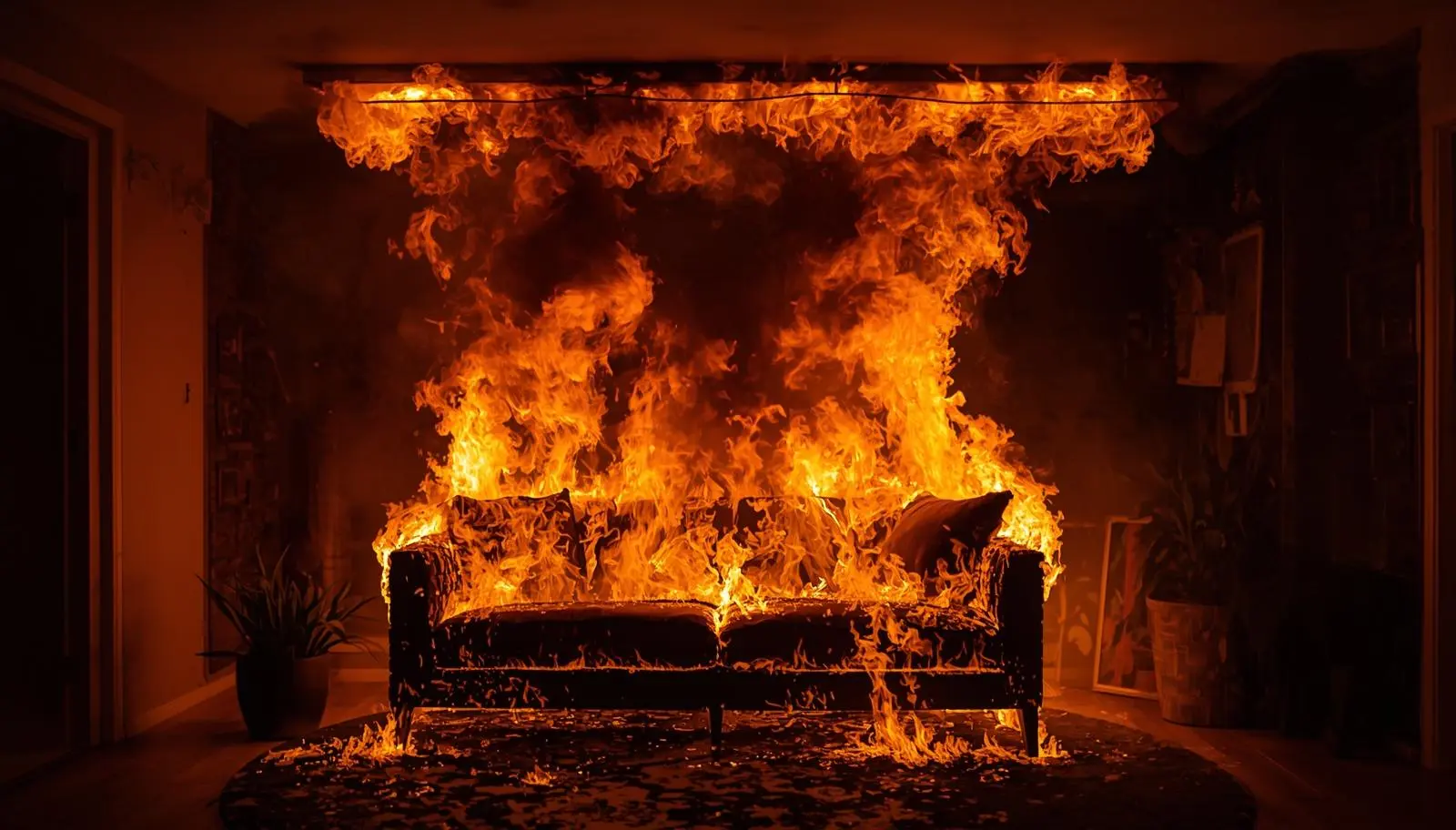
The polyurethane foam revolution changed everything. Polyurethane foam replaced natural fibers in furniture from the 1970s onward. A modern couch can produce 6–8 times the peak heat release rate of a comparable piece from 1960. This single material change is the primary driver of reduced time-to-flashover in residential fires.
Old vs. New Construction and Fuel
The 1960s furnished room
A living room from the 1960s contained: wool or cotton upholstery, solid wood furniture, hardwood or tile flooring, natural fiber rugs, plaster walls (high thermal mass), and single-pane windows with moderate air infiltration. Peak HRR from such a room was approximately 1,000–2,000 kW, with time to flashover of 15–25 minutes from ignition under typical conditions.
The modern furnished room
A contemporary living room contains: polyurethane foam upholstery, engineered wood (low thermal mass), synthetic carpeting and rugs, drywall (lower thermal mass than plaster), large-area vinyl windows (better sealed but fail catastrophically), and a high density of electronics with plastic housings. Peak HRR from such a room commonly exceeds 4,000–6,000 kW, with time to flashover as low as 3–5 minutes.
The structural materials change
In addition to furnishings, the structural materials themselves have changed:
- Engineered lumber (LVL beams, I-joists, OSB) replaced dimensional solid lumber in most post-1990 construction. It is lighter, cheaper, and structurally adequate under normal loads. Under fire conditions, it fails 3–4× faster than equivalent solid lumber.
- Adhesives in engineered wood can vaporize or degrade below the ignition temperature of the wood itself, causing delamination and connection failure before visible charring indicates structural compromise.
- Gang-nail truss connectors in roof and floor trusses are metal plates that conduct heat and can pull free of the wood member, causing truss collapse with minimal warning.
Synthetic Materials: The Chemical Fire Hazard
Modern synthetic materials do not just burn faster — they also produce more toxic and more energetic combustion products. The specific hazards:
Polyurethane foam
Burns with very high HRR and produces hydrogen cyanide (HCN) as a primary combustion product. HCN is approximately 25–30 times more toxic than carbon monoxide and is absorbed extremely rapidly through the lungs. Even brief exposure to high HCN concentrations can cause rapid loss of consciousness. Modern synthetic fire environments have significantly higher HCN concentrations than older natural-fiber environments.
PVC and vinyl
Polyvinyl chloride (PVC) wiring, piping, and flooring produces hydrogen chloride (HCl) when burned. HCl is highly corrosive and creates strong acid when combined with moisture in the respiratory tract. It also contributes to acid deposition on equipment and structures. PVC plastics also produce dioxins under incomplete combustion.
Polystyrene (foam insulation, packaging)
Burns with very high HRR and extreme black smoke. When used as structural insulation (as in SIPs — structural insulated panels), polystyrene can create a hidden fire environment inside the wall or roof panel that is extremely difficult to detect and extinguish.
Flame retardants: the paradox
Many synthetic materials contain flame retardants — chemicals added to slow ignition. While effective at delaying initial fire development, flame retardants can increase the toxicity of smoke when the material does eventually burn. The same retardants that slow a couch from igniting produce highly toxic organophosphate and halogenated compounds in the smoke when suppression is delayed.
Flashover Timeline: What the Research Shows
The most widely cited research comparing modern and legacy fire behavior comes from UL and NIST studies conducted between 2010 and 2020. Key findings:
- A furnished room from the 1970s took approximately 29 minutes from ignition to reach flashover under experimental conditions
- A comparable room furnished with modern synthetic materials took approximately 3 minutes and 40 seconds to reach flashover under the same conditions
- The reduction in time-to-flashover is driven almost entirely by the higher HRR of synthetic furnishings, not by construction differences
- Time available for safe interior operations before flashover has decreased by approximately 85–90% in typical residential fires compared to 1970s baselines
The survival window for occupants has also compressed. In a modern furnished room fire, the conditions that are immediately dangerous to life and health (IDLH) can be reached in under 2 minutes. An occupant who does not begin evacuation within the first 2 minutes of a bedroom fire may not survive. This context is critical for public education and for understanding why early smoke alarm response is not optional — it is the difference between survivable and fatal.
Oxygen and Ventilation-Limited Fires
As modern fires develop faster and produce more heat, they often consume available oxygen faster than it can be replenished through normal building infiltration. This creates ventilation-limited (oxygen-limited) fire conditions much earlier in the fire development than was typical in older construction.
What ventilation-limited means
When a fire consumes oxygen faster than the building supplies it, combustion becomes incomplete. The fire appears to slow or self-extinguish (the flame goes out, but the room remains extremely hot and filled with unburned fuel gases). This is the pre-backdraft condition. The room is essentially a fuel-air bomb waiting for oxygen.
Why this matters for attack decisions
Opening a door, window, or cutting a ventilation hole in a ventilation-limited modern structure fire can trigger rapid fire progression from a seemingly manageable smoke condition to a fully involved room in seconds. The unburned fuel gases ignite as oxygen reaches them. This is the phenomenon that has killed firefighters who believed they were entering a manageable situation.
The operational response: read smoke before opening anything. Pulsing smoke, high heat, and little visible flame are indicators of a ventilation-limited fire. See the Reading Smoke guide and Backdraft vs Flashover guide for recognition and response tactics.
UL and NIST Research: Key Findings for Firefighters
The research from Underwriters Laboratories Fire Safety Research Institute (UL FSRI) and the National Institute of Standards and Technology (NIST) has fundamentally changed how the fire service understands modern fire behavior. Key operationally relevant findings:
- Door control reduces fire development rate significantly. A closed door delays flashover in an adjacent room by many minutes. A single closed bedroom door can mean the difference between a survivable and non-survivable room for an occupant. This has driven renewed emphasis on the "close before you doze" fire safety campaign.
- Water application from the exterior before entry can be life-saving. Applying a short burst of water through a window or doorway before interior crews enter can cool the hot gas layer, delay flashover, and improve conditions for crews and victims. This "transitional attack" approach has been validated by research even though it conflicts with some traditional fire service tactical culture.
- Flow path management is critical. When a door or window is opened, it creates a flow path for air and smoke. Understanding and controlling flow paths — rather than inadvertently creating paths that push fire toward crews and victims — is the central tactical skill for modern fire behavior.
- Positive pressure ventilation before attack can worsen conditions in some scenarios. Applying PPV before the fire is controlled can accelerate fire development in ventilation-limited fires. The sequencing of ventilation with water application matters more than the ventilation method alone.
Tactical Implications of Modern Fire Dynamics
Understanding modern fire dynamics directly changes tactical decisions:
- Faster water application is more important than ever. The window between fire discovery and flashover has compressed from 15–25 minutes to 3–5 minutes. Getting water on the fire within the first 60 seconds of arrival — even a brief transitional attack from the exterior — can delay flashover enough to enable a successful interior attack.
- Never assume a smoldering or apparently controlled fire is safe to enter without reading the smoke. Ventilation-limited fires may appear calm while containing enough unburned fuel gas to produce rapid fire progression the moment the door is opened.
- Door control is a survival technique, not a convenience. Closing the door to the fire room during attack, and keeping stairwell doors closed, directly reduces fire spread rate and buys time for crews and victims.
- Lightweight construction failure timelines are not forgiving. With 5–6 minute floor failure timelines in modern lightweight construction and 3–5 minute flashover timelines in modern furnished rooms, there is almost no margin between arrival and a non-survivable building environment. Early aggressive attack and rapid escalation to defensive operations when conditions warrant are both more critical in modern construction.
- Transitional attack is a legitimate tactic. A brief external water application before interior entry can improve crew survivability without compromising the interior attack. Train this option and include it in tactical decision-making.
Frequently Asked Questions
Why do modern house fires develop faster than older fires?
Modern furnishings contain polyurethane foam and synthetic materials that have 6–8 times the heat release rate of the natural fiber materials they replaced. A modern sofa can reach peak burning rate in 3–5 minutes; a 1960s equivalent took 10–15 minutes. This compressed timeline drives faster flashover and less time for occupant escape and firefighter operations.
What is heat release rate and why does it matter to firefighters?
Heat release rate (HRR) is the rate at which a burning material produces energy, measured in kilowatts. It determines how fast the hot gas layer descends, how quickly flashover temperature is reached, and how much fire flow is needed for suppression. Higher HRR means less time before untenable conditions and more water needed to achieve knockdown.
What is a ventilation-limited fire?
A ventilation-limited fire has consumed the available oxygen faster than the building can supply it. Combustion slows or stops, but the room remains extremely hot and filled with unburned fuel gases. Introducing air — by opening a door or window — can trigger rapid fire progression from these unburned gases. Pulsing smoke, high heat without visible flame, and a "quiet" fire after reports of heavy involvement are indicators of ventilation-limited conditions.
What does UL research say about door control in house fires?
UL FSRI research has shown that a closed door significantly delays fire spread between rooms. In comparison tests, a closed bedroom door during a fire in an adjacent room maintained survivable conditions inside the room for many minutes longer than with the door open. This research supports the "close before you doze" fire safety recommendation and reinforces door control as a tactical priority during firefighting operations.



Comments 0
No comments yet. Be the first to share your thoughts!
Leave a Comment