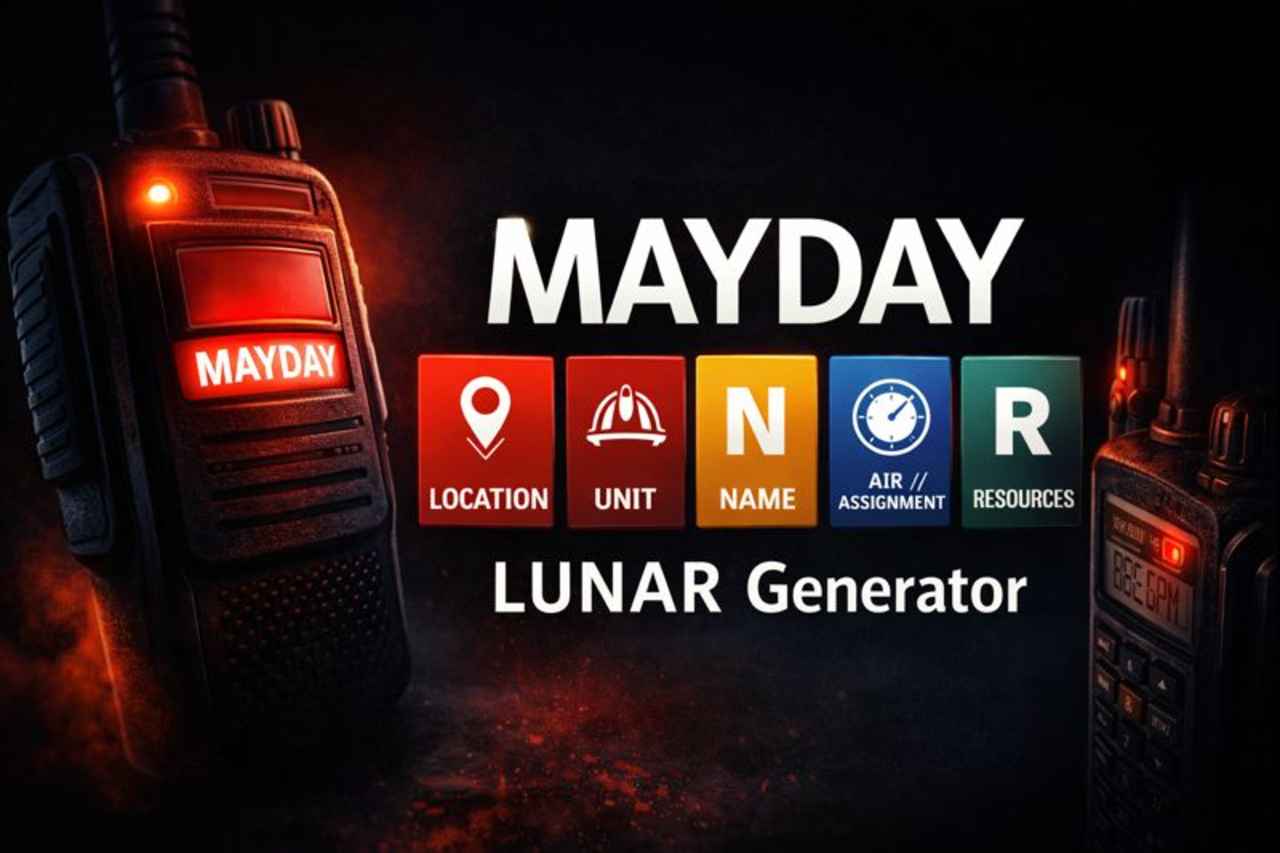
Mayday LUNAR Generator Guide – LAST Resort Comms, LUNAR Format, and Training Workflow
Last updated:
The Mayday LUNAR Generator exists for one job: help crews build short, structured Mayday messages that survive stress. This is primarily a training tool—use your department SOP/SOG on incidents.
Jump to:What LUNAR is · When to call Mayday · Message template · Examples · Training drills · Common mistakes
Open Mayday LUNAR GeneratorMayday / RIC / Comms Pillar
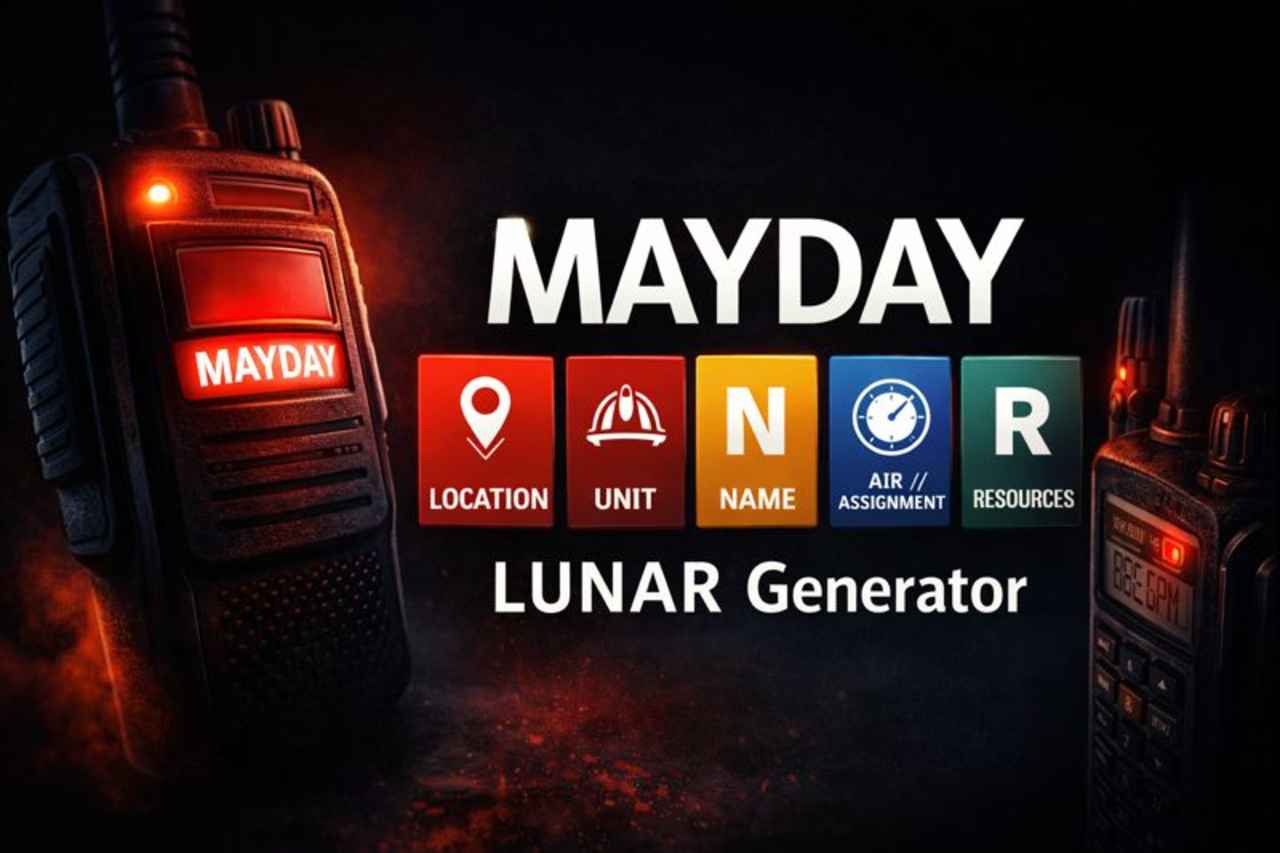
What LUNAR Means (and Why It Works)
LUNAR is a memory framework that forces the message to include the minimum details command and RIC need fast. Many departments use a version like:
- L – Location: where you are (best possible description you can give).
- U – Unit: your company/apparatus identifier.
- N – Name: who is in trouble (or “one firefighter”).
- A – Air / Assignment: air status and what you were doing.
- R – Resources / Rescue needs: what you need now (e.g., line, ladder, disentanglement, RIC contact).
When to Call a Mayday (Training Triggers)
Departments vary, but training should include common trigger conditions so members act early:
- Lost / disoriented
- Trapped / entangled
- Fall through floor / collapse involvement
- Low air or emergency breathing
- Injured and can’t self-rescue
A Simple Message Template
Use the same skeleton every time. Example structure:
Then stop talking and listen. If you can’t give an exact location, give the best directional/landmark clues you have (entry point, floor, side, hose line reference, landmarks, last known point).
Examples (Short + Actionable)
- Lost/disoriented: “Mayday… Location: second floor, rear, near stairwell. Unit: Engine 2. Name: Smith. Air: 40%, searching bedrooms. Resources: RIC to my location.”
- Entangled: “Mayday… Location: basement, near boiler room, following 2½ line. Unit: Truck 1. Name: one firefighter. Air: 30%, entangled. Resources: wire cutters + RIC.”
- Injured: “Mayday… Location: first floor, Alpha side, hallway. Unit: Engine 4. Name: Jones. Air: 50%, injured leg. Resources: RIC for removal.”
Training Drills (Build Speed + Consistency)
- Cold-start drill (60 seconds): Instructor gives a scenario. Member delivers one LUNAR message. Repeat 5 times.
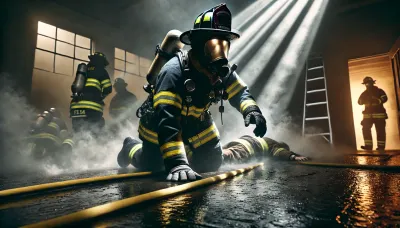
- Movement drill: Member crawls/works for 45 seconds, then must deliver LUNAR immediately (stress + breathing).
- Location drill: Train how to describe location using entry point, floor, side, landmarks, hose reference.
- Radio discipline drill: One message only, then silence. Teach avoiding repeated rambling calls.
Common Mistakes (What the Generator Prevents)
- No location: the most damaging omission. Give best-known clues.
- Too much story: under stress, messages get long and lose the actionable core.
- Skipping needs: “Mayday” without what you need wastes time.
- Late activation: waiting until air is critical makes everything harder.



Comments 0
No comments yet. Be the first to share your thoughts!
Leave a Comment