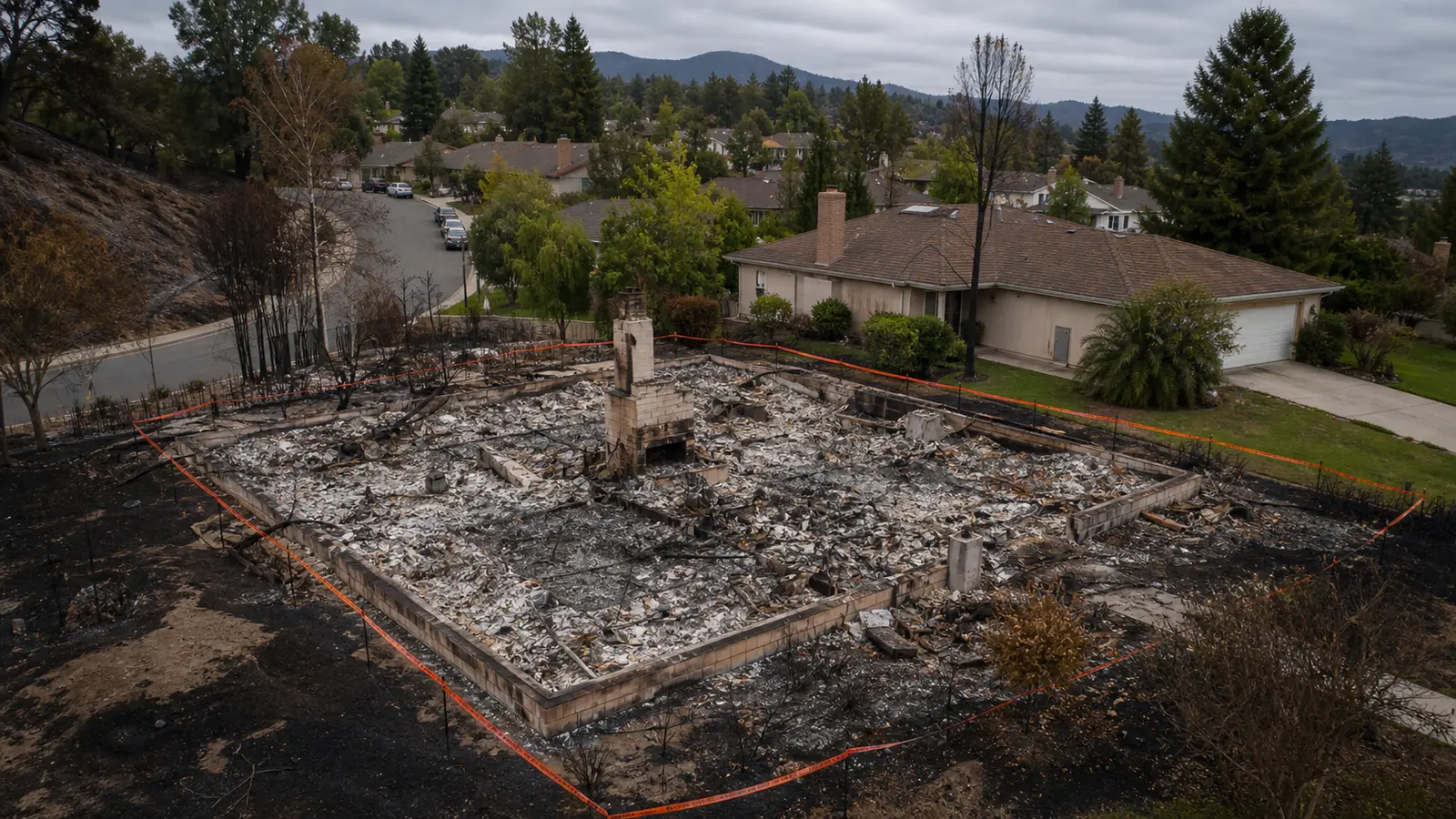

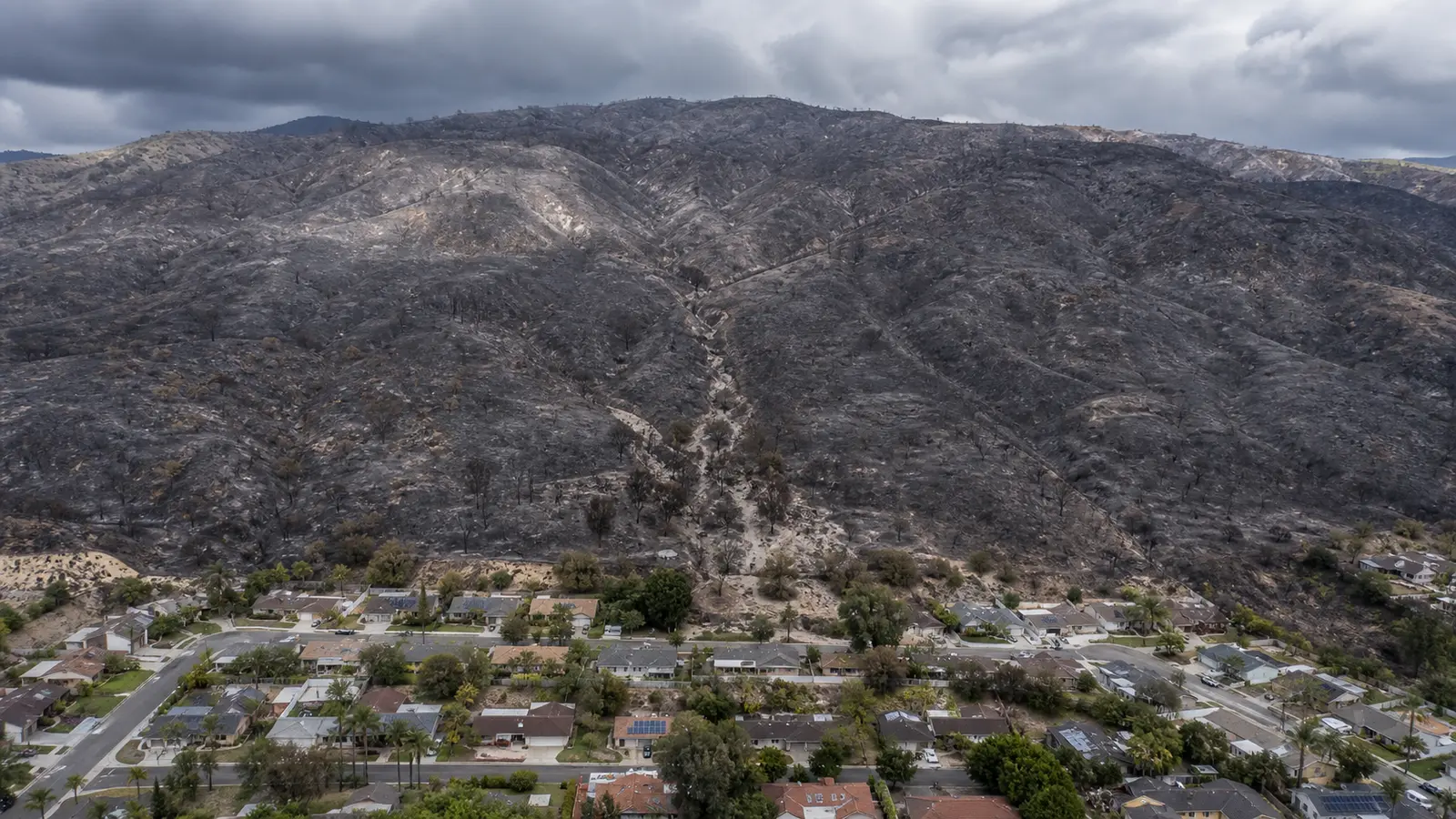
When residents return to a neighborhood after a wildfire has passed, the immediate impulse is to assess what survived, document the damage, and begin cleaning up. That impulse is understandable and, in some cases, deadly. The ash and debris that remain after a wildfire — particularly one that burned through a wildland-urban interface neighborhood where structures burned alongside vegetation — contains a mixture of toxic compounds that makes unprotected cleanup one of the highest personal exposure events a person can experience outside of an industrial accident.
Post-fire debris from structure fires contains concentrated levels of lead, arsenic, asbestos fibers, chromium, dioxins, polycyclic aromatic hydrocarbons, and PFAS compounds from burned household materials, insulation, treated wood, and the contents of garages and storage areas. In wildfire events where AFFF foam was applied during suppression, additional PFAS contamination may be present in and around the fire perimeter. The ash is not inert. It is a concentrated hazardous material that belongs in the category of environmental contamination, not household dirt.
After the January 2026 LA fires, state and county health officials issued explicit guidance prohibiting residents from clearing ash without proper protective equipment — guidance that a significant number of residents ignored in the urgency to assess their properties. This guide covers what is actually in wildfire ash, what protections are required, what can be cleaned and what requires professional remediation, and what the fire service knows about post-fire exposure that most residents don't find out until after the damage is done.
minimumRespiratory protection required for any ash contact — surgical masks do not filter combustion particles
In this article:
- What is actually in wildfire ash from structure burns
- Phase 1 and Phase 2 debris removal — what you can't touch yet
- Required personal protective equipment for any ash contact
- Returning to your property safely — what to check first
- Cleaning items that survived the fire
- Well water and municipal water after a wildfire
- Children, pets, and post-fire contamination
What Is Actually in Wildfire Ash From Structure Burns
Ash from a wildland fire burning in a remote forest — no structures, no manufactured materials — is primarily combusted organic material and mineral compounds from soil and rock. It is unpleasant but not acutely hazardous. Ash from a fire that burned through a neighborhood, where structures, vehicles, landscaping materials, household chemicals, and decades of stored goods were incinerated simultaneously, is a different material with a different hazard profile.
Studies of post-fire debris from California wildland-urban interface fires have consistently documented:
- Lead at concentrations 100 times or more above background soil levels — from burned paint, electronics, batteries, and plumbing materials. Lead ingestion and inhalation causes neurological damage, particularly in children.
- Arsenic and chromium from treated lumber — older pressure-treated wood contains chromated copper arsenate. When that wood burns, arsenic and chromium concentrate in the ash at levels that exceed hazardous waste thresholds in some samples.
- Asbestos fibers from insulation, floor tiles, roof materials, and pipe insulation in homes built before 1980. Asbestos-containing materials release respirable fibers when disturbed. Post-fire ash from older homes can contain elevated asbestos levels that require professional remediation rather than household cleanup.
- PFAS compounds from burned household items (non-stick cookware, stain-resistant fabric, waterproof clothing, food packaging) and from AFFF foam used in suppression operations. PFAS is persistent — it does not break down in the environment — and concentrates in soil and water at fire sites.
- Polycyclic aromatic hydrocarbons (PAHs) and dioxins from incomplete combustion of plastics, treated materials, and hydrocarbons. Several PAHs are classified carcinogens. They are present in measurable concentrations in air during and immediately after the fire, and in soil and ash afterward.
- Benzene from burned fuels, solvents, and plastic materials — a known leukemia-causing carcinogen that is also volatile, meaning it off-gasses from ash and contaminated soil into the air in post-fire areas.
Phase 1 and Phase 2 Debris Removal — What You Can't Touch Yet
In most California counties following a major declared disaster, debris removal occurs in two mandatory phases before private cleanup or construction can proceed.
Phase 1 is government-conducted hazardous material removal. State OES, county environmental health, and contracted hazmat crews survey every destroyed structure for household hazardous materials — propane tanks, compressed gas cylinders, pesticides, fertilizers, swimming pool chemicals, lithium batteries, and asbestos-containing materials. These are extracted and disposed of as regulated hazardous waste before any general debris clearing begins. Phase 1 is typically completed within weeks of re-entry and is conducted without requiring any action from the property owner. The property owner cannot legally begin their own clearing while Phase 1 is in progress.
Phase 2 is general debris removal — the bulk clearing of ash, burned structural material, and foundation rubble. Property owners can opt into the government-administered Phase 2 program (typically conducted by FEMA-contracted crews and often funded through disaster declarations) or opt out and conduct their own Phase 2 using licensed contractors who follow state-specified debris management protocols. Self-conducted Phase 2 requires compliance with environmental regulations, including disposal at approved facilities — household ash from a structure fire is classified as hazardous waste in California and cannot be deposited in a standard landfill.
For residents whose structures were not destroyed but whose property is covered in ash fall from adjacent burning, Phase 1 and 2 protocols may not formally apply — but the hazard does. Ash deposited on a surviving home from a neighboring structure fire carries the same chemical contamination as ash at the fire origin. The distance that ash travels — potentially miles from the fire perimeter — does not reduce its chemical hazard.
Required Personal Protective Equipment for Any Ash Contact
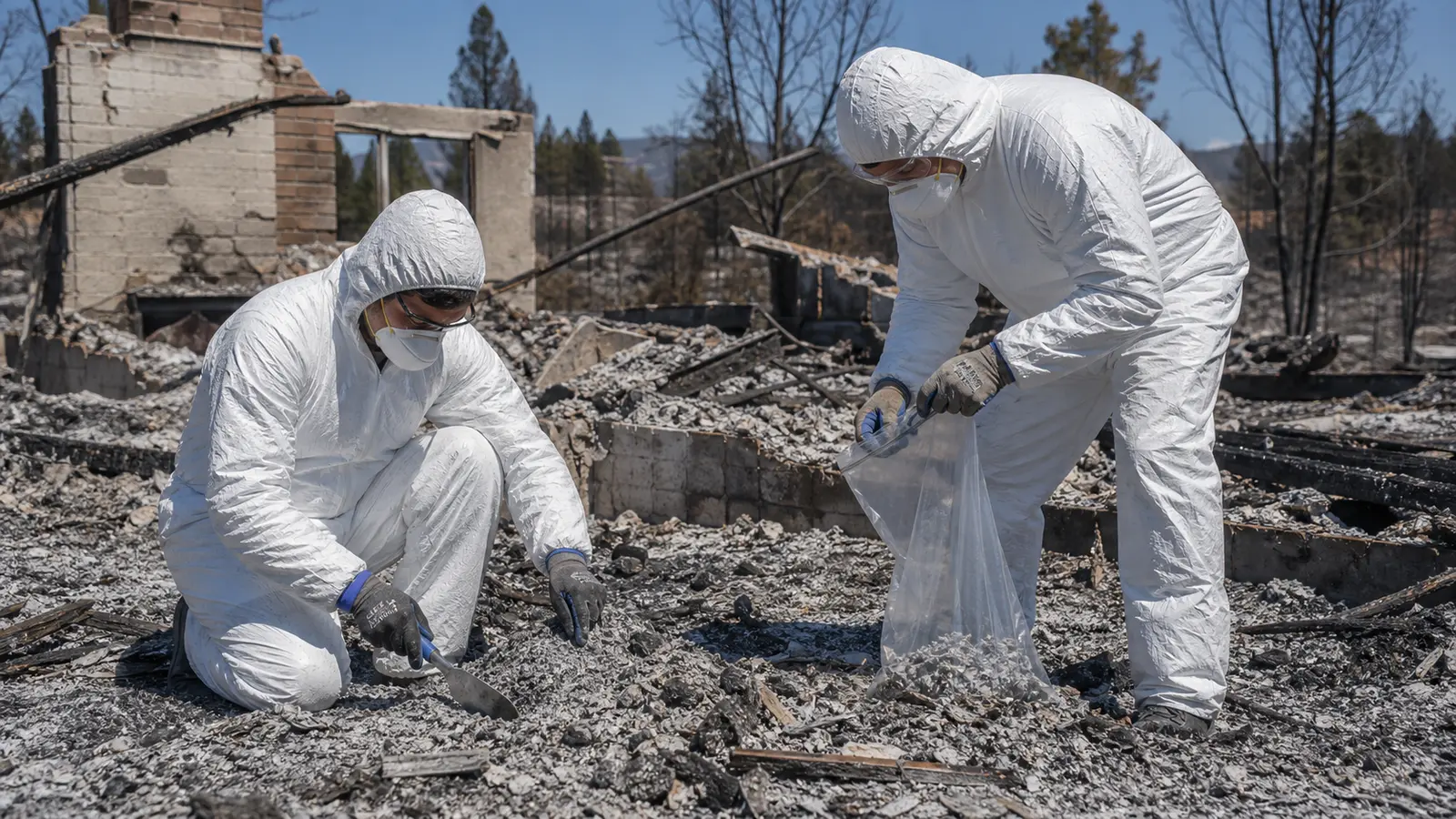
If you are entering a post-fire area or handling ash-contaminated materials, the minimum protective equipment for any level of contact:
- ✓N95 respirator (minimum) — ideally P100. Combustion particles, asbestos fibers, and ash particulates are in the size range that N95 filtration addresses. Surgical masks and cloth masks do not provide adequate protection against post-fire ash. The P100 half-mask respirator provides higher protection and is preferred for extended time at ash sites.
- ✓Nitrile or rubber gloves. Ash contact with bare skin allows dermal absorption of soluble heavy metals. Thicker rubber gloves provide better protection than thin disposable nitrile for extended work.
- ✓Disposable Tyvek coverall or dedicated clothing. Ash clings to fabric and is carried home on clothing. Clothes worn in a post-fire area should be removed at the entry point, bagged, and washed separately — not carried into a home where the contamination spreads to unaffected surfaces.
- ✓Safety glasses or goggles. Ash and combustion particles cause eye irritation and can carry particulates that cause corneal damage if rubbed in. Splash-proof goggles protect against ash contact when wind is present.
- ✗Do not use a leaf blower or dry sweeping to clear ash. Dry disturbance of ash — blowing, sweeping, or shoveling without wetting — aerosolizes fine particles and asbestos fibers, creating inhalation concentrations far higher than contact with settled ash. Wet down ash with a garden hose before any manual removal. Use HEPA vacuum equipment for indoor ash cleanup.
Cleaning Items That Survived the Fire
Not everything in a fire-affected home is a loss. Items that survived the fire but are covered in ash or smoke deposits require careful cleaning — and some categories of items should not be assumed safe regardless of their apparent condition.
Food and medications: Any food or medication stored in a fire-affected area — including sealed canned goods, bottled water, and prescription medications — should be discarded. Heat from a fire can denature medications, accelerate chemical reactions in canned food, and allow toxic gases to penetrate even sealed containers. This includes food in a refrigerator that was in a smoke-contaminated space.
Hard surfaces: Non-porous hard surfaces — glass, metal, ceramic tile — can typically be cleaned with soap and water followed by disinfectant. The cleaning water should be treated as contaminated and disposed of in a drain, not on the ground where it can carry heavy metals into soil. Wear gloves during cleaning.
Soft goods and fabric: Upholstered furniture, mattresses, carpets, and clothing exposed to heavy smoke or ash should generally be considered total losses. Smoke odor penetrates porous materials to a depth that is not addressed by surface cleaning, and ash deposits on fabric carry particulate contamination that is difficult to fully remove. Professional textile cleaning services with fire restoration experience can evaluate specific items.
Children, Pets, and Post-Fire Contamination
Children and pets have exposure pathways that adults don't fully share. Children engage in hand-to-mouth activity that increases ingestion of surface contamination. They play at ground level where ash deposits are highest. Lead and arsenic at post-fire soil concentrations represent a significantly higher proportional risk to children than to adults due to their smaller body mass and developing neurological systems.
Children should not enter post-fire areas, fire-affected homes, or neighborhoods with visible ash coverage until professional cleanup has been completed and a health clearance has been issued. This applies even to brief visits to assess the property — the duration of exposure that matters for lead and arsenic ingestion in children is shorter than most adults assume.
Pets that have walked through ash-contaminated areas carry contamination on their paws and fur. They lick their paws. They sleep in close contact with family members. A dog that has been walked through a post-fire neighborhood and returned home without being fully bathed has transported lead, arsenic, and other ash compounds into the living environment. Paws should be wiped down with a damp cloth or the animal bathed before re-entering the home after any exposure to ash-contaminated terrain.
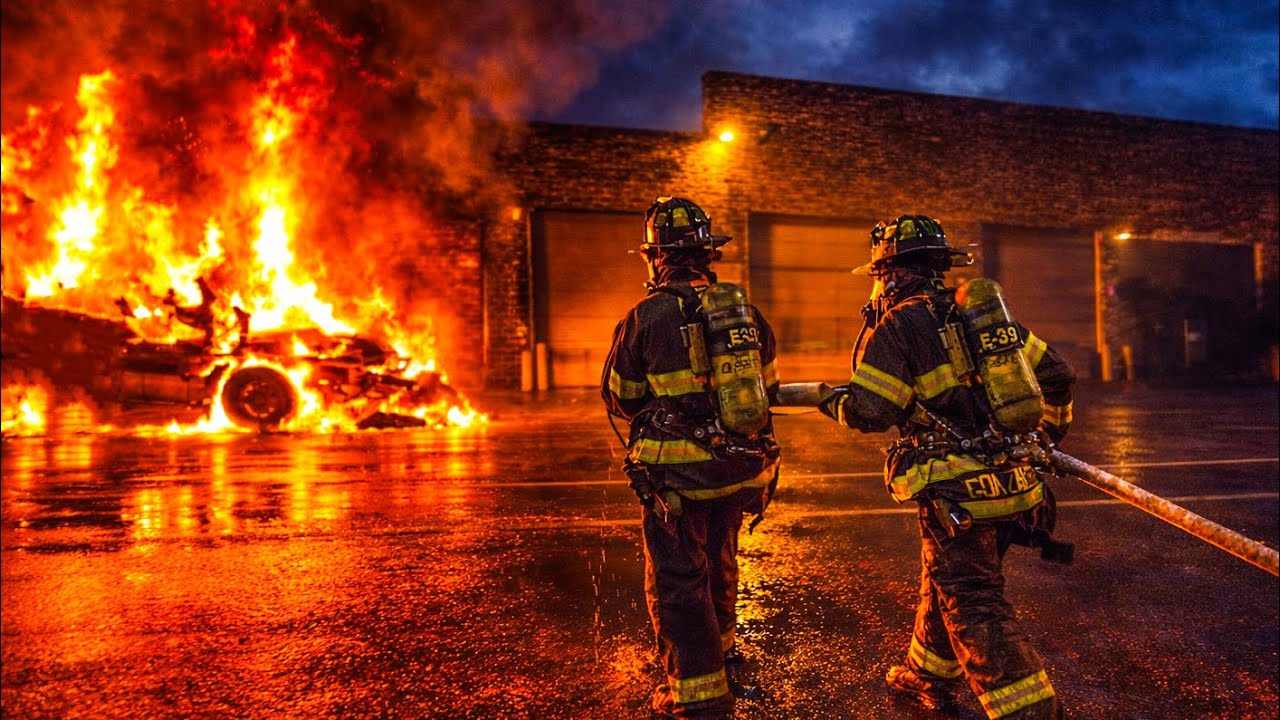
The fire service knows what post-fire ash contains because firefighters work in it, and because decades of research on firefighter cancer risk have characterized the carcinogen exposure that structure fire residue represents. The same exposure that drives decontamination protocols for firefighters after a structure fire response — shower before going home, bag the gear, wash it separately — is the exposure that residents encounter when they return to a burned neighborhood without protection.
The urgency to assess, salvage, and clean is completely understandable. The cost of doing it without protection is an acute exposure to a hazardous material mixture at concentrations that most people never encounter in any other life context. Wait for the Phase 1 clearance. Wear the N95. Wet down the ash before you touch it. The contamination will still be there after you've protected yourself.

Comments 0
No comments yet. Be the first to share your thoughts!
Leave a Comment