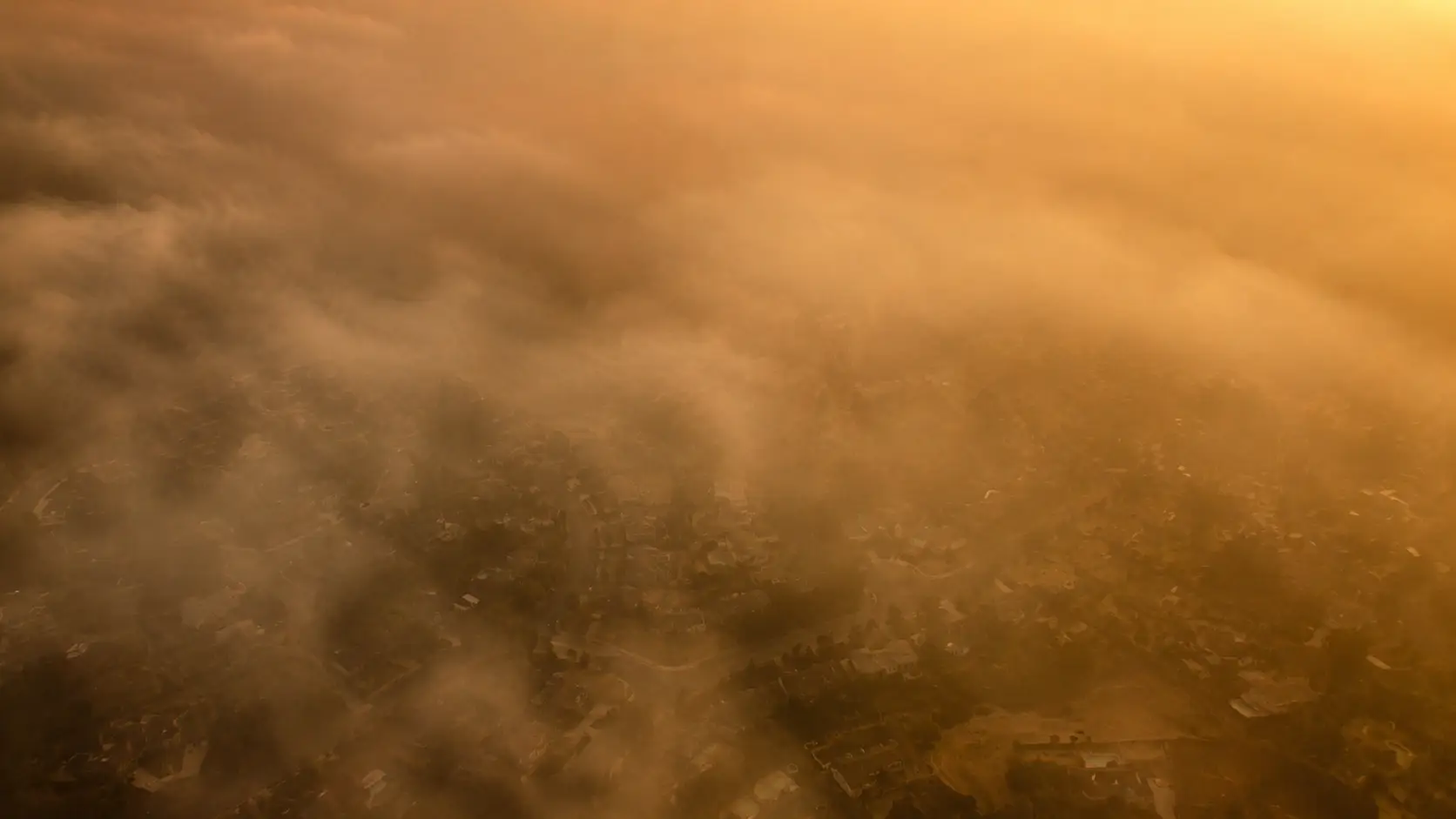
The smoke from a wildfire burning 300 miles away doesn't look like a threat. It drifts in on a light wind, turns the afternoon sky a flat, washed-out orange, and carries the faint smell of something distant burning. People in wildfire country have come to recognize this as seasonal. What the smoke is doing to the people breathing it — including firefighters who spend weeks working directly inside it — is no longer a matter of speculation.
In 2026, the body of research on wildfire smoke health effects reached a threshold that fire service physicians have been anticipating for years. Multiple independent studies now link prolonged smoke exposure not just to breathing problems and asthma attacks, but to cancer, cardiovascular mortality, neurological damage, and cognitive impairment. The occupational risk profile for wildland firefighters has changed significantly. So has the public health picture for the hundreds of millions of Americans who breathe smoke-affected air each fire season.
With 2026 already tracking at nearly double the historical average for acres burned, and smoke from western fires routinely reaching Kansas City, Chicago, and the East Coast, this stopped being a western states issue years ago. What the research published this year means — and what every firefighter and every person who breathes outdoor air during fire season needs to do with it — is what this guide covers.
In this article:
- What makes wildfire smoke different from other air pollution
- The 2026 cancer research: what new studies found
- Heart and cardiovascular risk: the evidence
- Brain, neurological, and mental health effects
- Who is at highest risk
- What firefighters know about smoke that the public doesn't
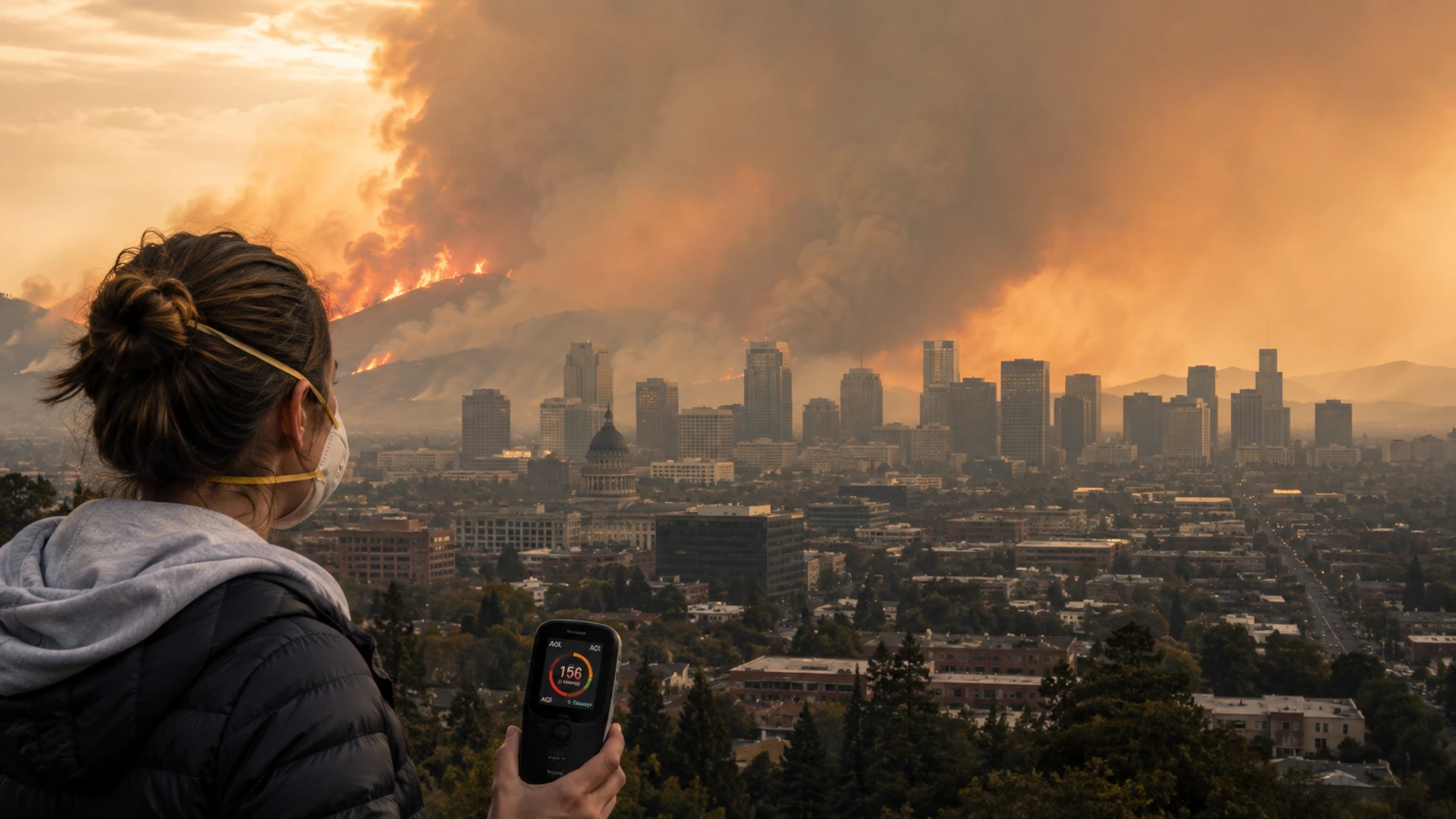
- Understanding the AQI number during wildfire season
- How to protect yourself from wildfire smoke
- Shelter in place or evacuate: making the right call
What Makes Wildfire Smoke Different From Other Air Pollution
Most air quality standards address a single category of pollutant — vehicle exhaust, industrial emissions, power plant output. Wildfire smoke is a mixture, and that specific combination is what makes it medically unusual and, according to recent research, potentially more harmful than equivalent concentrations of urban air pollution.
The primary hazard is fine particulate matter known as PM2.5 — particles smaller than 2.5 micrometers in diameter. They are small enough to bypass the nose and throat entirely, pass through the airways, and deposit directly in the gas-exchange tissue deep in the lungs. From there, the smallest fraction enters the bloodstream. Wildfire PM2.5 carries a different chemical fingerprint than urban PM2.5, and research suggests it may trigger more potent inflammatory responses in lung and vascular tissue at equivalent concentrations.
The gas-phase component of wildfire smoke adds another layer. Carbon monoxide, hydrogen cyanide, acrolein, benzene, formaldehyde, and polycyclic aromatic hydrocarbons are all produced by incomplete combustion of organic material. In wildland-urban interface fires — the kind now dominating western fire seasons — burning structures add metals, plastics combustion products, and building material residues to this baseline mixture.
Beyond particulates and gases, wildfire smoke elevates ground-level ozone in ways that are only recently being quantified at scale. Research published in Science Advances in May 2026 found that wildfire smoke raised ground-level ozone by as much as 16 percent in some U.S. regions — including the eastern United States and Midwest, far removed from any active fire. This ozone increase, invisible and undetectable without instrumentation, adds a secondary health threat to the direct smoke exposure that most people track. The same study estimates that wildfire smoke ozone alone contributes to more than 2,000 excess deaths in the United States per year.
The 2026 Cancer Research: What New Studies Found
In April 2026, researchers presenting at the American Association for Cancer Research annual meeting reported findings from a large-scale study linking wildfire smoke exposure to significantly elevated cancer risk across multiple cancer types. People with higher smoke exposure over the preceding three years showed increased rates of lung, colorectal, breast, bladder, and blood cancers. The study placed wildfire smoke alongside established carcinogens — not as a theoretical risk but as a documented one backed by multi-year population data.
For firefighters, this is not an abstract finding. Wildland firefighters working a two-week assignment on a major fire may accumulate smoke exposure equivalent to years of community-level ambient exposure. Research has consistently found that firefighters as a group carry elevated cancer rates across more than 30 cancer types. The 2026 research adds to growing evidence that smoke inhalation — not only occupational chemical exposure from structural fires — is a meaningful driver of that elevated risk.
For the general public, the implication is that the framework for thinking about wildfire smoke has shifted. The older model treated smoke exposure as primarily an acute respiratory event — one that resolved when the smoke cleared. The 2026 research, combined with prior data on long-term PM2.5 effects, suggests that repeated annual exposures over multiple fire seasons are accumulating as cancer risk in a way that resembles long-term tobacco smoke exposure, though through different biological pathways.
The comparison to tobacco is instructive at the population level. As cigarette smoking rates have declined in the United States, wildfire smoke is emerging as a significant environmental carcinogen — one that is not a behavioral choice for the communities it reaches.
Heart and Cardiovascular Risk: The Evidence
Cardiovascular effects of wildfire smoke are among the best-established in the research literature, and the mechanism is well understood. PM2.5 particles inhaled deep into lung tissue can pass into systemic circulation. Once in the bloodstream, they trigger widespread inflammation, accelerate arterial plaque development, disrupt the heart's electrical rhythms, and increase clotting factors — the same cascade of events behind most acute cardiac emergencies.
A meta-analysis in Environmental Science & Technology found that wildfire smoke carried its strongest association with cardiovascular mortality — a measurable increase in population-level cardiac deaths during high-smoke periods. For individuals with existing heart disease, hypertension, or diabetes, the relative risk is substantially higher than the population average.
The timing matters for emergency preparedness. Cardiovascular events triggered by PM2.5 exposure typically appear with a lag of one to three days after peak smoke exposure — not necessarily during the heaviest smoke itself. Fire departments and hospitals serving communities that experience major smoke events should anticipate elevated cardiac call volume in the days following peak AQI readings, not just during them. Departments that have reviewed their run data against historical AQI records have confirmed this pattern consistently.
Brain, Neurological, and Mental Health Effects
The neurological effects of wildfire smoke represent a more recent and rapidly developing area of research. PM2.5 particles reach the brain through two documented pathways: via the systemic bloodstream after crossing the lung-blood barrier, and via the olfactory nerve, where nasal inflammation creates a more direct route into neural tissue. Once present in the brain, the particles trigger inflammatory responses similar to those seen in lung and vascular tissue.
Research published in April 2026 confirmed that wildfire smoke exposure is now linked to neurological and mental health impacts alongside the longer-established cardiovascular and respiratory effects. Objective cognitive testing during high-smoke periods shows measurable declines in processing speed, working memory, and error rates in otherwise healthy adults. These are not subjective reports — they are documented performance decrements under controlled testing conditions.
The mental health dimension adds a separate layer. Communities that experience major wildfire events — or extended smoke seasons — show elevated rates of anxiety, depression, and PTSD symptoms both during and after the events. The mechanisms include the direct neurological effects of smoke exposure, the stress of evacuation and property loss, and the documented psychological toll of living under extended air quality advisories with limited ability to go outside.
For wildland firefighters working extended shifts in heavy smoke, the cognitive findings carry direct operational implications. Sound judgment under pressure is a core firefighter competency. Research-documented degradation of processing speed and working memory under sustained smoke exposure is not only a personal health concern — it is a crew safety factor that the fire service is beginning to address through work-rest guidelines and mandatory rest periods during extended incidents.
Who Is at Highest Risk
All people breathing wildfire smoke experience health effects proportional to their exposure level and duration. Certain groups face substantially elevated risk at all exposure concentrations:
- Children and adolescents face elevated risk because their lungs are still developing, they breathe more air per unit of body weight than adults, and they typically spend more time outdoors. PM2.5 exposure during lung development is associated with permanently reduced lung function in adulthood.
- Adults over 65 show higher rates of emergency department visits and hospitalization during smoke events, driven by the higher prevalence of underlying cardiovascular and respiratory conditions that amplify PM2.5's effects.
- People with asthma, COPD, heart disease, or diabetes face disproportionate acute risk. For this group, a single high-exposure day can trigger an emergency event. Research found that asthma emergency department visits increase by more than 11 percent during wildfire smoke events.
- Pregnant women face documented risk of preterm birth from PM2.5 exposure during wildfire events, along with effects on fetal development from sustained smoke exposure during pregnancy.
- Outdoor workers — agricultural workers, construction crews, landscapers, and firefighters — accumulate exposure levels far beyond what an indoor worker experiences during the same smoke event. A wildland firefighter on the line is not a community resident experiencing elevated AQI. The exposure gap between the two is orders of magnitude.
What Firefighters Know About Smoke That the Public Doesn't
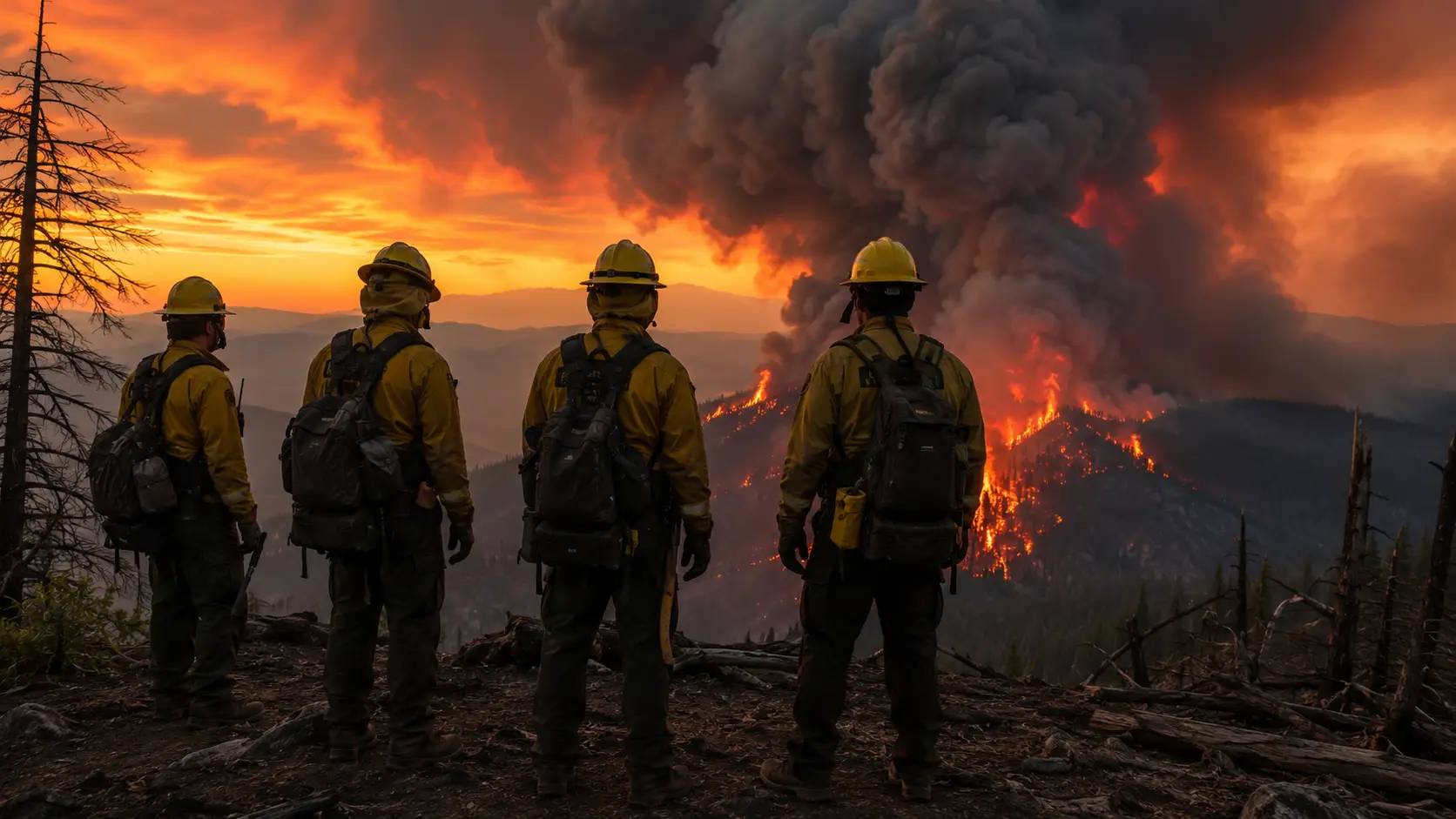
The wildland firefighting community understood smoke exposure risk at an operational level before the research literature formally documented it. The shift in how fire departments approach smoke began a decade or more before the population studies that now confirm what experienced crews already knew.
Smoke exposure on the line is not uniform
Topography, wind shifts, and fire behavior create pockets of extreme concentration that don't announce themselves visibly. A valley that looks clear from a ridgeline can hold carbon monoxide levels that will trigger a detector alarm within minutes. The dense visible smoke column that most people associate with wildfire danger is not where the highest chemical concentrations are. The visible column is where water vapor has condensed around particulates and made them visible. The invisible gases and ultrafine particles disperse more widely and reach further from the visible smoke than most people assume.
SCBA use on the fireline is not standard in the way it is for structural firefighting
Structural firefighters in SCBA are physically protected from smoke inhalation during interior operations. Wildland crews work in environments where self-contained breathing apparatus is impractical for extended operations covering miles of terrain. This means wildland firefighters accumulate chronic, repeated smoke exposure across entire fire seasons in a way that structural firefighters in SCBA-equipped departments do not. The cancer research points directly at this exposure pattern as the mechanism behind elevated cancer rates in the wildland firefighting workforce.
Fireground decontamination after wildland fires is becoming standard
Departments now deploying gross decon procedures after wildland assignments — shower protocols, gear bagging, equipment cleaning — are acting on the same evidence base driving the 2026 cancer research. A generation ago this practice did not exist in wildland fire operations. The fact that it is now being adopted reflects how substantially the understanding of smoke-related carcinogen exposure has shifted within the fire service over the past decade.
Understanding the AQI Number During Wildfire Season
The Air Quality Index — AQI — is the number on weather apps and air quality monitoring sites that tells you how clean or polluted the outdoor air is in real time. During wildfire smoke events, understanding this number accurately is the difference between making a sound health decision and either over-reacting or under-reacting to genuine risk.
For wildfire smoke, the AQI measurement that matters is PM2.5. The scale runs from 0 to 500, broken into six categories that correspond to health guidance:
| AQI Range | Category | What to Do |
|---|---|---|
| 0–50 | Good | Normal activity. No restrictions. |
| 51–100 | Moderate | Sensitive groups should reduce prolonged outdoor exertion. |
| 101–150 | Unhealthy for Sensitive Groups | People with heart or lung disease, elderly adults, and children should limit outdoor time. |
| 151–200 | Unhealthy | Everyone should reduce prolonged outdoor exertion. Sensitive groups should avoid it. |
| 201–300 | Very Unhealthy | Everyone should avoid outdoor activity. Stay indoors with air filtration. |
| 301–500 | Hazardous | Emergency conditions. All outdoor activity should be avoided. N95 required if any outdoor exposure is unavoidable. |
One important nuance for wildfire smoke specifically: current guidance from fire and health agencies recommends that higher-risk individuals treat an AQI of 100 as the threshold for restricting outdoor activity — lower than the standard category labels suggest — because wildfire smoke PM2.5 may carry greater biological toxicity per unit of concentration than the urban PM2.5 that AQI thresholds were originally calibrated for.
The most reliable real-time AQI data comes from the EPA's AirNow.gov, which aggregates readings from monitoring stations across the country. The PurpleAir sensor network provides hyperlocal data that can differ significantly from the nearest official monitor — useful for understanding what is happening at a specific location rather than an average across a region.
How to Protect Yourself From Wildfire Smoke
The right protective measures depend on how close you are to the fire, what the current AQI is, and how long you need to be exposed. These are the actions that actually reduce PM2.5 exposure — and the common mistakes that don't:
- ✓Stay indoors with windows and doors closed when AQI exceeds 100. Even a poorly sealed building substantially reduces indoor PM2.5 concentrations relative to outdoor levels. Staying inside is the single most effective thing most people can do.
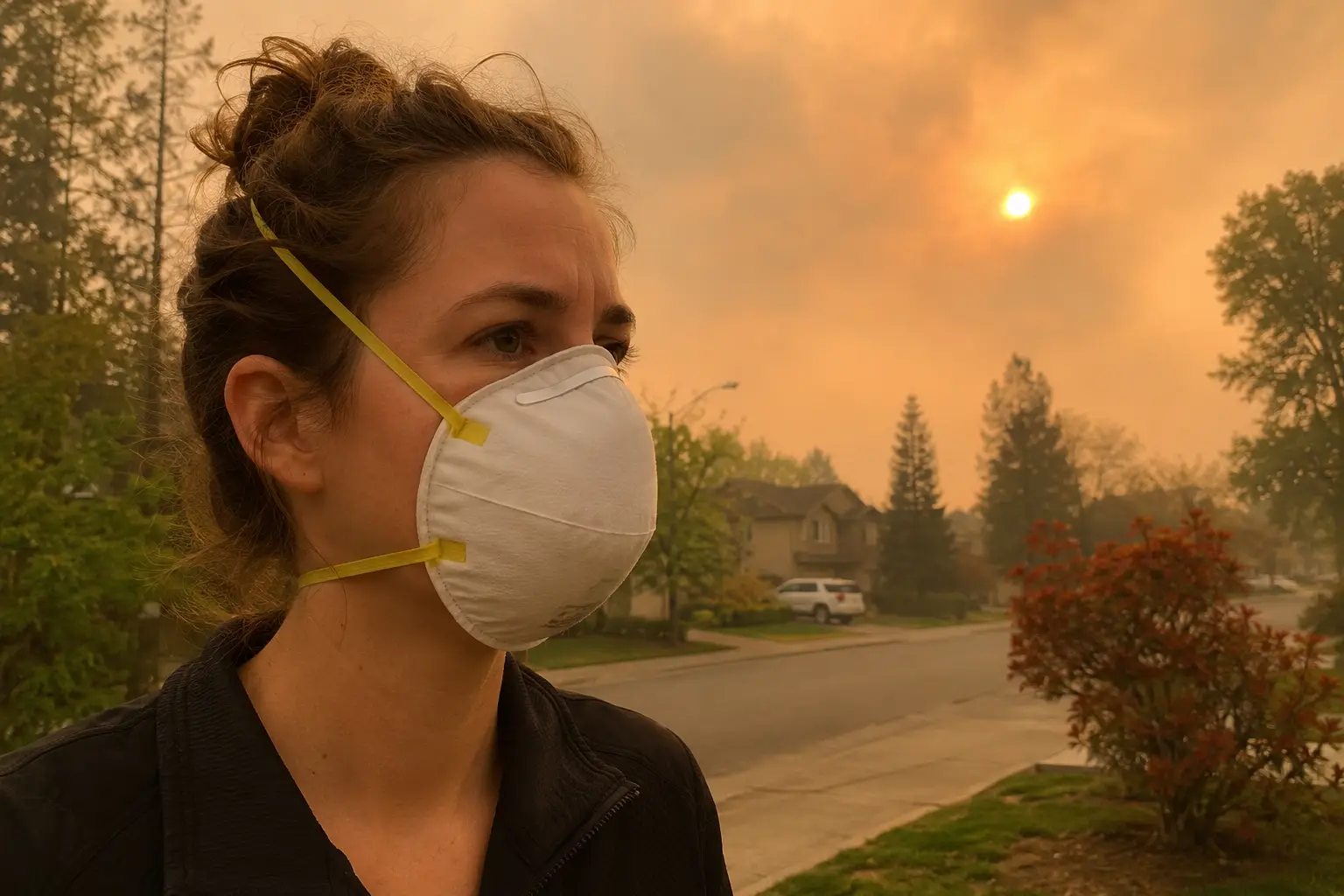
- ✓Use an N95 or P100 respirator if outdoor exposure is unavoidable. These masks, properly fitted, filter at least 95 percent of airborne particles. They must seal against the face to work. A gap at the nose bridge or cheek eliminates most of the protection.
- ✓Run HEPA air purifiers indoors. A properly sized HEPA purifier running continuously in a bedroom or main living space meaningfully reduces indoor PM2.5. Size the purifier for the room — an undersized unit running on low is far less effective than the specifications suggest.
- ✓Set your HVAC system to recirculate during smoke events, not outside air. Many central air systems default to pulling in outdoor air. During elevated AQI periods, recirculation mode keeps the indoor air from being continuously replaced with smoke-laden outdoor air.
- ✓Reduce indoor combustion sources during high outdoor smoke events. Candles, gas stoves, and fireplaces add indoor PM2.5 to an already stressed air quality situation. This is not the week to light candles or cook over high heat on a gas range without ventilation.
- ✗Do not rely on surgical masks or cloth face coverings for smoke protection. These do not filter PM2.5. They do not seal against the face. During wildfire smoke events, wearing a surgical mask outdoors provides roughly the same PM2.5 protection as wearing no mask. Only N95 or better filtering respirators with a proper seal are effective.
- ✗Do not open windows to "ventilate" during smoke events. Indoor air — even stale indoor air — is substantially cleaner than outdoor air during elevated smoke conditions. Opening windows introduces continuous fresh smoke into the space you're trying to protect.
- ✗Do not exercise outdoors when AQI exceeds 150. Physical exertion increases breathing rate and tidal volume — you inhale significantly more PM2.5 per minute during exercise than at rest. An AQI that is manageable during light walking becomes a meaningful exposure event during a run.
Shelter in Place or Evacuate: Making the Right Call
Wildfire smoke forces a different decision than a direct fire threat. When the fire is not nearby but the smoke is, the question becomes: is the health exposure risk from staying lower than the exposure risk from traveling through heavy smoke to reach cleaner air?
If you are far from the fire and receiving ambient smoke — the common situation for millions of Americans during western fire season — sheltering in a well-sealed building with a HEPA purifier running is almost always the correct choice. Driving through heavy smoke with a car's outside air intake open increases your personal exposure significantly during transit. Buildings, even poorly sealed ones, reduce indoor PM2.5 concentrations well below outdoor levels.
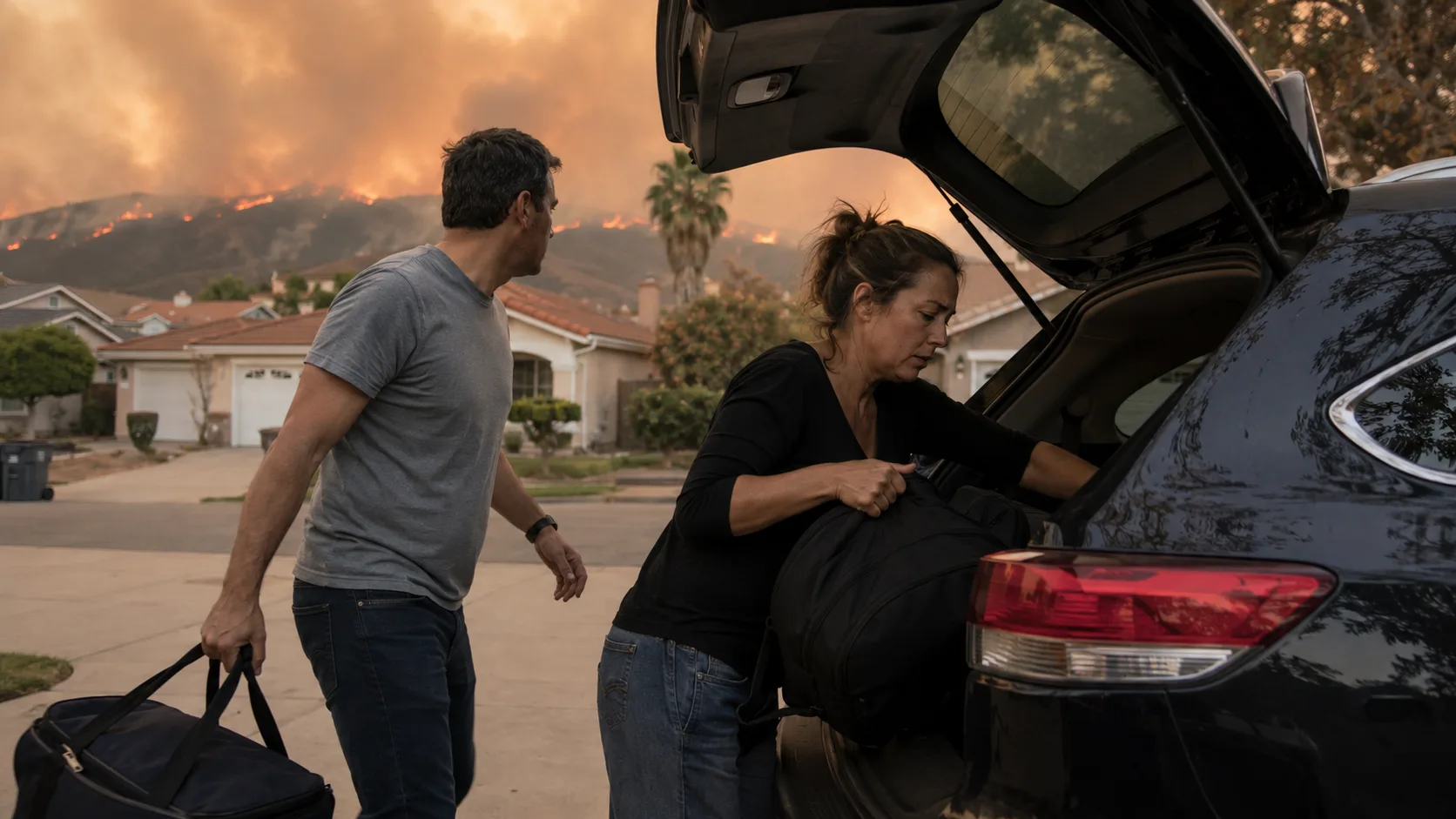
If the fire is close enough that evacuation orders are a real possibility, the correct move is to prepare to leave before the order comes. This is the principle that every firefighter who has worked evacuations will tell you: the people who leave during a warning stage, before the mandatory order, are the ones who leave safely and on their own timeline. The people who wait for the mandatory order frequently find themselves in evacuation traffic that moves slower than the fire. That calculation has killed people in every major WUI fire of the past decade.
If you must travel through heavy smoke during an evacuation, set your vehicle's air system to recirculate — not outside air — and run it on high. Keep windows closed. If your route requires extended time in extreme smoke and you have an N95 in the vehicle, wear it. These steps meaningfully reduce in-vehicle exposure during transit through smoke-affected areas.
Wildfire smoke is no longer a western states issue, a brief seasonal nuisance, or a concern only for people who feel immediate symptoms. The evidence in 2026 points to cumulative seasonal exposure as a long-term health risk in the same category as chronic environmental pollution — one that firefighters have been absorbing at occupational levels for decades, and one that communities across the country are now accumulating during smoke events that reach their neighborhoods without any fire in sight.
The right response is not alarm. It is awareness, preparation, and the same clear-eyed hazard recognition that the fire service applies to every documented occupational risk. Know your AQI. Have N95 masks on hand before fire season. Have a plan that distinguishes between sheltering and evacuating. And know that the smoke you can smell but not see is doing something measurable, whether or not it feels like it in the moment.
Comments 0
No comments yet. Be the first to share your thoughts!
Leave a Comment