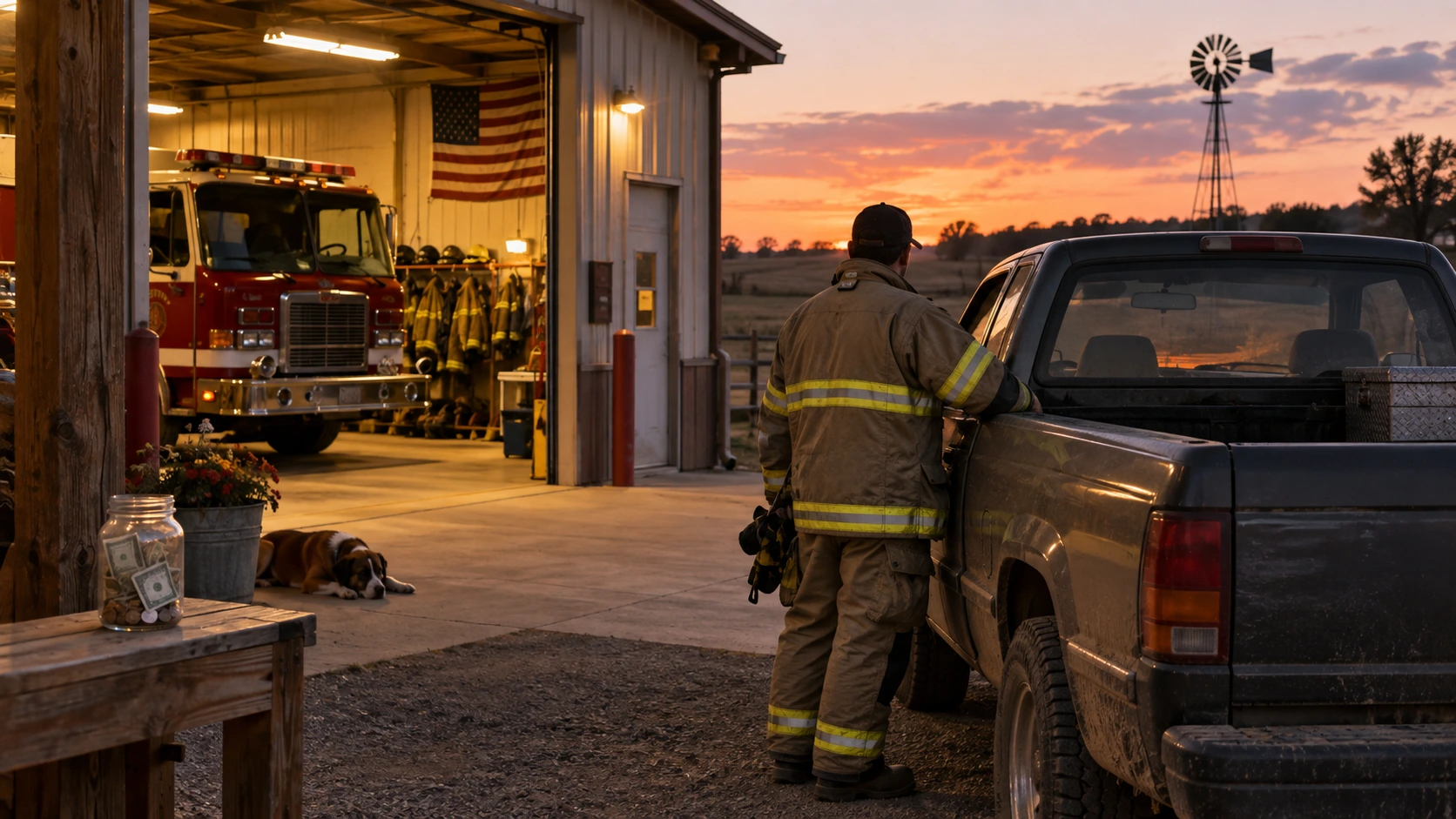
Short answer: Not a salary or hourly wage — that's what legally separates a "volunteer" from an "employee" under federal law. But most volunteer firefighters do receive some form of compensation: a small per-call payment (often $2–$20), a monthly or annual stipend, reimbursement for gas, gear, or training costs, and often long-term benefits like a modest pension or tax incentives. Around 70% of firefighters in the U.S. are volunteers, and compensation structures vary enormously by state and department.
"Volunteer" firefighter doesn't always mean unpaid in every sense — it means something specific under federal labor law, and the reality of compensation is more nuanced than a simple yes or no. Here's how it actually works.
Why Volunteer Firefighters Can't Be Paid a Wage
Under the federal Fair Labor Standards Act (FLSA), paying someone an hourly wage or salary for their work generally makes them a legal "employee," entitled to minimum wage and overtime protections. To preserve volunteer status, the U.S. Department of Labor has established what's known as the "20 percent rule": a fire department can pay a volunteer a stipend or fee up to roughly 20% of what a full-time firefighter would earn for comparable work, without that payment being considered a wage that would reclassify them as an employee. For example, if a full-time firefighter position pays $50,000 a year, a department could pay a volunteer an annual stipend of up to around $9,500 and still keep them classified as a genuine volunteer.
Common Forms of Volunteer Firefighter Compensation
| Compensation type | What it looks like |
|---|---|
| Per-call payment | A small flat amount (commonly $2–$20) for each call responded to, mainly intended to offset gas and wear on personal vehicles |
| Monthly or annual stipend | A fixed periodic payment, sometimes scaled by rank or call volume, capped under the FLSA 20% rule |
| Training/shift stipends | Payment for attending scheduled training or covering a staffed shift, separate from emergency call pay (some states, like New York, mandate minimum training stipend amounts) |
| Expense reimbursement | Coverage for uniforms, gear, or training course costs, generally not counted toward the 20% cap since it's a reimbursement, not compensation |
| Long-term benefits | Modest pensions after years of service, life/accident insurance, tuition reimbursement, and state tax credits or exemptions in some states |
It Varies a Lot by State and Department
Compensation structures for volunteers are set locally, so there's no single national standard. Some real examples: in South Carolina, volunteers may receive stipends, per-call payments, tax incentives, and pension access after enough years of service. In Texas, some departments pay volunteers for completed calls and training sessions specifically to help with recruitment. In Pennsylvania, where the number of volunteer firefighters has been cut roughly in half since 2000, some municipalities like Plum have introduced shift-based stipend programs (for example, $75 for a 4-hour daytime shift) specifically to address staffing shortages. New York requires the state Office of Fire Prevention and Control to help fund mandated training stipends for volunteer firefighters.
Related reading: Compensation isn't the only place volunteer status creates a gap — coverage after a line-of-duty injury varies significantly for volunteers too. See our guide on what happens if a firefighter is injured on duty for the full picture on workers' comp and presumptive law coverage for volunteers specifically.
Volunteer vs. Career: The Bigger Picture
Roughly 70% of firefighters in the United States are volunteers, and volunteer departments are especially common in smaller communities under about 25,000 people, where staffing an all-career department isn't financially feasible. Career firefighters, by contrast, are paid a full salary (commonly averaging somewhere in the $25/hour range depending on the region and department, before overtime), work firefighting as their primary profession, and generally have access to a full pension system on the scale described in our firefighter pension and retirement benefits guide. Most volunteers hold separate full-time jobs and take on firefighting as a form of community service, with compensation functioning more as a modest thank-you and expense offset than as a livable income.
Bottom line: Volunteer firefighters generally don't get paid a wage, but many receive per-call payments, stipends, reimbursements, or long-term benefits — the specifics depend entirely on your state and department. If you're considering volunteering, ask your local department directly what compensation, if any, they offer.


Comments 0
No comments yet. Be the first to share your thoughts!
Leave a Comment