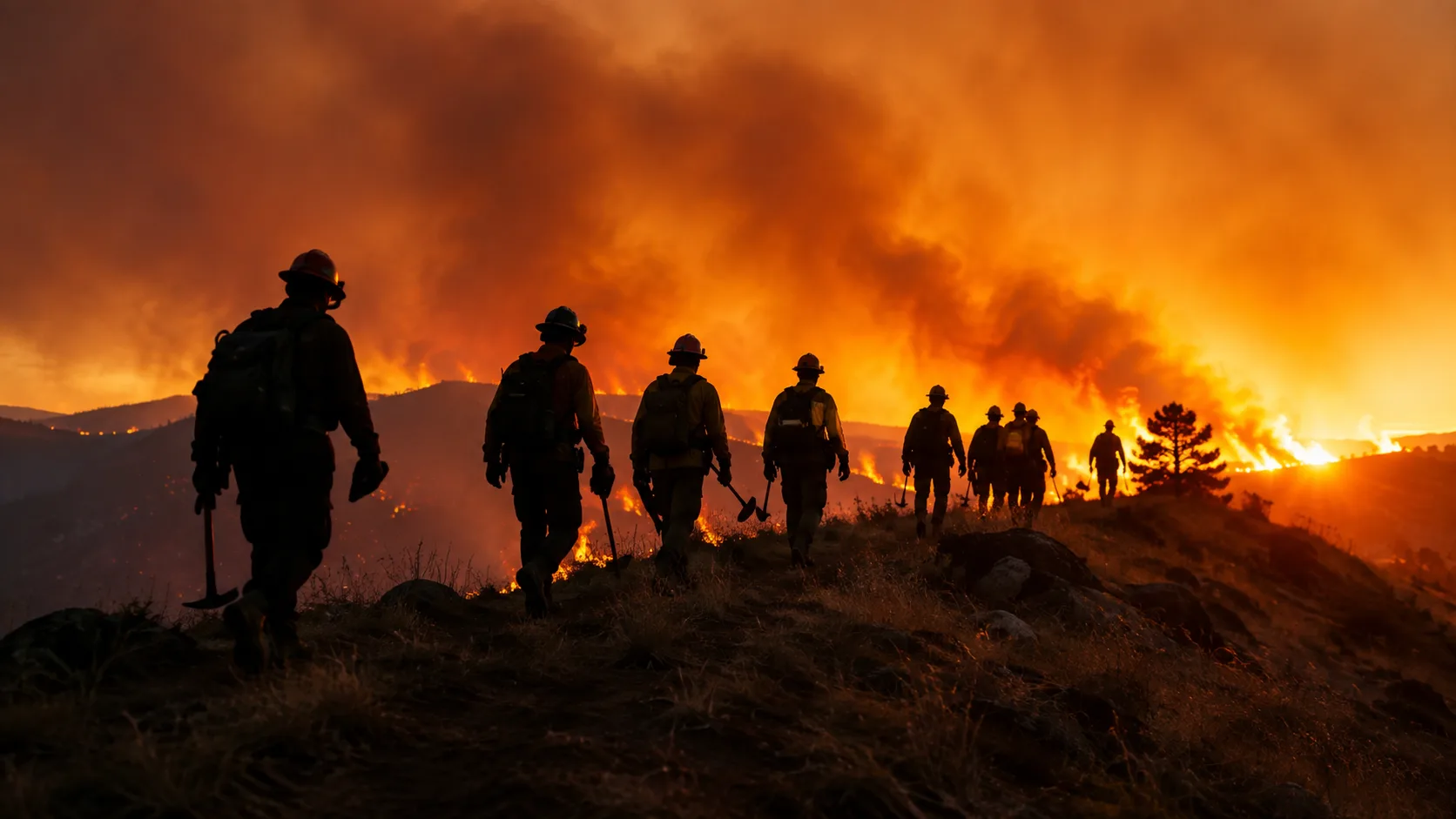
Short version: Hotshot crews are the 20-person elite hand crews sent to the most dangerous, highest-priority sections of the largest wildfires — the same designation Spokane's Autumn Lane Fire earned this month at the national level, hotshot crews are the ground teams assigned to fires with that status. You cannot apply directly to become a hotshot with zero experience: nearly everyone spends at least one full season on a Type 2 handcrew, engine crew, or with a volunteer or academy-trained department first. Pay is modest on paper and misleading without the overtime, hazard, and per diem numbers layered on top. Here's the real path in, the physical standard, and what a season actually pays.
In this article:
What a Hotshot Crew Actually Is
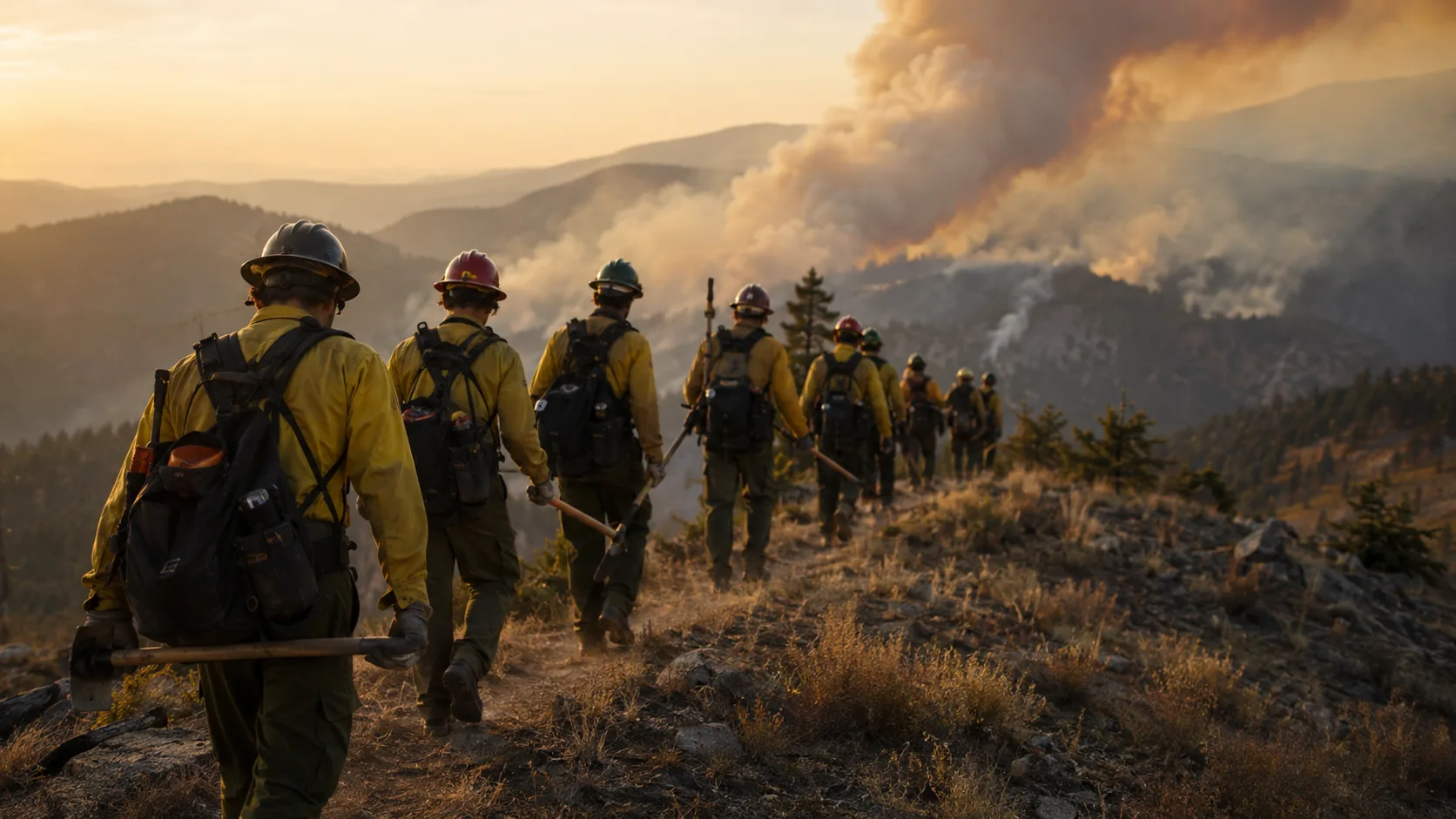
An Interagency Hotshot Crew (IHC) is a standing team of 20 to 30 wildland firefighters trained and equipped to handle the most demanding, highest-priority sections of the largest wildfires in the country, and occasionally abroad. They're organized by the U.S. Forest Service, National Park Service, Bureau of Indian Affairs, Bureau of Land Management, and a handful of state agencies, with the National Interagency Fire Center coordinating deployment nationally. Hotshots specialize in building hand-cut fireline in terrain too steep or remote for engines or dozers, often working self-sufficiently for days at a time with minimal outside logistical support.
The designation matters because of where crews get sent: when a fire is elevated to the nation's top wildfire priority, the way the Autumn Lane Fire near Nine Mile Falls was this month, hotshot crews are typically among the first specialized resources pulled in alongside large air tankers and additional strike teams. For general background on wildland firefighting as a career track, including the Red Card system and S-130/S-190 basic training, see our full guide to how to become a wildland firefighter. This article focuses specifically on the hotshot tier above that entry point.
The Real Path In: Nobody Starts as a Hotshot
Hotshot positions are not entry-level. Crews consistently report that most successful applicants arrive with three to five or more seasons of prior wildland experience, most commonly gained on a Type 2 handcrew, a fire engine module, a volunteer department, or after completing a fire academy. A handful of crews will consider a strong entry-level candidate for a rookie slot, but competition for those spots is intense, and geographic flexibility plus early application timing matter more at that stage than experience does.
The paperwork path is the same as any federal wildland firefighter role: candidates must be 18 or older, complete foundational classes (S-130, S-190, L-180, I-100, and I-700), and pass the Arduous Work Capacity Test to be issued a Red Card, the qualification card that certifies a firefighter for fireline duty. Federal wildland fire job postings for a given summer season typically open on USAJobs.gov between November and February of the preceding winter, and positions fill fast — applying in November or December, rather than waiting for spring, is the difference most successful applicants point to.
The Physical Standard: the Arduous Pack Test
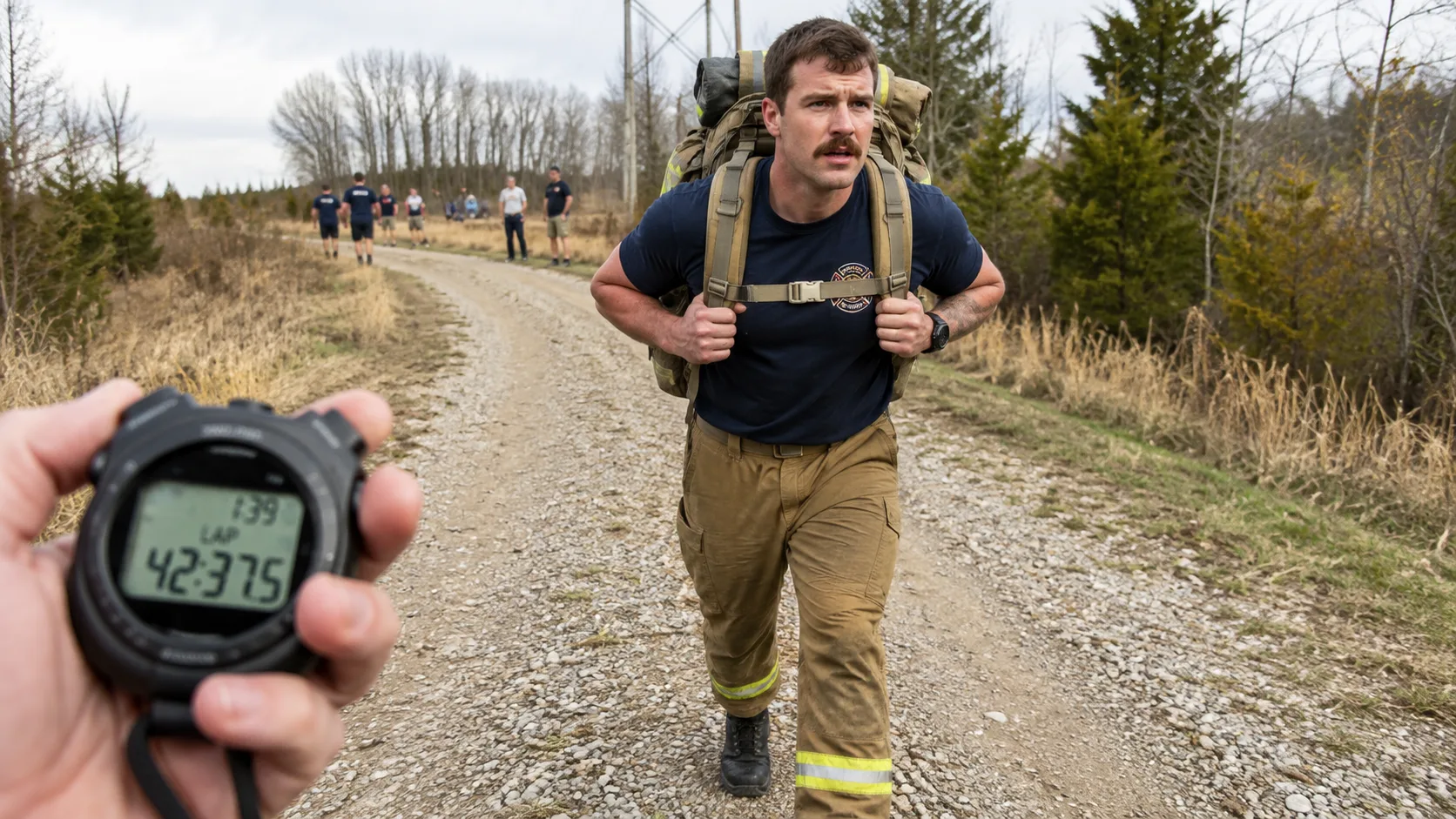
The Arduous Work Capacity Test, universally known as the Pack Test, is the baseline every hotshot candidate must clear: carrying a 45-pound pack over 3 miles in 45 minutes or less. That's a floor, not a target. Individual crews commonly layer their own additional fitness benchmarks on top, and national reference standards used by many crews include a 1.5-mile run in under 10 minutes 35 seconds, 40 sit-ups in 60 seconds, and a chin-up count scaled to body weight. Candidates who show up at the passing minimum, rather than well above it, tend to struggle once the season's actual pace — hiking with tools and gear for hours, then digging line for hours more — starts.
What a Hotshot Season Actually Pays
Base hourly pay for entry-level federal wildland firefighter positions has run roughly $21 to $23 an hour in recent federal postings, and non-federal or state hotshot crew wages have landed in a similar $19–$29/hr seasonal band. On its own, that number understates what the job actually pays, because federal wildland firefighter compensation is built from several stacked components rather than base pay alone.
| Pay Component | What It Covers |
|---|---|
| Base pay | Roughly $21–$23/hr for entry-level federal positions as of 2026 postings; higher with grade and step increases. |
| Hazard pay | A standard federal hazard differential applied on top of base pay for time spent in genuinely hazardous fireline conditions. |
| Overtime | The single biggest driver of total earnings. Hotshot crews commonly log 1,000+ overtime hours in a season, with 1,200+ increasingly common in recent years. |
| Per diem | A daily meal/incidentals allowance (around $68/day at 2026 standard federal rates) paid when assigned away from home base, plus covered lodging. |
Layered together, a full six-month fire season on a hotshot crew commonly lands somewhere between $40,000 and $80,000 depending on how active the season is and how much overtime a crew actually gets, with a genuinely busy fire year able to push higher. A short three-to-four month season, more typical for a student or first-year crewmember, sits well below that range. It's also worth knowing that federal wildland firefighter pay is actively being restructured in 2026 with the creation of the United States Wildland Fire Service, which is intended to move wildland firefighters onto a dedicated pay scale rather than the general GS system — candidates should check current USAJobs postings directly for up-to-date figures rather than relying on any single year's numbers.
The Career Ladder Inside a Crew
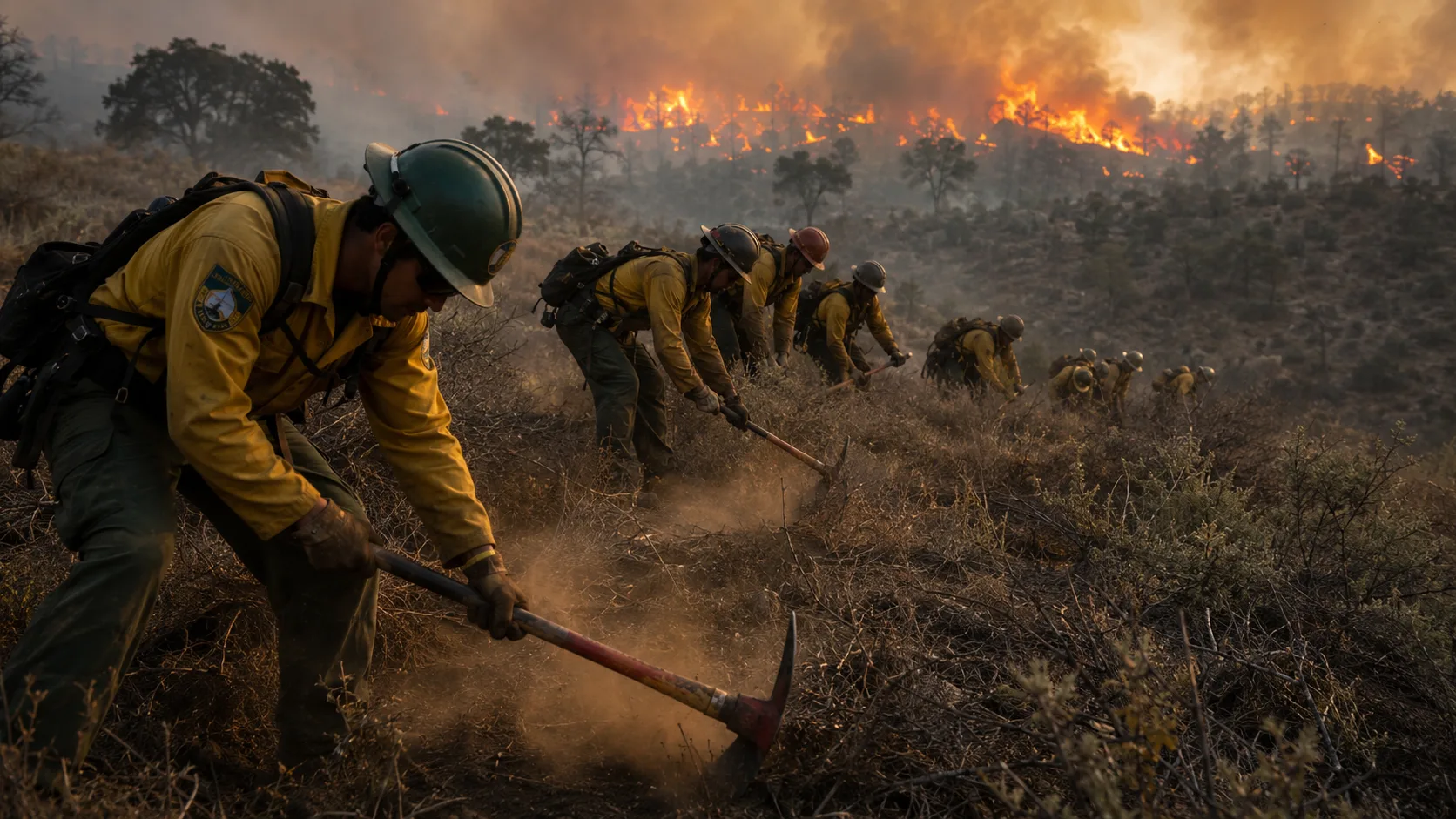
A typical IHC has a defined leadership structure: a crew superintendent at the top (a career position recently elevated from a GS-9 to a GS-10 target grade across the federal system), an assistant superintendent/captain, at least two senior firefighters who hold career (not seasonal) positions, and squad bosses who provide day-to-day leadership within the crew. Seasonal crewmembers form the base of the roster and are the entry point for nearly everyone. Moving up that ladder requires additional Red Card qualifications — a Firefighter Type 1/Squad Boss (FFT1) qualification is the typical minimum for a squad boss or senior firefighter role — earned through repeated seasons, task books, and completed training, not simply time served.
Getting Hired: Quick Checklist
- ✓Get at least one season on a Type 2 handcrew, engine, or volunteer department first — this is how nearly every current hotshot got their start.
- ✓Complete S-130, S-190, L-180, I-100, and I-700 to become Red Card eligible before you apply.
- ✓Train well past the Pack Test minimum — passing at 45 minutes exactly is not the same as being ready for the season.
- ✓Apply on USAJobs in November or December, not spring — most crews fill their rosters well before March.
- ✓Stay geographically flexible — willingness to relocate for the season widens your options far more than experience does at the entry level.
- ✗Don't expect to apply straight into a hotshot crew with zero wildland experience — it happens occasionally, but it's the exception, not the plan to bank on.
- ✗Don't budget your season around base pay alone — overtime and hazard pay are where most of a hotshot's actual annual income comes from.
The role earns its reputation honestly: long assignments, physically brutal work, and real risk, offset by pay that only makes sense once overtime and hazard differentials are counted, and by being part of the crews sent to handle the fires everyone else is being evacuated from. For the broader entry path into wildland firefighting before aiming at a hotshot crew specifically, our how to become a wildland firefighter guide covers the Red Card system and first-season basics in full.

Comments 0
No comments yet. Be the first to share your thoughts!
Leave a Comment