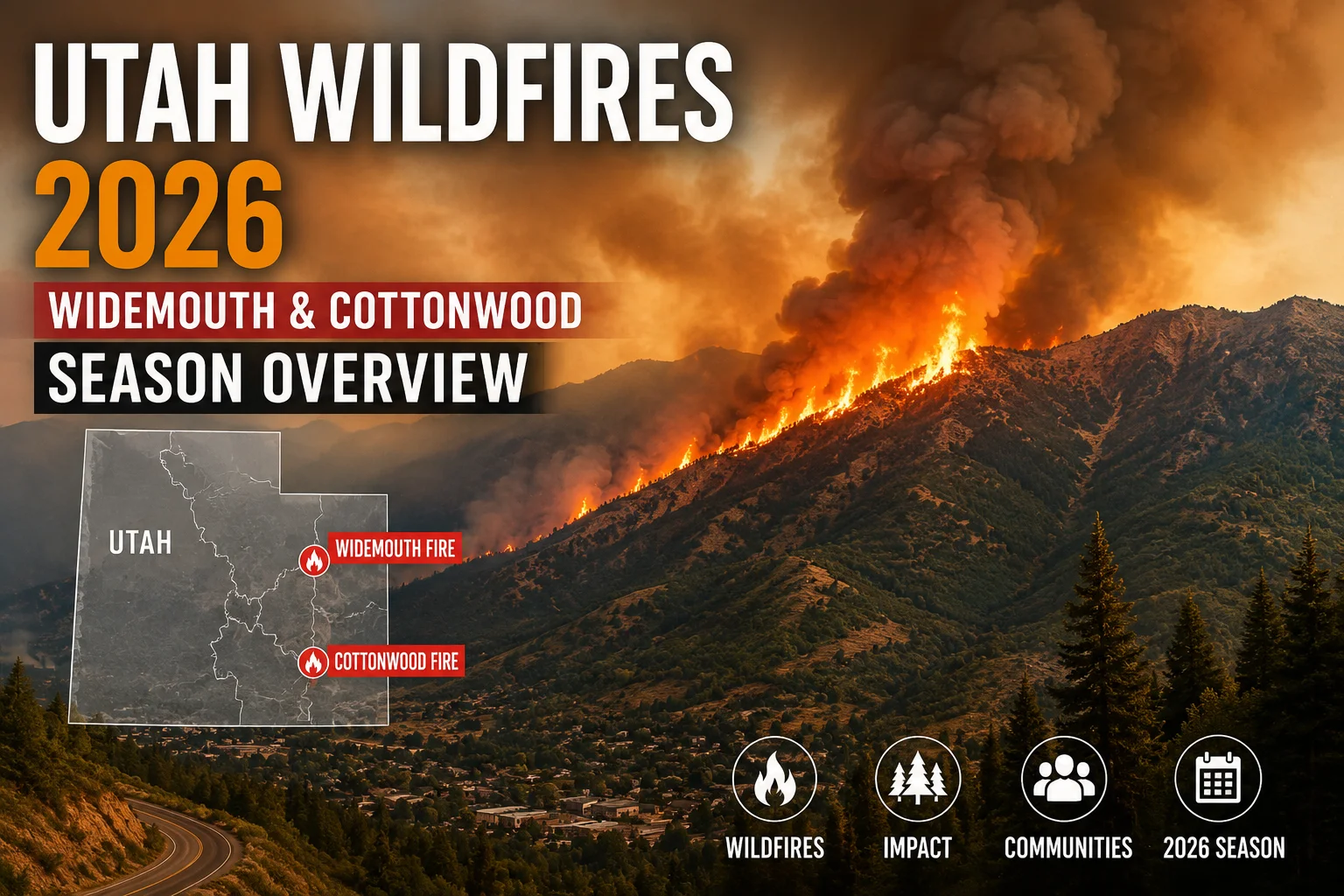

Where things stand (Aug 20, 2026): Utah has 8 active wildfires covering roughly 247,000 acres, with 932 personnel assigned statewide. The Great Basin region — Utah, Nevada, Idaho, and part of Wyoming — has been at National Preparedness Level 5 of 5, the federal system's highest tier, for weeks. Two firefighting pilots have died, about 150 structures have burned, and 2026 now ranks as the second-worst wildfire season in Utah's recorded history.
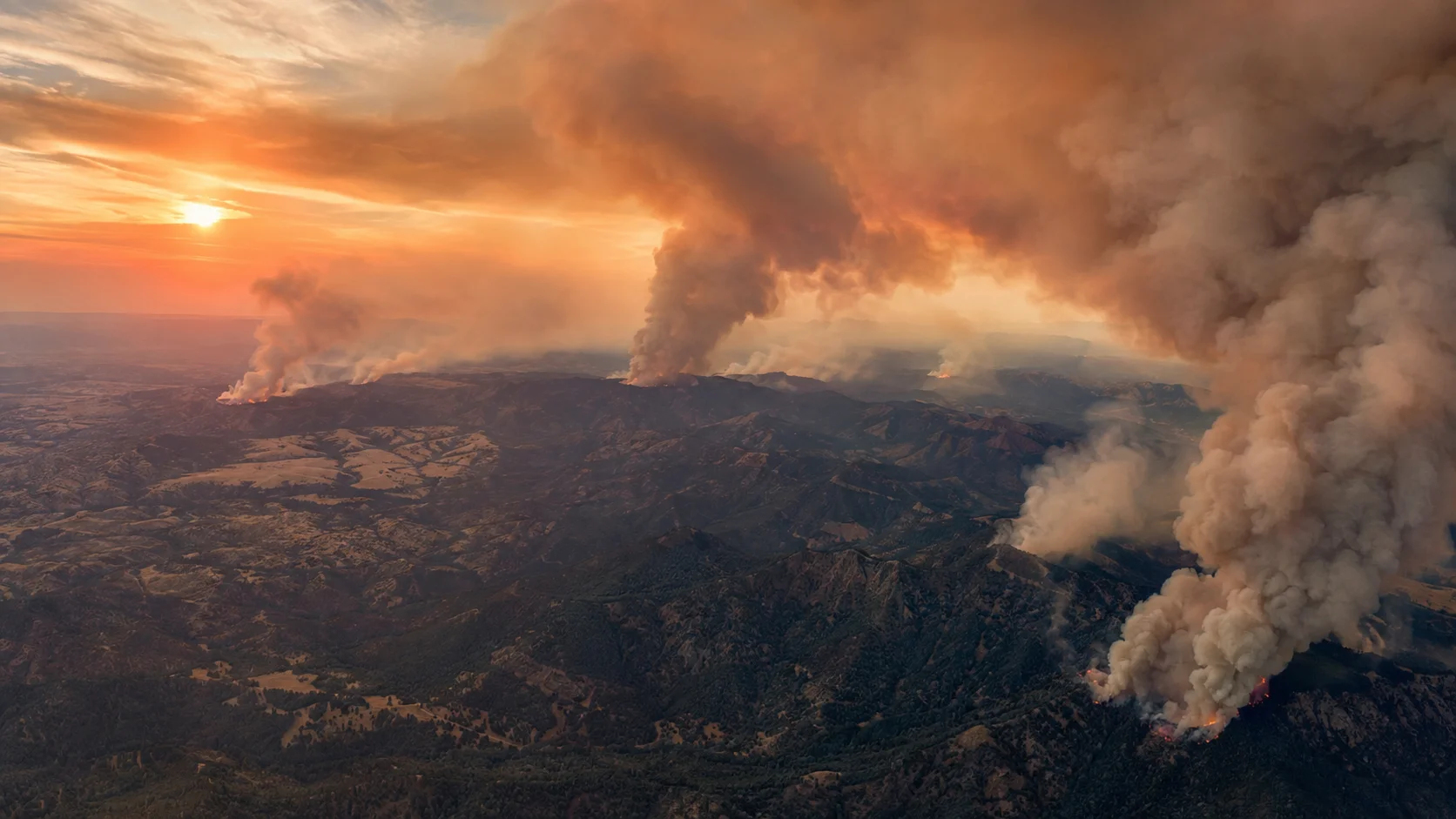
By early August, Utah's 2026 fire season had already burned close to 475,000 acres statewide — a total surpassed in state history only by the 629,212 acres burned in 2007. Governor Spencer Cox declared a state of emergency as three separate fires each approached or passed the 100,000-acre mark within the same summer, an outcome Cox himself called nothing to be proud of. The season's two deadliest chapters came weeks apart: a June burnover incident on the Knowles Fire near the Utah-Colorado border claimed four firefighters' lives, and on August 7, two helicopter pilots were killed fighting the Widemouth 2 Fire — the first fire-related deaths on Utah soil this season. Below is where each of the state's active fires stands today, and what happened to get there.
KUTV 2News coverage of the Widemouth 2 Fire breaching containment lines near Kanosh in early August.
In this article:
- Widemouth 2 Fire — Utah's largest fire of 2026
- The helicopter crash that killed two pilots
- Cottonwood Fire — the season's most destructive
- Rocky Canyon Fire — nearing full containment
- Black Canyon Fire — Australian crews join the fight
- Smaller and newer fires to know
- Why 2026 got this bad
- How to stay informed
Widemouth 2 Fire: Utah's Largest Fire of 2026
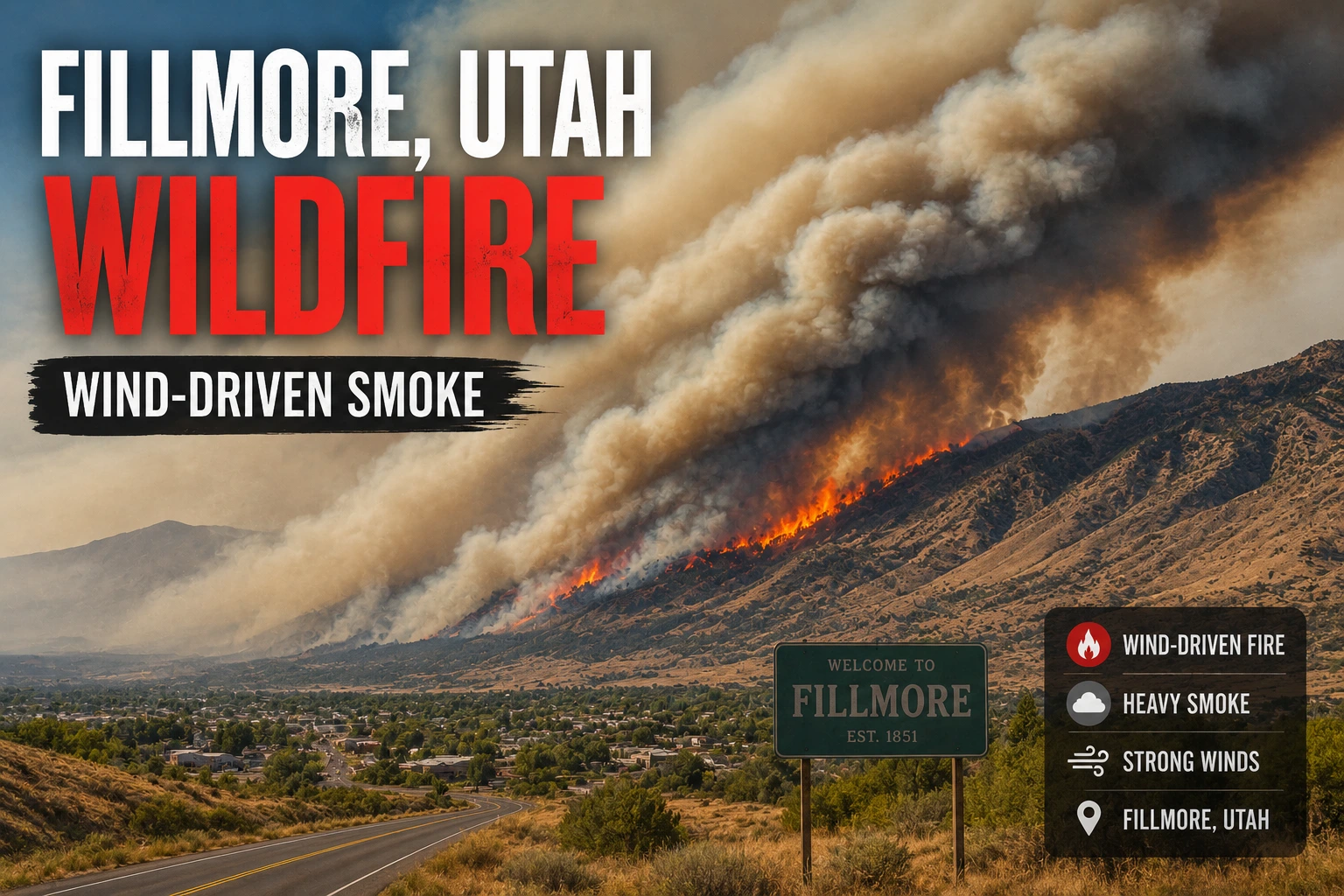
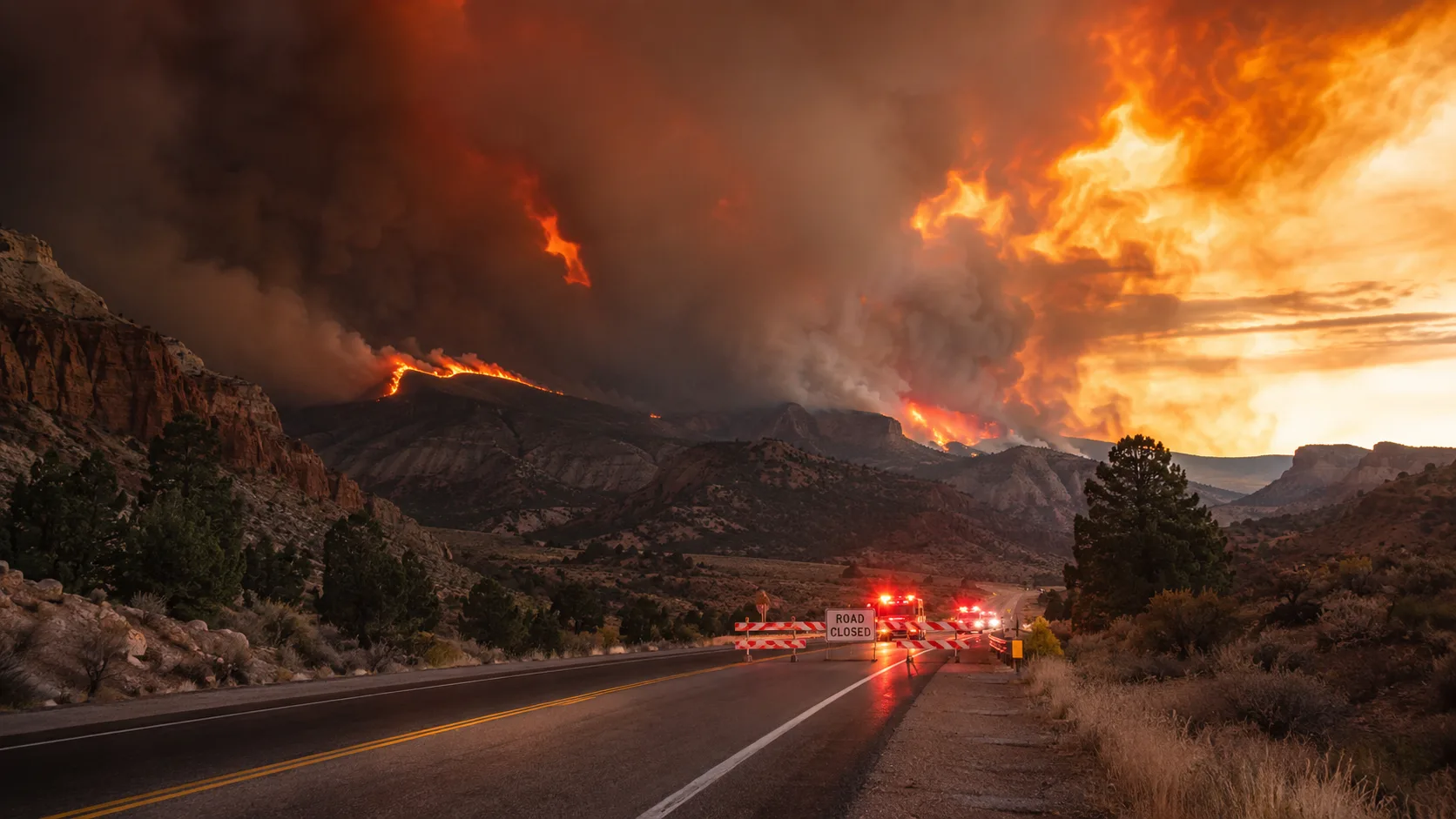
The Widemouth 2 Fire began with a lightning strike on July 27 in the Fishlake National Forest near Kanosh, in Millard County, and for its first few days looked like a routine, contained lightning fire. That changed fast. By August 2 it had grown sixfold overnight to more than 36,000 acres, and on August 3 wind-driven fire behavior pushed it nearly 10 miles toward the city of Fillmore in a single push, prompting a GO evacuation order for part of Kanosh and a local emergency declaration from the mayor. Video captured during the firefight even showed a fire tornado spinning through the flames as the blaze made runs through the forest canopy. By mid-August the fire had passed both the Cottonwood Fire and the Babylon Fire to become Utah's largest wildfire of the season, eventually mapping out at more than 129,000 acres — an area larger than the city of Salt Lake City. More than 100 cattle were killed and multiple firefighters were injured, but officials have consistently credited the response with preventing any loss of structures. At its peak the fire had more than 600 personnel, 23 engines, nine dozers, and seven helicopters assigned; as containment climbed past 90%, that footprint has shrunk to a much smaller mop-up crew.
The Helicopter Crash That Killed Two Pilots
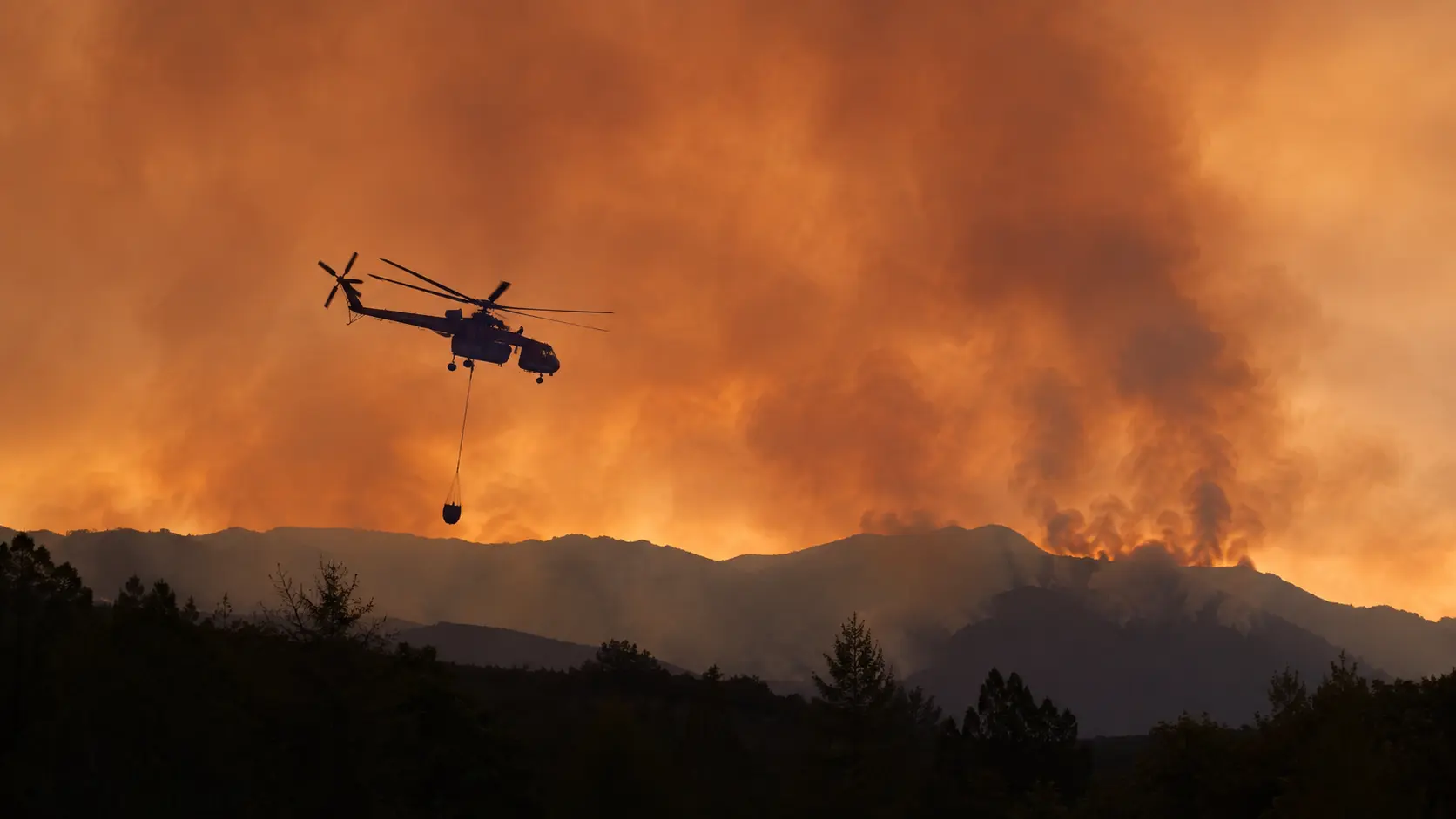
At approximately 10:40 a.m. on August 7, a Sikorsky S-64 "Skycrane" helicopter — contracted to the U.S. Forest Service through Helicopter Transport Services — crashed in steep, rugged terrain near Richfield while working the southeastern edge of the Widemouth 2 Fire. The crash ignited a brush fire around the wreckage, and extreme fire conditions kept ground search-and-rescue teams from safely reaching the site for more than a day. Sevier County Sheriff Nathan Curtis said crews attempting to hike in on foot were pulled back once active flames moved between them and the crash site, a decision he called necessary to avoid losing more lives. The National Interagency Fire Center confirmed Saturday, a day after the crash, that both the pilot and crewmember had died; their bodies were recovered that evening and escorted by Utah Highway Patrol to the state medical examiner's office. Governor Cox mourned the loss publicly, writing that the pilots gave their lives protecting the state. The FAA and NTSB are investigating the cause of the crash.
It was the first fire-related loss of life on Utah soil this season, but not the first of the summer tied to Utah's firefighting effort. In June, four firefighters died — three at the scene and a fourth weeks later from injuries — in a burnover incident on the Knowles Fire, part of a fire complex near the Utah-Colorado border. Utah's wildland fire community has now lost six people this season, a toll officials and Cox himself have repeatedly called a sobering reminder of how dangerous wildland firefighting is, even with modern equipment and training.
Cottonwood Fire: The Season's Most Destructive
The Cottonwood Fire, burning near Beaver in Beaver County, was the first of Utah's 2026 fires to approach 100,000 acres and at one point was the largest wildfire burning anywhere in the country. It's also the most destructive fire of the season by far: officials estimate it destroyed roughly 150 cabins, condominiums, and ski lodge buildings before firefighters gained the upper hand. As of today the fire is mapped at 97,464 acres and 95% contained, with just 42 personnel still assigned to mop-up and monitoring work — a steep drawdown from the hundreds who worked it at the height of the fight. The U.S. Forest Service has since committed $18 million to support recovery efforts for communities affected by the fire.
Rocky Canyon Fire: Nearing Full Containment
The Rocky Canyon Fire, burning southwest of Henefer on the Morgan and Summit county line, is a human-caused fire that has burned 16,464 acres. Containment has climbed steadily — from 23% when we first covered this fire to 88% as of today — with 170 personnel still assigned to secure the remaining line. Utah Army National Guard UH-60 Black Hawk crews have flown water-bucket missions on Rocky Canyon after an earlier deployment to the Black Canyon Fire, dropping roughly 530 gallons per pass to slow the fire's spread in support of ground crews.
Black Canyon Fire: Australian Crews Join the Fight
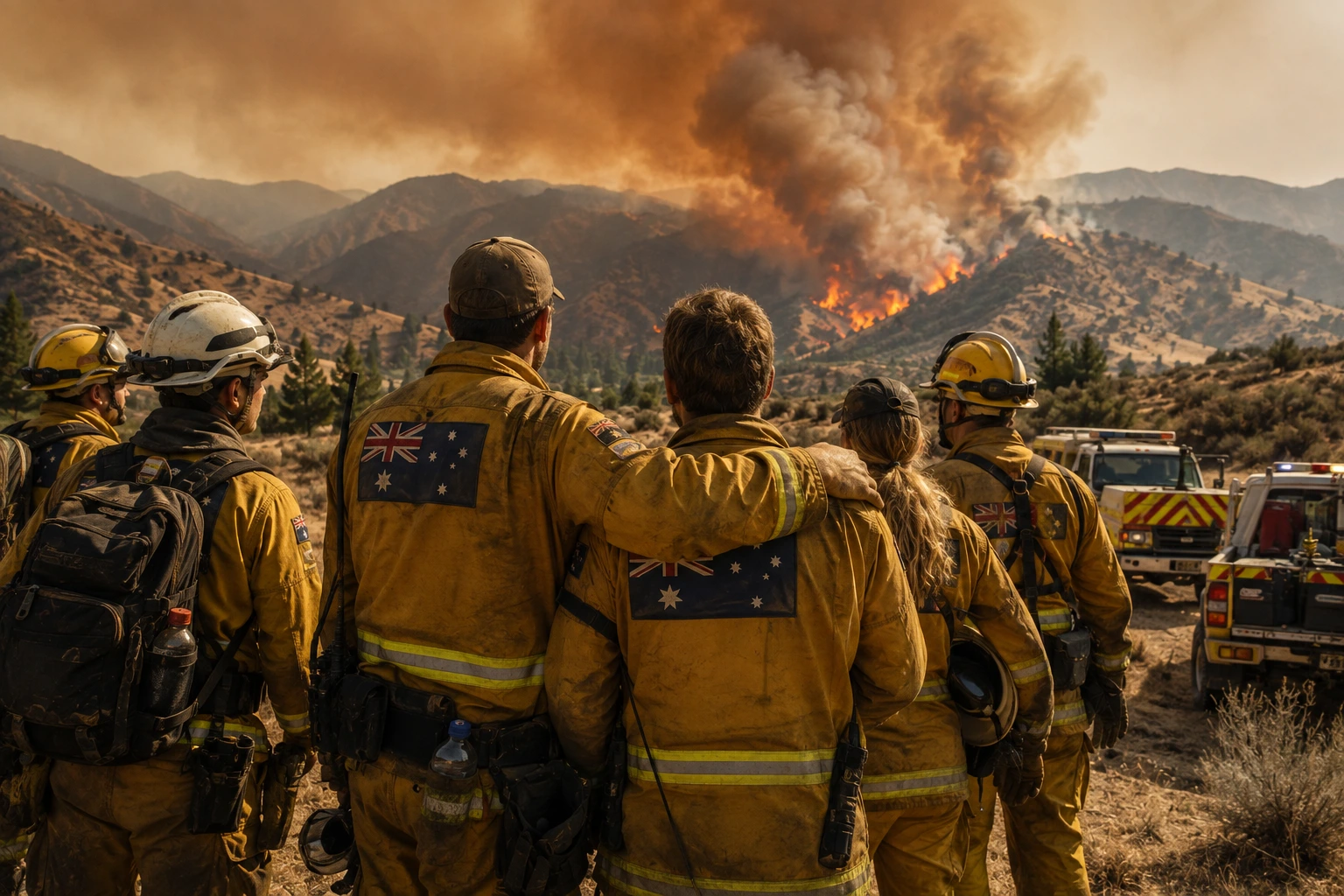
The Black Canyon Fire, sparked by lightning on July 30 along the Sanpete-Emery county line in the Manti-La Sal National Forest, has burned roughly 3,500 acres and is a little over halfway contained. What sets it apart is the response: with the Great Basin region having spent 29-plus consecutive days at Preparedness Level 5, domestic crews were stretched thin enough that the U.S. requested international help. Two 21-person hand crews from Australia's Forest Fire Management Victoria arrived on August 16 after traveling nearly 8,000 miles, and set up camp alongside American crews in Spring City's city park. "They have just settled in right along next to our firefighters and our divisions and are doing a fantastic job," said Amy Forsgren of Nevada Team One, one of the incident management teams overseeing the fire. More than 500 personnel, five aircraft, 20 engines, and Utah Army National Guard Black Hawk helicopters have been assigned to the fire at various points, and the Reeder subdivision in Emery County has been under a GO evacuation order for much of the fire's duration.
Smaller and Newer Fires to Know
| Fire | Location | Status |
|---|---|---|
| Dugway Fire | Weber County | ~20 acres, around 90% contained. See our full Dugway Fire writeup. |
| Slough Canyon Fire | Grand County | 128 acres, early suppression stage. |
| MM17 I15 Fire | Washington County | Human-caused, newly detected, minimal acreage so far. |
| Zane Fire | Uintah County | Newly detected, still being assessed. |
Earlier in the season, Utah also fought the Babylon Fire (107,189 acres, now closed out at 97% containment), the Monroe Canyon Fire in the Fishlake National Forest (roughly 55,600 acres), and several other fires — Johnson Canyon, Wild Goose, Little Horse, and Iron Fire near Eureka — that have since dropped off the state's active list as containment reached full or near-full levels.
Why 2026 Got This Bad
Utah Division of Forestry, Fire and State Lands officials have pointed to a familiar combination behind this season's severity: persistent drought, critically dry vegetation, and repeated stretches of hot, windy weather that let small lightning-caused ignitions explode into six-figure-acreage fires within days. Several of the season's fires — including Widemouth 2 — grew most dramatically overnight, when firefighters historically got a break from daytime heat; officials have noted that hotter, drier conditions are increasingly erasing that overnight lull. With three separate fires reaching or approaching 100,000 acres in the same summer and the region locked at Preparedness Level 5 for weeks on end, Utah applied for FEMA disaster grants, which typically cover about 75% of firefighting costs, to help offset the strain on state and local budgets.
How to Stay Informed
- ✓Utah Fire Info — the state's official tracker for acreage, containment, and new starts.
- ✓Your county sheriff's office — the authority for evacuation orders in Millard, Beaver, Sevier, Morgan, Summit, Sanpete, and Emery counties.
- ✓Watch Duty or a live tracker — for real-time alerts if you're near any of these fires.
- ✓AirNow.gov — for smoke and air quality readings, useful well outside any evacuation zone.
We'll continue updating this page as containment on the remaining fires progresses and as investigations into this season's two fatal incidents move forward.
Comments 0
No comments yet. Be the first to share your thoughts!
Leave a Comment