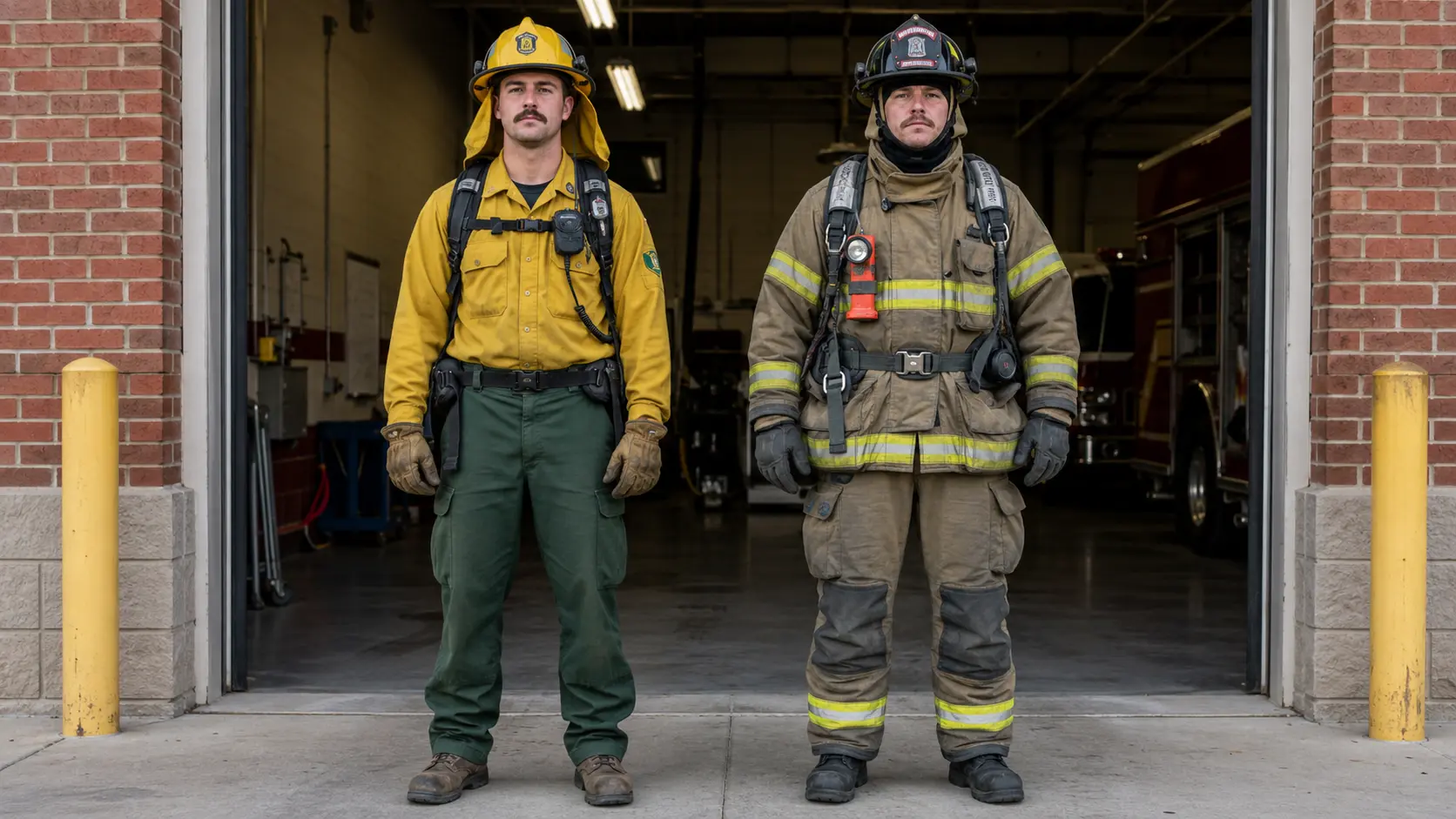
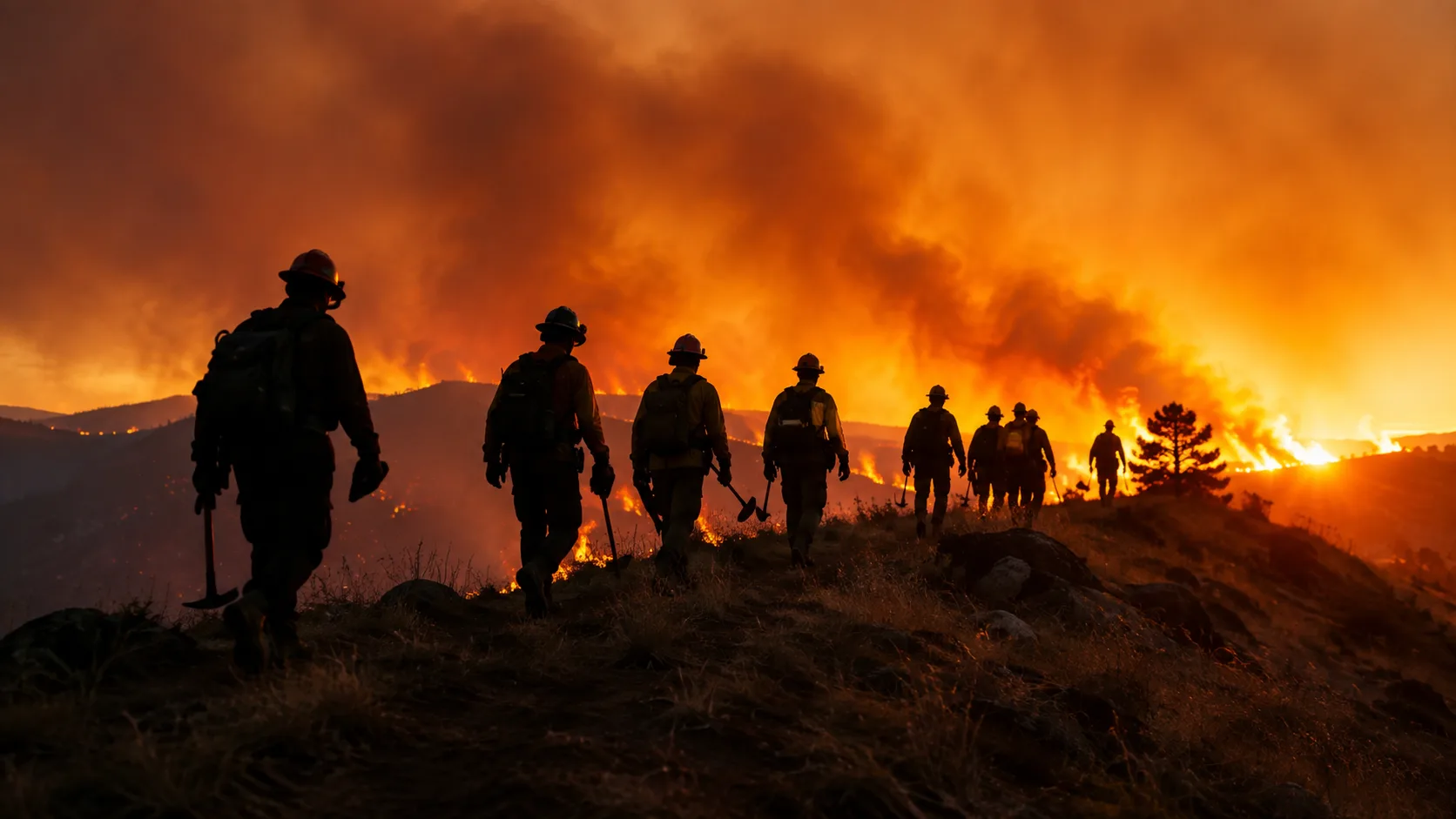
A wildland hand crew firefighter working a hand line in dry chaparral on a steep slope in 95-degree heat is doing physically demanding, continuous work for six to twelve hours. If they wore structural turnout gear, they would develop heat stroke within approximately 30 to 45 minutes. The gear that keeps a structural firefighter alive in a burning building — the moisture barrier that suppresses evaporative cooling, the thermal liner that traps heat as insulation, the heavy outer shell — would kill a wildland firefighter not from the fire but from the physiological consequences of the gear itself.
The two protective systems are built around completely different threat profiles. Structural gear is built for high-intensity, short-duration exposures in a hot, smoke-filled environment. Wildland gear is built for extended-duration exposures to flame, moderate radiant heat, and the physical demands of terrain travel and hand tool work. The correct gear for one environment is the wrong gear for the other.
In this article:
- Structural gear: design philosophy and hazard profile
- Wildland gear: design philosophy and hazard profile
- Nomex: what it does and what it doesn't
- Why structural gear fails in wildland operations
- Why wildland gear fails in structural operations
- Interface gear: a third category
- Helmets, gloves, and boots: the complete system comparison
- NFPA 1977 vs. NFPA 1971
Structural Gear: Design Philosophy and Hazard Profile
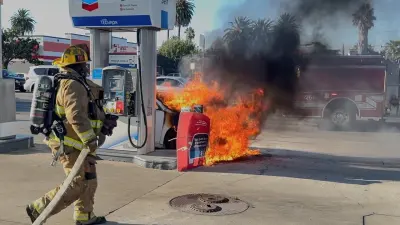
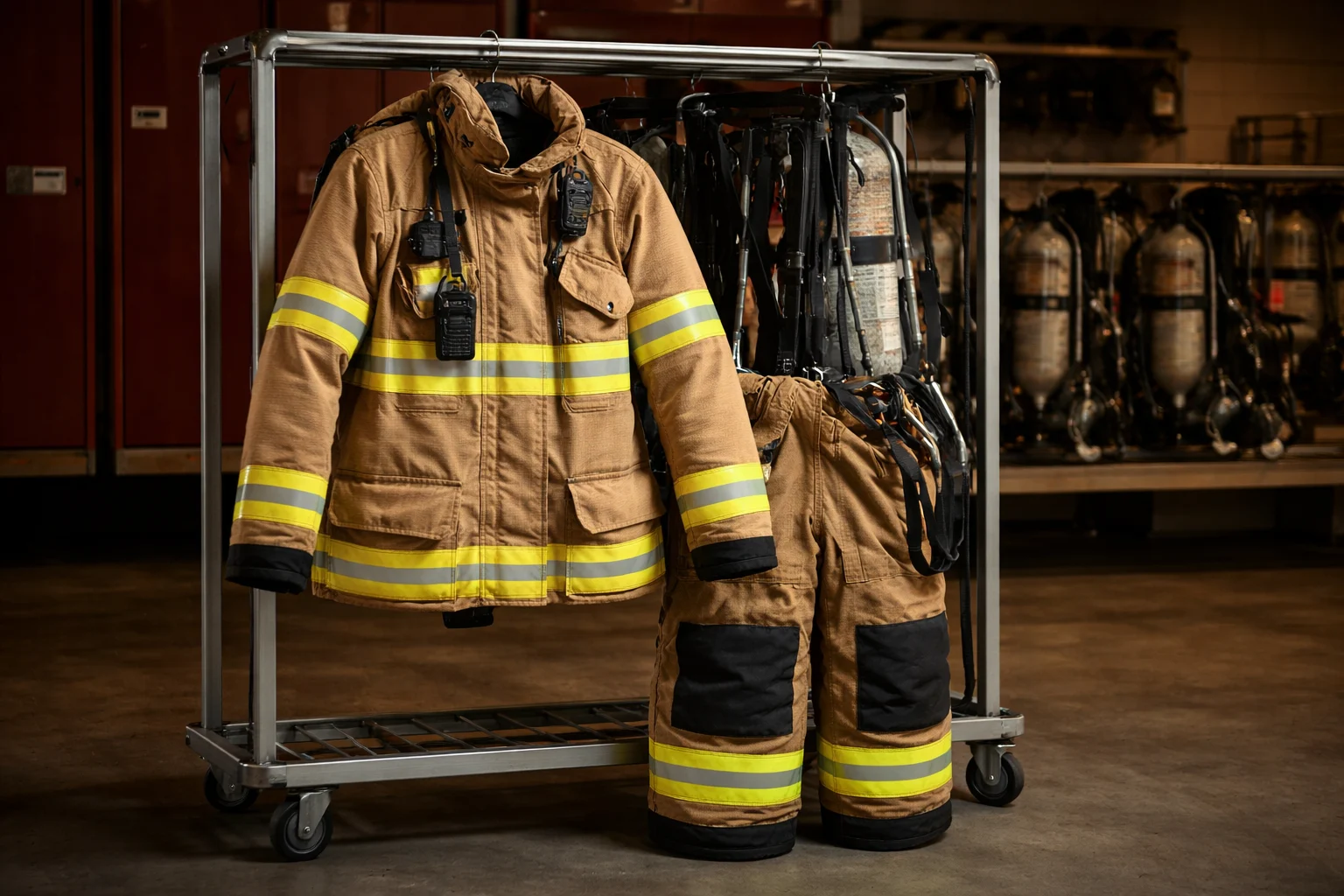
Structural gear is built to protect a firefighter against specific thermal hazards measured by standardized tests: radiant heat flux, convective heat, direct flame contact, and steam. The three-layer system (outer shell, moisture barrier, thermal liner) works together to prevent those hazards from reaching the firefighter's skin within the gear's rated protection period. The protection is passive — the gear provides thermal resistance regardless of whether the firefighter is moving or stationary.
The design trade-off: the moisture barrier that keeps heat and chemicals out also keeps metabolic heat and sweat vapor in. A firefighter working in structural gear generates heat faster than the gear allows it to dissipate. Core temperature rises continuously during structural fire operations — which is why NFPA 1584 mandates rehab with cooling after interior rotations. The gear is designed to protect against the external thermal environment, not to maintain the firefighter's thermal comfort. Extended wear in hot conditions without rehab produces heat illness regardless of ambient temperature.
Wildland Gear: Design Philosophy and Hazard Profile
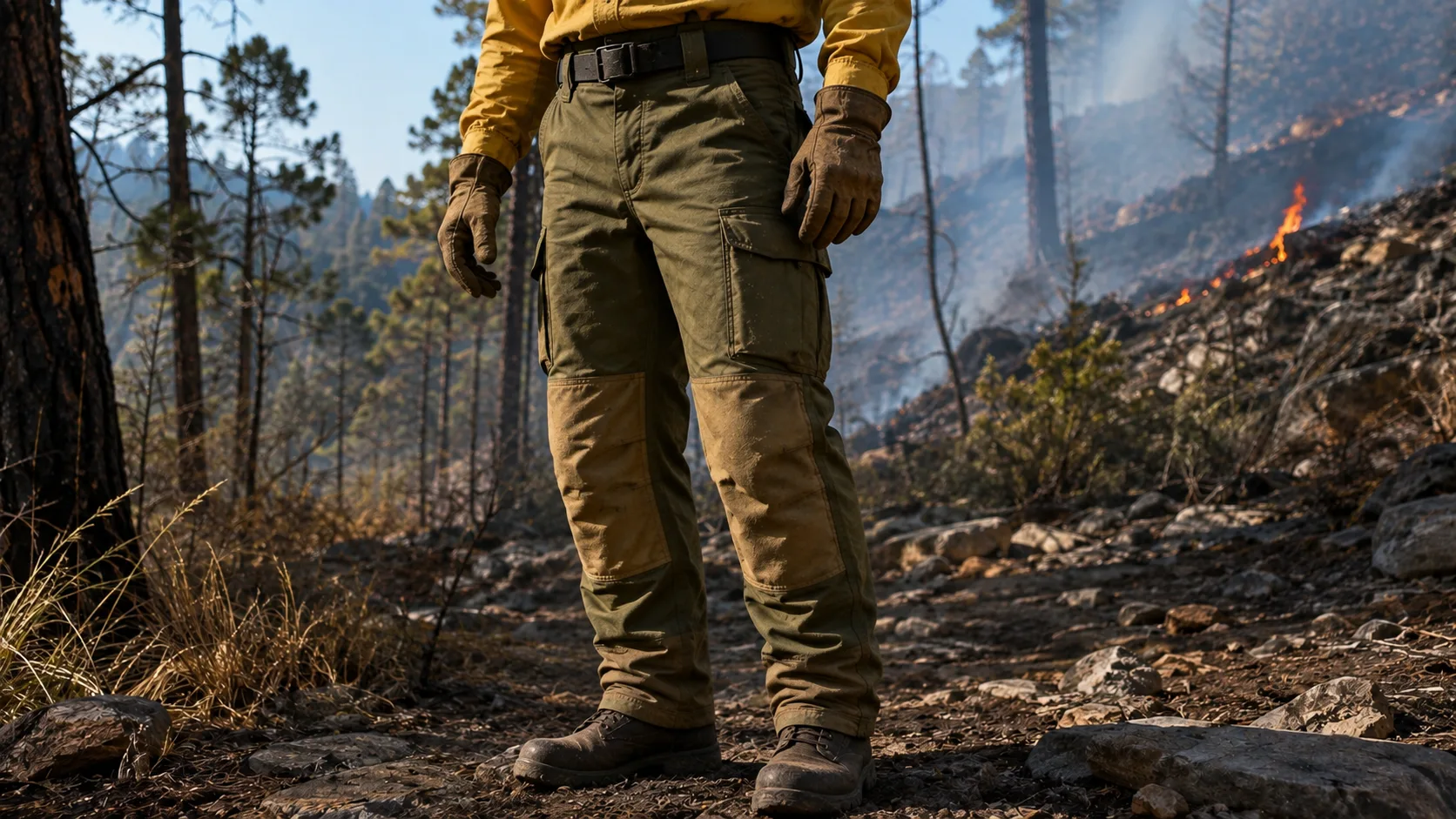
Wildland gear is built for a completely different threat. A hand crew firefighter is not exposed to the 500°F ambient temperatures of a structural fire interior. They are exposed to direct flame contact for brief periods (when the fire edge reaches their position), sustained moderate radiant heat from burning vegetation, embers and sparks, and the physical demands of extended work in rough terrain. The most significant hazard for wildland firefighters over extended operations is not the fire's immediate thermal environment — it is heat stress from the combination of ambient temperature, solar radiation, physical exertion, and metabolic heat generation.
Wildland gear's primary requirement: flame resistance (the material cannot ignite and sustain combustion when exposed to direct flame), minimum thermal protection for short-duration direct flame exposures, and maximum breathability to allow sweat evaporation. NFPA 1977 defines the standard for wildland/structural interface protective clothing — it includes flame resistance testing but does not include the thermal protective performance (TPP) requirements of NFPA 1971, because the wildland gear is not designed to protect against sustained high-radiant-heat environments.
Nomex: What It Does and What It Doesn't
Nomex — DuPont's trade name for meta-aramid fiber — is the material that defines wildland firefighter clothing. It is inherently flame-resistant: the fiber itself does not ignite and sustain combustion. When exposed to direct flame, Nomex chars rather than melting, burning, or dripping molten material. The char layer that forms provides some additional insulating value while the flame contact lasts.
What Nomex does not do: it does not provide the sustained radiant heat protection that structural gear's multi-layer system provides. A single layer of Nomex exposed to the radiant heat flux of a flashover condition (15 to 20 kW/m²) provides heat transfer to the skin within seconds. The protection Nomex provides is against brief direct flame contact — the scenario where a wildland firefighter is exposed to a flame front passing over their position — not against the sustained radiant environment of an enclosed structural fire.
Nomex also does not provide chemical protection. The moisture barrier in structural gear that blocks chemical vapor penetration is absent from wildland Nomex. This is acceptable in the wildland context (chemical exposure is not the hazard being protected against) and disqualifying in the hazmat context.
Why Structural Gear Fails in Wildland Operations
The three specific ways structural gear fails when worn by wildland firefighters:
Heat stress: Structural gear's moisture barrier suppresses evaporative cooling — the primary mechanism the body uses to manage core temperature during physical work. A wildland firefighter wearing structural gear in 85°F air temperature with moderate exertion will reach dangerous heat stress levels in 30 to 45 minutes. Extended wildland operations in structural gear are not physiologically survivable without frequent, lengthy rest and cooling intervals that are incompatible with fire operations.
Weight and mobility: Structural gear (coat and pants) weighs 25 to 35 pounds. Add boots, helmet, and SCBA and the total protective ensemble weight approaches 50 to 60 pounds. A hand crew firefighter hiking a 2-mile approach to a fire on a steep slope, then working with hand tools for 6 to 8 hours, carrying 50 pounds of protective clothing plus their pack, tool, and water, cannot maintain the physical performance the work requires. Wildland firefighters' entire protective clothing ensemble weighs 3 to 5 pounds.
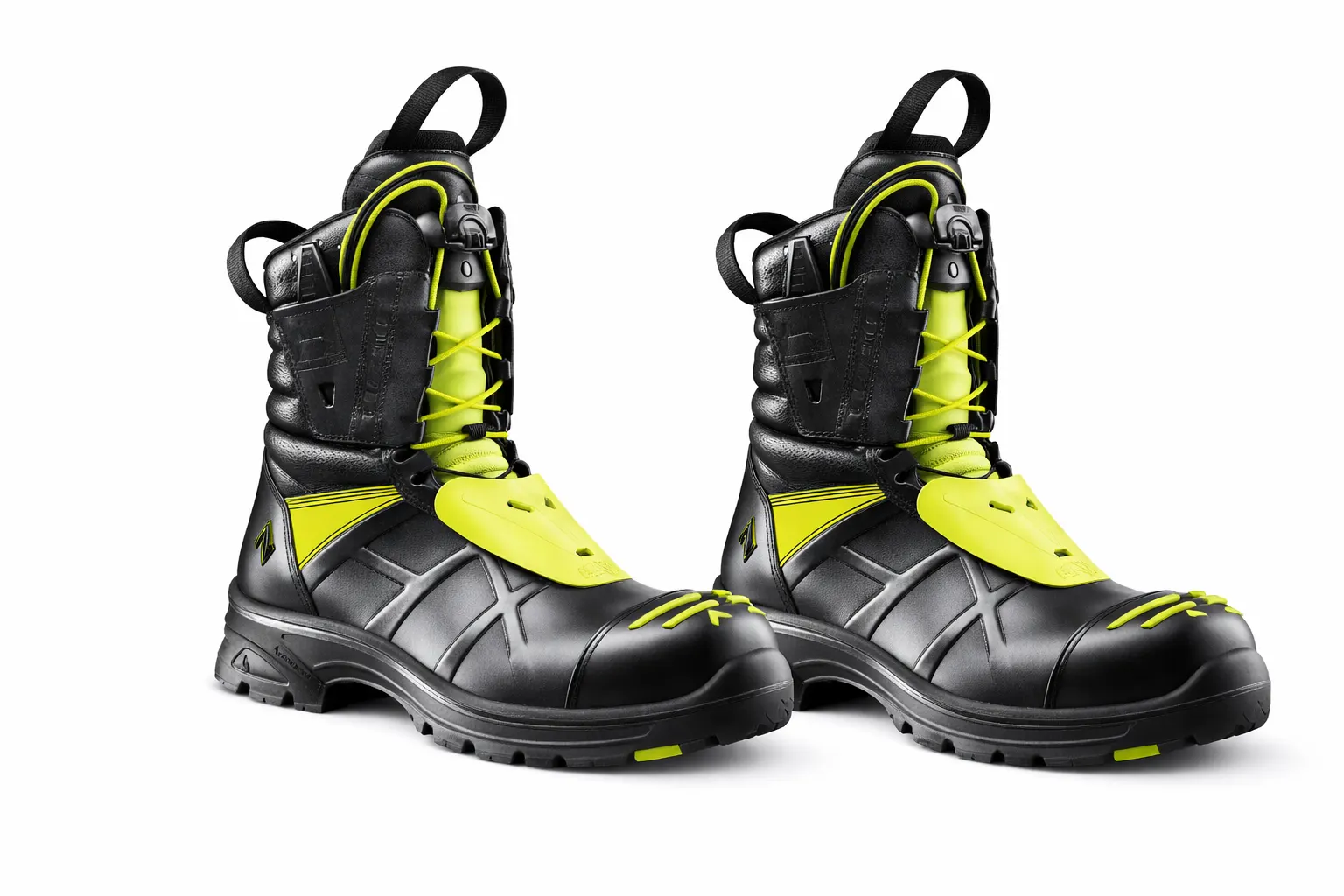
Terrain incompatibility: Structural gear's bulk and the specific boot design (structural boots have soles designed for interior operations, not for terrain travel) make extended cross-country movement through brushy terrain physically difficult. Structural boots lack the ankle support and sole traction for steep, uneven terrain that wildland leather boots provide.
Why Wildland Gear Fails in Structural Operations
Wildland gear fails in structural operations for the opposite reasons: it provides insufficient thermal protection against the radiant heat environment inside a burning building. A firefighter in Nomex shirt and pants entering a room with a developing thermal layer is receiving radiant heat at their body surface without any of the structural gear's insulating layers between the heat source and their skin.
The specific failure point: at pre-flashover conditions in a residential room fire, the radiant heat flux from the thermal layer (5 to 10 kW/m²) would produce second-degree skin burns through a single Nomex layer within 10 to 15 seconds. Structural gear at the same exposure provides 3 to 5 seconds of protection per TPP unit — a minimum of 35 TPP provides approximately 4 to 5 seconds, but in the multiple-layer system it typically provides substantially more under the specific test conditions.
Wildland gear also provides no respiratory protection. The facepiece seal that structural gear accommodates (the Nomex hood creates a sealed surface for the SCBA mask) is absent in wildland gear design. Wildland firefighters work in environments where SCBA is not worn — the smoke and gas concentrations encountered while working a fire perimeter in open terrain do not require continuous SCBA use the way interior structural operations do. In a structural fire with smoke-filled atmospheres at toxic concentrations, SCBA is required and wildland gear does not support its use.
Interface Gear: A Third Category

Wildland-urban interface firefighting creates a scenario where neither pure structural gear nor pure wildland gear is optimal: a crew working hand line on the flank of a grass fire that is threatening structures may need to defend a house in the next hour. Full structural gear produces heat stress during the wildland work. Pure wildland gear is insufficient for the structural defense phase.
Interface gear — specifically designed for this scenario — uses lighter-weight, more breathable construction than structural turnout gear but provides more thermal protection than standard Nomex. It typically meets NFPA 1977 for wildland use and provides some (though not NFPA 1971 equivalent) thermal protection for brief structural exposures. Interface gear is the appropriate PPE for interface department members who routinely transition between wildland and structural operations in the same incident response.
Helmets, Gloves, and Boots: The Complete System Comparison
| Component | Structural | Wildland |
|---|---|---|
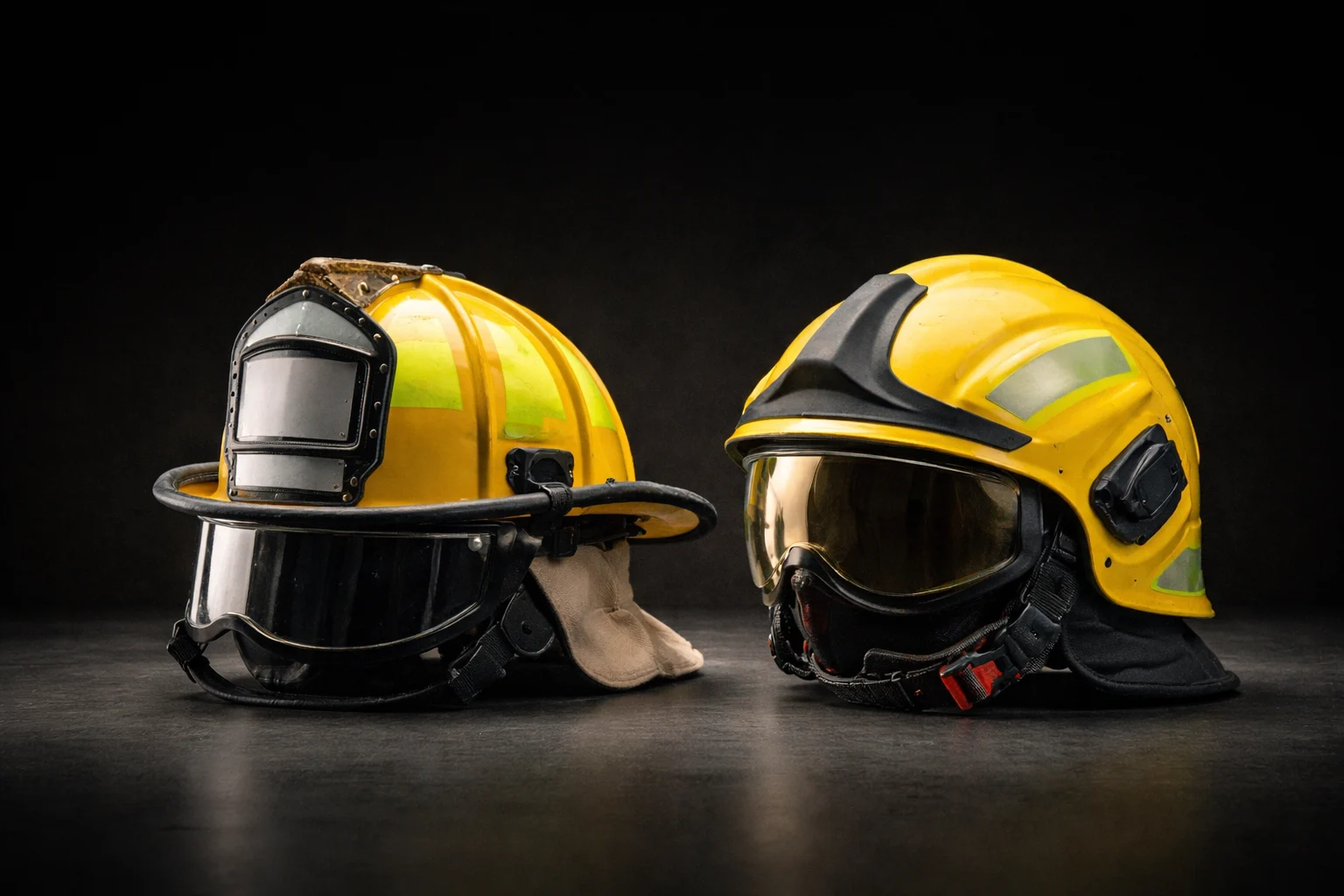
| Helmet | Rigid thermoplastic or composite, full brim, designed to support SCBA facepiece, impact-rated to NFPA 1971 | Hard hat with face shield and neck shroud, lighter weight, no SCBA facepiece interface, designed for falling branch and flying debris protection |
| Gloves | Heavy leather or Nomex/leather composite, wrist-length or gauntlet, tested for radiant heat and direct flame | Light leather work gloves, designed for dexterity with hand tools, no radiant heat rating comparable to structural standard |
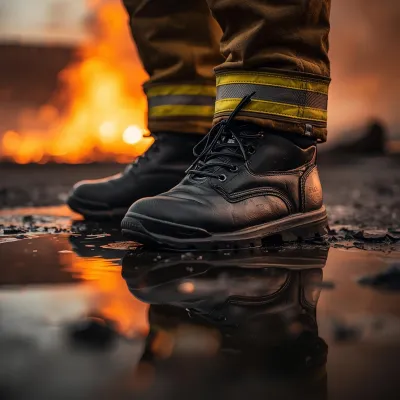
| Boots | Rubber or leather, steel-toe, designed for interior surfaces and debris, limited ankle flexibility | High-top leather lace-up, lug sole for terrain traction, significant ankle support, not designed for hazardous materials chemical resistance |
| Hood | Nomex balaclava covering all exposed skin outside SCBA facepiece — required for structural interior operations | Not standard; neck shroud on hard hat provides limited neck coverage; face exposure is normal in wildland operations |
NFPA 1977 vs. NFPA 1971
NFPA 1971 is the structural protective ensemble standard — the multi-layer coat and pants, hood, gloves, and boots. It defines the TPP rating, moisture barrier requirements, and the full test battery for structural protective clothing. Gear must meet NFPA 1971 to be appropriate for structural interior operations.
NFPA 1977 is the wildland protective clothing standard. It defines flame resistance requirements, heat resistance, fabric construction, and the test methods for gear designed for wildland operations. NFPA 1977 gear does not meet NFPA 1971 requirements — it is not intended to. Gear that meets NFPA 1977 is appropriate for wildland operations and does not claim to provide structural fire interior protection.
A firefighter wearing NFPA 1977-compliant wildland gear is correctly protected for wildland operations. The same firefighter wearing that gear inside a burning structure is not adequately protected by any standard. The standards and the gear they define serve specific operational contexts, and using gear in the wrong context produces protection failures that neither the gear nor the standard was designed to prevent.
Comments 0
No comments yet. Be the first to share your thoughts!
Leave a Comment