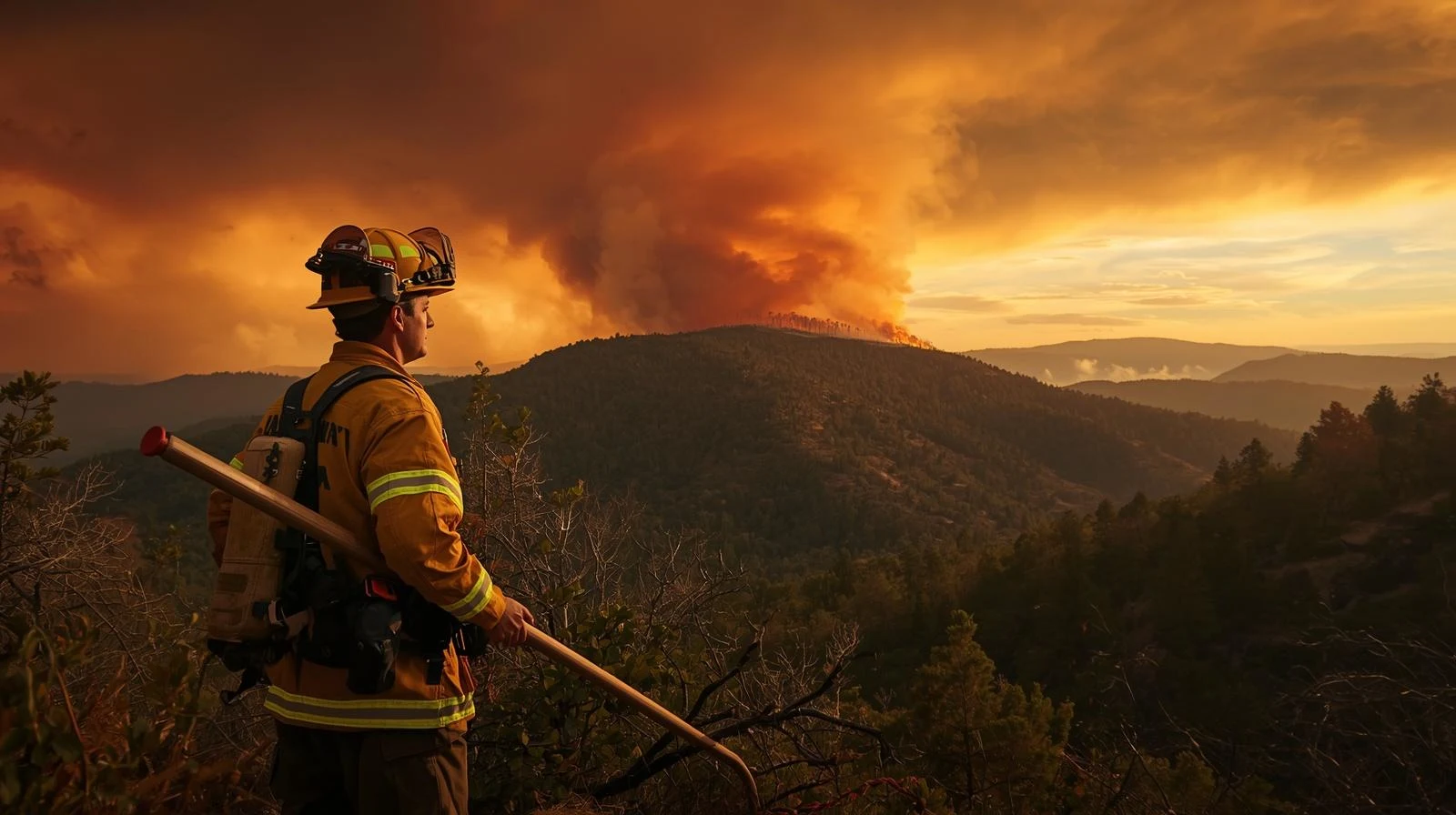

How to Become a Wildland Firefighter in 2026: ICS, Red Cards, Physical Standards & Hiring
Wildland firefighting is a distinct career track from municipal structural fire departments — different employers, different certifications, different physical standards, and a seasonal hiring cycle that requires planning months in advance. This guide covers everything a candidate needs to understand to get hired for the 2026 fire season.
Jump to:Who hires wildland firefighters · Requirements · Arduous fitness test (Pack Test) · S-130/S-190 training · Red Card (IQCS) · How to apply · Pay and advancement · Seasonal vs. permanent · FAQ
Who Hires Wildland Firefighters
Wildland firefighting in the U.S. is dominated by federal land management agencies, with some state and local programs:
| Agency | Parent department | Typical hiring season |
|---|---|---|
| U.S. Forest Service (USFS) | USDA | November – March for summer season |
| Bureau of Land Management (BLM) | DOI | November – March |
| National Park Service (NPS) | DOI | November – March |
| Bureau of Indian Affairs (BIA) | DOI | November – March |
| Fish and Wildlife Service (FWS) | DOI | November – March |
| State forestry agencies | Varies by state | January – April |
| CAL FIRE | California CDFA | Year-round (seasonals start Jan) |
Federal positions are posted on USAJobs.gov. Applications typically open November through February for summer season work. Missing this window means waiting a full year.
Basic Requirements
- Age: Minimum 18 for most federal wildland positions
- Citizenship: U.S. citizenship required for federal positions (some state agencies accept work authorization)
- Driver's license: Valid license required; off-road driving ability a plus
- Physical fitness: Must pass the Arduous fitness standard (Pack Test) before deployment
- No criminal record: Federal background check required for all positions
- Education: High school diploma or GED for entry-level; no degree required
Important: Unlike structural firefighting, most entry-level wildland positions do NOT require EMT certification. You will receive fire-specific first aid training (WFA or WAFA) after hiring.
The Arduous Fitness Standard (Pack Test)
The federal Arduous fitness test — commonly called the Pack Test — is required for all personnel assigned to wildland fire operations at the Arduous work capacity level. You must:
- Walk (not run) 3 miles over flat terrain in 45 minutes or less
- Wearing a 45-pound pack
- On a marked course or treadmill
This sounds straightforward but fails a surprising number of candidates. Forty-five pounds over 3 miles in 45 minutes requires a sustained pace of 4 mph — a brisk walk that is harder than it sounds under load, especially in heat or altitude.
How to train for the Pack Test
- Start training 8–12 weeks before your target test date
- Begin with a 20-pound pack at 3 miles, 3 days per week. Add 5 pounds every 2 weeks.
- Train at a 4 mph pace from the start. Use a GPS watch or treadmill speed setting — most people naturally walk at 3–3.5 mph, which is too slow.
- Train on terrain similar to where you will test. Gravel, packed dirt, and pavement all feel different at speed under load.
- The test is walk-only. Running is grounds for disqualification.
Required Training: S-130, S-190, and L-180
Before you can receive a Red Card and be deployed on a fire, you need to complete three core NWCG training modules:
| Course | What it covers | Delivery | Length |
|---|---|---|---|
| S-130 Firefighter Training | Fireline safety, basic fire suppression techniques, hand tools, line construction, equipment | In-person + field practicals | ~16–24 hours |
| S-190 Introduction to Wildland Fire Behavior | Weather, topography, fuels, fire behavior prediction, spotting, situational awareness | In-person or online + field | ~8–16 hours |
| L-180 Human Factors on the Fireline | Situational awareness, communication, leadership under stress, LCES and 10 Standard Firefighting Orders | Online | ~4 hours |
| IS-700 NIMS Introduction | ICS basics, NIMS framework, span of control | Online (FEMA) | ~3 hours |
Many federal agencies and state forestry programs provide S-130 and S-190 training after hiring. You can also complete them beforehand through your local USFS unit or state forestry office — doing so before applying makes you more attractive as a candidate and faster to deploy.
The Red Card (Incident Qualification Card)
A Red Card (officially the IQCS Incident Qualification Card) is your credential for wildland fire deployment. It certifies your position qualifications, physical fitness level, and training currency. Without a current Red Card, you cannot be dispatched to a fire assignment.
To get your first Red Card as a Firefighter Type 2 (FFT2 — the entry position):
- Complete S-130, S-190, L-180, and IS-700
- Pass the Arduous fitness standard (Pack Test)
- Complete your agency's annual refresher (RT-130) each year to maintain currency
- Your supervisor enters your qualifications in the IQCS database and issues your card
The Red Card system uses the IQCS (Incident Qualifications and Certification System). Advancing to FFT1 (Firefighter Type 1) requires documented experience on fire assignments and additional training including S-131.
How to Apply for Wildland Firefighting Jobs
Most federal wildland fire jobs are temporary/seasonal in the first 1–3 years. The application process runs through USAJobs.gov:
- Create a USAJobs account and build your federal resume. Federal resumes are longer and more detailed than private sector resumes — include specific tasks, hours per week, and supervisor contact info for every position.
- Search for GS-0462 (Forestry Technician) positions. Entry level is typically GS-03 or GS-04.
- Apply broadly across multiple forests, districts, and regions. Your first offer will likely not be your preferred location. Geographic flexibility dramatically improves your odds of getting hired.
- Apply early. Priority recruitment periods typically run November–January. Applications submitted after February often come too late in the hiring cycle.
- Veterans preference: If you have DD-214, make sure your veteran status is documented correctly in your USAJobs profile. It significantly helps on federal hiring lists.
Pay, Advancement, and Career Path
| Position | Grade | Base pay (approx.) | With hazard pay + OT |
|---|---|---|---|
| Seasonal Firefighter (FFT2) | GS-03/04 | $34,000–$42,000 seasonal | Can exceed $50,000–$60,000 in active fire years |
| Lead Firefighter (FFT1) | GS-05/06 | $45,000–$55,000 seasonal/perm | $60,000–$80,000+ with overtime |
| Engine Captain / Crew Boss | GS-07/08 | $55,000–$70,000 | $75,000–$100,000+ in active seasons |
| Hotshot Superintendent | GS-09/11 | $65,000–$85,000 | $90,000–$120,000+ |
Wildland firefighters earn hazard pay (25% on top of base rate) and substantial overtime during fire assignments. In active fire years, total compensation for experienced crew members can significantly exceed GS base rates. The tradeoff is long deployments away from home — 2-week assignments, back-to-back, from June through October in high-fire years.
Seasonal vs. Permanent Wildland Positions
Most entry-level wildland jobs are seasonal (April–November typically). Converting to a permanent year-round position requires years of seasonal experience, competitive standing on a federal merit list, and often geographic flexibility. The path to permanent employment is:
- 1–3 years as a seasonal FFT2 building experience and qualifications
- Advance to FFT1 with documented fire assignments and S-131 training
- Apply to permanent positions (advertised on USAJobs as "permanent seasonal" or "permanent full-time")
- Consider pathways to helitack, hotshot crews, or smokejumper programs for faster permanent conversion
Hotshot crews (IHC — Interagency Hotshot Crews) are the elite ground crews of wildland firefighting. Competition for these positions is intense. Most hotshot crew members have 3–5+ years of seasonal experience before being selected.
Frequently Asked Questions
Do you need prior experience to become a wildland firefighter?
No prior fire experience is required for entry-level seasonal positions. You need the physical fitness to pass the Pack Test and the willingness to complete S-130/S-190 training. Many agencies provide this training after hiring. Geographic flexibility and early application timing matter more than prior experience at the entry level.
When does wildland firefighter hiring open for 2026?
Federal wildland fire job postings for the summer 2026 season typically appear on USAJobs.gov between November 2025 and February 2026. Applications submitted in November and December are processed earliest. Do not wait until spring — most positions are filled by March.
What is the difference between a wildland firefighter and a structural firefighter?
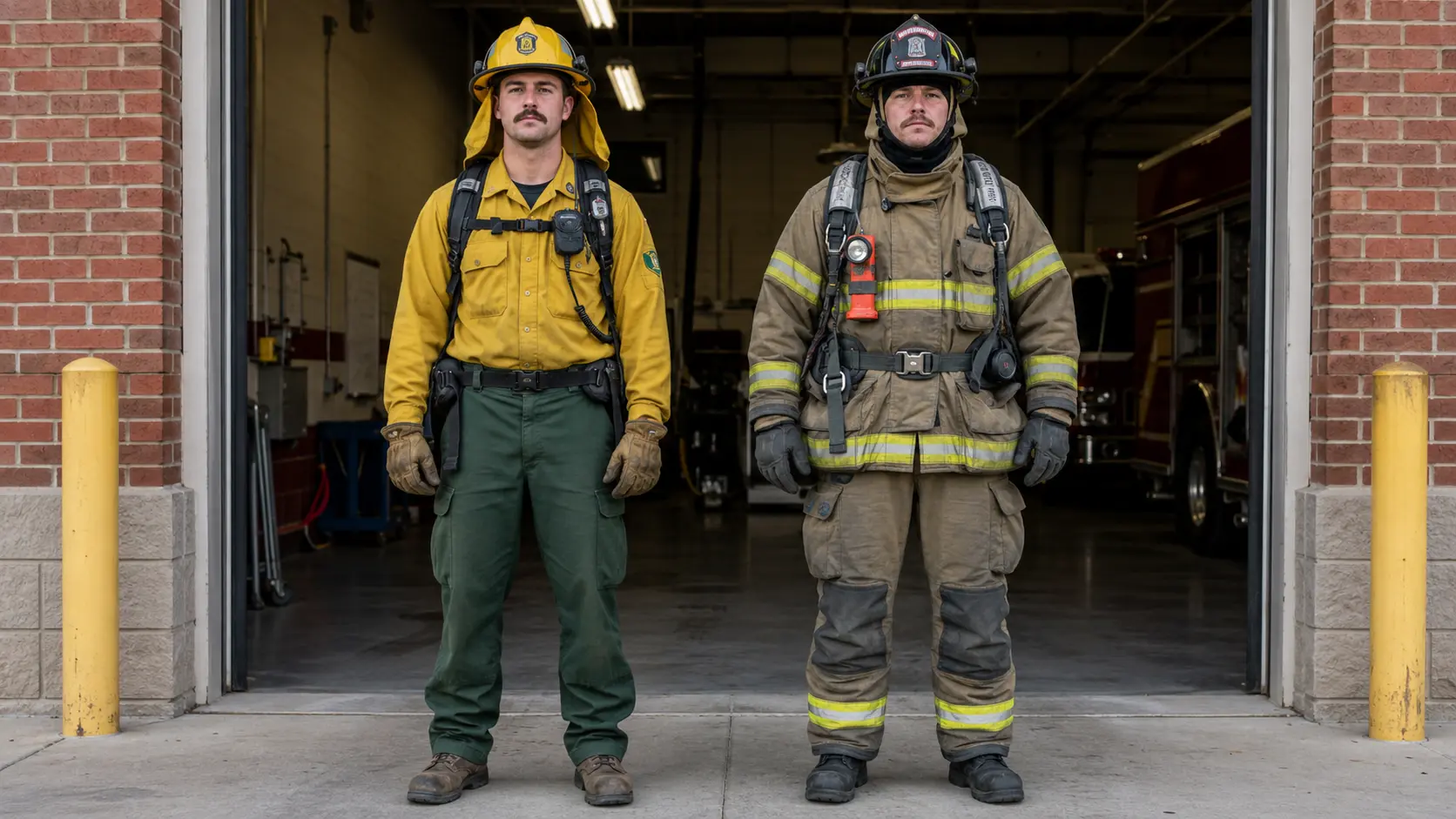
Structural firefighters work for municipal or county agencies, respond to building fires and medical calls year-round, and are hired through local civil service processes. Wildland firefighters work for federal or state land agencies, fight vegetation fires in forests and wilderness areas, and are hired through USAJobs or state systems on a seasonal basis. Some career firefighters cross over and do both through strike team deployments, but the initial hiring paths are entirely separate.
How hard is the Pack Test for wildland firefighting?
The Arduous Pack Test (3 miles, 45 lb, 45 minutes) is achievable for most candidates who train consistently for 8–12 weeks. The sustained pace of 4 mph under load is harder than it sounds — most untrained people walk at 3–3.5 mph. Training with a loaded pack starting 10 weeks out is essential.
Can you become a wildland firefighter without being a U.S. citizen?
Federal agencies require U.S. citizenship. Some state programs (CAL FIRE, state forestry agencies) may accept work authorization. Check each agency's specific requirements in the job posting.

Comments 0
No comments yet. Be the first to share your thoughts!
Leave a Comment