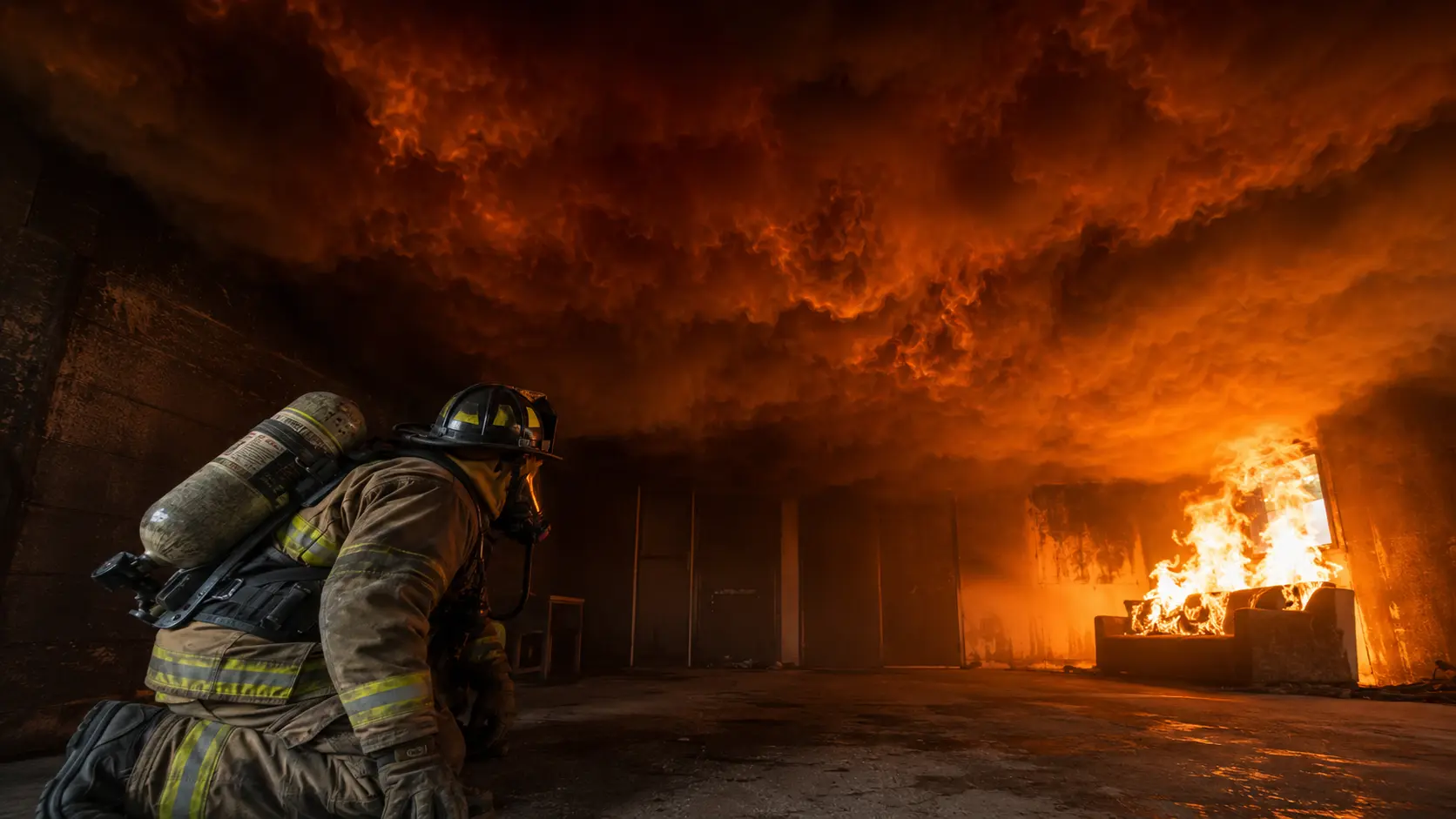
The three terms — flashover, backdraft, smoke explosion — are used interchangeably in casual conversation about fire, and they are not the same event. They have different causes, different physical mechanisms, different observable indicators before they occur, and different tactical implications. A firefighter who confuses backdraft indicators with pre-flashover indicators and responds to each with the same tactic is applying the wrong response to one of the two events — with consequences that range from losing the building to losing the crew.
Each event is genuinely dangerous. But they are dangerous in different ways, they announce themselves differently, and addressing them requires different actions taken in the right sequence. Understanding the distinction is not academic — it is operational.
In this article:
Flashover: What It Is and What Causes It
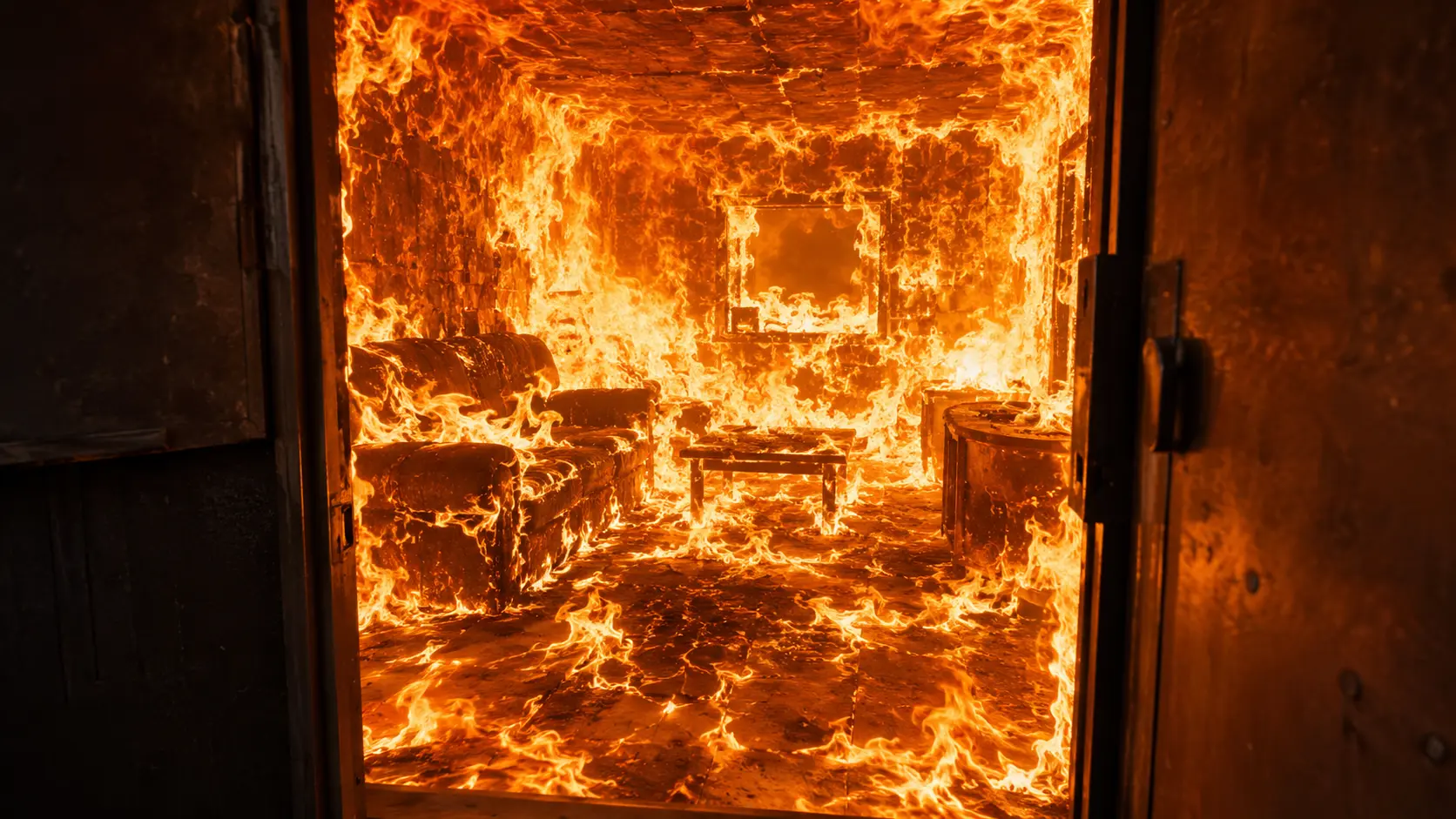
Flashover is a thermal event — a transition in fire development driven by temperature, not by a specific ignition trigger. As a fire burns in a room, it releases heat and combustion gases that accumulate at the ceiling level, forming a hot gas layer that grows downward over time. This layer radiates heat downward onto all exposed fuel surfaces in the room: the floor, furniture, walls, and contents. As the layer temperature rises, the radiated heat flux onto those surfaces increases, preheating them — driving off combustible vapors and raising the surface temperature toward ignition threshold.
At a critical point — typically when the upper gas layer reaches approximately 1,100°F and the radiated heat flux at floor level reaches about 20 kilowatts per square meter — every combustible surface in the room reaches its ignition temperature simultaneously. Every fuel surface ignites at essentially the same moment. The fire transitions from burning one or two objects to burning the entire room in a fraction of a second. This is flashover.
Post-flashover, the room is not survivable. Gas temperatures throughout the space — not just near the ceiling — exceed 1,000°F. Oxygen has been consumed. Toxic gases are at lethal concentrations. No protective equipment currently in service provides survival time in a fully-developed post-flashover room.
Pre-Flashover Indicators
Flashover is not instantaneous — it has a developmental stage that produces observable indicators. Crews who recognize these indicators and exit while the indicators are present can survive. Crews who stay past the indicators and attempt to suppress a fire that is transitioning to flashover face an environment that their gear cannot protect them from.
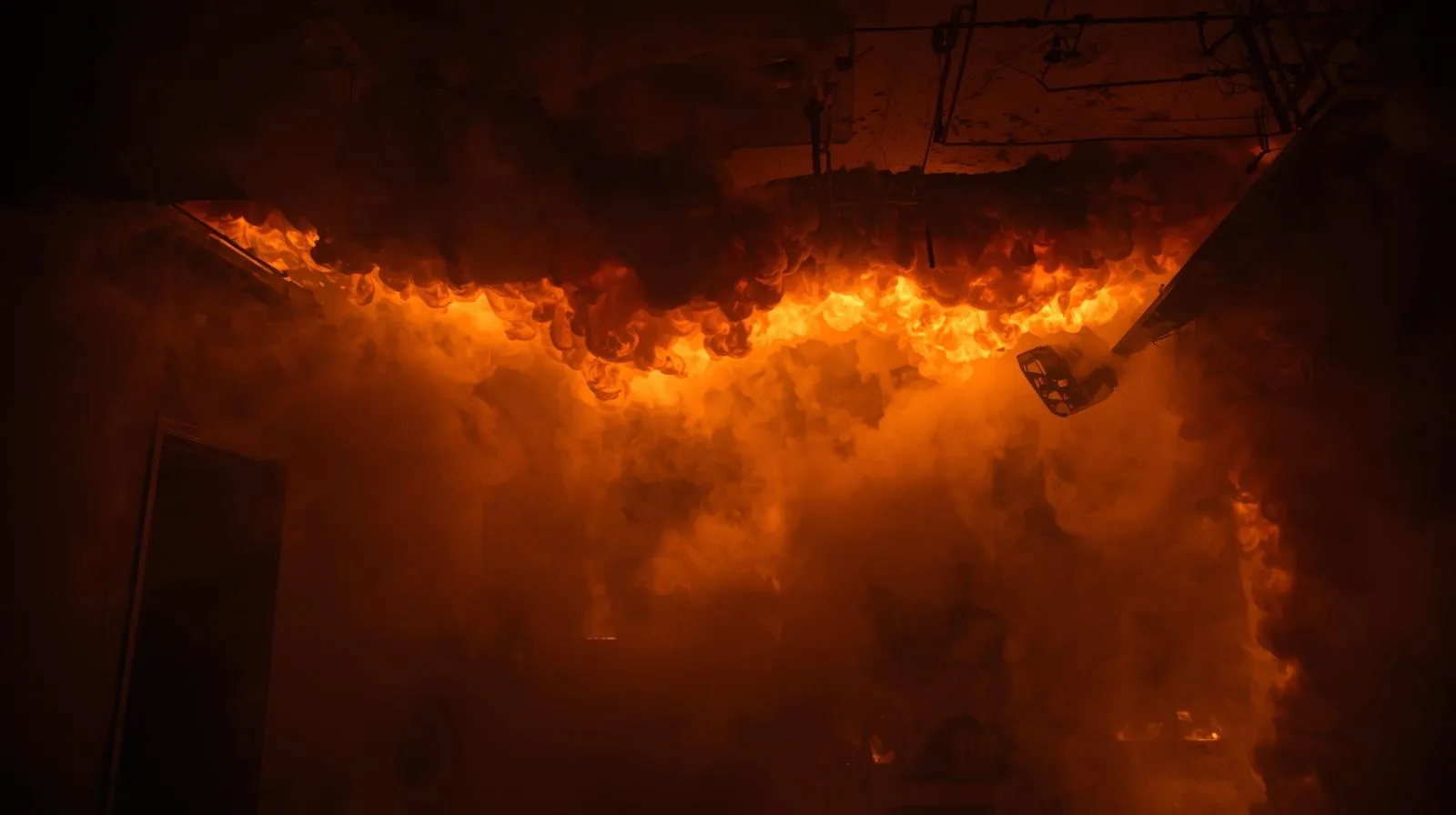
- Rollout: Flames rolling across the ceiling from the fire origin toward the rest of the room. The unburned combustible gases in the thermal layer are igniting at the ceiling level — this is the thermal layer beginning to actively burn, not just heat. Rollout means flashover is imminent.
- Thermal layer descending to floor level: The hot gas layer that was at ceiling height is now thick enough to be felt at waist or knee height. The survivable air layer at floor level is shrinking.
- Superheated air on exposed skin: If the ears, the back of the neck, or any exposed skin is experiencing intense heat sensation, the ambient temperature is already above the tolerance level for turnout gear's protection duration.
- Surfaces igniting independently: Furniture, carpet, or wall materials away from the primary fire location are beginning to smoke, smolder, or produce small flames — pyrolysis has reached them through radiated heat without direct flame contact. This is the final indicator before simultaneous ignition.
Rollout is the last reliable warning before flashover. A crew that sees fire rolling across the ceiling and delays exit by more than a few seconds may not exit at all. The time between rollout and full flashover can be under 20 seconds in a room with modern synthetic furniture content.
What Happens to a Crew Caught in Flashover
A firefighter caught in a flashover without any protective position has thermal burns to any exposed skin, gear failure at the point where TPP rating is exceeded, and potentially respiratory burns if the facepiece seal fails or the SCBA supply is exhausted. Post-flashover analysis of burn injuries in firefighter fatalities shows that the highest-temperature injury points are consistently at coverage gaps — wrists, neck, ears — because those are the areas where protective equipment transitions and the ambient temperature can directly reach skin.
Firefighters trained in flashover survival use the corner position — back against the corner of the room at floor level, directing a water stream at the ceiling (both suppressing the developing fire and cooling the thermal layer with steam). This technique buys seconds — not minutes — but seconds can be the margin for a crew that is almost at the exit when flashover occurs. A crew that is 40 feet into a structure when rollout begins does not have a corner-position option. They have an exit option. They should use it.
Backdraft: The Oxygen Event
Backdraft requires a fundamentally different precondition from flashover: not excess heat, but oxygen deprivation. A backdraft occurs when a fire in a closed compartment has consumed most of the available oxygen — the fire is still smoldering and producing combustible gases (CO, unburned hydrocarbons) but cannot sustain active flaming combustion because oxygen is below the minimum needed. The space is filled with a superheated mixture of combustible gases and smoke at temperatures well above the ignition temperature of those gases.
When a door, window, or other opening is created — giving the oxygen-deprived space sudden access to fresh air — the air-gas mixture reaches the flammable range and the accumulated gases ignite. The ignition is rapid and explosive, producing a fireball that exits the opening with significant force. Anyone at the opening when the backdraft occurs is in the fireball path.
Backdraft Indicators
Backdraft conditions announce themselves differently from pre-flashover conditions:
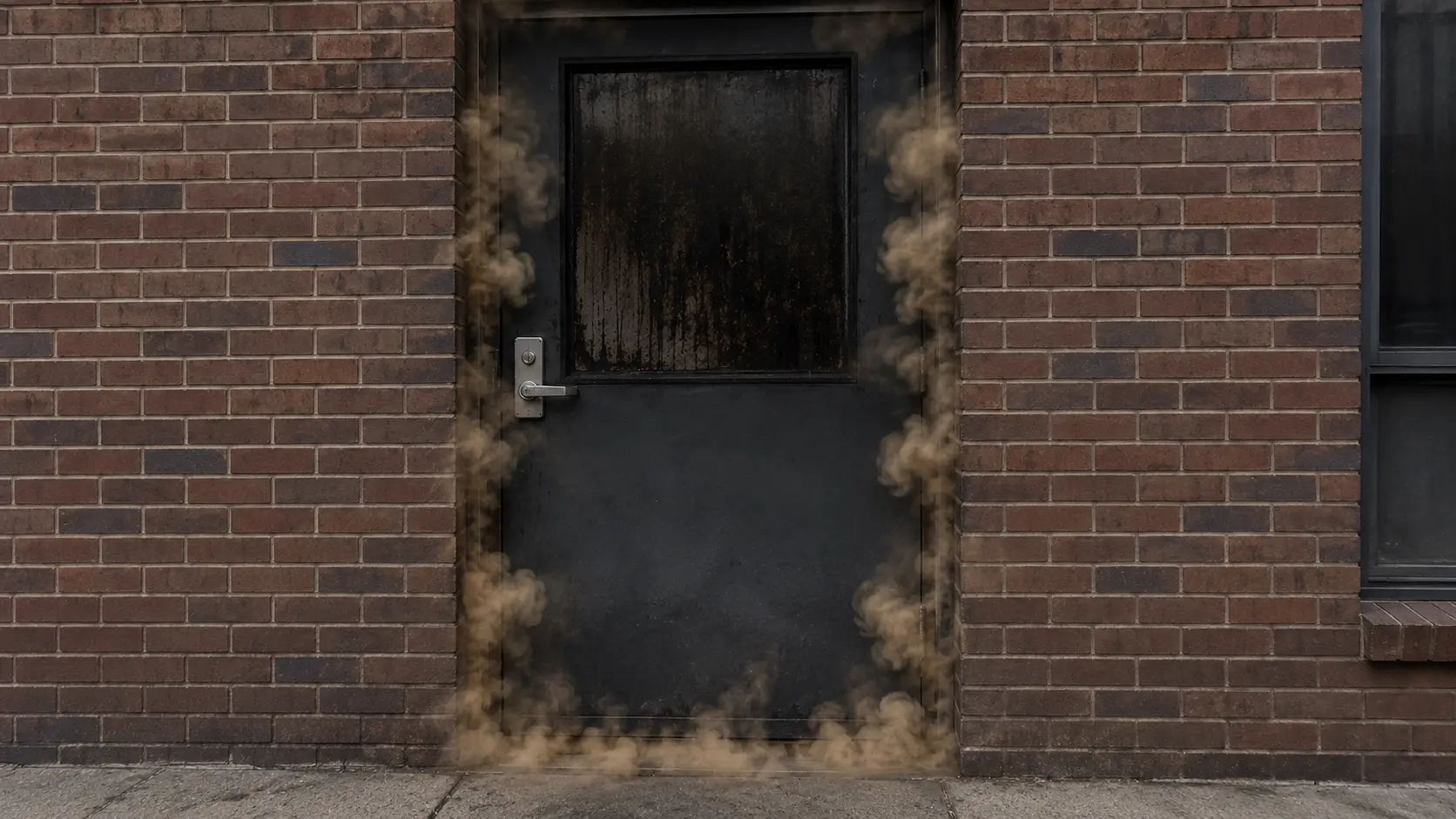
- Smoke that stains the glass black or brown: The glass of a window or door with a backdraft condition behind it shows smoke staining on the interior surface — black or dark brown — because the smoke is dense, hot, and tar-laden. Clear glass with light smoke means ventilating normally; stained, obscured glass means the interior condition is extreme.
- Puffing smoke: Smoke moving rhythmically in and out around door gaps or through small openings — not steady outward flow. The backdraft condition creates slight pressure oscillations as the smoldering fire draws air in through one pathway and pushes smoke out through another. This pulsing movement of smoke, visible at door gaps, is a distinctive and reliable field indicator.
- Yellow or brownish smoke color: Heavily fuel-rich smoke from a fire burning in near-zero oxygen has a yellow-brown color rather than the gray or black of a better-ventilated fire. This color indicates a very high concentration of unburned combustible gases in the smoke.
- Absence of visible flame through openings: A fire that has gone to oxygen deprivation may have no visible flame — just dense smoke and glow from embers. A structure that is smoking heavily with no visible flame is more concerning than one with visible flames, because the visible flame indicates the fire still has oxygen. No flame with heavy smoke indicates it may not.
- Hot door with cool glass: In some backdraft scenarios, the door itself is very hot to the touch but the glass is not — because the fire is not near the glass but the convective heat has spread to the door structure. This combination, combined with other indicators, supports a backdraft assessment.
Smoke Explosion: The Most Misunderstood of the Three
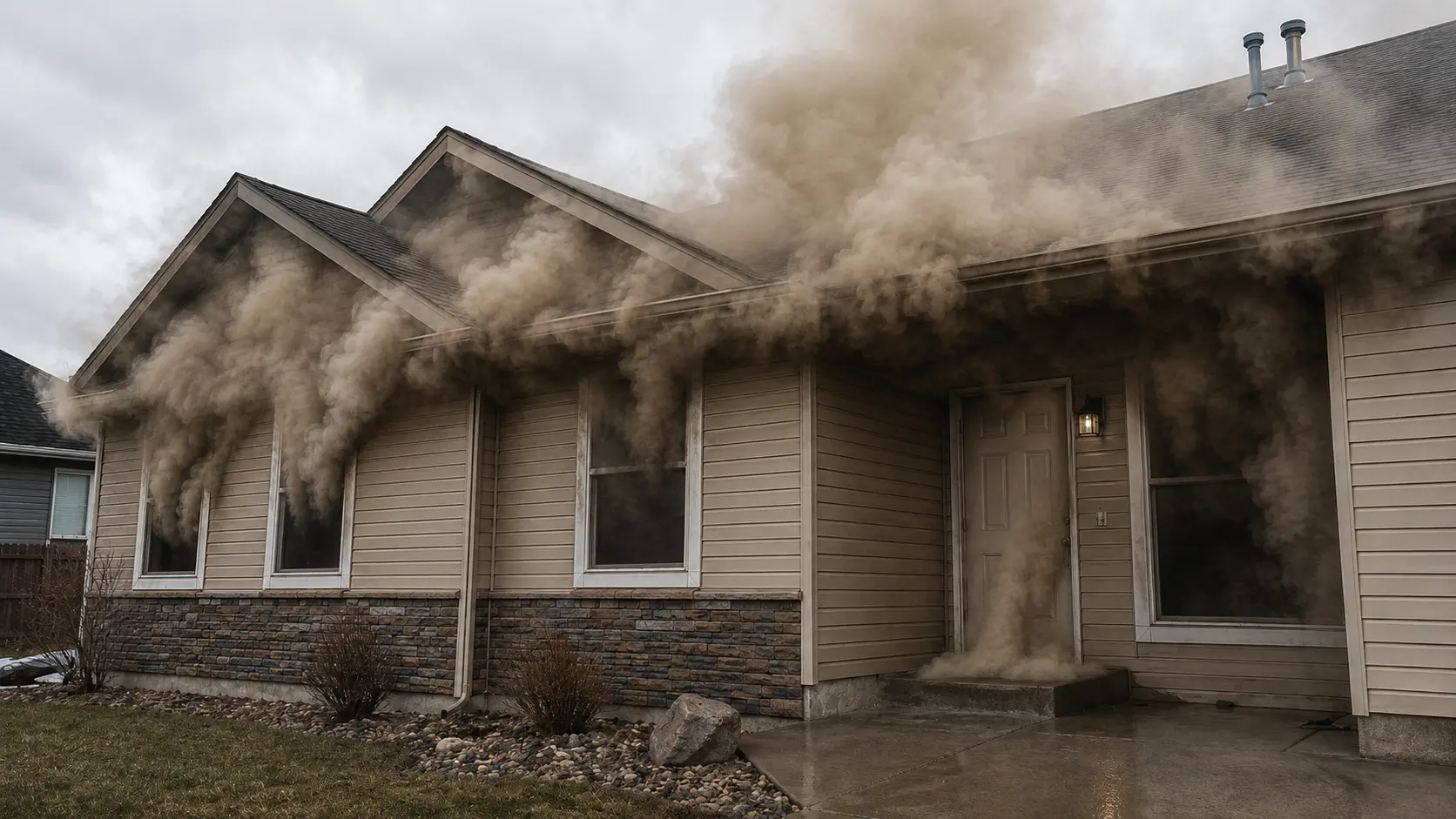
A smoke explosion — sometimes called a fire gas explosion or accumulated gas explosion — differs from both flashover and backdraft in one critical way: it does not require an active fire to occur. It requires accumulated combustible gases at flammable concentration, and a separate ignition source.
The scenario: a fire burns in a structure, then runs out of fuel or oxygen and extinguishes — or reduces to below-visible-flame smoldering. The fire is technically "out," but during its active phase it produced large quantities of combustible gases — carbon monoxide, unburned hydrocarbons — that have accumulated throughout the structure. If the structure is not ventilated, those gases build to a concentration within the flammable range of the gas mixture. The structure is essentially a container filled with premixed fuel and air.
An ignition source introduced at this point — a crew forcing entry with metal tools producing sparks, a light switch being thrown, a firefighter's flashlight turning on, a cell phone in the crew's pocket — can detonate the accumulated mixture. The explosion is not the same as a backdraft (which involves a fire, not an accumulated gas mixture without active fire), but the result is similar: a rapid explosion of combustible material that is already distributed throughout the space.
Side-by-Side Comparison
| Flashover | Backdraft | Smoke Explosion | |
|---|---|---|---|
| Requires active fire | Yes | Yes (smoldering) | No — gases without active fire |
| Cause | Thermal — radiated heat ignites all surfaces | Oxygen — fresh air introduced to starved fire | Chemical — ignition source in accumulated gas |
| Where it happens | Inside the fire room | At the opening when created | Throughout the structure |
| Key indicator | Rollout, descending thermal layer | Puffing smoke, stained glass, no visible flame | Heavy smoke with no flame, structure "quiet" |
| Tactical response | Exit immediately; cool ceiling with fog before entry | Ventilate from top before any entry opening | Remote ventilation before entry; no ignition sources |
Tactical Responses: What Differs and Why It Matters
The tactical responses to the three conditions are different because the triggering mechanisms are different.
For flashover: the response to pre-flashover indicators is immediate exit and, if suppression is possible, directing a fog pattern or straight stream at the ceiling to cool the thermal layer with steam before it reaches flashover threshold. Vertical ventilation — opening the roof above the fire to vent the thermal layer upward — reduces heat buildup and extends the time to flashover, which is why roof operations by the ladder company coordinate with engine attack timing.
For backdraft: the response to backdraft indicators is ventilation before any entry point is created at ground level. The correct ventilation sequence is to open the highest point of the structure — the roof — before any door or window is opened at the level of the hot gases. Venting from the top allows the accumulated gases to escape upward. Opening a door at the bottom of a backdraft condition without first venting the top brings fresh air directly into contact with the gas-air mixture at the floor level where the crew is standing.
For smoke explosion: the response is remote ventilation — opening the structure from a position of safety, allowing the accumulated gases to disperse, and monitoring the atmosphere before any crew with potential ignition sources enters. Positive pressure ventilation fans are not placed at the entry door by a crew standing next to it — they are positioned at a distance with the fan facing toward the opening while crew members remain clear of the doorway during initial ventilation.


Comments 0
No comments yet. Be the first to share your thoughts!
Leave a Comment