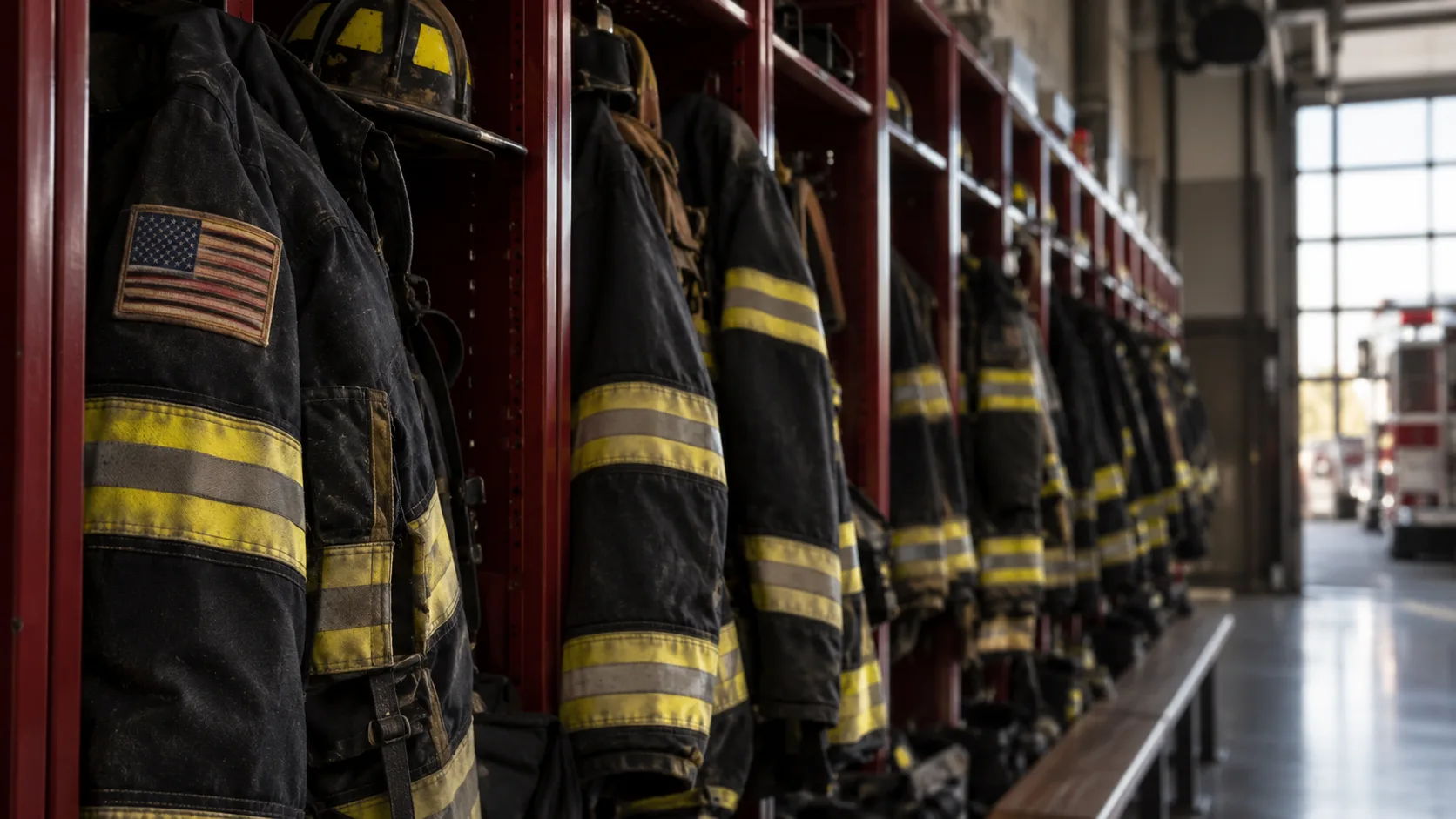

What Happens to a Firefighter's Family If They Die in the Line of Duty?
Every fire department hopes it never has to use the process described in this article. But every fire department has one, because the alternative — figuring it out for the first time in the middle of the worst day of someone's life — isn't acceptable. Within the first 24 hours after a line-of-duty death, a fairly specific sequence of notifications, claims, and support systems starts moving, most of it built around a single federal program most Americans have never heard of.
The First 24 Hours
A department experiencing a line-of-duty death is expected to notify the National Fallen Firefighters Foundation through a 24-hour hotline. That call connects the department to a Local Assistance State Team, a network of trained coordinators who help with everything from funeral logistics to the mountain of paperwork that follows, and who can also connect the department's leadership with another chief who has been through this before. Departments are also directed to arrange for an autopsy where required, since the cause of death has to be clearly documented for benefits purposes, and to begin the process of contacting the U.S. Department of Justice's Public Safety Officers' Benefits program, even before it's clear whether the family will ultimately qualify.
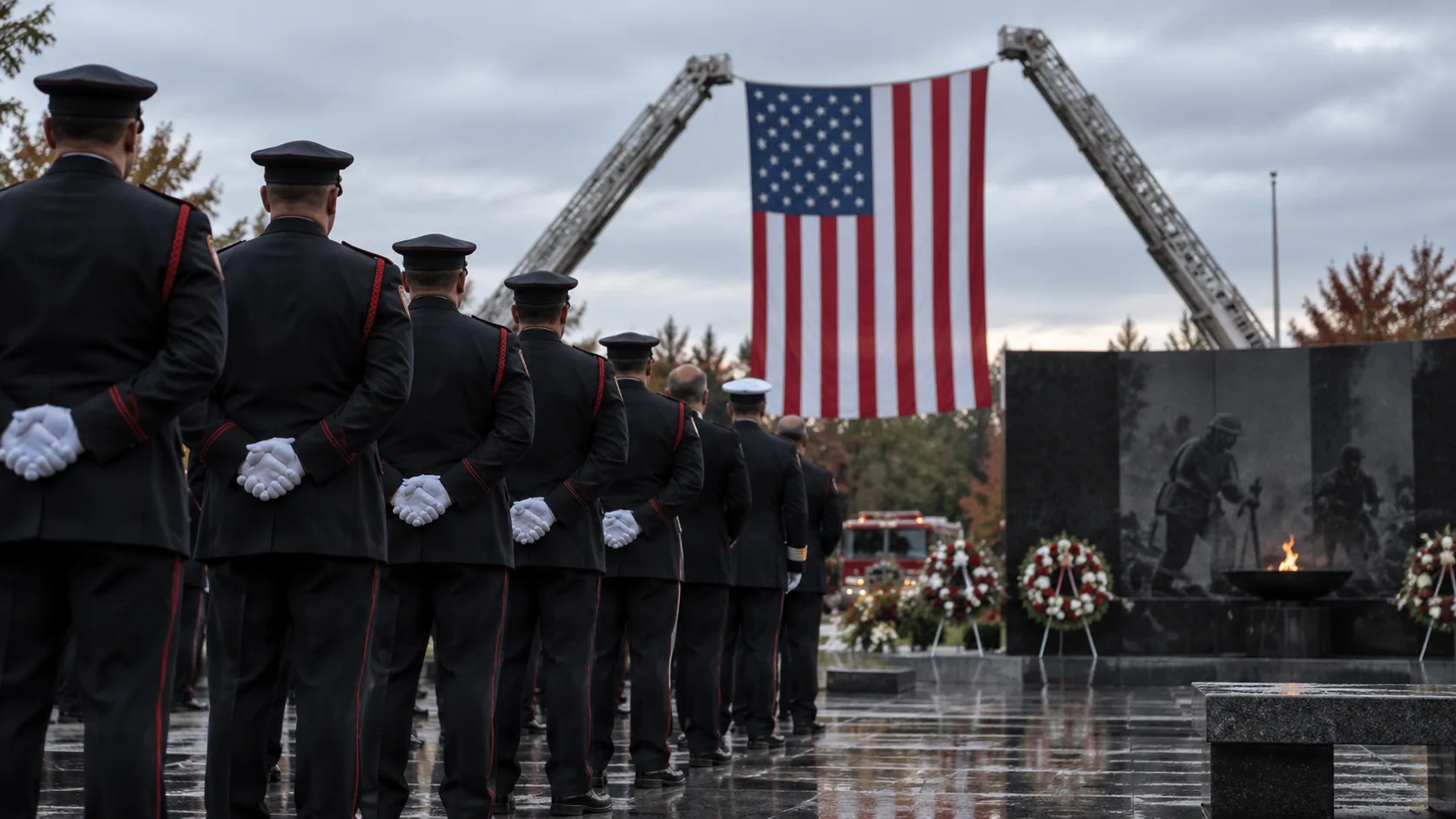
Departments follow a structured notification and support process in the hours after a line-of-duty death, built around decades of accumulated experience from other departments that have faced the same loss.
The PSOB Payment
The core of the federal safety net is the Public Safety Officers' Benefits program, administered by the Department of Justice's Bureau of Justice Assistance. For eligible deaths on or after October 1, 2025, PSOB pays a one-time lump sum of $461,656, adjusted for inflation each year. It's paid to a spouse, or split among surviving children, and it isn't insurance or a loan — it's a federal acknowledgment of the risk the job carried. On top of that, PSOB includes an education benefit worth roughly $1,574 per month of full-time enrollment for a surviving spouse or child, which can add up to close to $18,000 a year toward college costs.
Roughly 700 PSOB claims are reviewed each year across all public safety professions combined, and eligibility isn't limited to dying at the scene of a fire. It can cover a firefighter killed during training, while responding to or returning from a call, or from certain job-related illnesses. That last category recently expanded in a meaningful way: the Honoring Our Fallen Heroes Act, signed into law in late 2025, added occupational cancer, long the leading cause of firefighter line-of-duty deaths, to the list of conditions PSOB recognizes, after decades in which families of firefighters who died from job-linked cancer were routinely denied these federal benefits.
Did you know? A firefighter's employer-sponsored health insurance doesn't just disappear the day of a line-of-duty death. Federal law requires the employer to notify the health plan within 30 days, and the surviving family is entitled to continued coverage under COBRA for up to 36 months.
Beyond the Federal Benefit
PSOB is the floor, not the whole picture. Most states run their own line-of-duty death benefit programs on top of the federal payment, which can include additional lump-sum payments, workers' compensation death benefits, pension and retirement continuation, and scholarship funds specific to that state. Surviving family members may also qualify for Social Security survivor benefits if the firefighter had worked long enough to be covered, which is handled entirely separately from PSOB and usually starts with a report from the funeral director. Because the mix of available benefits varies so much by state and by department, fire service organizations strongly encourage every department to keep an up-to-date list of exactly what's available locally, rather than relying on family members to discover it during a crisis.
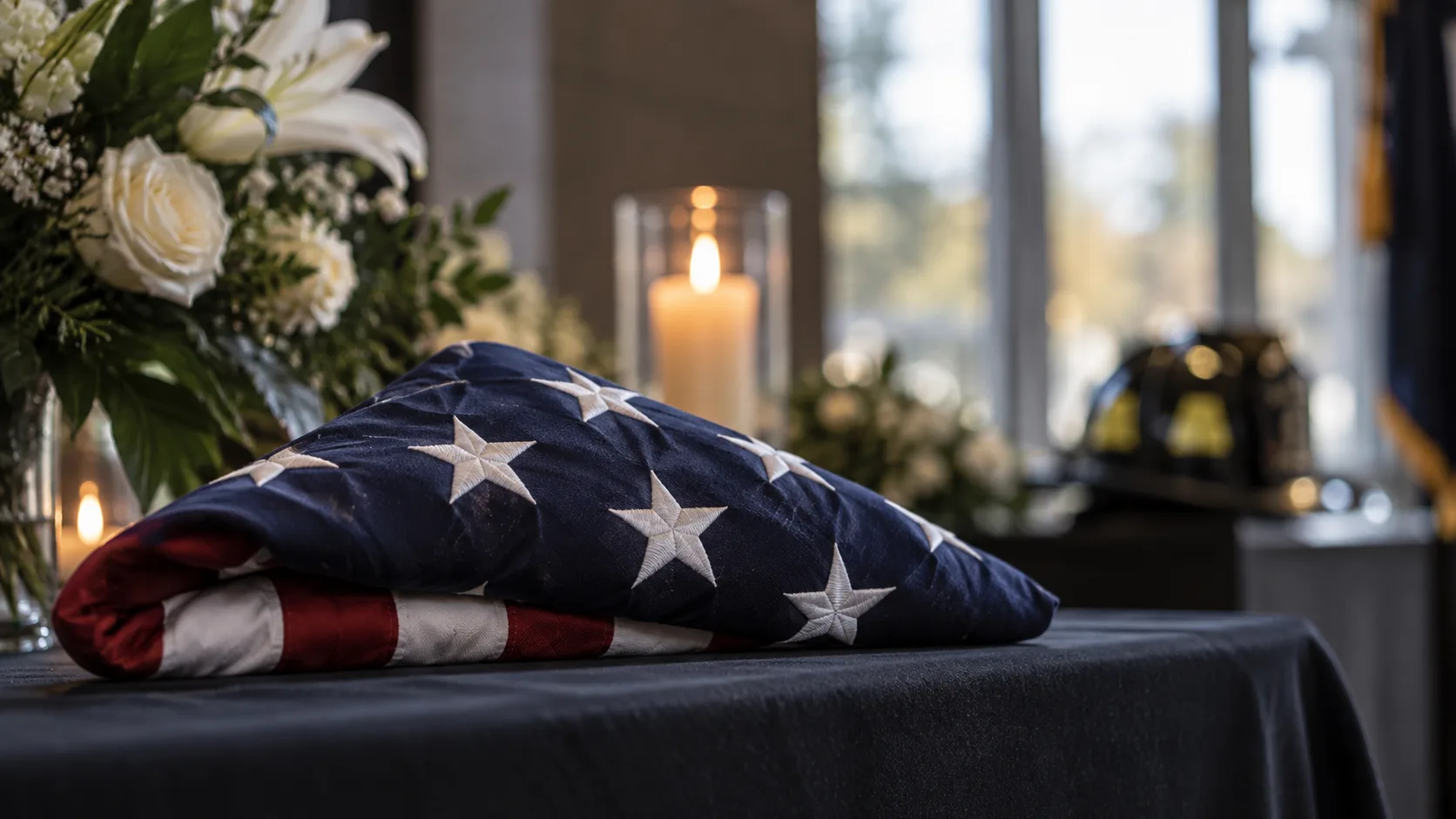
State-level benefits, pensions, and scholarship funds typically supplement the federal PSOB payment, though exactly what's available depends heavily on where the firefighter served.
Protecting the Family Through the Process
Fire service guidance is specific about protecting the family during the early hours, not just financially but emotionally: keeping radio traffic about the firefighter to a minimum so reporters and bystanders don't hear details before the family does, sending a department officer to stay with the family at the hospital, and designating a single liaison so the family isn't fielding different versions of the same information from multiple people. Departments are also warned to watch for scams — the federal PSOB office has had to publicly warn families about impostors posing as program staff and asking for personal or financial information over text message.
Bottom Line
When a firefighter dies in the line of duty, a structured, well-rehearsed process is what stands between their family and having to navigate an overwhelming federal and state bureaucracy alone during the worst days of their lives. A federal lump-sum payment near half a million dollars, ongoing education benefits for children, continued health coverage, and a rapid-response coordinator network exist specifically because departments learned, often the hard way, that grief and paperwork don't wait for each other.
Frequently Asked Questions
How much is the PSOB death benefit for firefighters?
For eligible deaths on or after October 1, 2025, the PSOB lump-sum death benefit is $461,656, adjusted for inflation annually, paid to the surviving spouse or divided among surviving children.
Does PSOB cover firefighters who die from job-related cancer?
Yes, as of the Honoring Our Fallen Heroes Act signed into law in late 2025, occupational cancer is recognized as a qualifying line-of-duty condition under PSOB, after decades in which it was not covered.
Do a firefighter's children get any education benefits if they die on duty?
Yes. PSOB includes an education benefit worth roughly $1,574 per month of full-time enrollment for a surviving spouse or child, which can total close to $18,000 a year.
Does health insurance end immediately after a line-of-duty death?
No. Federal law requires the employer to notify the health plan within 30 days, and surviving family members are entitled to continued coverage under COBRA for up to 36 months.





Comments 0
No comments yet. Be the first to share your thoughts!
Leave a Comment