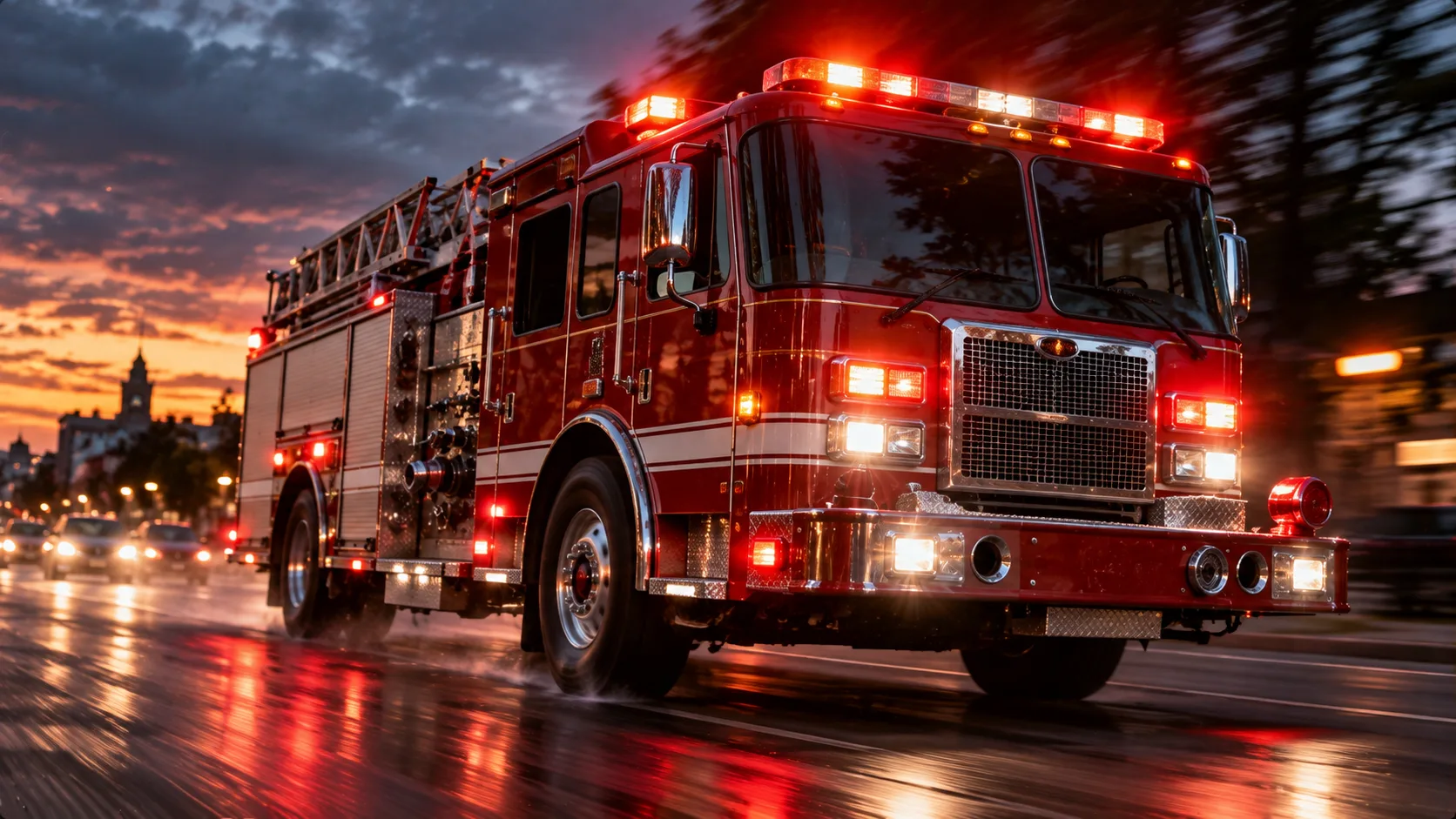
Why Do Fire Trucks Make Different Siren Sounds?
Ride along on any working call and you'll notice the driver isn't just leaning on one button the whole way there. The siren changes — a long sweeping wail on the open stretch, then a fast, chopping yelp as the rig comes up on an intersection, then a gut-punch of air horn if someone still hasn't moved. None of that is random. Each tone is a different tool, picked for a specific traffic problem, the same way you'd grab a different wrench for a different bolt.
From a Bell to an Electronic Wail
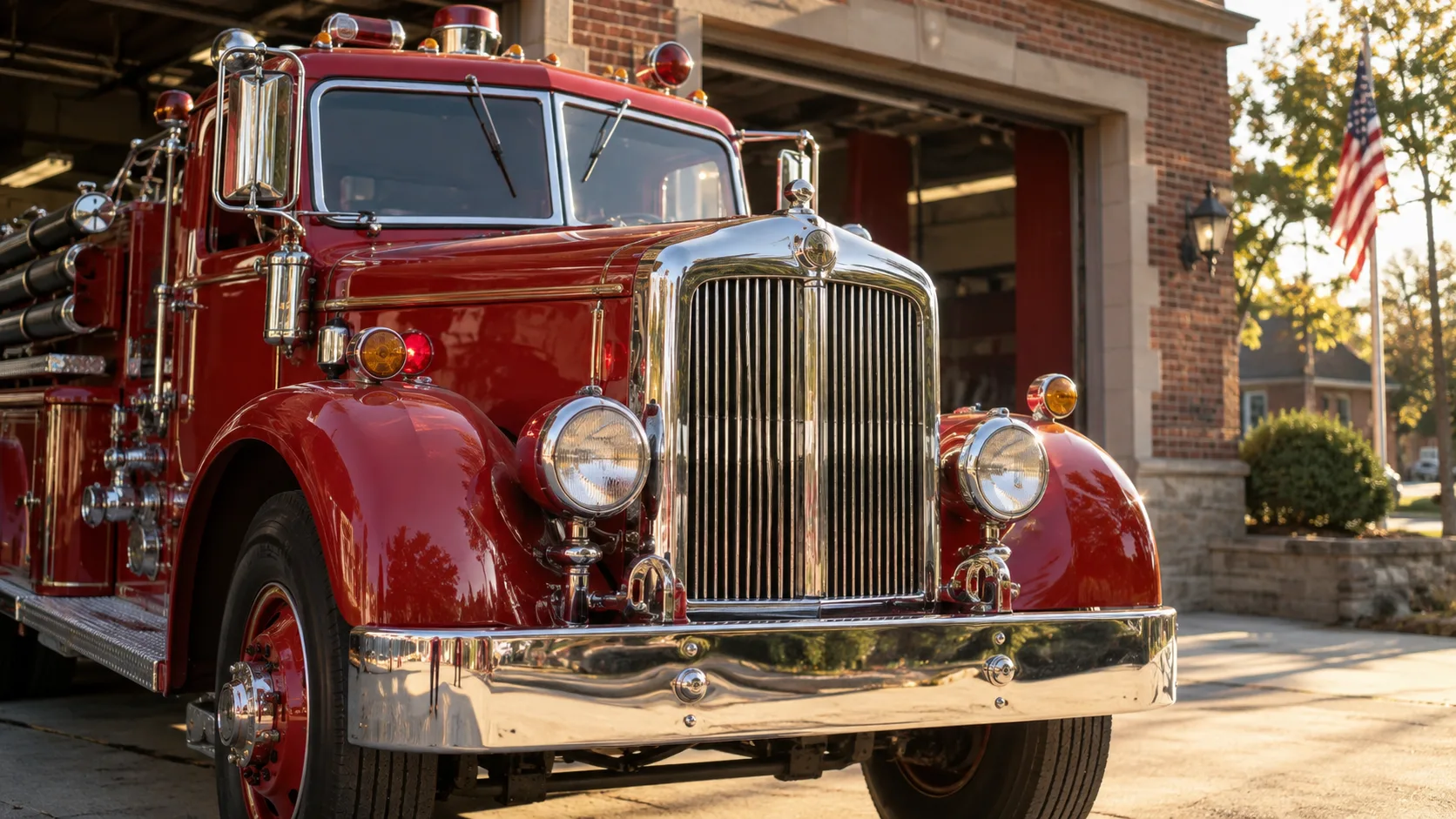
Early fire apparatus didn't have anything close to a modern siren — crews relied on a hand bell to announce they were coming, which worked fine when the loudest competing noise on the street was a horse-drawn cart. Mechanical sirens, the rotary kind with a motor spinning a fan through slotted housing, showed up in the early 1900s and produced that classic rising-and-falling wail almost by accident: the motor took time to spin up and slow down, so the pitch naturally rose and fell with it. By the 1970s, departments had largely moved to a duotone air horn setup, and by the 1980s, electronic sirens, which use a speaker and tone generator instead of a spinning motor, had taken over. Electronic systems can switch tones instantly instead of coasting up and down, which is exactly what made the modern multi-tone approach possible in the first place.
The Wail: Your Distance Warning
The wail is the long, oscillating tone most people picture when they think "siren." It's built for open road and long straightaways, where the goal is simply making sure drivers know something is coming from far enough away that they have time to react and pull over calmly. On a rural highway, a rig might run wail mode for the entire response and never switch tones at all.
The Yelp: Built for Tight Traffic
Once the rig hits denser traffic or approaches an intersection, the driver typically switches to yelp: the same basic tone, but cycled much faster, producing a rapid, choppy sound instead of a slow sweep. The quicker cycling grabs attention in a way a distant wail can't, which matters when the truck needs drivers in a tight space to notice it immediately rather than gradually.
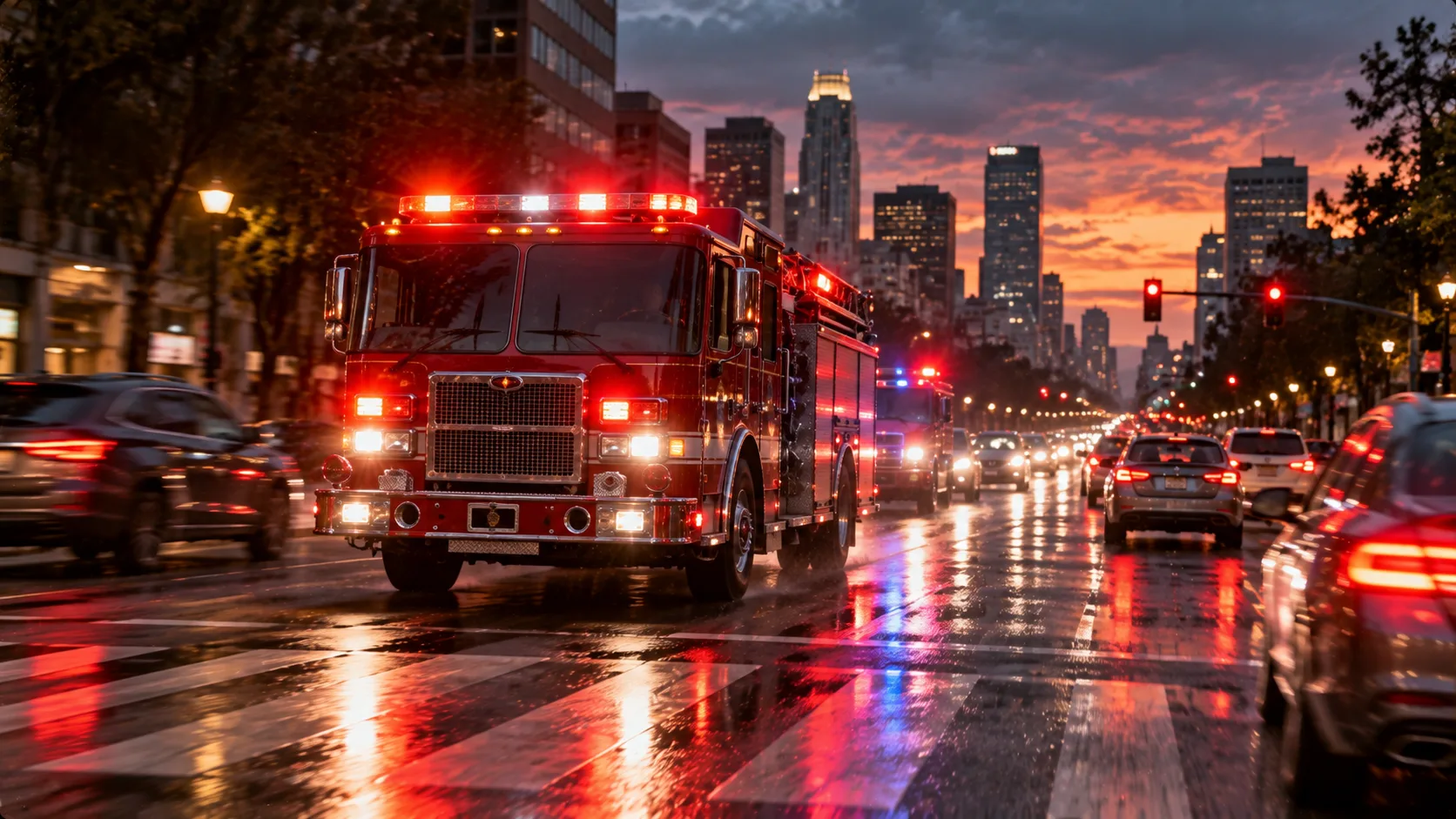
Drivers switch from a wail to a faster yelp as they approach intersections, where quick attention matters more than long-range warning.
The Phaser and the Air Horn: Last Resort Tools
Phaser mode, sometimes called a piercer, is the most aggressive electronic tone available: a very fast, high-pitched sound reserved for genuinely urgent moments, like a driver who clearly hasn't noticed the truck at all. It's intentionally hard to ignore, and also intentionally not used constantly, since a siren that screams at maximum intensity all the time stops registering as urgent to the people hearing it. The air horn serves a different purpose entirely. It's a deep, low-frequency blast that carries through closed windows, soundproofing, and bass-heavy car stereos in a way high-pitched electronic tones sometimes can't. Many drivers keep a thumb near the horn button specifically for the last few seconds before an intersection, pairing a horn blast with whatever siren tone is already running.
Did you know? Some modern rigs also carry a low-frequency "rumbler" tone, which you feel through your vehicle's frame and seat as much as you hear it. It's specifically meant to reach drivers who are hard of hearing or riding in a heavily soundproofed or bass-heavy vehicle.
Why Not Just Use One Loud Sound?
A single unchanging tone stops working as a warning the moment it becomes background noise, and in a dense city with constant traffic, that happens fast. Constantly switching between wail, yelp, and phaser keeps the sound novel enough that drivers' brains actually register it as something happening right now, not just ambient noise. It's also tactical: the tone itself tells a trained ear roughly how far away and how urgent the responding unit is, which is information both the public and other responders can use.
Bottom Line
The next time you hear a fire truck shift from a long wail to a rapid yelp, that's not the driver getting impatient — it's a deliberate tactical decision made in real time, based on exactly how close the rig is to other traffic. Wail for distance, yelp for congestion, phaser and air horn as a last-resort push through intersections. Four tools, one job: getting the rig there without anyone getting hurt on the way.
Frequently Asked Questions
What are the different fire truck siren sounds called?
The main tones are the wail (a slow, sweeping rise and fall), the yelp (a fast, choppy version of the wail), the phaser or piercer (a very fast, high-pitched tone), and the air horn (a deep, low-frequency blast).
Why do fire trucks switch siren sounds?
Drivers switch tones based on the traffic situation: wail for long, open stretches where distance warning matters most, and yelp or phaser near intersections and dense traffic where immediate attention matters more.
When did fire trucks start using electronic sirens?
Electronic sirens became widely adopted in the 1980s, replacing the mechanical, motor-driven rotary sirens that had been standard since the early 1900s and could only produce a slow wail.
What is a "rumbler" siren?
A rumbler is a low-frequency siren tone designed to be felt as a vibration, not just heard, which helps alert drivers who are hard of hearing or in heavily soundproofed or bass-heavy vehicles.



Comments 0
No comments yet. Be the first to share your thoughts!
Leave a Comment