
Why Are Some Fire Trucks Lime-Yellow Instead of Red?
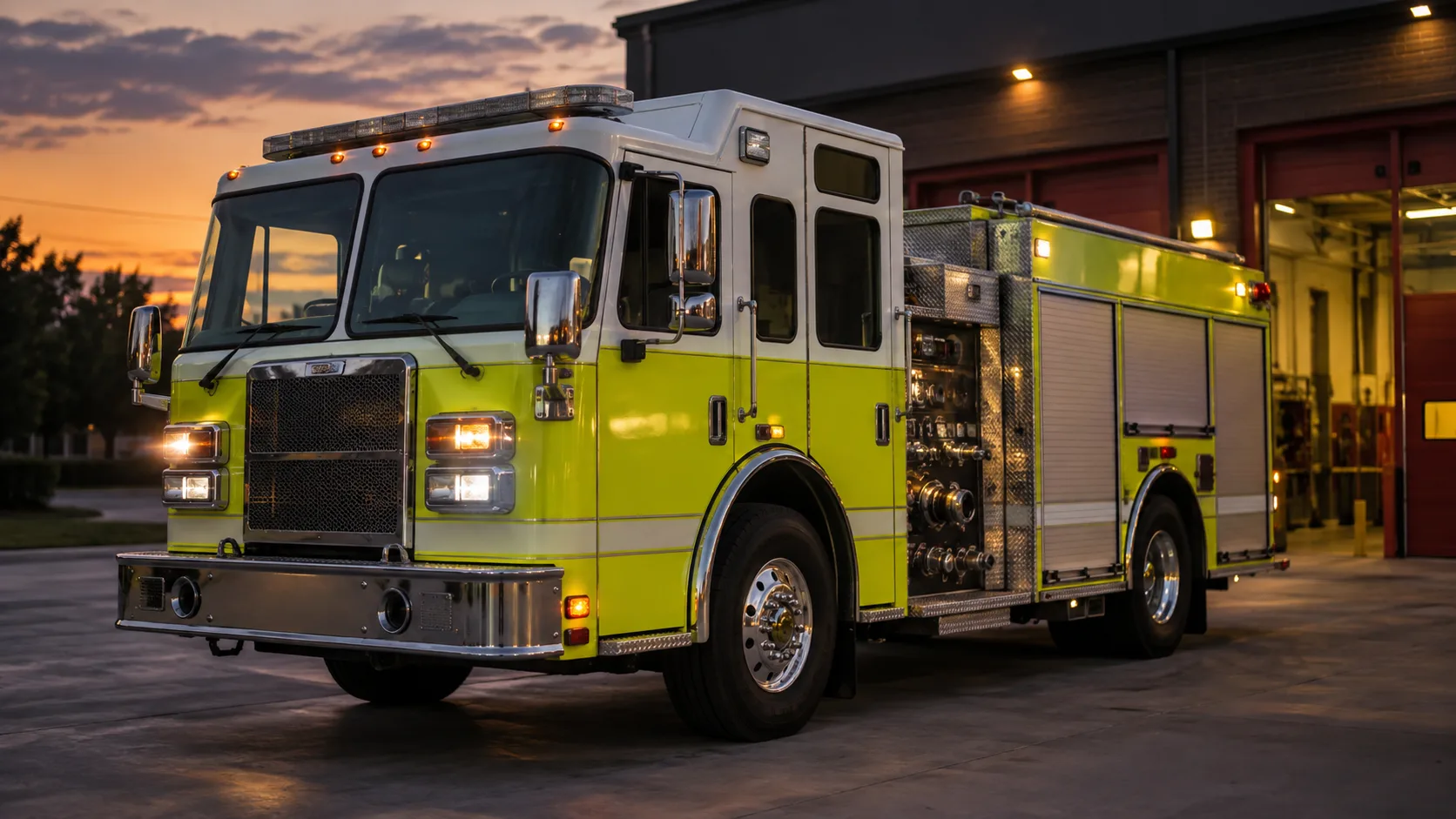
Somewhere between the highway and your subdivision, you've probably passed a fire truck that wasn't red at all — a bright, almost neon yellow-green rig that looked more like a safety vest than a fire engine. That's not a branding choice or a knockoff paint job. It's the result of decades of accident data suggesting that the color fire departments have used for over a century might actually be working against them.
The Dallas Study That Started the Debate
In the early 1970s, the Dallas Fire Department quietly began replacing its red apparatus with lime-yellow trucks with white upper cabs. That switch gave an optometrist named Dr. Stephen Solomon, who was also a volunteer firefighter, and systems safety engineer James G. King a rare natural experiment to work with: the same department, the same streets, the same crews, just a different paint color over time. Their first pass at the data, covering nine cities and roughly 750,000 fire vehicle runs, found lime-yellow trucks were about half as likely to be involved in intersection accidents as red ones.
They followed up with a tighter, four-year study of Dallas specifically, published in 1995 in the Journal of Safety Research. The conclusion was blunt: the likelihood of a visibility-related accident for a red or red-and-white fire truck was measurably higher than for a lime-yellow one, and the gap may have been as much as three times greater. When lime-yellow trucks were in an accident, the resulting injuries and vehicle damage tended to be less severe, too.
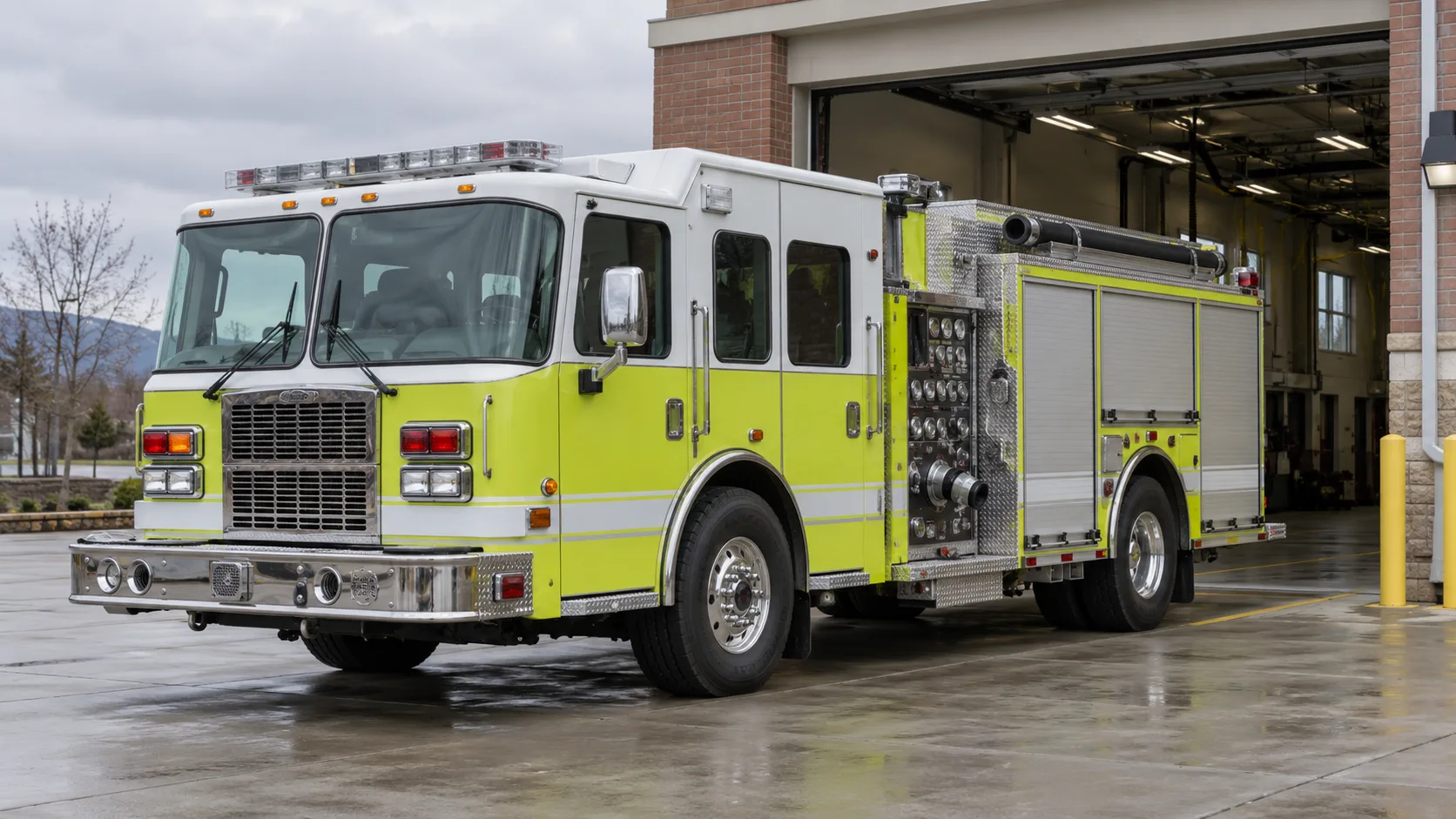
Dallas began switching to lime-yellow apparatus in the early 1970s, giving researchers a rare direct comparison against the department's older red fleet.
The Actual Eye Science: the Purkinje Shift
The reason isn't just a preference — it comes down to how the human eye is built. Your eyes rely on two types of light receptors: cones, which handle color vision and work best in daylight, and rods, which take over in low light but can't distinguish color well. As light drops, sensitivity shifts toward the green end of the spectrum, a phenomenon called the Purkinje shift. In practice, that means red objects lose brightness and contrast fast as light fades, while yellow-green objects, sitting closer to where the human eye is most sensitive (around 555 nanometers), stay comparatively easy to pick out. Solomon has put it more bluntly in interviews: pairing red with black trim on a truck is close to the worst possible combination for nighttime visibility, since the human eye is effectively red-blind after dark.
It's Not Just an American Finding
The U.S. wasn't first to notice this. Back in 1965, researchers at Lanchester College of Technology working with Coventry Fire Brigade in England found that lime and bright yellow held their visibility better than red under a range of artificial street lighting, in daylight, and in bad weather. A follow-up study in Australia in 1978 reached similar conclusions. That research pushed many U.K. fire vehicles toward retroreflective yellow markings well before American departments started experimenting with full lime-yellow paint jobs.
Did you know? An earlier 1984 study across five cities found red fire apparatus were involved in accidents at more than double the rate of lime-yellow apparatus — 31.9 per 100,000 runs versus 15.3 per 100,000 runs.
Why Most Departments Still Haven't Switched
Despite the data, lime-yellow never became the national standard, and some departments that tried it have actually gone back to red. In St. Petersburg, Florida, the fire chief polled his own firefighters after ordering new rescue units, and more than 70% said they wanted the department back on red. A 2009 U.S. Fire Administration study, working with the International Fire Service Training Association, added an important nuance to the visibility debate: recognition matters as much as raw visibility. If a community doesn't associate lime-yellow with "fire truck," a driver might see the vehicle clearly and still not immediately understand what it is or how to react. That study pointed departments toward a middle path that's become far more common than a full repaint: keeping the traditional red, but adding retroreflective striping, chevron patterns, and brighter warning lights, which the research found meaningfully improves nighttime visibility on its own.
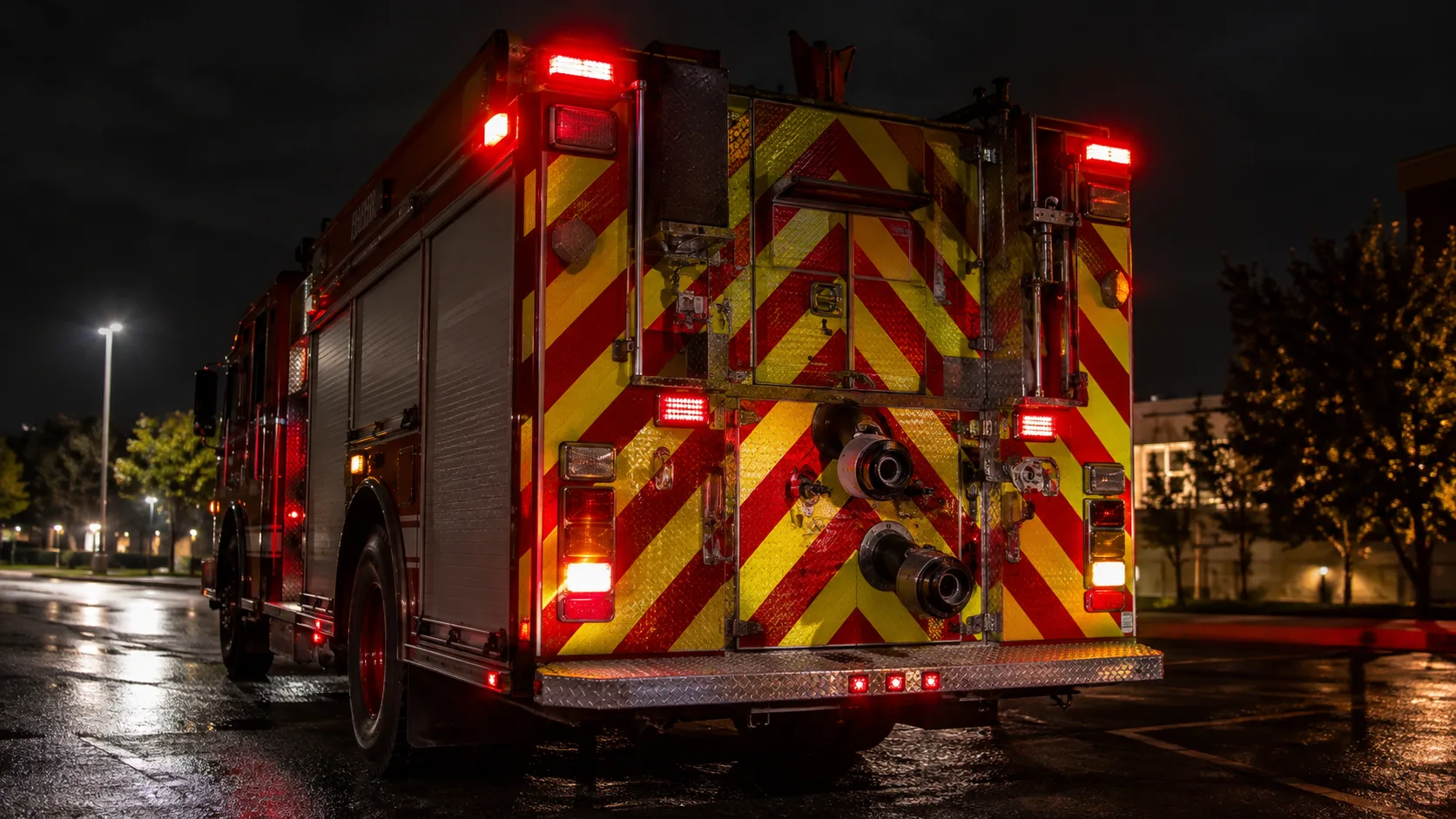
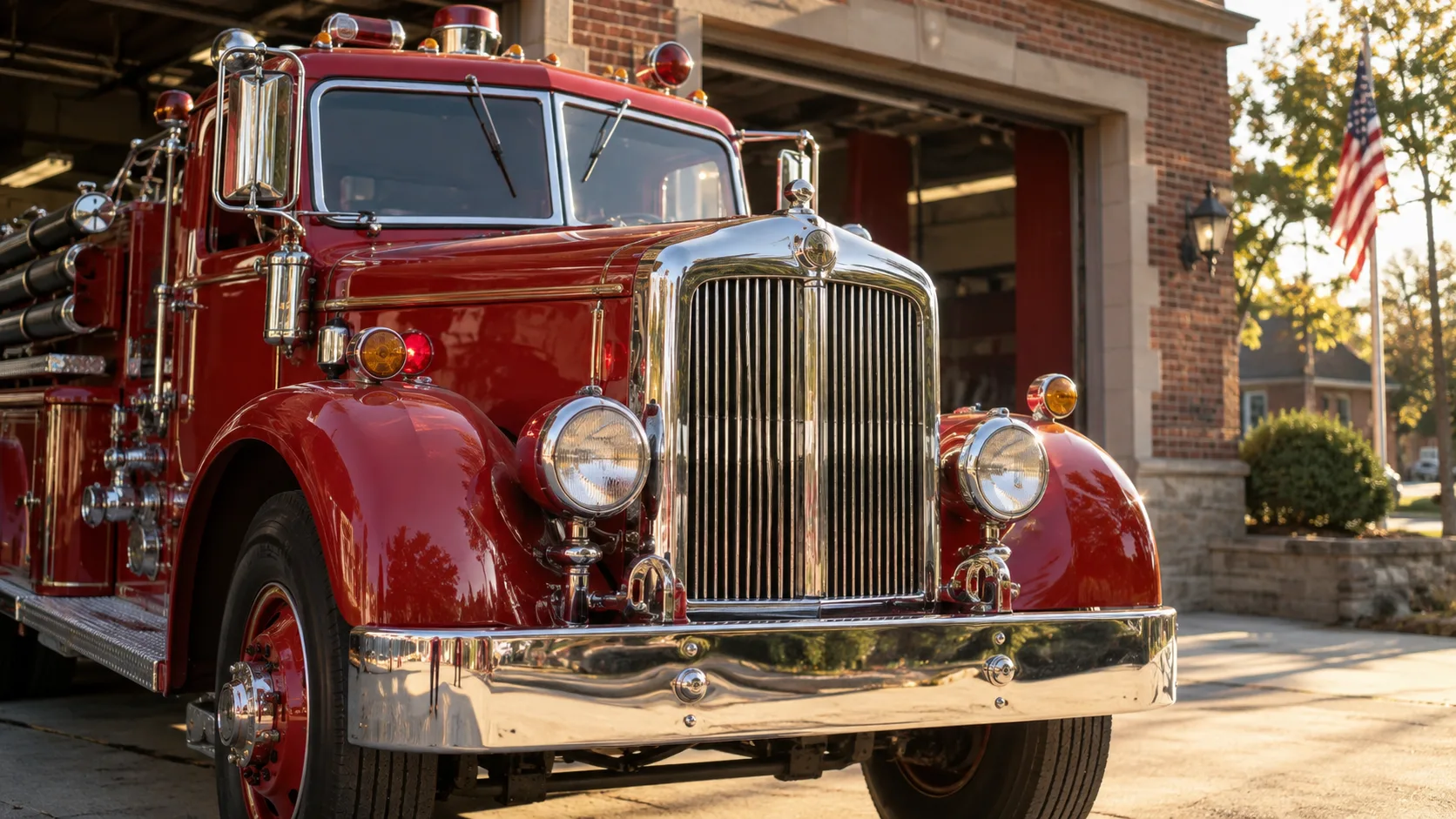
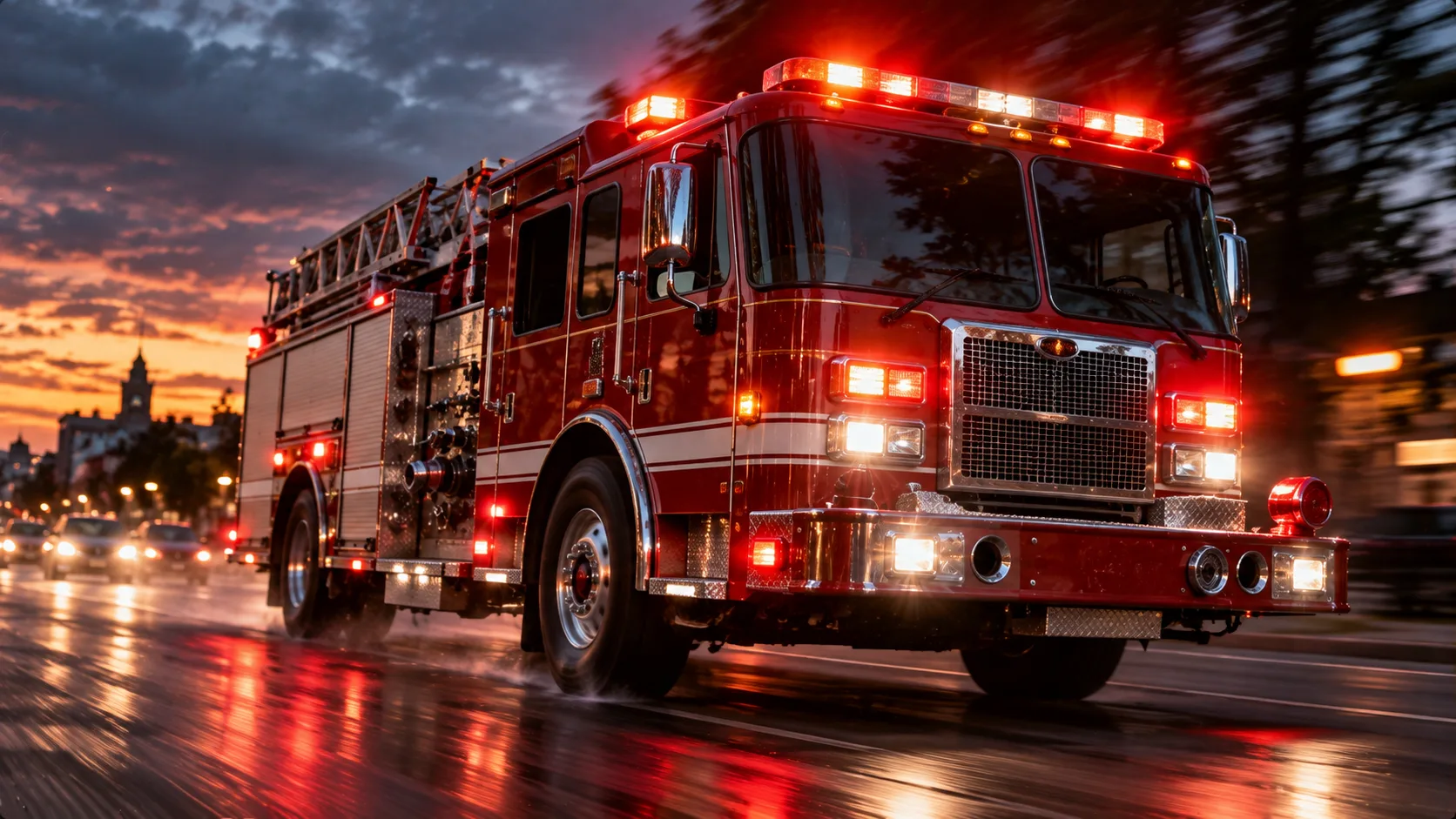
Most departments have chosen retroreflective striping over a full color change, keeping tradition while still improving nighttime visibility.
Bottom Line
Lime-yellow fire trucks aren't a fashion statement. They're the direct result of research, starting with a natural experiment in Dallas in the 1970s and confirmed by multiple later studies, showing that yellow-green sits closer to where the human eye is most sensitive, especially at night. But visibility research turned out to be only half the equation. Recognition, tradition, and firefighter preference have kept most of the country on red, with reflective striping doing the visibility work that a full repaint would otherwise handle.
Frequently Asked Questions
Are lime-yellow fire trucks actually safer than red ones?
Research, including a widely cited 1995 study of the Dallas Fire Department, found red fire trucks were involved in visibility-related accidents up to roughly three times more often than lime-yellow ones.
Why does lime-yellow show up better than red?
It comes down to how the human eye works: as light fades, sensitivity shifts toward the green end of the spectrum (the Purkinje shift), making red objects harder to see while yellow-green objects stay comparatively visible.
If lime-yellow is safer, why do most fire trucks stay red?
A 2009 U.S. Fire Administration study found that recognition matters as much as raw visibility — if a community doesn't associate lime-yellow with a fire truck, the color advantage can be offset. Tradition and firefighter preference have also kept many departments on red.
What do departments do instead of switching to lime-yellow?
Most add retroreflective striping, chevron patterns, and brighter warning lights to their traditional red apparatus, which research has shown meaningfully improves nighttime visibility without changing the base color.
Comments 0
No comments yet. Be the first to share your thoughts!
Leave a Comment