What Actually Happens When a Firefighter Gets Hurt on the Job?
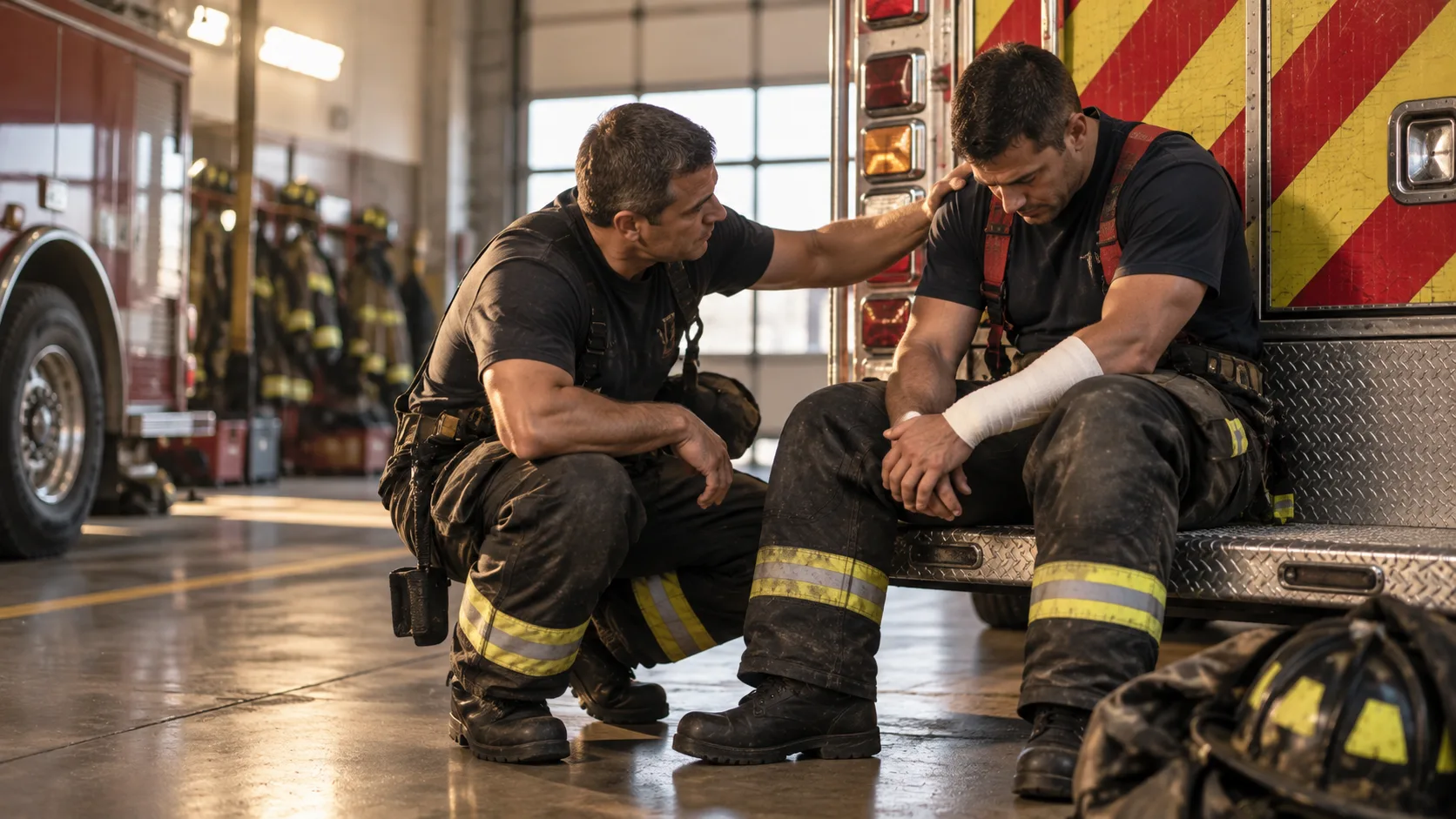
Roll an ankle on a fireground, tear a shoulder pulling ceiling, or get diagnosed with a cancer years after a career of breathing smoke that leaked past a mask seal — all three are "injured on duty," and all three trigger a claims process built around a legal concept called presumption. It's a small word that does a lot of work: instead of a firefighter having to prove their condition came from the job, the law starts by assuming it did, and puts the burden on the employer to prove otherwise.
The Basic Claim: No-Fault, But Not No-Paperwork
Workers' compensation for firefighters runs on a no-fault system, meaning nobody has to prove the department did anything wrong for a claim to be valid — an injury that happens on the job is generally covered regardless of how it happened. In practice, that still means reporting it fast: most jurisdictions expect an injury or illness to be reported within 30 days, and it needs to go through an approved medical provider for the claim to move smoothly. Once reported, the employer's insurance carrier opens a claim, and in many states, failing to accept or deny that claim within a set window, often 90 days, automatically creates a presumption in the firefighter's favor while the review continues.
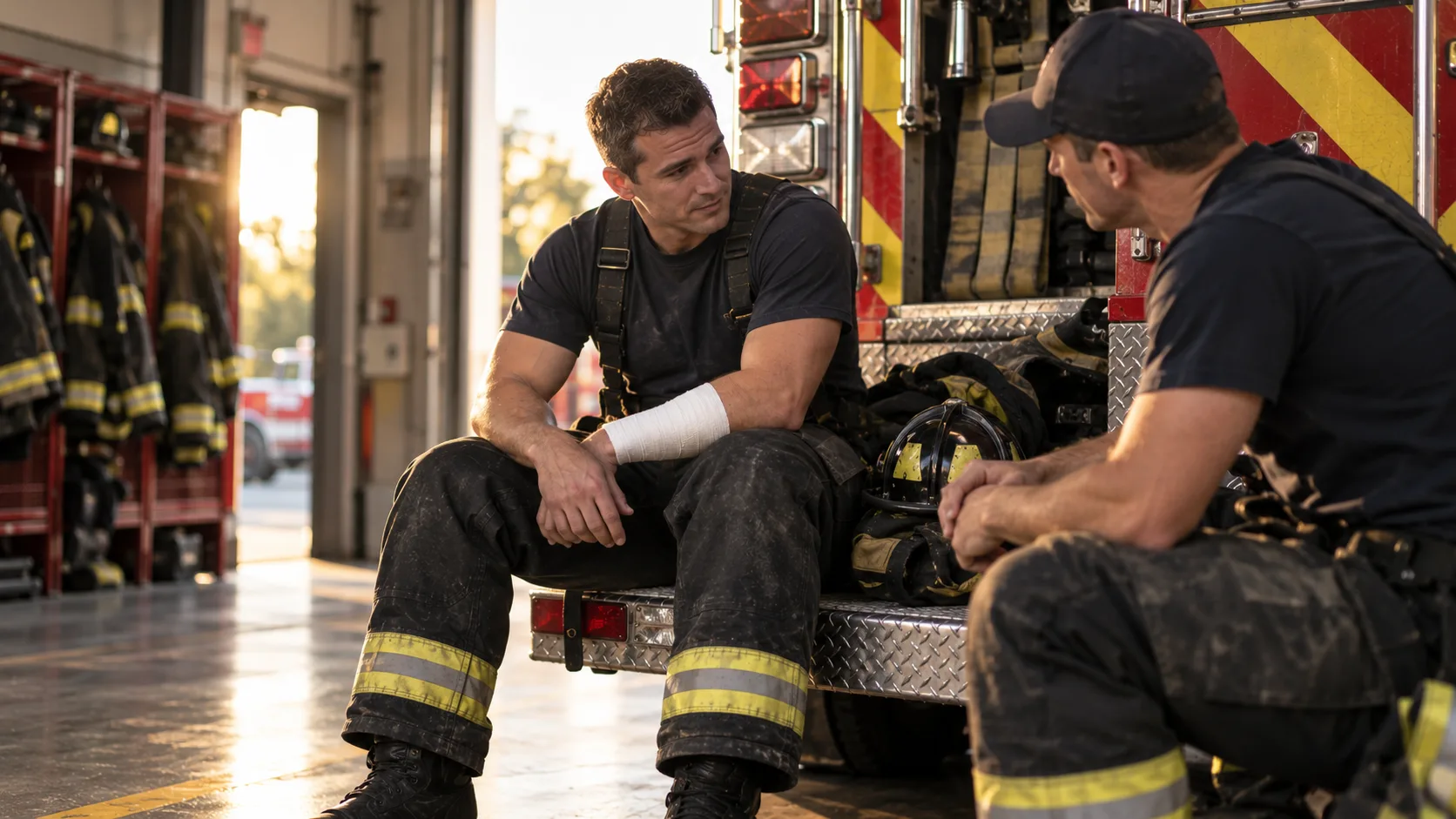
Roughly 58,000 U.S. firefighters are injured on duty in a typical year, and most claims start with the same basic step: reporting the injury within 30 days through an approved medical provider.
Why "Presumption" Matters So Much in This Job
For an acute injury, like a fall or a burn, proving the job caused it is straightforward. The harder problem has always been the slow-developing conditions: cancer, heart disease, lung disease, and more recently PTSD, all of which can take years to surface and are genuinely difficult to trace back to one shift or one fire. Presumptive illness laws exist specifically to solve that problem. Under a presumption law, if a firefighter is diagnosed with a condition on the state's covered list, the law assumes it's work-related unless the insurer can prove otherwise, rather than requiring the firefighter to build that case from scratch. More than half of U.S. firefighters are expected to develop cancer at some point in their careers according to occupational health researchers, which is a large part of why presumption laws have become such a central fight inside the fire service over the past decade.
These laws vary enormously by state, though. Some cover a long list of cancers and cardiac conditions; others cover very little. Most require a minimum number of years of service before the presumption kicks in — six years for cancer claims under Ohio's SB 27, for example. California's Senate Bill 542 extended presumption specifically to PTSD, but only after at least 10 years of service and a diagnosis meeting formal psychiatric criteria. Federal firefighters and firefighters in some states still have no presumption law at all, meaning they have to prove the job-connection case-by-case, the hard way.
Did you know? In California, injured firefighters covered under Labor Code Section 4850 receive their full regular salary, tax-free, for up to a year while recovering — not the two-thirds wage replacement that applies under standard workers' comp in most other jobs.
What Coverage Actually Looks Like Day to Day
Once a claim is accepted, workers' comp generally covers medical treatment related to the injury, and wage replacement if the firefighter can't work their normal duties while recovering, sometimes through a specific paid-leave category like "4850 pay" rather than standard disability payments. Firefighters are typically entitled to choose their own treating physician rather than being stuck with whoever the department's insurer first assigns, which matters more than it sounds: an occupational physician unfamiliar with fireground demands can under-restrict a firefighter and send them back to full duty before they're actually ready. Many larger departments now maintain relationships with physicians who specialize specifically in first responder injuries for exactly this reason.

Recovering firefighters typically have the right to choose their own treating physician rather than being assigned one automatically by the department's insurer.
Why Some Firefighters Stay Quiet About Symptoms
Workers' comp attorneys who represent firefighters describe a recurring pattern: firefighters delaying reporting symptoms out of fear of being pulled off duty, losing overtime opportunities, or being seen as unreliable by their crew. That instinct works directly against the presumption system, which depends on documentation existing in the first place, whether that's medical records, a logged exposure history, or a doctor's note connecting a condition to the job. A presumption law only protects a firefighter who has something on record for it to apply to.
Bottom Line
An on-duty injury for a firefighter isn't handled like an injury in most other jobs. Presumptive illness laws shift the burden of proof for the conditions the job is most associated with, no-fault workers' comp covers medical care and lost wages without requiring blame, and in some states, injured firefighters keep their full salary rather than a fraction of it while they recover. None of that happens automatically, though — it depends on the injury being reported, documented, and treated by someone who understands what the job actually demands.
Frequently Asked Questions
What does "presumptive illness" mean for firefighters?
It's a legal principle where certain conditions, like specific cancers, heart disease, or PTSD, are automatically presumed to be work-related for a firefighter, shifting the burden of proof to the employer or insurer to show otherwise, rather than requiring the firefighter to prove the connection.
Do all states have presumptive illness laws for firefighters?
No. Coverage varies significantly by state, and federal firefighters along with firefighters in some states have no presumption law at all, meaning they must prove a job connection case-by-case.
Does an injured firefighter get full pay while recovering?
It depends on the state. In California, for example, Labor Code Section 4850 provides injured firefighters their full, tax-free salary for up to a year, which is more generous than the two-thirds wage replacement typical of standard workers' compensation elsewhere.
Can a firefighter choose their own doctor for a workers' comp claim?
In most cases, yes. Firefighters are generally entitled to select their own treating physician rather than being limited to whoever the department's insurance carrier first assigns.



Comments 0
No comments yet. Be the first to share your thoughts!
Leave a Comment