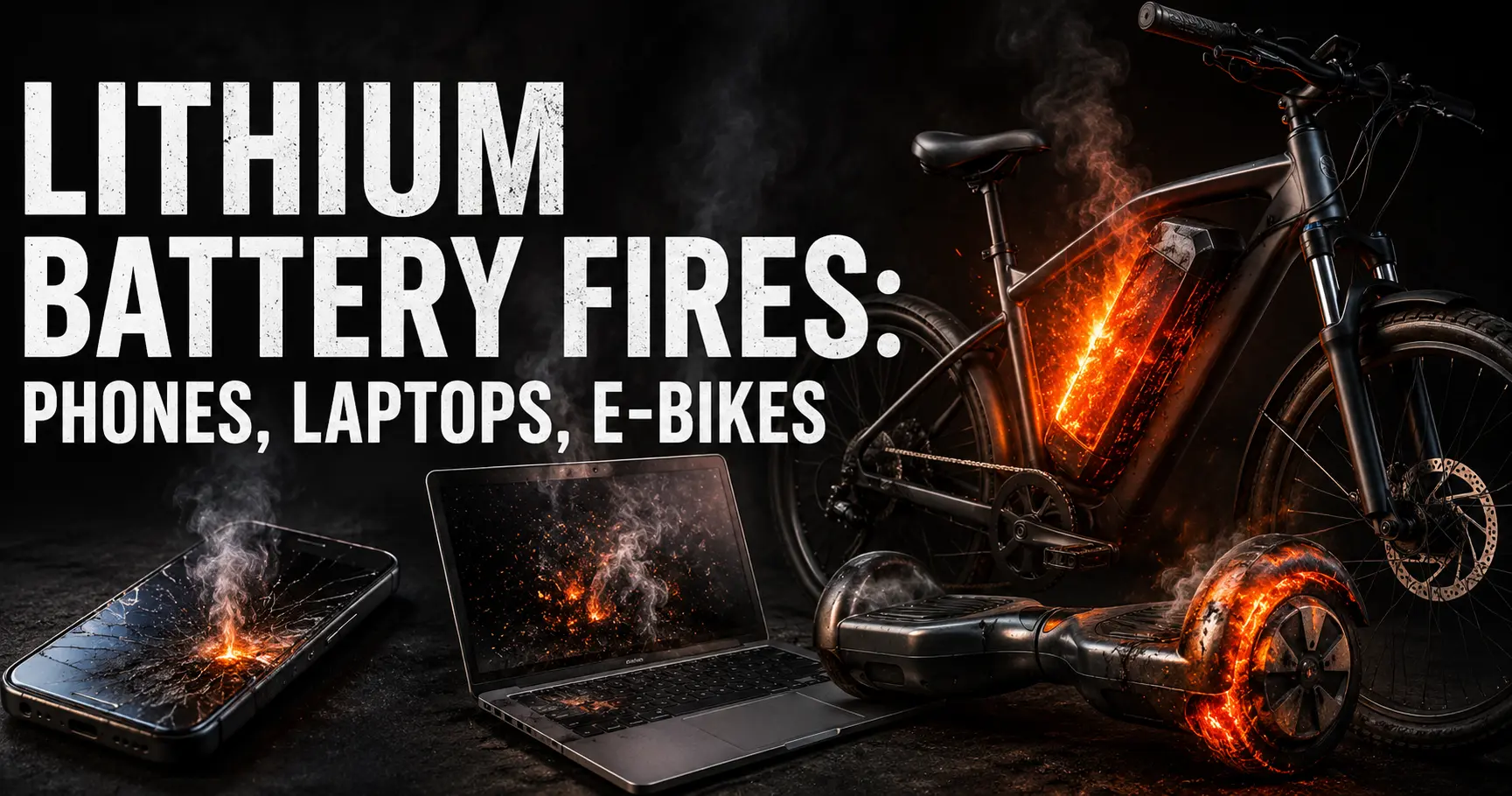

The average American household now contains dozens of lithium-ion batteries — in phones, laptops, tablets, wireless headphones, power banks, e-bikes, electric scooters, hoverboards, cordless tools, and an expanding range of other devices. Most of these batteries will never cause a problem. Some will. And the ones that do fail tend to fail fast, produce toxic smoke immediately, and in the worst cases, initiate a fire that behaves like nothing the household fire extinguisher was designed for.
New York City alone responded to more than 260 lithium-ion battery fires in 2023, resulting in 18 deaths — the majority from e-bike and e-scooter batteries charging in apartments. This is not a rare edge-case hazard. It is a documented and increasing source of residential fire deaths, driven directly by the proliferation of devices most households now own.
In this article:
Why Lithium-Ion Batteries Catch Fire
Lithium-ion batteries store a significant amount of energy in a compact space — this is their value and their risk. The energy is stored in a chemical form that is stable under normal operating conditions but unstable under specific stress conditions. When the battery experiences one of those stress conditions, a failure mode called thermal runaway can occur.
Thermal runaway in a small consumer battery works the same way as in an EV battery pack — just at a smaller scale. An internal failure causes one cell to heat rapidly. The heat breaks down the cell's internal separator, causing a short circuit that releases more heat. The heat causes the electrolyte to vaporize and in some cases ignite. The venting gases are flammable and toxic. In a fully enclosed battery (phone, laptop), the buildup of gas pressure can rupture the battery case before ignition occurs.
The conditions that trigger thermal runaway in consumer devices:
- Overcharging: Charging beyond the cell's maximum voltage causes lithium plating on the anode — a condition that creates internal short circuits. This is why quality chargers have charge management electronics. Cheap or counterfeit chargers may not.
- Physical damage: A cracked phone screen, a dented laptop corner, a battery pack that was dropped — physical impact can puncture the internal separator and cause an immediate or delayed short circuit.
- Heat exposure: Leaving a phone on a car dashboard in summer, charging a device under a pillow, leaving a battery pack in a hot car — sustained high ambient temperature accelerates chemical degradation and can push a marginal battery toward failure.
- Age and wear: As batteries age and go through charge cycles, their internal chemistry changes. An old battery has reduced capacity and may have developed internal defects that make failure more likely. A battery that used to charge reliably but now swells, drains quickly, or runs hot is a battery closer to the end of its safe service life.
- Counterfeit or substandard cells: Batteries made from lower-quality materials with inconsistent manufacturing lack the safety margins built into certified cells. They fail at higher rates under conditions that certified cells handle without incident.
Warning Signs Before a Battery Fire Starts
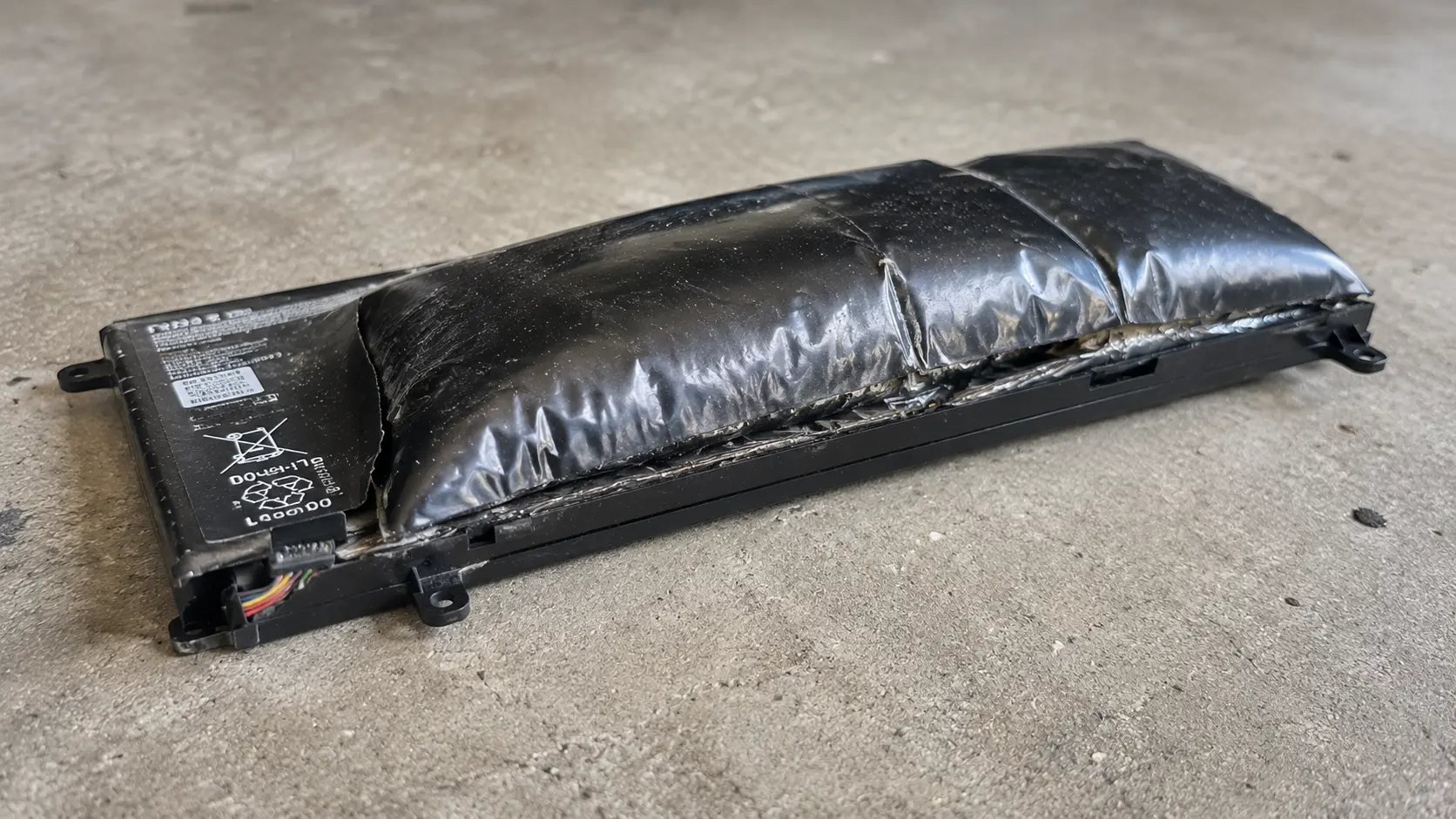
Battery fires are not always sudden. Many have a window of warning signs — anywhere from minutes to days — before ignition occurs. Knowing these signs matters because a swelling phone or a hot laptop is not just an inconvenience. It is a fire in its early stages.
- Swelling or bulging of the device or battery. A phone whose screen has started to separate from the body. A laptop whose lid no longer closes flat. A battery pack that is noticeably thicker than it was. These are all signs of internal gas buildup — the precursor to thermal runaway. Stop using the device immediately.
- Unusual heat during charging or use. All batteries produce some heat. A phone that is uncomfortable to hold during charging, a laptop that burns your lap, a battery pack that is hot to the touch — these are outside normal operating temperatures. Stop charging. Let it cool. If it happens consistently, the battery is failing.
- A chemical or sweet burning smell from the device. The electrolyte venting before ignition produces a distinctive smell — sometimes described as sweet, chemical, or solvent-like. If a device smells wrong, put it down on a non-combustible surface in an open area and move away from it.
- Hissing, popping, or crackling sounds from the battery or device. Internal venting and cell rupture produce sounds before visible fire. These sounds from a charging device are not normal and require immediate action.
- Rapid, unexpected battery drain followed by heat. A battery that goes from 80% to 20% in minutes while running hot is experiencing an internal failure. Stop using it.
- The device does not turn off or is unresponsive while getting hot. An internal short circuit can cause a device to behave erratically while producing heat. Unresponsiveness plus heat is a serious warning.
A swollen battery is not a warranty issue. It is a fire hazard. Do not continue using a device with a swollen battery while you wait for a replacement. Do not charge it. Remove it from your home or place it in a metal container away from combustibles until you can safely dispose of it. Most electronics retailers and battery manufacturers have take-back programs for damaged batteries.
Device-by-Device Risk and What To Know
Relatively low individual fire risk due to small battery size, but the sheer number in use means phone battery fires are common in total. Main risks: charging overnight under pillows (heat trap), third-party counterfeit chargers, and batteries in damaged phones. Do not charge under pillows or on soft surfaces.
Higher energy content than phones. Main risk: charging while on soft surfaces (beds, couches) that block ventilation. Also: old batteries in aging laptops that are still being used. A laptop from 2015 with its original battery has a battery that is 9+ years into its service life. Replace it.
The highest-risk category in residential settings. Large battery packs, frequently charged in apartments and hallways (fire egress routes), and a high proportion of low-cost devices with non-certified batteries. NYC's fire deaths were overwhelmingly from this category. Charge in open spaces away from sleeping areas and exits.
Documented cause of multiple fatal house fires since their mass introduction in 2015. The early hoverboard fire epidemic was largely driven by counterfeit batteries. Certified boards (UL 2272 listed) have significantly lower risk. Uncertified boards from unknown manufacturers carry high risk. Never charge overnight unsupervised.
Unregulated market means significant quality variation. A $8 power bank from an unknown brand may use recycled or substandard cells with no safety protection circuits. Use power banks from established manufacturers. Do not leave them charging unattended for extended periods.
Professional-grade tool batteries (DeWalt, Milwaukee, Makita, Bosch) are generally well-manufactured. The risk is in using heavily worn batteries past their reliable service life, charging damaged batteries, or using aftermarket batteries not designed for the tool platform.
If a Battery Fire Starts — What To Do
A battery fire in its earliest stage — a phone smoking, a laptop producing smoke and smell, a small visible flame from a device — has a narrow window for intervention. Here is the decision tree:
If the fire is just starting — first 30 seconds
If the device is smoking or has a small flame and you are already in the room, you have one chance at a contained response. Pick up the device with heavy gloves or a thick cloth (not bare hands — thermal runaway devices reach temperatures that cause instant burns) and move it to a non-combustible outdoor surface — concrete, asphalt, away from any structure or combustible. Do not put it in the sink — if the fire is already in thermal runaway, water can react with the burning lithium and produce hydrogen gas that accelerates combustion. Outside on concrete is the correct destination.
If the device is too hot to handle safely, do not attempt it. Move to the next step.
If you cannot safely handle the device
Get everyone out of the room and close the door. Call 911. Do not re-enter. A lithium battery in full thermal runaway produces toxic hydrogen fluoride gas — the same gas produced in EV battery fires — along with other toxic combustion products. A phone-sized battery produces a smaller amount than a vehicle battery pack, but it is still toxic at confined indoor concentrations and will incapacitate you if you remain in the space breathing it.
If the fire has spread beyond the device
Treat it as a structure fire. Get everyone out, close doors, call 911 from outside.
Can You Use Water on a Lithium Battery Fire?
The answer is nuanced and practically important. Large quantities of water are effective for cooling lithium battery fires — this is what fire departments use on EV battery fires. The issue with small-scale home battery fires is different.
For a phone or laptop battery in active thermal runaway, pouring a glass of water on it may splash burning material and does not provide enough cooling to stop the internal reaction. The reaction is self-sustaining from internal heat — the same way a larger EV battery fire is — and a small amount of water cools the exterior without reaching the internal cells where the reaction is occurring.
The practical guidance: if you can safely place the device in a large container and fill it with water — a metal bucket, a large cooking pot — complete submersion can stop the reaction by removing heat faster than the internal reaction produces it. This requires a large volume of water relative to the device. A phone in a 5-gallon bucket of water is submersion cooling. A phone under a running faucet is surface cooling that may not be sufficient.
For larger devices — e-bike battery, hoverboard — submersion is not practical in a household setting. The correct response is outdoor placement on non-combustible surface and 911.
Charging Habits That Prevent Fires
- ✓Use the original charger or a certified replacement. The charger designed for the device has the correct voltage, current, and charge management for that specific battery. Third-party chargers — especially cheap or unbranded ones — may not.
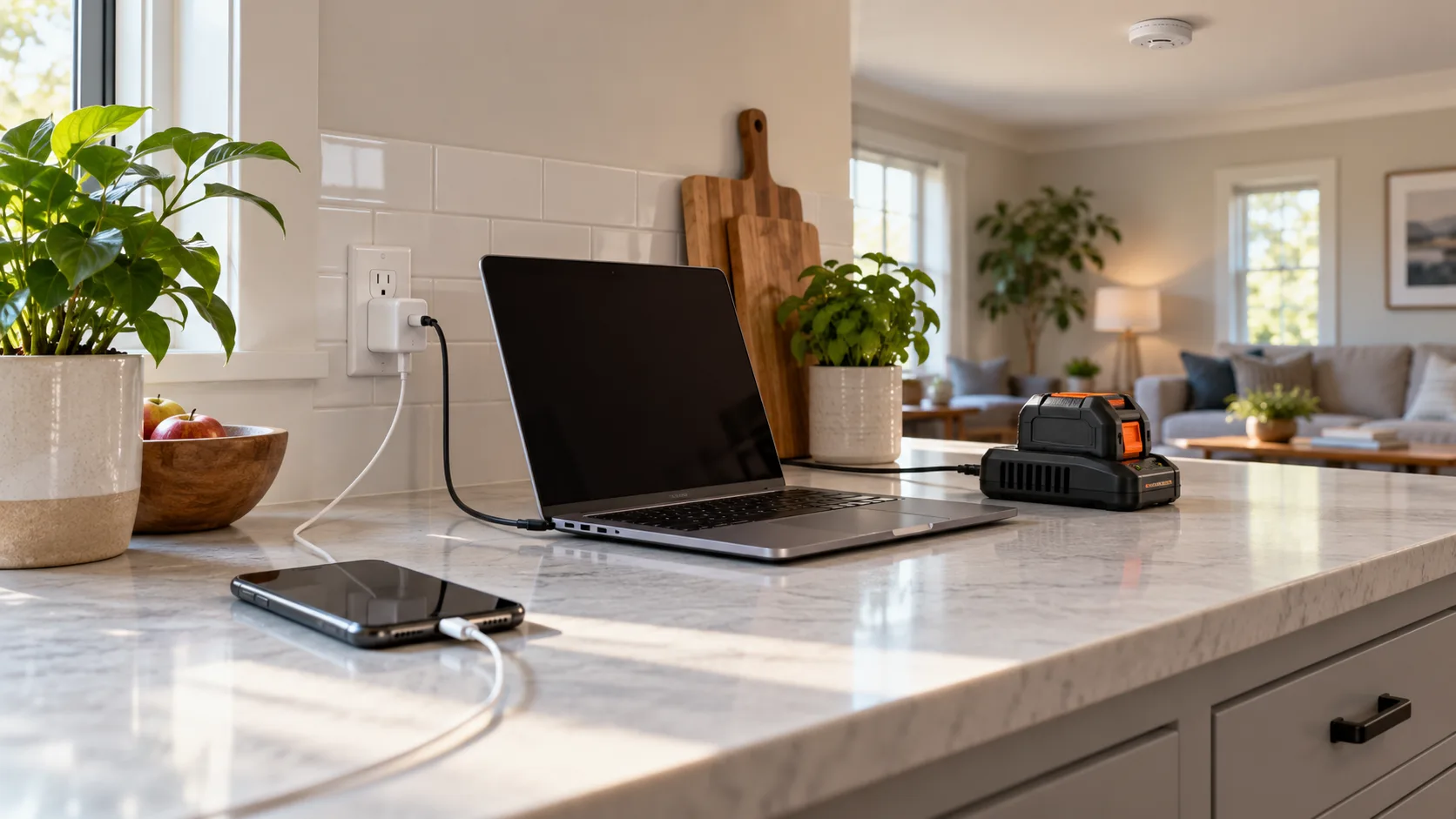
- ✓Charge on hard, non-combustible surfaces. On a desk, on a nightstand, on the floor — not under pillows, not under blankets, not on a bed where soft material can surround the device and trap heat.
- ✓Do not charge to 100% and leave plugged in indefinitely. Most modern devices manage this automatically, but older chargers and devices may not. Unplugging after a full charge reduces the time the battery spends at maximum voltage — the condition most associated with accelerated degradation.
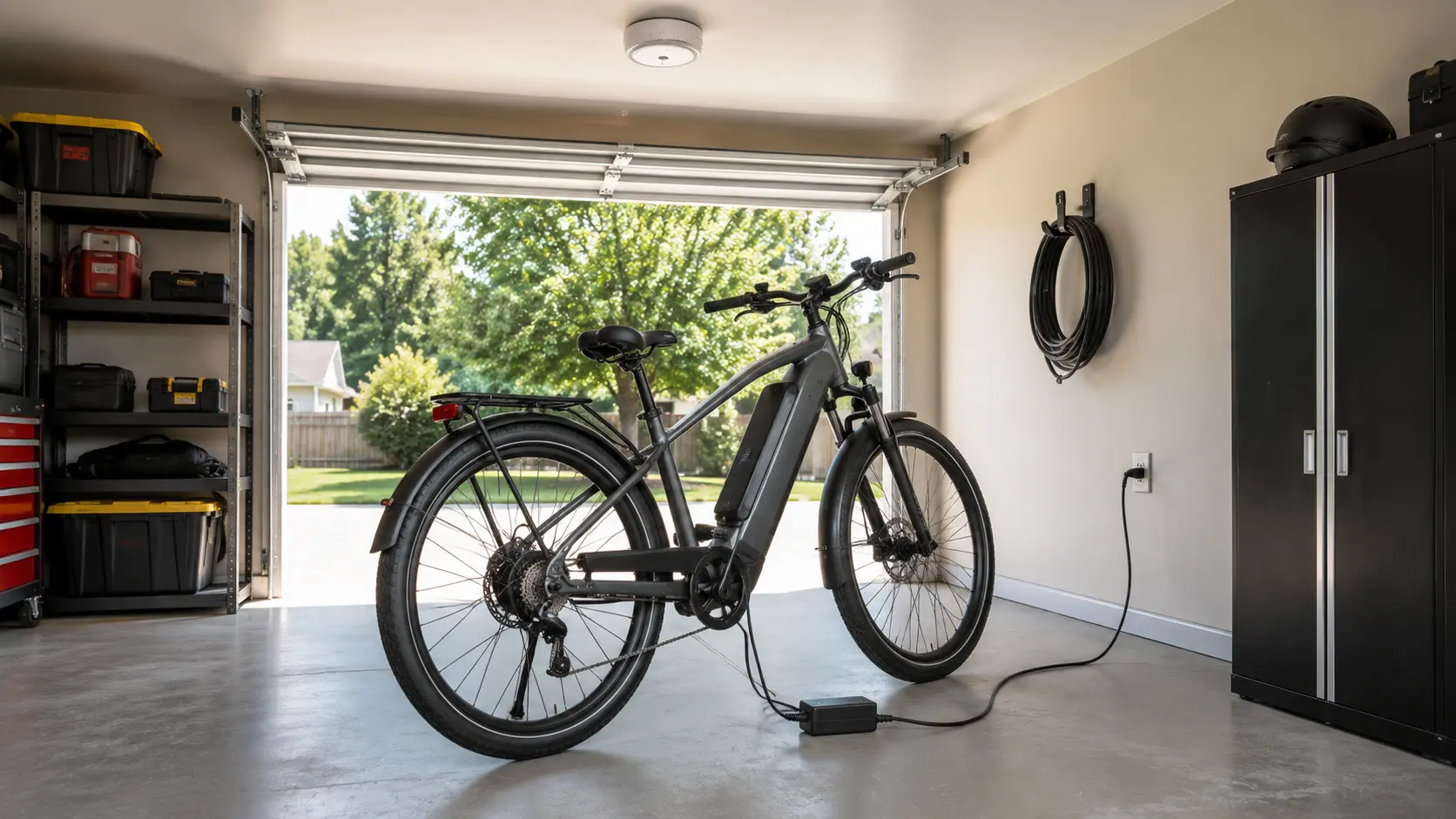
- ✓For e-bikes and hoverboards: charge in open spaces. Not in bedrooms. Not in hallways. Open garage, covered outdoor area, or well-ventilated space with the door open. Away from exit routes.
- ✓Do not charge damaged devices. A phone with a cracked screen, a laptop that has been dropped, a battery pack that has been compressed in a bag — physical damage to the device may have damaged the battery. Charging a physically damaged battery accelerates failure.
- ✗Do not charge overnight unsupervised in sleeping areas. For smartphones, the risk is low enough that most people accept it. For hoverboards, e-bikes, and e-scooters, charging unattended overnight in a space where people are sleeping is a documented cause of fatal fires. Charge during waking hours.
- ✗Do not use a device that is swelling, running unusually hot, or smelling chemical. These are pre-failure symptoms. Stop using it, do not charge it, and address the battery.
Storage Rules for Higher-Risk Devices
If you are storing a device with a lithium battery for more than a few weeks — a hoverboard in a closet, an e-bike in the garage, a power tool battery on a shelf — how you store it matters:
- Store at partial charge, not full or empty. Most lithium battery manufacturers recommend long-term storage at 40–60% charge. Full charge during long-term storage accelerates degradation. Fully depleted storage can cause the battery to go below its minimum voltage threshold and may make it unrecoverable.
- Store at room temperature. Extreme heat accelerates degradation. Cold slows the chemistry but does not damage most lithium batteries if they are warmed to room temperature before use. The garage in summer (120°F+) is a poor storage environment for valuable battery packs.
- Do not store damaged batteries indoors. A battery that has been physically damaged — dropped hard, crushed, punctured — has an unknown internal state. Store it outside in a metal container until you can safely dispose of it, or take it directly to a battery recycler.
- Store e-bikes and hoverboards away from sleeping areas and away from fire egress routes. The hallway outside apartments is a fire egress route. The bedroom is a sleeping area. Neither is an acceptable storage location for a high-capacity lithium battery device.
The Counterfeit Charger and Battery Problem
A significant proportion of lithium battery fires in consumer devices are linked to counterfeit or substandard chargers and replacement batteries. These products look identical to legitimate products but are built without the safety components — overcharge protection, thermal cutoff, current limiting — that prevent failures in certified products.
How to identify higher-risk chargers and batteries:
- Unusually low price compared to the manufacturer's charger or certified alternatives
- No UL, CE, or other recognized safety certification mark
- Sold through marketplace listings from unknown sellers rather than authorized retailers
- Incorrect spelling of the brand name or device model on the packaging
- Charger that runs unusually hot during use
The $8 replacement charger from an online marketplace may work for months without incident. It may also lack the overcharge protection that prevents the battery from reaching the voltage level that initiates thermal runaway. The price difference between a counterfeit charger and a certified one is not worth the risk of finding out which type you bought.
Buy replacement chargers and batteries from the device manufacturer or from established electronics retailers. Check for UL listing (in the U.S.) on the charger — it should be clearly marked on the charger body, not just on the packaging.
The number of lithium battery devices in the average home will continue to increase. E-bikes, e-scooters, cordless everything, and the continued growth of portable electronics means more battery energy in residential spaces than at any previous point in history. The habits that prevent fires — certified chargers, hard surface charging, supervised charging for large devices, recognizing and responding to warning signs — are not complicated. They just need to be known and applied before the one battery that is going to fail does so in your bedroom at 2am.
Fire Prevention Week 2026: This year’s campaign focuses specifically on safe charging and lithium-ion battery fire prevention. See the 2026 dates, theme and safe-charging guide.




Comments 0
No comments yet. Be the first to share your thoughts!
Leave a Comment