

If you smell gas right now:
Do not touch any electrical switch. Do not use your phone inside the building. Do not turn anything on or off. Walk out, leave the door open behind you, move at least 300 feet away, and call 911 or your gas company from outside. Do not go back in for any reason until the gas company has inspected and cleared the building.
Gas leaks kill people in two ways: explosion and asphyxiation. Both are silent enough in the early stages that people rationalize the smell, investigate instead of evacuating, and make the one or two small decisions — flicking a light switch, reaching for a phone, starting a car in the attached garage — that provide the ignition source for whatever gas has accumulated. The explosion does not announce itself. It happens the moment the concentration reaches the ignitable range and a spark provides the energy.
This piece covers what gas smells like and why, the specific actions to take and avoid, what can ignite accumulated gas that people do not expect, how far to evacuate, and what the process looks like before you can safely return.
What we cover:
- What gas actually smells like — and why
- The immediate sequence: what to do in order
- What not to do — and why each one matters
- Ignition sources people don't think about
- How far to evacuate
- Physical symptoms of gas exposure
- When is it actually safe to go back in
- Propane vs natural gas — the critical difference
- How to reduce the risk of a gas leak at home
What Gas Actually Smells Like — and Why
Natural gas and propane are both odorless in their natural state. The smell you associate with a gas leak — the rotten egg or sulfur smell — is a chemical called mercaptan (specifically ethyl mercaptan or a blend of similar compounds) that gas utilities are required by law to add to gas before it is distributed. The purpose of mercaptan is exactly this: to make an otherwise undetectable hazard detectable by smell at concentrations far below the explosive range.
Mercaptan is detectable at concentrations of about 1 part per billion — meaning you can smell gas at a concentration many times lower than the concentration at which it becomes dangerous. This is by design. If you can smell gas, there is gas present. There is no safe concentration of gas smell inside a building.
Smells that are often confused with gas
A few other situations produce smells that are sometimes mistaken for a gas leak:
- Sewer gas: A dry P-trap in a rarely used drain will allow sewer gas (which contains hydrogen sulfide — also a rotten egg smell) to enter the home. Sewer gas smells similar to natural gas but is a different source. Pouring a cup of water down the drain to refill the P-trap resolves it. If pouring water eliminates the smell within a few minutes, it was likely sewer gas, not a gas leak. If the smell persists or strengthens, treat it as a gas leak.
- Dead animal in a wall or crawl space: A different kind of organic decomposition smell, often described as sweeter or more pungent than gas, and usually localized to one area.
- New appliance burn-off: A new gas appliance on its first use may produce a brief burning smell from manufacturing residues — different from the mercaptan smell of a gas leak and typically dissipates within the first use cycle.
When in doubt, treat it as a gas leak. The consequence of treating a sewer gas smell as a gas leak is that you call the gas company, they come out, and tell you it is fine. The consequence of treating a real gas leak as a sewer gas smell can be an explosion. The asymmetry is not close.

The Immediate Sequence: What To Do in Order
Not the light switch as you leave the room. Not the phone on the charger. Not the stove control. Every electrical switch produces a small spark when activated — in both directions, on and off. In a room with accumulated natural gas, that spark can be the ignition source. Leave everything exactly as it is. If the lights are on, leave them on. If the TV is on, leave it on. Do not change the electrical state of anything.
This is counterintuitive — the phone feels like the natural first response. But a phone call, a text, a screen activation all involve electrical switching inside the phone. Outdoors, a phone produces no meaningful ignition risk. In a room with a gas-air mixture near its explosive range, it is a potential ignition source. Put the phone in your pocket and walk out before using it.
If there is an open window nearby, leave it open. If you can open a door or window on your path out without going toward the smell, do so. Ventilation reduces gas concentration. But do not detour toward the gas source to open windows. Walk your most direct path out.
Alert others in the home as you move toward the exit. Do not take a longer route to get someone who is in another part of the house if it means passing the gas source. Yell from a safe position. Get people moving and exit.
Gas can accumulate outside near the building, particularly in still air. Three hundred feet provides clearance from exterior gas accumulation and from the blast radius of most residential gas explosions. Go to the street, to a neighbor's driveway, across the road — somewhere physically separated from the structure.
Call 911 first. Then call your gas utility's emergency line. Both calls matter: 911 sends fire department and emergency response; the gas utility sends technicians who can find and stop the leak. Give both your address clearly. Stay on the line if asked.
Not for medication. Not for the dog. Not for your phone. Not to see if the smell is still there. Not to turn off the stove. Not to grab anything. The gas company and fire department will handle it. The building is not safe until they clear it.
What Not To Do — And Why Each One Matters
✓ DO
- Leave immediately without touching switches
- Leave doors open behind you
- Alert others on your way out
- Move at least 300 feet away
- Call 911 from outside
- Wait for gas company clearance
- Warn neighbors if leak is large
✗ DO NOT
- Flip any light switch on or off
- Use phone inside the building
- Start a car in attached garage
- Use any appliance
- Try to find the leak yourself
- Smoke or use a lighter near the building
- Re-enter until cleared by gas company
Ignition Sources People Don't Think About
Most people understand that an open flame — a match, a lighter — will ignite gas. What they often do not know is how many ordinary household actions produce sparks or electrical switching that can do the same thing at the right concentration.
| Action | Why It's an Ignition Risk |
|---|---|
| Flipping a light switch | Every switch produces a small arc when contacts open or close. Enough energy to ignite gas-air mixture at explosive concentrations. |
| Making a phone call or waking the screen | Phone electronics involve switching transistors and in some cases RF transmission. Low risk but non-zero in high-concentration environments. |
| Starting a car in an attached garage | The ignition system produces multiple high-energy sparks. An attached garage with gas migration from the home is one of the documented explosion scenarios. |
| Pressing a doorbell | Electrical switching inside the doorbell circuit. Avoid pressing doorbells on neighboring structures if gas is suspected to have migrated. |
| Opening a refrigerator or freezer | The door switch for the interior light and the compressor relay both involve electrical switching. |
| Operating the thermostat | Thermostat switching involves a relay. Some thermostats produce an audible click — that is the relay switching and it produces a spark. |
| Unplugging an appliance | Unplugging a device that is on causes an arc at the outlet. Plugging in also produces a spark at contact. |
The common thread is electrical switching of any kind. In a home with no accumulated gas, none of these are meaningful fire hazards. In a home where gas has been accumulating for 20–30 minutes in a partially enclosed space, some of them may be sufficient to trigger ignition. The correct response is not to assess which ones are safe — it is to not touch any of them and get out.
How Far To Evacuate
The 300-foot minimum is based on the conservative outer radius of the explosion effect zone for a residential structure gas explosion — the distance beyond which debris and pressure wave effects are unlikely to cause serious injury in most scenarios. It is not the distance at which you are definitely safe from all effects of a large explosion; it is the practical minimum for a residential incident.
In practice: get to the far side of the street and continue moving away from the building. Do not stand on the sidewalk directly in front of the home. Move perpendicular to the wind direction if possible — gas that is venting from the building will travel downwind, and you do not want to be in that path.
If you live in an apartment building, evacuate the building entirely and move away from it. Do not stop in the lobby. Notify other floors — knock on doors as you go down the stairwell — but do not delay your own exit to wait for others. Alert the building management or call 911 from outside and give them the building address and floor where you detected gas. Do not use the elevator.
Physical Symptoms of Gas Exposure
Prolonged exposure to natural gas — before the explosive concentration is reached — causes physical symptoms that are sometimes not recognized as gas exposure:
- Headache — often the first symptom, can develop within 10–20 minutes of exposure in an enclosed space
- Dizziness or lightheadedness
- Nausea
- Eye, nose, or throat irritation
- Difficulty breathing — at higher concentrations, gas displaces oxygen
- Fatigue or disorientation
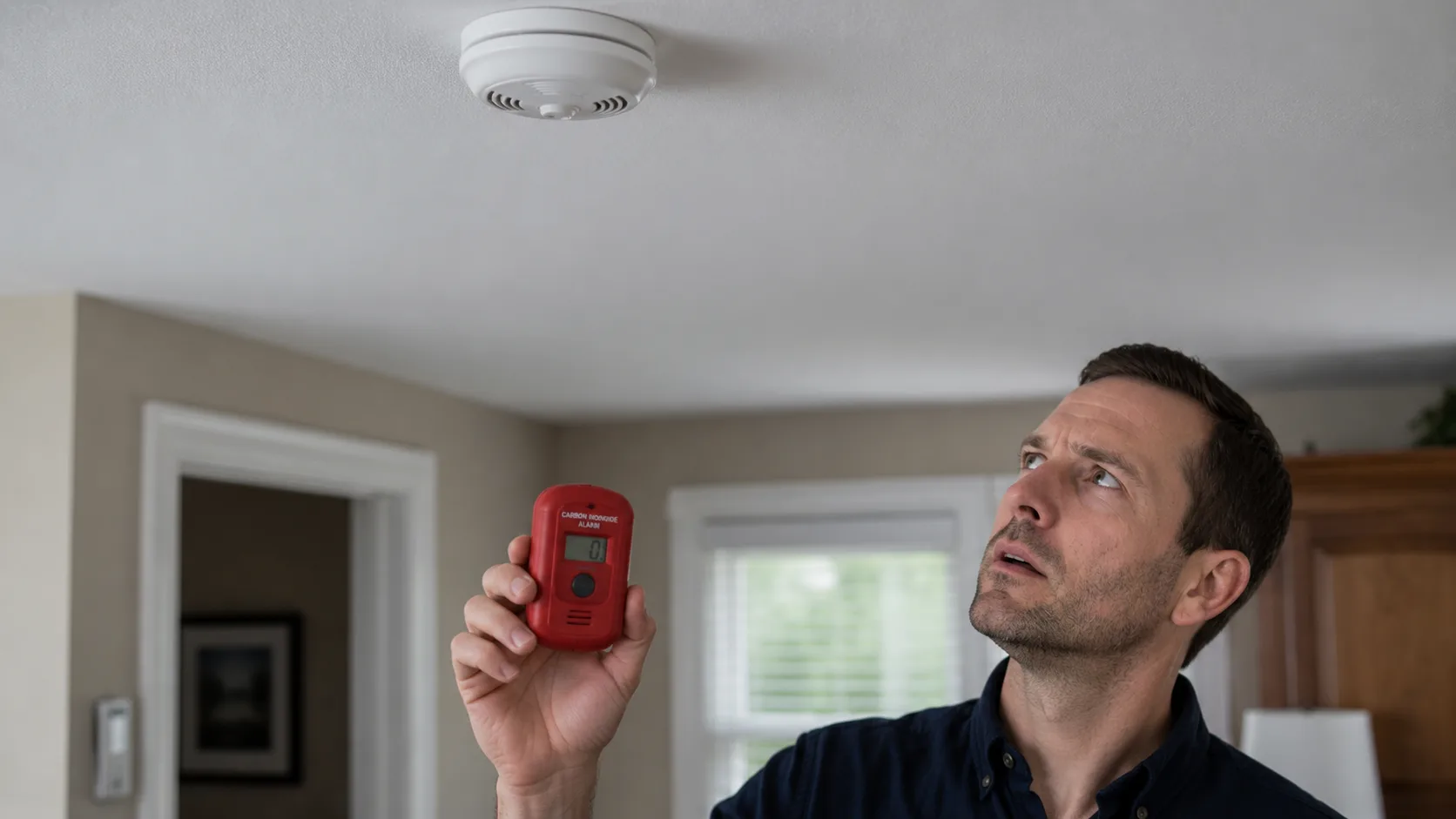
If multiple people in the same home develop the same symptoms simultaneously — particularly headache and nausea — without an obvious cause, a gas leak is one of the things to consider. The same symptom pattern can also indicate carbon monoxide (from an incomplete combustion source). Both require immediate evacuation and emergency services. Do not try to diagnose which one it is from inside the building.
When Is It Actually Safe To Go Back In
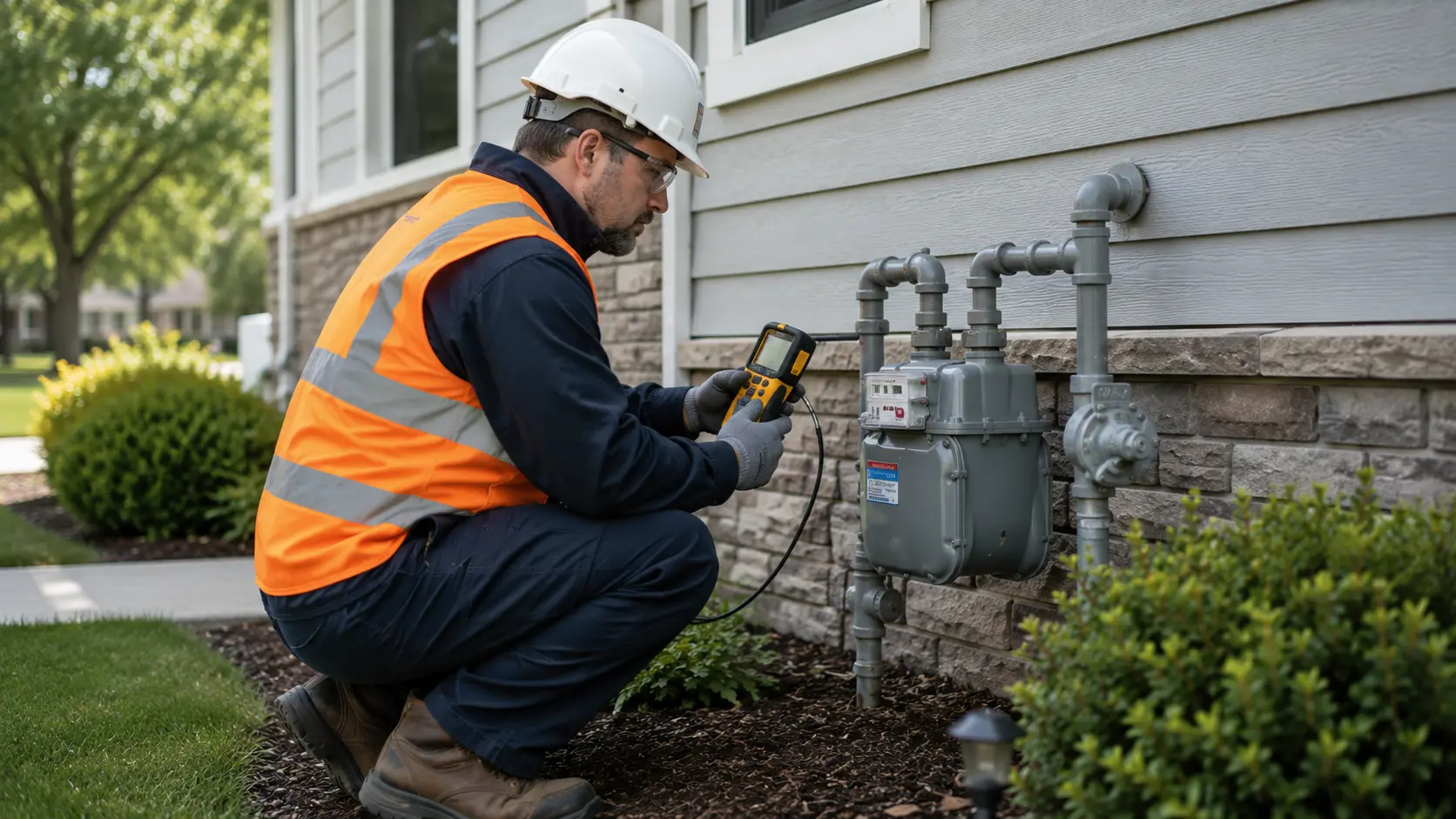
You can go back into the building when the gas company technician explicitly tells you it is safe — not before. Specifically:
- The technician has located and repaired or isolated the leak source
- The technician has used an electronic gas detector throughout the building and confirmed gas concentration is below the lower explosive limit (LEL)
- The building has been adequately ventilated and concentrations have dropped to safe levels
- The technician has physically cleared you to re-enter
Do not rely on the smell being gone as a clearance indicator. Mercaptan concentration drops as gas concentration drops — by the time the ventilation has diluted the gas to below your nose's detection threshold, the gas may or may not be below explosive concentrations. The only reliable measurement is an electronic detector. The technician has one. You do not.
If the gas company cannot respond quickly and you need to re-enter for a critical reason — a person who cannot be moved, medication without which someone is in danger — tell 911 and let them make that call. They can send fire department personnel with gas detection equipment to assess whether limited re-entry is safe.
Propane vs Natural Gas: The Critical Difference
Natural gas is lighter than air. It rises and accumulates near ceilings, vents upward, and disperses relatively quickly through ceiling gaps and upper ventilation. This is not safe — it absolutely can accumulate to dangerous concentrations — but it dissipates faster in a well-ventilated space because it rises.
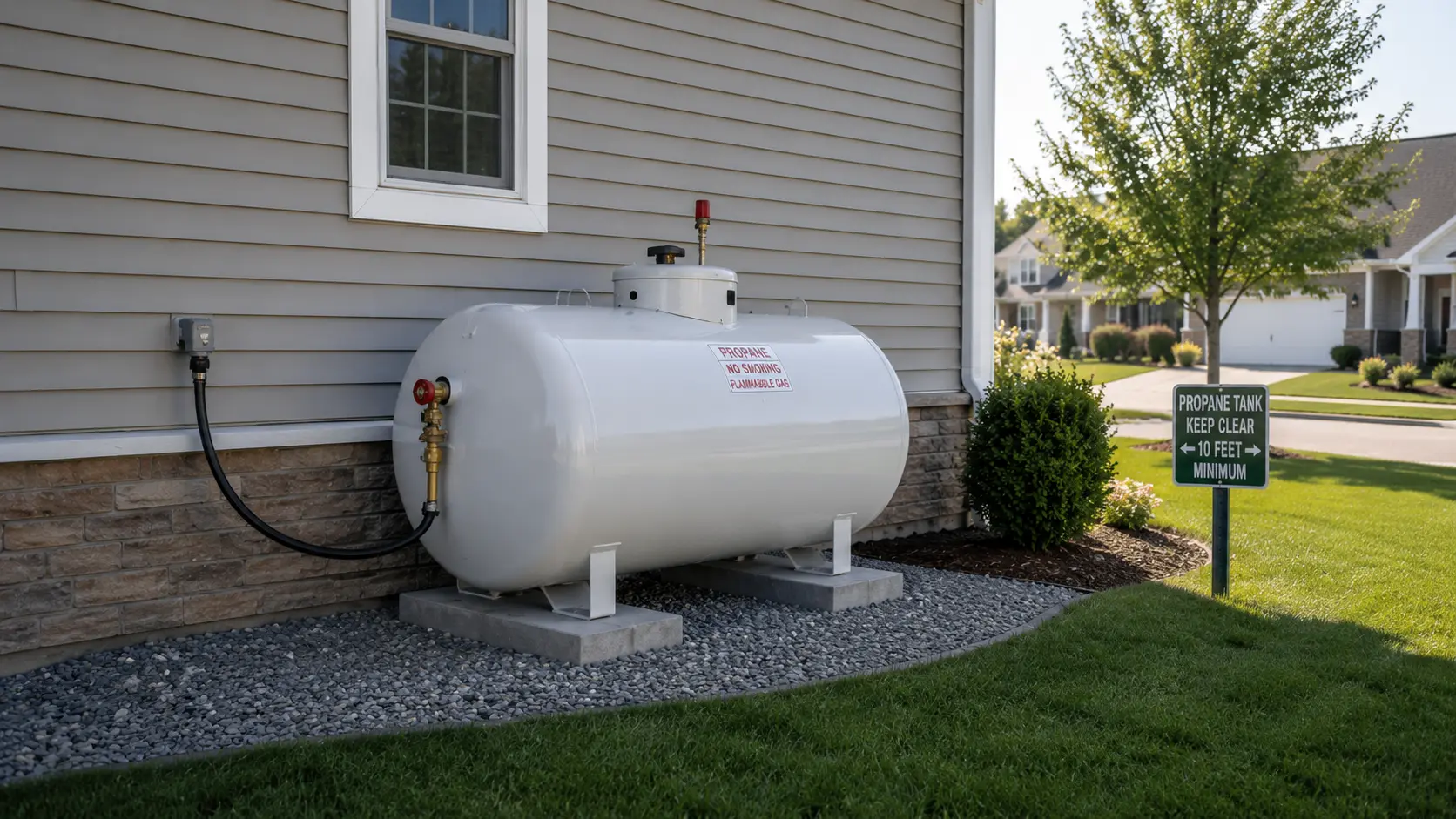
Propane is heavier than air. It sinks. It accumulates at floor level, in basements, in crawl spaces, and in low-lying areas where there is no airflow. A propane leak in a basement can accumulate to explosive concentrations in a low, unventilated space while the upper floors still smell only faint gas. A propane leak in a garage flows under vehicles, collects in floor-level depressions, and reaches the ignition system of a car that starts before you know there is a serious leak at floor level.
If you use propane — for heating, cooking, or outdoor appliances connected to a tank — this behavior is important to know. The smell may be faint upstairs while dangerous concentrations exist at floor level below. If you smell any propane, the floor-level accumulation is the risk you are managing, and it requires the same immediate evacuation as natural gas.
Reducing the Risk of a Gas Leak at Home
Most residential gas leaks come from a small number of sources. Knowing where they are makes it easier to detect and address them before they become emergencies:
- Flexible gas connectors behind appliances. The corrugated stainless steel or brass connector between the gas line and the appliance (stove, dryer, water heater) has a limited service life. Connectors more than 10–15 years old should be inspected. Connectors should never be kinked, stretched, or run through walls or floors. If your stove has been moved and the connector was stretched or kinked, have it replaced.
- Pilot lights on older appliances. A pilot light that goes out repeatedly is trying to tell you something — a thermocouple that is failing, a draft issue, or a gas pressure problem. A repeatedly extinguished pilot light should be serviced, not repeatedly re-lit.
- Gas appliances in closed spaces. Gas appliances require combustion air. An appliance in a very tight space — a sealed closet, a small utility room with no ventilation — may be running at conditions that produce incomplete combustion and carbon monoxide in addition to any leak risk. Ensure adequate combustion air per the appliance manufacturer's requirements.
- Connections at the meter. The gas meter and its associated piping is utility-owned and utility-maintained. If you notice any damage to the meter, the piping from the street, or the connection to your home — call the gas company, not a plumber. This is utility infrastructure.
- Gas line impacts during renovation or yard work. Digging without calling your local “call before you dig” service (811 in the U.S.) is how buried gas lines get hit. Always call 811 before any digging, even shallow digging for landscaping.
Gas detectors for the home. Plug-in natural gas and propane detectors are available for $25–50 and can detect gas concentrations below the threshold your nose detects them — providing earlier warning and an audible alarm when concentrations begin to rise. They are not a substitute for calling 911 when you smell gas, but as an early-warning addition near gas appliances, they are worth having. Install them near gas appliances at the appropriate height — low (floor level) for propane, higher for natural gas.
Gas emergencies have a very specific and learnable response sequence. The sequence is not complicated — it is essentially “do not touch anything electrical, get out, call from outside.” The difficulty is executing it under the stress and time pressure of smelling something alarming in your home. Reading this now, before it happens, is the preparation that makes the correct sequence possible in the moment when it matters.



Comments 0
No comments yet. Be the first to share your thoughts!
Leave a Comment