SCBA Emergency Procedures Every Firefighter Must Know: Bypass, ROAM & Bailout
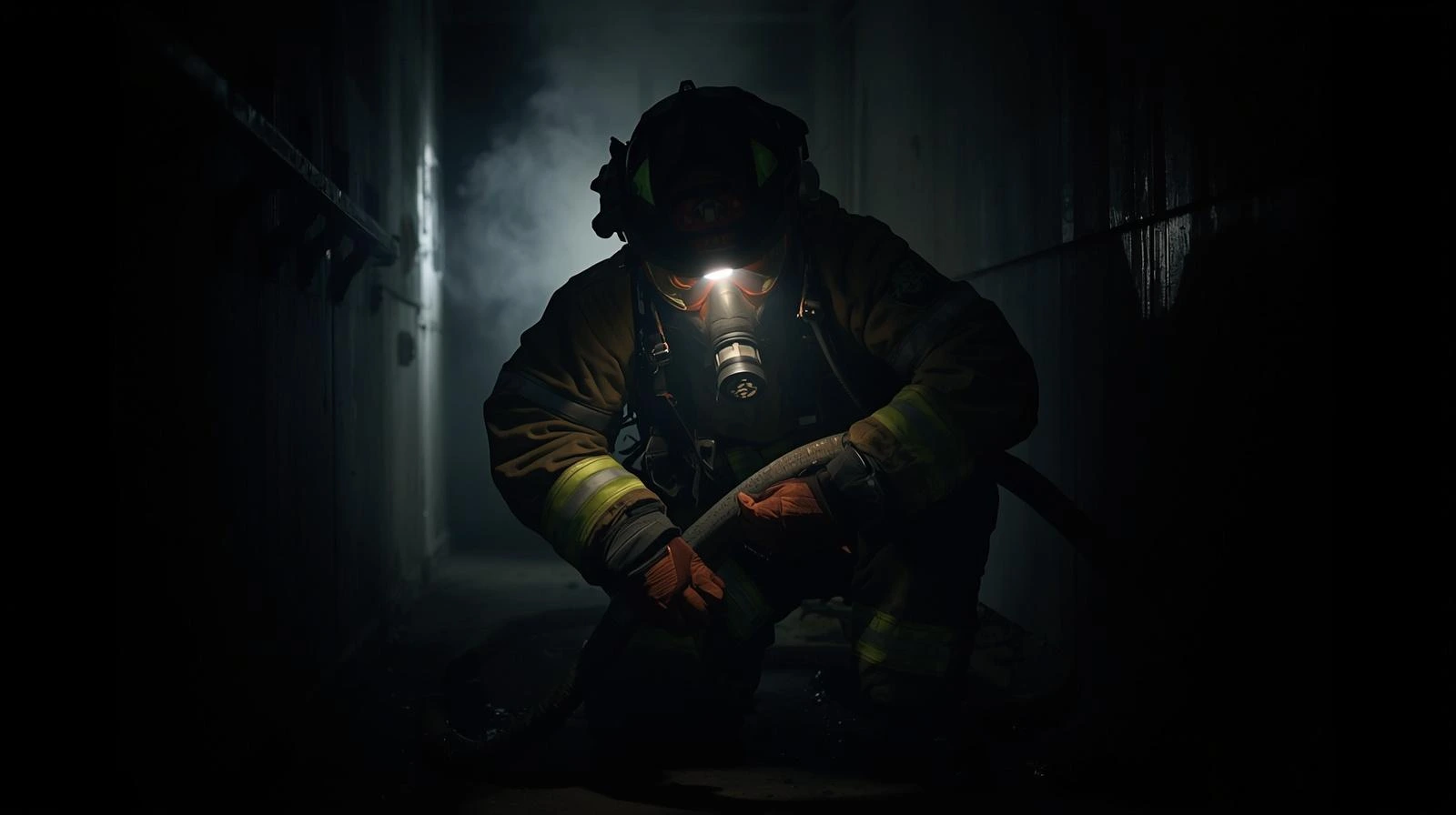
SCBA failure inside a burning structure is one of the most survivable emergencies in firefighting — if you know the procedures and have practiced them to the point of muscle memory. This guide covers the four SCBA emergency situations every firefighter will train for: low-air activation, regulator failure (emergency bypass), entanglement, and MAYDAY with bailout. Each has a specific procedure. None of them can be learned for the first time under smoke.
Jump to:Low-air alert and ROAM · Emergency bypass valve · Entanglement and wire · Buddy breathing / air sharing · Bailout and escape systems · MAYDAY declaration · Cylinder knowledge · Daily checks · FAQ
Training note: Procedures in this guide are general best practices. Your department's SCBA SOG and manufacturer's instructions are authoritative for your specific equipment. Practice your emergency procedures in your own SCBA until each step is automatic.
Low-Air Alert and the ROAM Protocol
Every SCBA alarm system activates a low-air warning when cylinder pressure drops to approximately 25% of rated capacity (typically 1,100–1,300 PSI on a 4,500 PSI cylinder, depending on manufacturer). This is your signal to begin exiting, not your signal to start worrying.
ROAM — the low-air response sequence
When your low-air alarm activates, most departments use a variation of the ROAM sequence:
Time you actually have at low-air alarm: With a 45-minute rated SCBA at moderate work rate, a 25% cylinder alarm gives you approximately 5–10 minutes of remaining air at moderate exertion. Under heavy exertion, this can drop to 2–4 minutes. Do not treat the low-air alarm as a "start thinking about leaving" signal — treat it as a "you are leaving now" signal.
Emergency Bypass Valve: What It Is and When to Use It
The emergency bypass valve (also called the bypass valve or remote pressure gauge bypass) bypasses the demand regulator and delivers air directly to the facepiece at a continuous, pressurized flow. It is the emergency procedure for regulator failure — specifically when the regulator is not delivering air on demand.
When to use the bypass valve
- You attempt to inhale and cannot get air from the regulator (free flow failure or blockage)
- The regulator is free-flowing uncontrollably and wasting air
- Regulator has been damaged and is not functioning normally
- Any situation where the demand regulator is not delivering breathable air
How the bypass works
Location varies by manufacturer (MSA, Scott, Dräger, Interspiro all place it differently) but the bypass is always a manual valve that opens a direct flow path. When opened, it delivers air continuously rather than on demand. This means you will consume air faster than normal — bypass is an emergency procedure to get you out, not a way to continue working.
Know your bypass location by feel, in the dark, with gloves on. Practice locating and operating the bypass valve on your specific SCBA brand without looking. If you need it, you will not be in a position to read a label.
Bypass procedure (general — verify with your manufacturer)
- Recognize regulator failure — inability to breathe normally through the facepiece
- Locate the bypass valve (typically on the high-pressure side, on the first-stage regulator or cylinder valve area)
- Open the bypass valve slowly until air flows to the facepiece
- Control the flow to the minimum needed to breathe
- Immediately begin emergency egress — bypass consumes air rapidly
- Transmit MAYDAY if you cannot self-rescue
Entanglement and Wire Procedures
Entanglement in wire, rebar, drop ceiling grid, or debris is one of the most common SCBA-involved emergencies. Panic is the primary killer — firefighters who remain calm and methodical survive entanglement. Firefighters who thrash exhaust their air and injure themselves.
Wire entanglement procedure
Air Sharing and Emergency Buddy Breathing
Air sharing between two firefighters is an emergency procedure used when one firefighter has run out of air or has a facepiece failure and cannot exit without assistance. Modern SCBA systems support air sharing through one of two methods:
Transfill hose (preferred)
Most modern SCBA systems (MSA G1, Scott Air-Pak X3 Pro, Dräger PSS 7000) include a transfill port that allows direct cylinder-to-cylinder air transfer via a short connecting hose. This is the safest and most efficient method. The firefighter with more air transfers to the one with less until both can exit.
- Connect the transfill hose between the two cylinders
- Open the transfer valve slowly
- Allow pressure to equalize between cylinders
- Both firefighters now have air to exit — exit immediately
Emergency breathing support system (EBSS)
Some SCBA systems include an EBSS hose — a short regulator hose that attaches to the side of the facepiece or mainline regulator. Both firefighters breathe from the same cylinder alternately. This is a true emergency measure — air is consumed by two people simultaneously, exit must happen immediately.
Know your system before you need it. Transfill and EBSS connections vary by SCBA brand. Practice locating and connecting them with your partner during regular training. Use the SCBA Air Time Calculator to understand how cylinder sharing affects remaining air time.
Bailout and Emergency Escape Systems
Most modern structural firefighting PPE systems include some form of personal escape (bailout) system — a compact rope and anchor device worn on the body that allows a firefighter to descend from a window or elevated position when no other egress is available.
When to use bailout
Bailout is a last resort when:
- All interior egress routes are compromised (fire, collapse, structural failure)
- You are trapped in an elevated position and cannot reach the stairs or another egress
- Conditions are immediately life-threatening and waiting for RIT rescue is not viable
Bailout is not a preferred egress option — it is what you use when all other options are gone. Interior stairs, windows at grade level, and RIT assist are all preferable to a bailout.
General bailout sequence
- Transmit MAYDAY with your location before you go out the window — give command the information they need to track you
- Locate a solid anchor point (window mullion, radiator, structural member — nothing that will fail)
- Deploy the anchor from your bailout system and secure it to the anchor point
- Test the anchor with body weight before committing
- Control your descent to the ground or a lower floor where you can re-enter or be assisted
Practice bailout deployment regularly. Bailout devices from different manufacturers (Petzl, CMC, Sterling) have different deployment sequences. If you have never deployed your specific system under realistic conditions, you may not be able to do it under stress in a burning building.
MAYDAY Declaration with SCBA Emergency
A MAYDAY is the radio transmission that tells command you are in immediate life-threatening danger and cannot self-rescue without assistance. Transmit it early — the earlier command knows you need help, the more time the RIT has to reach you.
Use LUNAR when transmitting MAYDAY:
- Location — as specific as possible: floor, room, window, stairwell
- Unit — your company name and number
- Name — your name
- Air — remaining air level (PSI or alarm status)
- Resources needed — what help do you need: RIT, bailout assist, air resupply
Use the MAYDAY LUNAR Generator to practice building a complete MAYDAY message for your drill scenarios. The goal: transmit a complete LUNAR in under 15 seconds.
SCBA Cylinder Knowledge Every Firefighter Needs
| Cylinder type | Rated pressure | Volume (liters) | Rated duration (moderate work) | Low-air alarm (approx.) |
|---|---|---|---|---|
| 30-minute cylinder (carbon composite) | 4,500 PSI | ~1,130 L | ~30 min moderate exertion | ~1,125 PSI |
| 45-minute cylinder | 4,500 PSI | ~1,700 L | ~45 min moderate exertion | ~1,125 PSI |
| 60-minute cylinder | 4,500 PSI | ~2,260 L | ~60 min moderate exertion | ~1,125 PSI |
Rated duration assumes moderate exertion (~40 L/min RMV). Heavy exertion can consume 3× the air, cutting rated duration to 10–20 minutes. Calculate your specific air time with the SCBA Air Time Calculator.
Daily SCBA Checks: What to Verify Every Shift
- Cylinder pressure: must be at or near full rated pressure (≥90% full before deployment)
- Low-pressure alarm: activate manually to confirm audible function
- PASS device: test manual activation and confirm audible alarm functions
- Facepiece seal: don the facepiece and test seal with inhalation test (block regulator port, inhale — facepiece should collapse slightly and hold)
- Regulator connection: confirm positive connection to facepiece mainline connection
- Harness and straps: check for damage, confirm adjustment range is appropriate for your body
- Bypass valve: locate and confirm it operates freely (do not fully open — just verify it moves)
- Transfill port (if equipped): confirm it is accessible and cap is present
Frequently Asked Questions
What does ROAM stand for in SCBA?
ROAM is a low-air emergency response protocol: Reduce air consumption, Orient yourself to egress, Activate your PASS device, and Move toward exit while communicating your status. Specific procedure names and steps vary by department — check your SOG for your department's exact protocol.
What is the emergency bypass valve on an SCBA?
The bypass valve allows air to flow directly from the cylinder to the facepiece, bypassing the demand regulator. It is used when the demand regulator fails to deliver air. Opening the bypass delivers continuous pressurized flow rather than on-demand flow, which consumes air faster. It is an emergency egress procedure, not a work-around for regulator problems.
How long does SCBA air last in a real fire?
A 45-minute rated cylinder lasts approximately 45 minutes at moderate exertion (∼40 L/min respiratory minute volume). Under heavy exertion or stress, RMV can reach 80–100+ L/min, cutting useful time to 15–20 minutes. The low-air alarm activates with approximately 25% of capacity remaining — roughly 8–12 minutes at moderate exertion, significantly less under heavy workload.
When should you declare a MAYDAY?
Declare MAYDAY immediately when you are lost, trapped, injured, running out of air, or in any condition that you cannot resolve through self-rescue. Declare early — the longer you wait to call MAYDAY, the less time the RIT has to reach you. There is no penalty for calling a MAYDAY that turns out to be self-resolved.


Comments 0
No comments yet. Be the first to share your thoughts!
Leave a Comment