
Becoming a firefighter in Illinois works a little differently than in most states: instead of training first and applying later, Illinois departments generally hire candidates first, then send them through the fire academy. That means your path starts with meeting eligibility requirements, earning an EMT license, and passing a battery of tests — not with paying for academy on your own.
This guide walks through exactly what it takes to become a firefighter in Illinois in 2026: age and education requirements, the certifications you'll need before you apply, how the hiring process works, where to attend the academy, and what firefighters actually earn across the state.
Illinois Firefighter Requirements at a Glance
| Minimum age | Typically 21 for full-time/career hire (18–20 for some volunteer or paid-on-call departments); most departments cap applicants around 35 unless prior full-time fire service exempts them |
| Education | High school diploma or GED; some departments (e.g., Palatine FD) require 60+ semester hours of college credit or equivalent OSFM training |
| Citizenship / residency | U.S. citizen or legal resident with a valid driver's license; many departments require Illinois residency by the time of appointment |
| Required certifications before hire | EMT-B or Paramedic license (Illinois Department of Public Health), CPAT, and the Illinois-specific Ladder Climb Exercise |
| Entry-level fire certification | Basic Operations Firefighter (BOF), issued by the Office of the State Fire Marshal (OSFM) |
| Where you train | Illinois Fire Service Institute (IFSI), NIPSTA, Chicago Fire Academy, Romeoville Fire Academy/Lewis University, SIU Carbondale, and other OSFM-approved academies |
| Academy length | Roughly 180–320 hours depending on the academy and delivery format |
| Average salary | Roughly $57,000–$80,000+ per year statewide, with entry-level pay lower and Chicago-area departments often paying above the state average |
Step-by-Step: How to Become a Firefighter in Illinois
1. Meet the basic eligibility requirements
Most career departments require candidates to be at least 21 years old (though some accept applicants at 18–20 for volunteer, paid-on-call, or cadet-style programs) and no older than 35, unless a state exemption applies for candidates with credible full-time service at another Illinois department. You'll also need a high school diploma or GED, a valid driver's license, U.S. citizenship or legal residency, and a clean criminal background. Some departments, like Palatine FD, additionally require 60 semester hours of college credit or equivalent OSFM training.
2. Get your EMT-B or Paramedic license
Unlike many states where EMS certification comes after hire, Illinois departments typically expect candidates to already hold a valid EMT-B, EMT-I, or Paramedic license — nationally registered or licensed through the Illinois Department of Public Health (IDPH) — at the time of application, and it must remain valid through hire. Since a Paramedic license requires EMT-Basic first, most candidates start with EMT-B.
3. Pass the CPAT and the Illinois Ladder Climb Exercise
Candidates must complete the Candidate Physical Ability Test (CPAT), typically within one year of the written exam date. Illinois law (Public Act 097-0251) also requires a separate Ladder Climb Exercise that demonstrates the ability to operate safely from heights — this is an Illinois-specific requirement on top of the standard CPAT used in most other states.
4. Apply and complete the hiring process
With eligibility requirements and certifications in hand, you can apply to individual Illinois fire departments — there are more than 1,300 statewide, ranging from career departments to paid-on-call and volunteer districts, each with its own hiring cycle. The process usually includes a written exam, an oral interview, a background investigation, a polygraph test, a psychological assessment, and a medical/functional physical evaluation. Failing any single stage can end the process, so most candidates apply to several departments at once.
5. Attend the fire academy
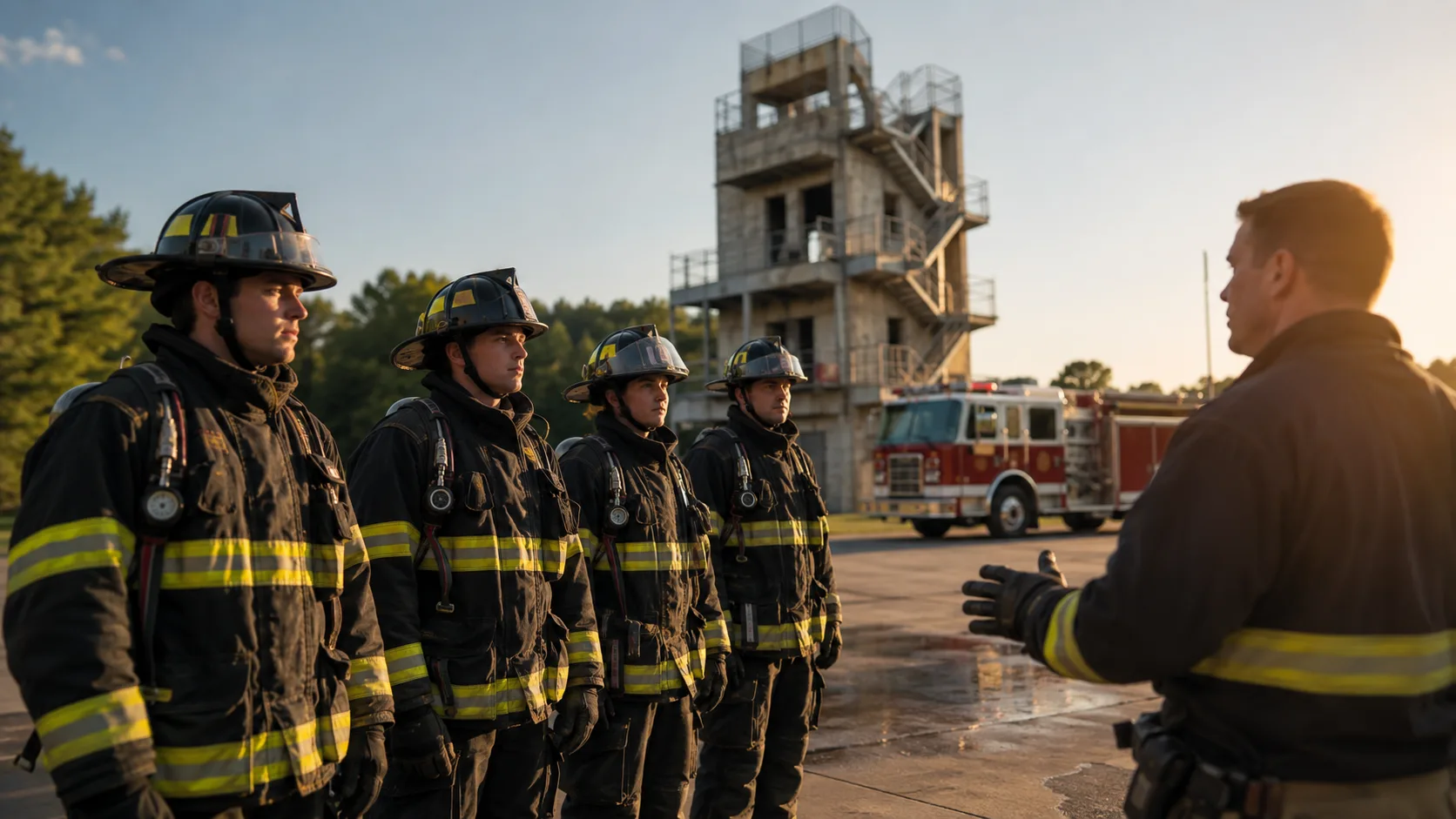
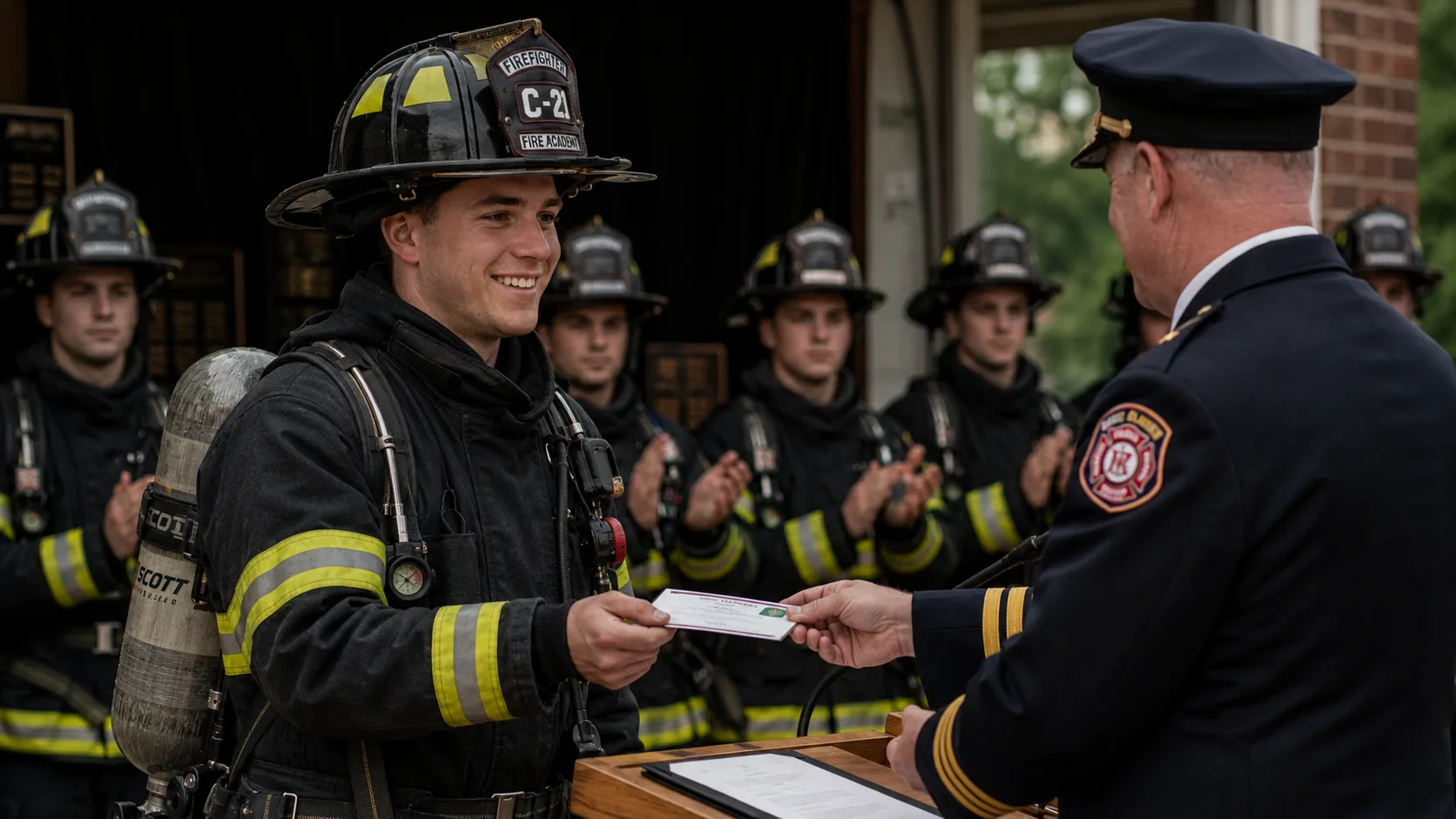
Once hired (or sponsored by a department), you'll attend a fire academy to earn your Basic Operations Firefighter (BOF) certification through the Office of the State Fire Marshal. Common options include the University of Illinois Fire Service Institute (IFSI) in Champaign, the Northeastern Illinois Public Safety Training Academy (NIPSTA) in Glenview, the Chicago Police and Firefighter Training Academy (for Chicago Fire Department recruits), the Romeoville Fire Academy at Lewis University, and Southern Illinois University–Carbondale. Programs generally run full-time, Monday through Friday, and combine classroom instruction with hands-on apparatus and live-fire training.
6. Complete probation and keep building certifications
After the academy, new hires typically serve a probationary period with their department while continuing to build certifications — Firefighter II, hazmat operations, driver/operator, and paramedic training are common next steps for career advancement in Illinois fire service.
Good to know: Requirements vary noticeably between a big-city department like Chicago Fire Department and a smaller paid-on-call or volunteer district. Rural departments are often more flexible on age and pre-hire certifications, while suburban and city departments tend to have the strictest requirements and the most competitive hiring pools. Always confirm current requirements directly with the department you're applying to.
How Much Do Firefighters Make in Illinois?
Firefighter pay in Illinois varies significantly by source, department, rank, and experience, so treat any single number as a starting point rather than a guarantee. Statewide averages generally fall in the $57,000–$80,000 per year range, with entry-level firefighters starting lower and senior firefighters, engineers, lieutenants, and captains earning more through step increases and rank promotions. Chicago-area departments tend to pay above the statewide average, with reported averages commonly in the $61,000–$98,000 range depending on the data source and years of experience, and top earners in some departments exceeding $100,000 with overtime.
For a deeper breakdown by city and experience level, see our firefighter salary calculator and our guide to fire department ranks and how pay scales with promotion.
Where to Train: Illinois Fire Academies
- Illinois Fire Service Institute (IFSI) — Champaign; university-affiliated, offers the Basic Firefighter/NFPA Firefighter I academy plus advanced and specialty training.
- NIPSTA — Glenview; 320-hour Basic Operations Firefighter program on a 20-acre training campus, open to candidates employed or engaged by a fire department.
- Chicago Police and Firefighter Training Academy / City Colleges of Chicago–Harold Washington College — Chicago; primary training pathway for Chicago Fire Department recruits.
- Romeoville Fire Academy / Lewis University — Romeoville; regional academy option in the southwest suburbs.
- Southern Illinois University–Carbondale — Carbondale; academy option for southern Illinois candidates.
Some candidates choose to earn Basic Operations Firefighter certification independently before applying, which can strengthen an application, though most Illinois departments still send new hires through department-sponsored academy training regardless of prior certification.
Frequently Asked Questions
What is the age limit to become a firefighter in Illinois?
Most career departments require candidates to be at least 21 and no older than 35 by the date of the written exam, though this varies by department and some exemptions exist for candidates with prior full-time fire service. Volunteer and paid-on-call departments often have lower minimum ages.
Do I need to be an EMT to become a firefighter in Illinois?
In most cases, yes. Unlike many states, Illinois departments typically require a valid EMT-B, EMT-I, or Paramedic license at the time of application, and it must stay valid through hire.
How long is fire academy in Illinois?
It depends on the academy and format — commonly cited figures range from about 180 hours for a Basic Operations Firefighter course up to roughly 320 hours for a full-time program like NIPSTA's. Check with your specific academy for its exact hour requirements.
How much do firefighters make in Illinois?
Statewide averages are generally in the $57,000–$80,000 per year range, with entry-level pay lower and experienced firefighters, engineers and officers earning more. Chicago-area departments often pay above the state average.
Do I need to live in Illinois to become a firefighter there?
Many Illinois departments require primary residency in Illinois (and sometimes within a set distance of the department) by the time of appointment as a probationary firefighter. Residency rules vary by department, so confirm this directly before applying.
What's the difference between Basic Operations Firefighter (BOF) and Firefighter II?
BOF is Illinois's entry-level firefighter certification issued by the Office of the State Fire Marshal and is the minimum needed to work as a career firefighter in the state. Firefighter II is a more advanced NFPA-aligned certification that many firefighters pursue after starting their career for broader skills and promotional opportunities.
Requirements, certifications and pay figures can change and vary by department — always verify current requirements with the Illinois Office of the State Fire Marshal (OSFM) and the specific department you're applying to before making career decisions.



Comments 0
No comments yet. Be the first to share your thoughts!
Leave a Comment