How to Become a Firefighter in Texas (2026) – TCFP Certification & City-by-City Hiring Process
Last updated:
Texas doesn't run firefighter hiring through one statewide process. Every department sets its own written exam, physical test, and academy — but they all sit on top of the same state framework: the Texas Commission on Fire Protection (TCFP), which certifies every career firefighter in the state, and Chapter 143 of the Texas Local Government Code, which sets the age window every civil-service department has to follow. This guide walks through both layers — what's true everywhere, and what changes city to city.
Compare pay first:Texas Firefighter Salary — City Breakdown · National overview:How to Become a Firefighter (2026 Guide)
The Two Paths Into a Texas Fire Department
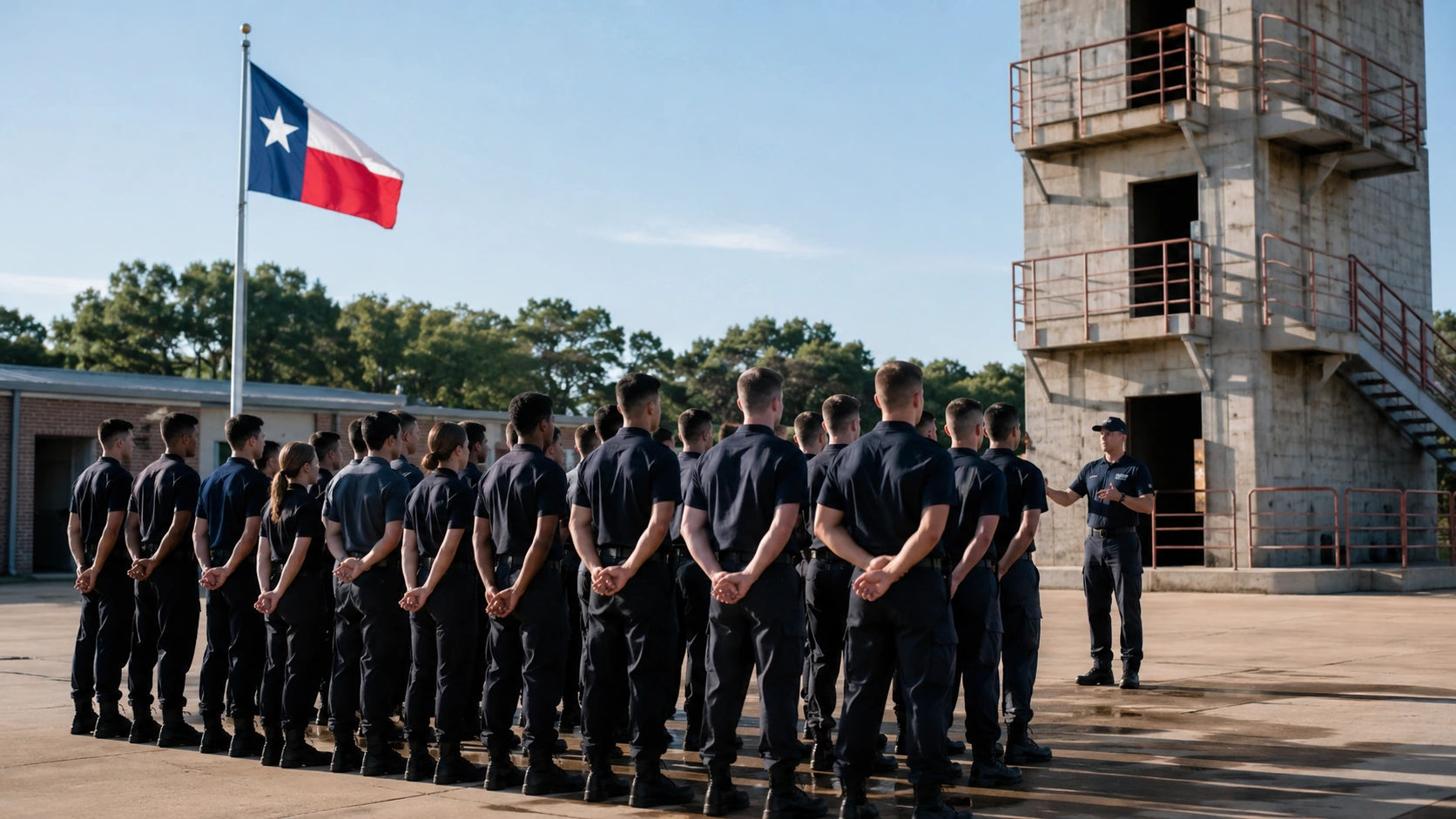
Texas is one of the few states where most large departments will hire you with zero fire training and certify you themselves. That splits every applicant into one of two tracks:
- Non-certified trainee/cadet — you apply with no TCFP certification. If hired, the department pays you a trainee salary while you complete their in-house academy, which includes your TCFP Basic Fire Suppression certification and, in most Texas departments, an EMT-Basic certification as well. This is the default path for Houston, Dallas, Fort Worth, and San Antonio.
- Pre-certified applicant — you complete a TCFP-approved fire academy at a community college first (Collin College, Austin Community College, Tarrant County College, San Antonio College, Lone Star College, and South Texas College all run TCFP-approved programs), pass the TCFP Basic Fire Suppression exam on your own, then apply already certified. This costs you tuition and time up front, but it widens your options — smaller departments and some suburban cities prefer or require pre-certified candidates, and it can shorten your department academy once hired.
Neither path is objectively better. Non-certified is the faster, cheaper way into a big department that trains its own people. Pre-certified gives you more departments to apply to and a credential that travels if a hiring cycle falls through.
Statewide Minimum Requirements
These apply to essentially every civil-service fire department in Texas, because they come from state law (Tex. Local Gov't Code §143.023) rather than department policy:
- ✓At least 18 years old, and not yet 36 years old on the date of the civil service written exam (San Antonio sets its own floor at 19 — see below)
- ✓High school diploma or GED
- ✓Valid Texas driver's license with a clean-enough driving record (most departments cap it around two moving violations in the last 36 months)
- ✓No felony convictions — this is a permanent disqualifier under state civil-service law, not a department preference
- ✓U.S. citizen or otherwise legally authorized to work in the U.S.
- ✓Able to pass a department medical exam, drug screen, and psychological evaluation
Beyond that floor, several big departments layer on a college-credit-or-military alternative for the non-certified track — see the table below for exact numbers, since they differ by city.
City-by-City: Age, Exam, and Academy
| Department | Age Window | Written Exam | Academy | Extra Path (non-certified track) |
|---|---|---|---|---|
| Houston Fire Department | 18–35 at exam date | Civil Service Exam (CSE) + Physical Ability Test (PAT) | Val Jahnke Training Academy — non-certified cadet training runs ~9 months, paid from day one; certified-only candidates run a shorter track | 15–24 transferable college credit hours (C or better) OR 2 years full-time active military service with honorable discharge |
| Dallas Fire-Rescue | 18–35 at exam date | Fire & Rescue Officer Training Exam — math, reading, Mapsco/map reading, mechanical aptitude, ~2.5–3 hrs | ~26 weeks, paid | 45 semester hours college credit with a C average or better, OR 36 months active military service with honorable/uncharacterized discharge |
| San Antonio Fire Department | 19+ at exam date (confirm current upper cap with SAFD recruiting) | Written entrance exam — 230 questions, 3-hour limit, 70% minimum to pass | Cadet Phase — 6 months at the SAFD Fire Academy | Veteran's preference points (5 pts) with 180+ days active duty and honorable discharge |
| Austin Fire Department | 18–35 at exam date | Morris & McDaniel exam — Reading Ability Procedure (RAP) + Entry-Level Abilities and Behaviors Exam, ~4 hrs | Confirm current length directly with AFD recruiting | Confirm current college-credit/military alternative with AFD recruiting |
| Fort Worth Fire Department | 18–35 at exam date | IO Solutions NFSI — cognitive + personality, 155 questions, 2.5-hr limit, 70% minimum | Paid from day one: $19.19/hr (~$39,915/yr) training, rising to $32.58/hr (~$67,757/yr) at graduation | HS diploma/GED, OR 12 semester hours college credit; must live within 30 min of an assigned station within 6 months of hire |
Sources: department civil-service job postings and recruiting pages (Houston, Dallas, San Antonio, Austin, Fort Worth), current as of mid-2026. Hiring windows, exam vendors, and academy length change between recruitment cycles — always confirm dates and requirements on the department's own civil-service page before you apply.
What TCFP Certification Actually Covers
Whichever path you take, you end up needing the same credential: TCFP Basic Fire Suppression certification, issued by the Texas Commission on Fire Protection. The coursework covers fire suppression tactics, search and rescue, ventilation, ladder operations, hose handling and hydraulics, SCBA use, hazmat awareness, and basic EMS. If you go the pre-certified route, this is delivered through a TCFP-approved academy at a community college; if you go the department route, it's built into your cadet academy curriculum.
Once your training approval is on file, the certification exam itself is administered through TCFP-approved testing centers — Texas State University's Testing, Evaluation and Measurement Center (TEMC) runs sessions in San Marcos and Round Rock. You register for the exam through TCFP directly (tcfp.texas.gov, or 512-936-3838), bring a government-issued photo ID and your approval paperwork on test day, and same-day retesting is available if a slot is open.
Step-by-Step: The Texas Civil-Service Hiring Process
- Apply during an open recruitment window. Texas departments don't hire continuously — they open applications for a set period, then close them once enough candidates are in the pipeline. Set alerts on the department's civil-service job board (most run through governmentjobs.com).
- Pass the written civil-service exam. Content and vendor vary by city — see the table above. Scores typically build a ranked eligibility list, so a higher score matters even after you clear the passing threshold.
- Pass the physical ability test. Most Texas departments use a CPAT-style timed obstacle course. Start training months ahead — several departments, including Houston, run free candidate prep sessions.
- Background investigation. Criminal history, driving record, employment history, and in some cases financial history get reviewed. Disclose everything; an old, disclosed issue is usually survivable, an undisclosed one usually isn't.
- Oral board / panel interview. Standard behavioral-interview format — be ready to talk through teamwork, pressure, and ethical judgment calls with specific examples.
- Conditional offer, then medical exam, drug screen, and psychological evaluation.
- Academy. Paid, live it like a job — length and pay vary by department (see table above).
- Probation period after graduation, typically around a year, before you're a fully vested member of the department.
What Disqualifies You
- ✗Any felony conviction — permanent bar under Texas civil-service law, not a department-level judgment call.
- ✗Misdemeanor and DWI lookback windows vary by department. Dallas, for example, disqualifies for a Class A misdemeanor within the last 5 years, a Class B within 2 years, four or more Class C misdemeanors within 10 years, or any DWI within the last 5 years. Other departments set different windows — check the specific announcement, not a generic list.
- ✗Age. Miss the 18–35 window (19+ for San Antonio) on exam day and you're not eligible for that cycle, full stop — this is state law, not department discretion.
- ✗Visible tattoos, in some departments. Policies differ; Austin's published standard requires tattoos be concealable under the long-sleeve dress uniform, with ear tunnels over half an inch disqualifying. Ink a normal uniform covers clears most departments' policies.
Frequently Asked Questions
What is the minimum age to become a firefighter in Texas?
18 years old at most departments, and you must not have reached your 36th birthday by the date of the written civil-service exam — this comes from Texas Local Government Code §143.023, so it applies uniformly across civil-service departments. San Antonio sets its own floor at 19.
Do I need TCFP certification before I apply to a Texas fire department?
No. Houston, Dallas, Fort Worth, and San Antonio all hire non-certified candidates and train them through a paid in-house academy, which includes earning your TCFP Basic Fire Suppression certification. Getting certified first through a community college academy is optional — it widens which departments you can apply to and can shorten your department academy, but it isn't required to get hired.
How long does a Texas fire academy take?
It depends on the department and whether you're entering certified or non-certified. San Antonio's Cadet Phase runs about 6 months. Dallas Fire-Rescue's academy runs approximately 26 weeks. Houston's non-certified cadet track runs about 9 months since it includes both fire and EMT-Basic certification; certified-only candidates go through a shorter track.
What disqualifies someone from becoming a firefighter in Texas?
Any felony conviction is a permanent disqualifier under state civil-service law. Beyond that, each department sets its own lookback windows for misdemeanors and DWIs, and its own tattoo and driving-record policies — always check the specific department's current civil-service announcement rather than assuming one city's rules apply to another.
Want to know what you'd actually earn once you're hired? See the Texas Firefighter Salary breakdown by city, or start training now with our CPAT prep guide.


Comments 0
No comments yet. Be the first to share your thoughts!
Leave a Comment