Stroke Recognition and EMS Response: BE-FAST, Cincinnati Scale & Pre-Hospital Treatment
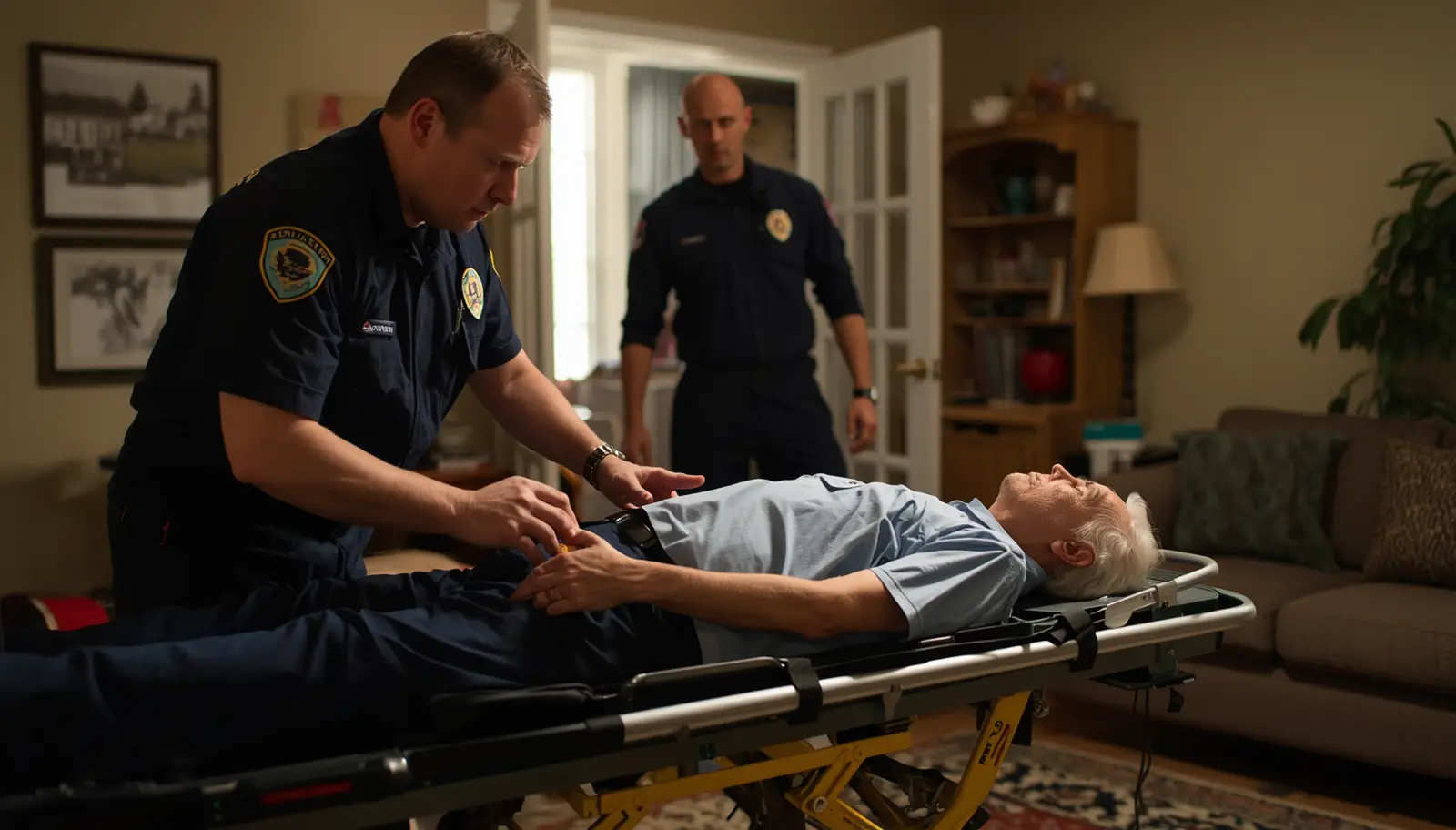
Stroke is a time-critical neurological emergency. Every minute of delay between stroke onset and definitive treatment results in the death of approximately 1.9 million neurons. The pre-hospital providers who first reach a stroke patient — often fire-based EMS — determine whether that patient gets to a capable facility in time for effective intervention. This guide covers stroke recognition, field assessment tools, hemorrhagic vs ischemic stroke, pre-hospital treatment, and the transport decisions that affect patient outcomes.
Jump to:Ischemic vs hemorrhagic stroke · BE-FAST recognition · Cincinnati Prehospital Stroke Scale · Los Angeles Motor Scale · Field assessment sequence · Pre-hospital treatment · Transport decisions · Stroke mimics · TIA · FAQ
Ischemic vs Hemorrhagic Stroke: Why It Matters Pre-Hospital
Approximately 87% of strokes are ischemic — caused by a blood clot blocking an artery supplying the brain. Approximately 13% are hemorrhagic — caused by a blood vessel rupturing and bleeding into or around the brain. Pre-hospital providers cannot definitively distinguish between the two types without CT imaging. This distinction matters because the definitive treatments are completely different, and some treatments for ischemic stroke (thrombolytics) are harmful in hemorrhagic stroke.
| Ischemic stroke | Hemorrhagic stroke | |
|---|---|---|
| Cause | Clot blocking cerebral artery | Rupture of blood vessel in or around brain |
| Frequency | ~87% of strokes | ~13% of strokes |
| Onset | Usually sudden, may have progressed over minutes | Often with severe headache; may be sudden |
| Classic additional symptom | Often without headache | Often with "worst headache of my life" (SAH) or severe headache |
| Definitive treatment | tPA (clot-busting drug) and/or mechanical thrombectomy | Blood pressure management; neurosurgical intervention in some cases |
| Pre-hospital treatment difference | None distinguishable in field; both require rapid transport | Avoid tPA; be especially cautious with BP management |
Do not attempt to differentiate stroke type in the field. Without CT imaging, ischemic and hemorrhagic stroke cannot be reliably distinguished. Your pre-hospital role is rapid recognition, appropriate assessment, blood glucose check, time documentation, and transport to the most appropriate facility. The hospital makes the treatment decision.
BE-FAST: Public and Dispatcher Stroke Recognition
BE-FAST is the updated public education acronym for stroke recognition, replacing the older FAST. It adds Balance and Eyes to increase sensitivity for posterior circulation strokes:
- B — Balance: Sudden loss of balance or coordination, unsteady gait, inability to walk normally
- E — Eyes: Sudden vision changes, vision loss in one or both eyes, double vision, or visual field cut
- F — Face: Facial droop or asymmetry, particularly unilateral (one side)
- A — Arms: Arm weakness or drift, inability to hold both arms up at the same level
- S — Speech: Slurred speech, inability to find words, inability to understand speech
- T — Time: Time of symptom onset is critical; call 911 immediately
Cincinnati Prehospital Stroke Scale (CPSS)
The Cincinnati scale is the most widely used pre-hospital stroke assessment tool. It tests three findings, each scored as Normal or Abnormal. Any single abnormal finding = positive screen; patient should be treated as stroke until proven otherwise.
| Finding | How to test | Normal | Abnormal (Stroke positive) |
|---|---|---|---|
| Facial droop | Ask patient to smile or show teeth | Both sides move equally | One side does not move or moves less than the other |
| Arm drift | Ask patient to close eyes, extend both arms palms up for 10 seconds | Both arms remain at the same level | One arm drifts downward or does not move |
| Abnormal speech | Ask patient to say "The sky is blue in Cincinnati" | Words are clear, correctly used, and understood | Slurred, incorrect words, inability to speak, or inability to understand |
Sensitivity of CPSS for any stroke: approximately 59%; specificity approximately 89%. It misses posterior circulation strokes more often. Use the Los Angeles Motor Scale (LAMS) for large vessel occlusion (LVO) screening where mechanical thrombectomy is being considered.
Los Angeles Motor Scale (LAMS): LVO Screening
The LAMS is a 5-point scale developed specifically to identify large vessel occlusions (LVO) that are candidates for mechanical thrombectomy. LVO represents approximately 24% of ischemic strokes but causes the most severe deficits. A LAMS score of ≥4 has high specificity for LVO and should trigger transport to a comprehensive stroke center (CSC) with thrombectomy capability rather than the nearest primary stroke center.
| Finding | Score 0 | Score 1 | Score 2 |
|---|---|---|---|
| Facial palsy | Absent | Present | — |
| Arm weakness | Absent | Drifts down | Falls rapidly |
| Grip strength | Normal | Weak | No grip |
LAMS ≥4: High probability of LVO — transport to CSC with thrombectomy capability if travel time difference is ≤30 minutes. Consult local stroke protocol.
Field Assessment Sequence
- Scene safety and initial impression. Note the patient's position, level of consciousness, and obvious deficits on arrival.
- Primary assessment. Airway, breathing, circulation. Stroke rarely compromises the airway acutely, but altered LOC from large strokes can. Maintain patent airway and support ventilation if needed.
- Establish last known well (LKW) time. Ask: "When was the patient last known to be at their normal baseline?" This is the onset time. If the patient was found symptomatic, LKW is the last time they were observed to be normal, not when they were found. Document this time precisely — it determines tPA eligibility (within 3–4.5 hours from LKW).
- Blood glucose check. Hypoglycemia is the most common stroke mimic. A blood glucose below 60 mg/dL with neurological symptoms should be treated as hypoglycemia first. If glucose corrects the symptoms, this is hypoglycemia, not stroke. If it does not, continue treating as stroke.
- Cincinnati Prehospital Stroke Scale. Document each finding. Positive = activate stroke alert and transport.
- LAMS score if applicable. Assess for LVO features if your protocol includes CSC transport decision-making.
- Vital signs and 12-lead ECG. Atrial fibrillation is a major stroke risk factor and can be identified on 12-lead. Hypertension is common in stroke; do not aggressively treat it in the field without specific protocol guidance (permissive hypertension may be beneficial in ischemic stroke).
- IV access and transport. Establish IV access en route. Do not delay transport for IV placement.
Pre-Hospital Treatment
Pre-hospital treatment for suspected stroke is primarily supportive and time-focused:
- Airway management: Position of comfort; recovery position if altered LOC; BVM support if ventilation is inadequate; intubation per protocol for unprotected airway
- Oxygen: Supplemental O2 only if SpO2 <94%. Hyperoxia is not beneficial and may be harmful in ischemic stroke.
- Blood glucose correction: If glucose <60 mg/dL and neurological symptoms: D50 or glucagon per protocol; reassess symptoms after correction
- Blood pressure management: Do not aggressively lower BP in field unless specific protocol indication (e.g., systolic >220 for ischemic, or specific hemorrhagic hemorrhage protocols). Stroke BP is managed at the hospital.
- NPO (nothing by mouth): Stroke patients frequently have dysphagia (difficulty swallowing). Do not allow oral intake including medications.
- Temperature: Fever worsens stroke outcomes. Cool the patient if febrile; do not actively rewarm a normothermic patient.
- Communication with receiving facility: Pre-notify the stroke center with your CPSS/LAMS findings, last known well time, blood glucose, and ETA. This activates the stroke team before arrival.
Transport Decisions: PSC vs CSC
The stroke system of care distinguishes between Primary Stroke Centers (PSC), which can give tPA, and Comprehensive Stroke Centers (CSC), which can also perform mechanical thrombectomy for LVO. The transport decision depends on:
- Time from symptom onset: If >4.5 hours from LKW, tPA is not an option; transport to CSC even if farther for potential thrombectomy
- LAMS score: LAMS ≥4 suggests LVO; transport to CSC if additional transport time is ≤30 minutes (follow local protocol)
- Local protocol: Your region's stroke transport protocol is authoritative. Know your nearest PSC and CSC before you need them.
Stroke Mimics
Several conditions present with stroke-like symptoms and must be considered in the differential:
| Mimic | Distinguishing feature | Field action |
|---|---|---|
| Hypoglycemia | Blood glucose <60 mg/dL; may resolve with glucose | Check glucose first; treat if low; reassess |
| Todd's paralysis | Post-seizure focal weakness; history of seizure activity | Transport as stroke; hospital will differentiate |
| Complex migraine | Aura with neurological symptoms; history of migraines | Transport as stroke; cannot rule out in field |
| Hypertensive encephalopathy | Very high BP with confusion, headache; may not have focal deficit | Transport as stroke; hospital differentiates |
| Brain tumor | Gradual onset; may have progressive symptoms over days | Transport; CT will differentiate |
Transient Ischemic Attack (TIA)
A TIA is a brief episode of focal neurological symptoms caused by temporary interruption of blood flow, with complete resolution within 24 hours (typically within 1 hour). TIA is a stroke warning — the risk of a complete stroke within 48–90 hours after TIA is approximately 3–10%, and highest in the first 24 hours.
Pre-hospital approach: A patient who had neurological symptoms that have fully resolved on your arrival should still be transported urgently. Do not treat a resolved TIA as a non-emergency. Document the symptom description, onset, and resolution time precisely. The patient needs emergency evaluation and risk stratification at the hospital.
Frequently Asked Questions
What is the Cincinnati Prehospital Stroke Scale?
A three-finding assessment tool: facial droop, arm drift, and abnormal speech. Any single abnormal finding is a positive screen for stroke. It has approximately 59% sensitivity and 89% specificity. It is used by pre-hospital providers to rapidly identify probable stroke patients and activate stroke transport protocols.
What does last known well time mean in stroke?
Last known well (LKW) time is the last moment the patient was known to be at their normal neurological baseline. It determines tPA eligibility (within 3–4.5 hours from LKW). If a patient was found symptomatic, LKW is the last time they were observed to be normal — not when they were found. A patient who went to bed normal and woke up with stroke symptoms has an LKW of when they went to bed.
Should you give oxygen to a stroke patient?
Only if SpO2 is below 94%. Routine high-flow oxygen in stroke patients with normal oxygen saturation is not beneficial and may be harmful by causing cerebral vasoconstriction. Supplemental oxygen is indicated for hypoxia, not prophylactically.
What is the difference between a stroke and a TIA?
A stroke causes permanent neurological deficit; a TIA causes temporary symptoms that fully resolve within 24 hours (usually within 60 minutes). Both are caused by interrupted blood flow to brain tissue. TIA is a medical emergency requiring urgent evaluation because the stroke risk in the following 48 hours is high. Do not transport a TIA as a non-urgent call.




Comments 0
No comments yet. Be the first to share your thoughts!
Leave a Comment