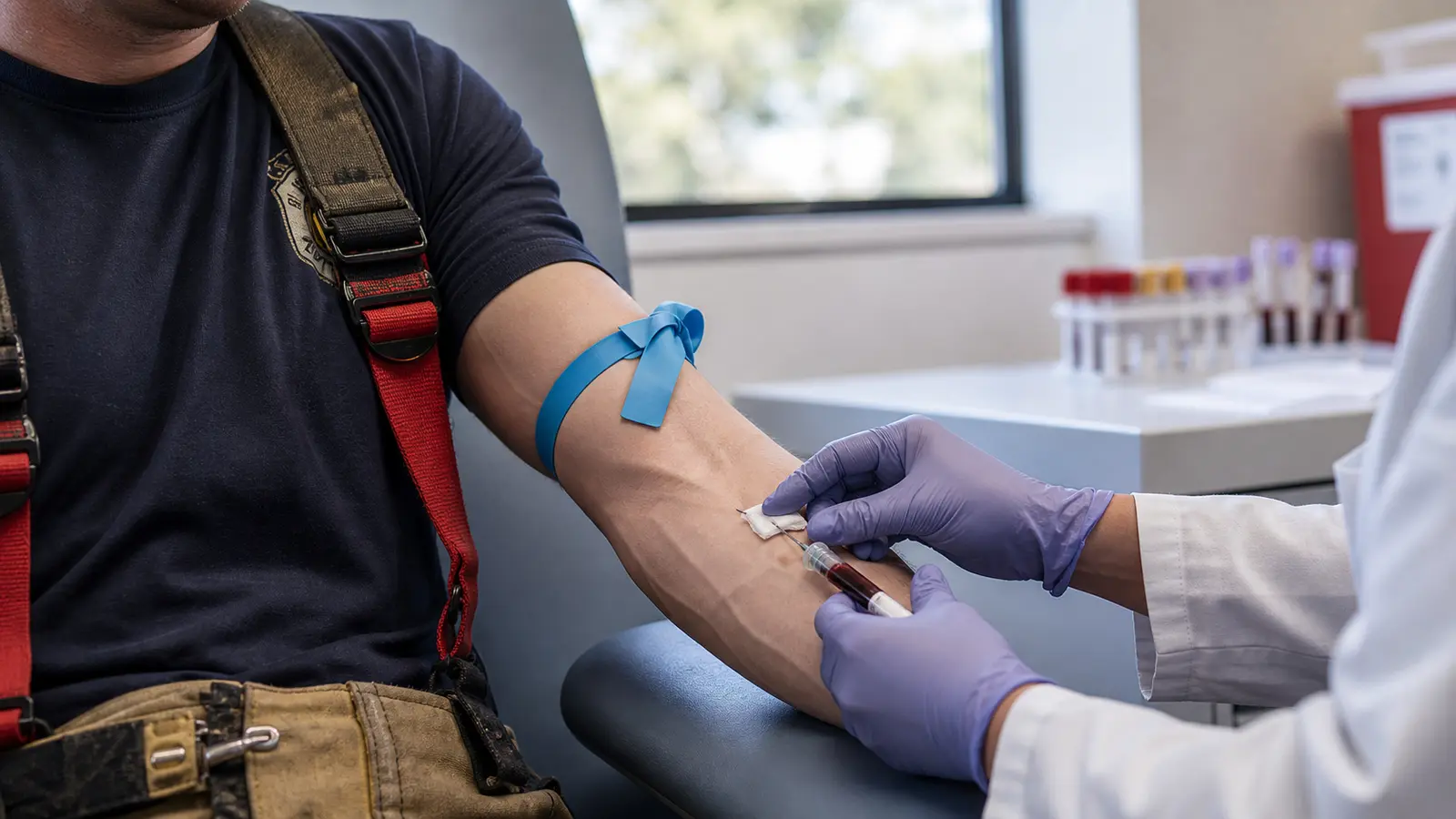
NIOSH began offering free PFAS blood testing to firefighters in 2023 through its Health Hazard Evaluation program and the National Firefighter Registry. By 2026, tens of thousands of firefighters have been tested. The results have confirmed what the toxicology literature predicted: firefighters carry PFAS blood levels significantly higher than the general population, driven by decades of AFFF foam use and PFAS-containing turnout gear. Many firefighters who receive their results don't know what to do with them — what the numbers mean clinically, whether they trigger any specific medical action, and how they connect to the ongoing AFFF litigation and workers' compensation landscape.
PFAS blood levels are measured in nanograms per milliliter of serum. The number your test returns is not a diagnosis — it is an exposure biomarker. It tells you how much PFAS is circulating in your blood at the time of the test. It does not tell you whether you will develop cancer, when, or which type. But it does tell you something about your occupational exposure history, and that information has both medical and legal significance that every firefighter who has been tested — or is considering testing — should understand before they act on it.
In this article:
- What PFAS blood testing actually measures
- How to read your results: what the numbers mean
- Clinical action levels and what medical follow-up to request
- Half-life and clearance — how long PFAS stays in your blood
- The legal dimension: how blood test results factor into AFFF claims
- What you can do to reduce ongoing PFAS exposure
- How to get tested through NIOSH
What PFAS Blood Testing Actually Measures
PFAS — per- and polyfluoroalkyl substances — are a family of more than 12,000 synthetic compounds sharing a carbon-fluorine bond that makes them extraordinarily resistant to breakdown. They accumulate in living tissue. Blood serum testing measures the concentration of specific PFAS compounds circulating in your bloodstream at the time the sample is drawn.
The NIOSH firefighter testing panel typically measures seven PFAS compounds that have the strongest documentation of human health effects and the highest prevalence in firefighter exposure sources: PFOS (perfluorooctane sulfonate), PFOA (perfluorooctanoic acid), PFHxS (perfluorohexane sulfonate), PFNA (perfluorononanoic acid), PFDA (perfluorodecanoic acid), PFUnDA (perfluoroundecanoic acid), and MeFOSAA (N-methyl perfluorooctane sulfonamido acetic acid). PFOS and PFOA are the most historically significant — they were the primary compounds in legacy AFFF formulations and are the best-characterized in terms of human health effects.
The test result you receive is typically a separate concentration in ng/mL for each measured compound, plus a summed total. Both the individual compound levels and the sum are clinically relevant — because different PFAS compounds have different health effects and different half-lives, knowing which compounds are elevated is more useful than the sum alone for determining what medical follow-up is appropriate.
How to Read Your Results: What the Numbers Mean
The 2022 National Academies of Sciences, Engineering, and Medicine report on PFAS exposure and health is the most authoritative current framework for interpreting blood serum results clinically. It established three tiers based on the sum of seven specific PFAS compounds:
| Sum of 7 PFAS (ng/mL) | Clinical tier | Recommended action |
|---|---|---|
| Below 2 ng/mL | Lowest tier | Routine screening, general healthy lifestyle recommendations, reduce ongoing exposure where possible |
| 2–7 ng/mL | Middle tier | Clinical discussion with provider, targeted screening based on specific compound levels and individual risk factors |
| Above 7 ng/mL | Highest tier | Medical evaluation with a clinician familiar with PFAS health effects, targeted cancer screening, thyroid and lipid panel, kidney function assessment |
For context: the median PFAS blood level in the general US adult population is approximately 2 ng/mL. In firefighter cohorts tested through NIOSH, median levels have consistently ranged from 6 to 20 ng/mL depending on career length, AFFF exposure history, and gear vintage. Airport firefighters — who used AFFF at much higher frequency than structural or wildland firefighters — typically show the highest levels, often exceeding 20 ng/mL in career-long personnel.
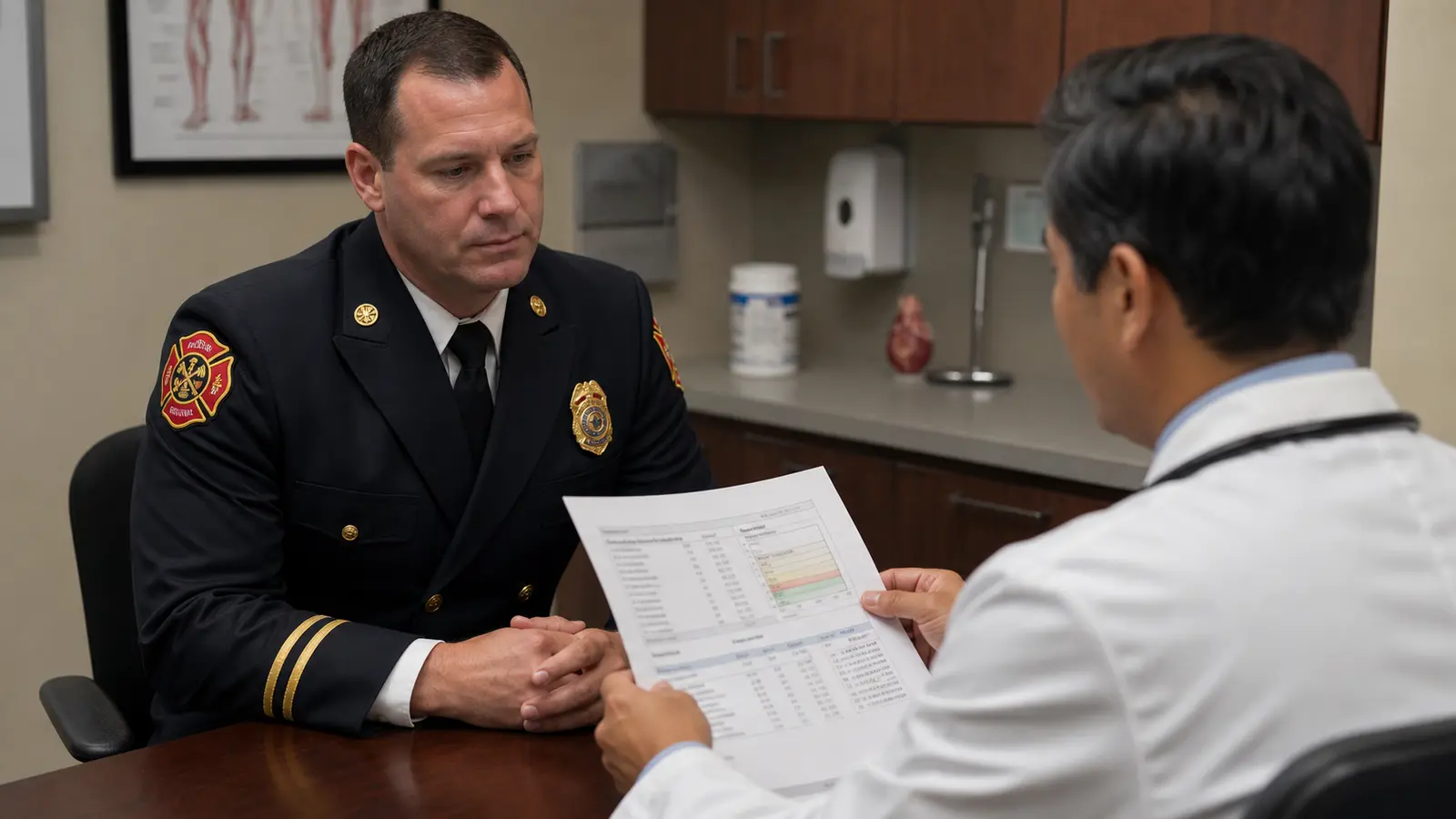
A result above 7 ng/mL does not mean you have cancer or will develop it. It means your PFAS exposure history is documented, your level is in the range associated with elevated health risk in epidemiological studies, and medical follow-up is warranted. The action is enhanced surveillance and early detection, not a diagnosis.
Clinical Action Levels and What Medical Follow-Up to Request
The specific health effects linked to elevated PFAS levels in the research literature, and the corresponding screening that clinicians familiar with PFAS exposure recommend:
Thyroid function. PFAS compounds interfere with thyroid hormone synthesis and transport. Elevated PFAS is associated with both hypothyroidism and thyroid cancer in occupationally exposed populations. Thyroid function panel (TSH, free T4) and thyroid ultrasound for nodule detection are appropriate for firefighters with PFAS levels above 7 ng/mL.
Lipid panel. PFOA and PFOS are associated with elevated total cholesterol and LDL in exposed populations. For firefighters already at cardiovascular risk from shift work and physical stress, PFAS-driven dyslipidemia adds to an already elevated baseline. Fasting lipid panel with LDL subfraction analysis is appropriate.
Kidney function. PFAS is associated with reduced kidney function in long-term exposure studies. Creatinine and eGFR assessment is appropriate, particularly for firefighters with long career lengths and high PFAS levels.
Liver enzymes. PFOA exposure is associated with elevated liver enzymes in occupationally exposed workers. ALT and AST as part of a comprehensive metabolic panel is appropriate for the highest-tier results.
Cancer-specific screening. The cancers most consistently linked to PFAS exposure in occupational epidemiology — kidney, testicular, bladder, thyroid, and non-Hodgkin lymphoma — are the ones for which enhanced surveillance is most justified in high-level firefighters. Discuss with your physician whether the standard age-based screening guidelines are sufficient given your PFAS level and career exposure history, or whether earlier or more frequent screening is warranted.
Half-Life and Clearance — How Long PFAS Stays in Your Blood
PFAS compounds are not metabolized — the body cannot break down the carbon-fluorine bond that makes them persistent. They are eliminated only through excretion, primarily in urine, and the rate of elimination varies significantly by compound. The half-life of a PFAS compound is the time it takes for the blood concentration to fall by half after exposure stops.
PFOS has a half-life in human serum of approximately 5.4 years. PFOA approximately 3.8 years. PFHxS — found at elevated levels in firefighters who used older AFFF formulations — has a half-life of approximately 8.5 years. What this means practically: a firefighter who retires today and is no longer exposed will still have detectable, potentially elevated PFAS blood levels for years after retirement. The level at retirement reflects accumulated career exposure and will decline slowly rather than rapidly.
This long half-life has two implications. First, a blood test done at retirement is a meaningful snapshot of career exposure — the level is not artificially inflated by recent exposure and reflects the accumulated body burden. Second, the health risks associated with elevated PFAS do not disappear at the point exposure stops. Post-retirement surveillance is appropriate for firefighters with elevated levels, not just active-duty testing.
The Legal Dimension: How Blood Test Results Factor Into AFFF Claims
The AFFF multidistrict litigation — consolidated product liability claims against manufacturers including 3M, DuPont, and others — has produced settlements exceeding $10 billion and continues to move through bellwether trials in 2026. Blood test results are relevant to both the litigation track and the workers' compensation track, but in different ways.
In the AFFF litigation, blood serum PFAS levels are not a prerequisite for joining the litigation and are not by themselves the primary evidence for a claim. The MDL is primarily about product liability — demonstrating that manufacturers knew about PFAS health risks and failed to warn users. Individual claimants do not need to prove their specific PFAS level caused their specific cancer. However, documented blood levels combined with a diagnosed covered cancer and a history of AFFF exposure strengthen the individual claim and may affect settlement positioning.
In workers' compensation under a state cancer presumption law, blood test results can serve as corroborating evidence of occupational exposure. A firefighter with a documented PFAS blood level significantly above the general population average and a covered cancer diagnosis has objective evidence that their body carries the exposure fingerprint of their occupation. This is not legally required under strong presumption laws — the presumption operates without needing this evidence — but it substantially complicates a rebuttal attempt.
One important confidentiality point: NIOSH testing results are returned to the individual firefighter and are not shared with employers, departments, or insurers without the firefighter's explicit consent. A firefighter who tests and receives elevated results has control over when and with whom that information is shared. Consult with an attorney familiar with firefighter occupational disease claims before deciding how to use test results in either legal context.
What You Can Do to Reduce Ongoing PFAS Exposure
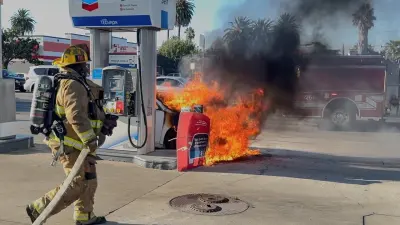
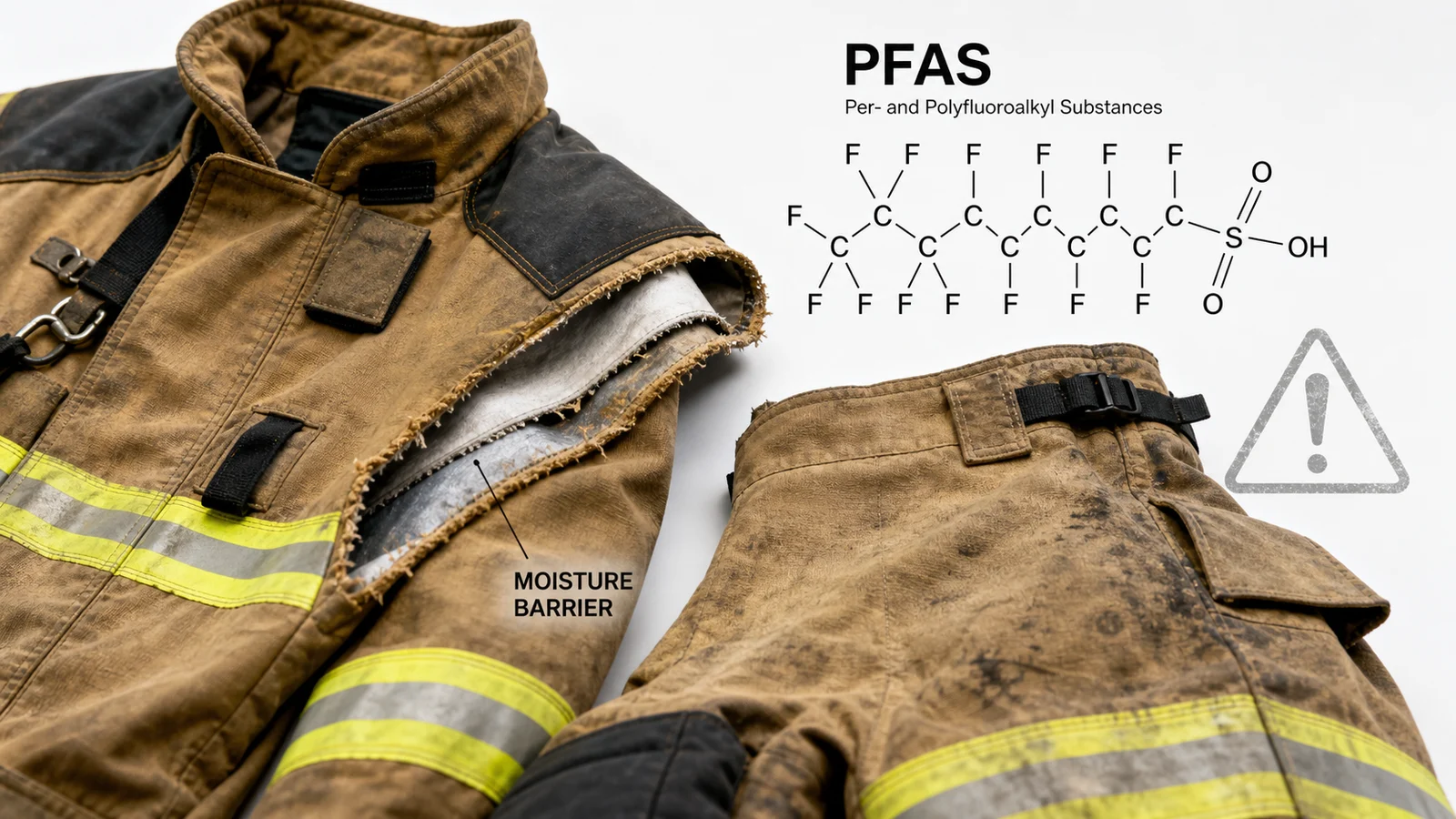
PFAS exposure in the fire service comes from three primary sources: AFFF foam, turnout gear, and station environment. Reducing ongoing exposure doesn't reverse existing body burden, but it stops accumulation from continuing at the same rate.
- ✓Post-fire gross decontamination before leaving the scene. Showering, face washing, and changing out of contaminated gear at the scene prevents skin absorption during the commute home. This is now standard protocol in many departments and directly reduces carcinogen body burden per incident.
- ✓Wash turnout gear after every structural fire response. PFAS and other carcinogens concentrate on the outer shell of turnout gear after each fire. Gear that is not washed after incidents and stored in the cab or living quarters becomes a continuous low-level exposure source between responses.
- ✓Request PFAS-free turnout gear when your current gear is due for replacement. NFPA 1971 has been updated to address PFAS in turnout gear, and manufacturers are producing PFAS-free outer shell and moisture barrier options. Transitioning to PFAS-free gear at replacement cycles reduces ongoing dermal and inhalation exposure from the gear itself.
- ✓Avoid reapplying DWR treatments to turnout gear. Durable water repellent coatings applied to turnout gear as maintenance treatments historically contained PFAS. Using PFAS-free DWR alternatives — now commercially available — eliminates this exposure pathway.
- ✗Do not store turnout gear in the cab or sleeping area. Contaminated gear off-gasses carcinogens into enclosed spaces. Department policy requiring gear storage in a separate, ventilated area away from living quarters is an evidence-based exposure reduction measure, not just a housekeeping rule.
How to Get Tested Through NIOSH
The National Firefighter Registry for Cancer at NIOSH (cdc.gov/niosh/firefighters) is the primary enrollment point for free PFAS testing for U.S. career and volunteer firefighters. Enrollment in the registry is the prerequisite for testing. Registration takes approximately 15 minutes online and collects career history, exposure history, and basic health information.
Once enrolled, NIOSH contacts registered firefighters with testing opportunities based on their location and exposure profile. The test itself is a standard blood draw that can be completed at a participating lab near the firefighter's location. Results are returned to the firefighter directly — not to the department, union, or employer — with interpretive information about what the levels mean and what clinical follow-up is recommended at their specific level.
If you have already been tested through another channel — through a state health department program, through the IAFF local's health initiative, or through a private occupational medicine provider — the seven-compound sum from those results can be interpreted using the National Academies tiers above. The key information you need is the individual compound levels and the sum of the seven PFAS most clinically relevant to occupational firefighter exposure.
The PFAS blood test is not a predictor of fate. A level above 7 ng/mL does not mean cancer is coming. It means your occupational exposure history is documented in your bloodstream, that the level is in a range associated with elevated risk in population studies, and that enhanced medical surveillance is appropriate. Surveillance finds cancers earlier. Earlier detection changes outcomes.
The firefighters who benefit most from testing are not the ones with the highest anxiety about the results. They are the ones who use the results to have a specific conversation with a clinician about what to screen for and when — and who document their exposure history while they are still healthy enough to act on it. Enroll. Get tested. Know your number.





Comments 0
No comments yet. Be the first to share your thoughts!
Leave a Comment