Door Control in Firefighting: The Skill That Can Save Your Life
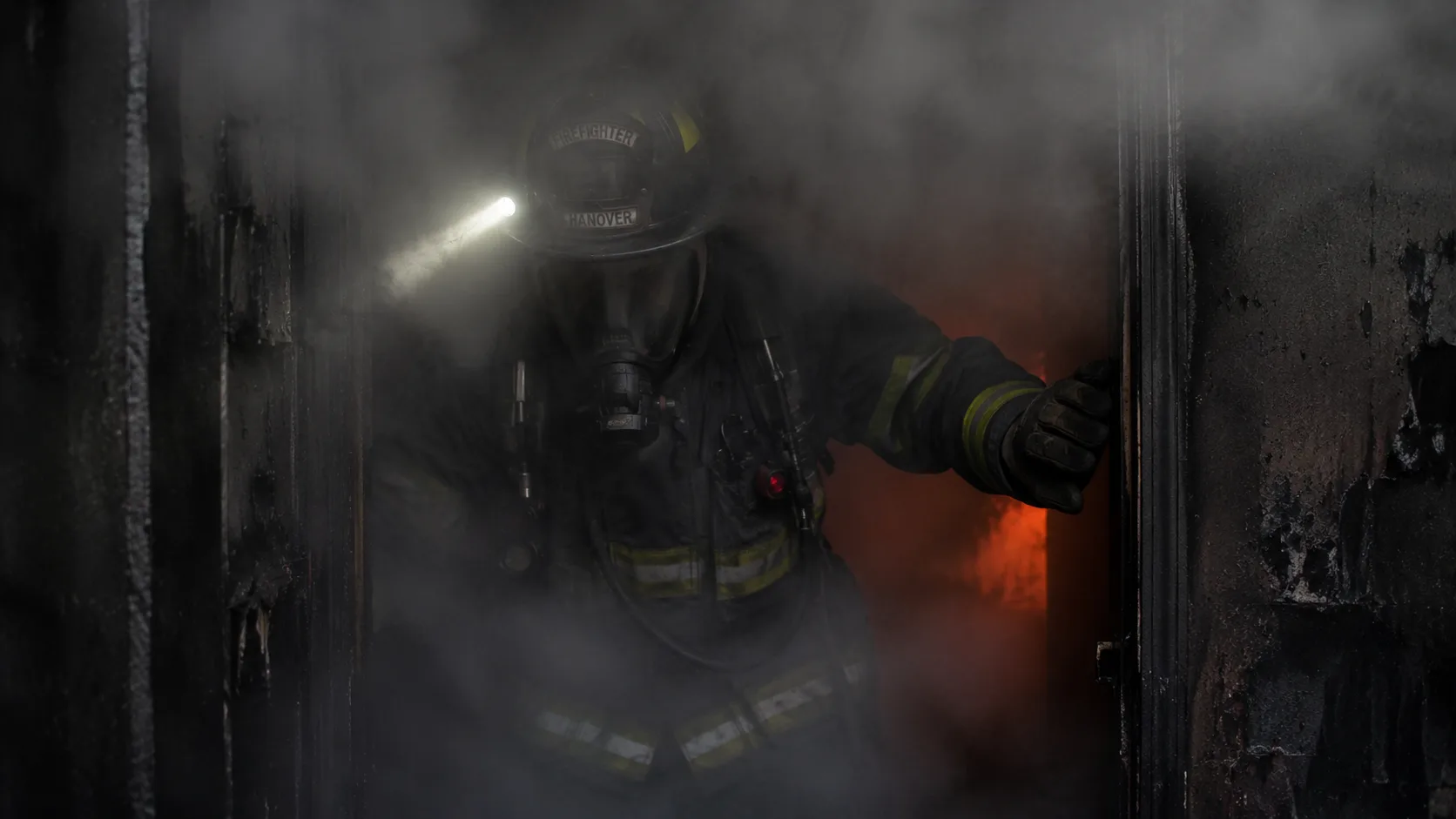
Door control is the deliberate management of how and when doors are opened during fire attack — and it is one of the most consequential skills a firefighter can develop. The difference between opening a door rapidly versus checking it, controlling it, and opening it slowly can be the difference between a manageable fire and a fire that flashes over the stairwell while a crew is standing in it. Modern fire dynamics research has made door control a front-line tactical topic that every firefighter needs to understand from first principles.
Jump to:The science: doors and fire behavior · Pre-entry door assessment · Control techniques · Door control with a hoseline · Closed doors in occupied rooms · FAQ
The Science: Doors and Fire Behavior
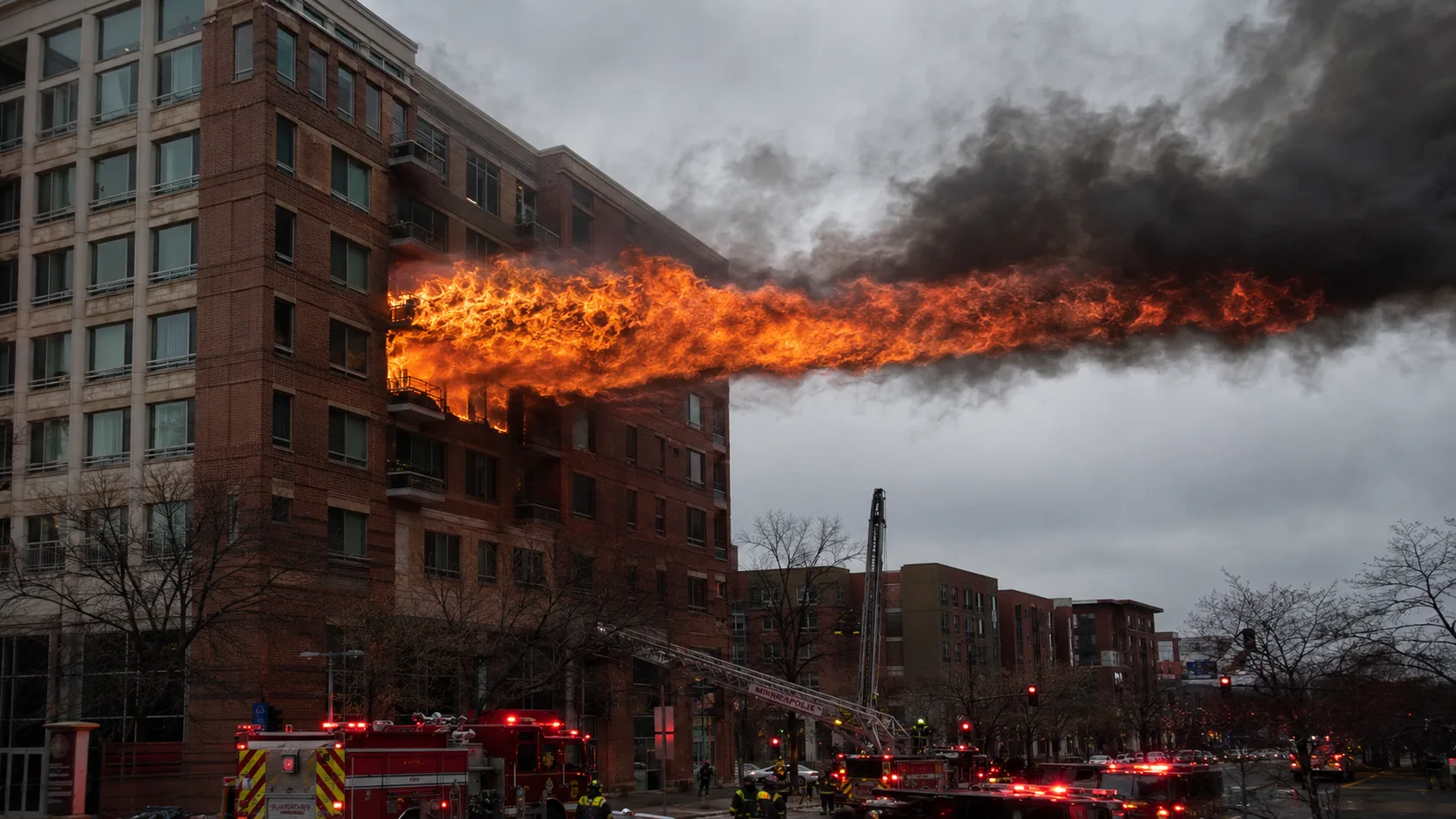
Modern residential fires are predominantly ventilation-controlled before fire department arrival. This means the fire has consumed much of the available oxygen in the compartment and is burning below its potential heat release rate. It is essentially waiting for more air. When a firefighter opens a door, they provide that air.
UL FSRI research documented the following when a door is opened in a ventilation-limited fire:
- Oxygen concentration in the fire compartment rises rapidly
- Heat release rate increases dramatically — sometimes doubling or tripling within seconds
- Flame and hot gas movement accelerates toward the new air supply (the open door)
- The temperature at the ceiling of the approach hallway can rise hundreds of degrees in the seconds following door opening
The moment you open a door is the moment of maximum hazard. Fire conditions change faster at that instant than at any other point in the operation. Everything about door control is designed to manage that moment — to control it rather than be surprised by it.
Pre-Entry Door Assessment
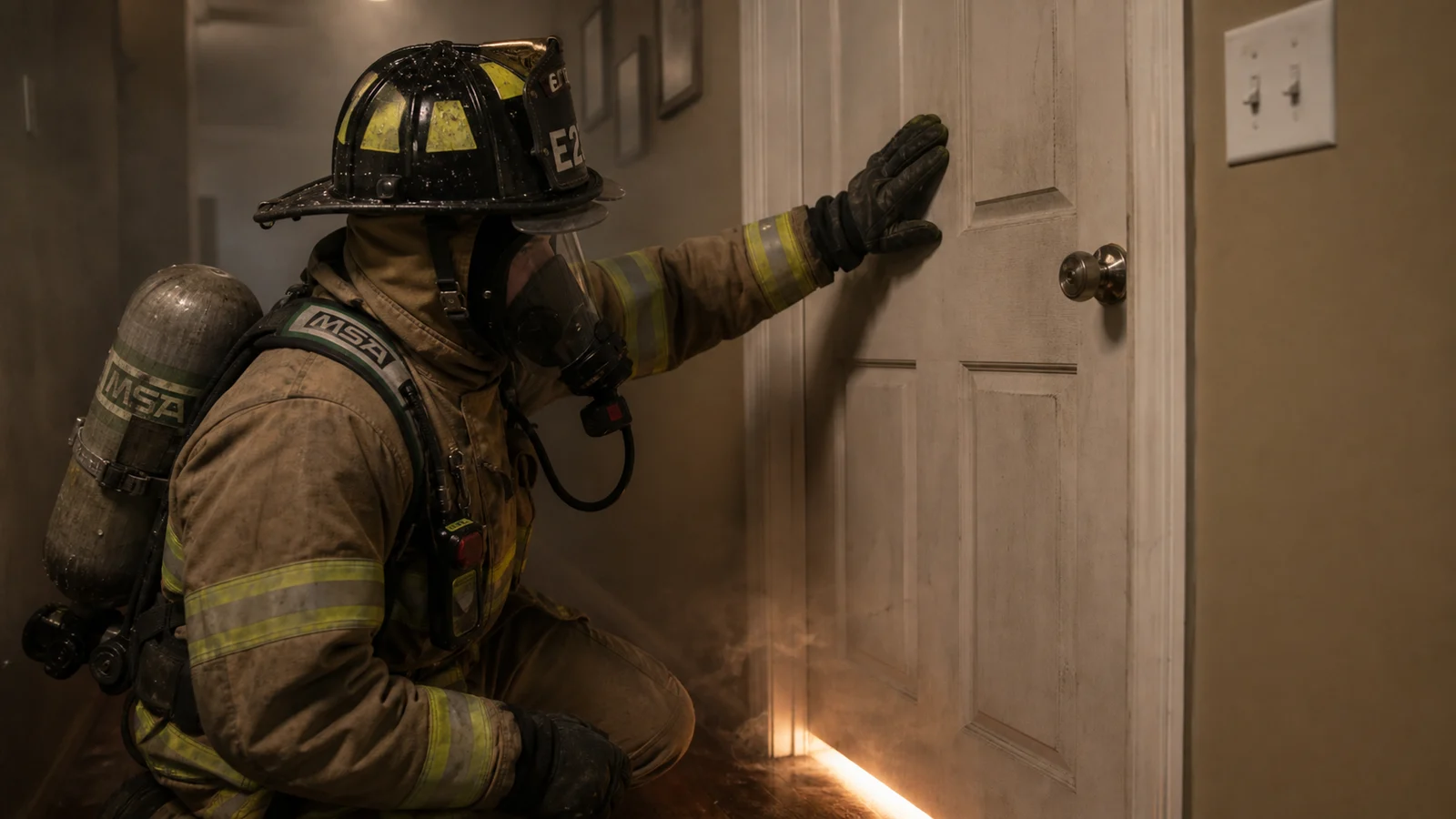
Before opening any door in a fire structure, a brief assessment takes seconds and provides critical information:
- Check for smoke under the door. Heavy, fast-moving smoke under a closed door indicates significant fire pressure on the other side. Thin, slow-drifting smoke suggests less immediate hazard.
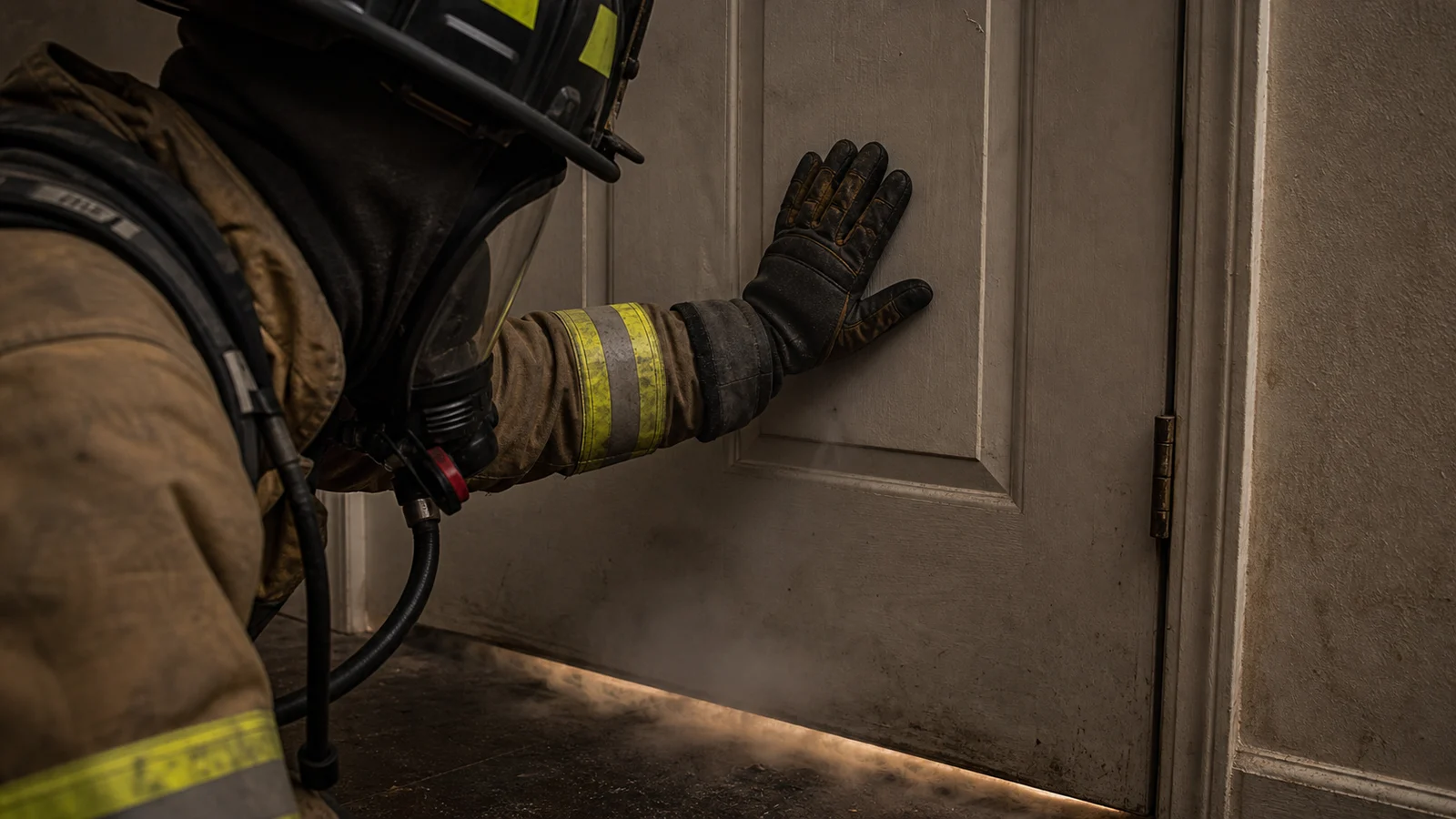
- Feel the door with the back of your hand. Start at the bottom and move up. Heat concentrated at the top of the door indicates fire near the ceiling on the other side. A uniformly hot door indicates fire conditions throughout the compartment. A cool door is not a guarantee of safety but is a favorable sign.
- Feel the door handle or knob. A hot metal handle is a warning sign. Note: many modern handles are plastic and are less reliable heat indicators.
- Assess the gap at the top. If you can see orange light or feel intense heat radiating through the top gap, conditions are severe on the other side.
Door Control Techniques
The controlled crack
The most important technique. Open the door 2–3 inches and pause. Observe: what does the smoke do? Does it flow out slowly (indicating positive pressure from heat), rapidly (indicating active ventilation-limited fire seeking air), or not at all? Does heat billow out? The controlled crack lets you read the conditions before committing to a full opening.
Positioned opening
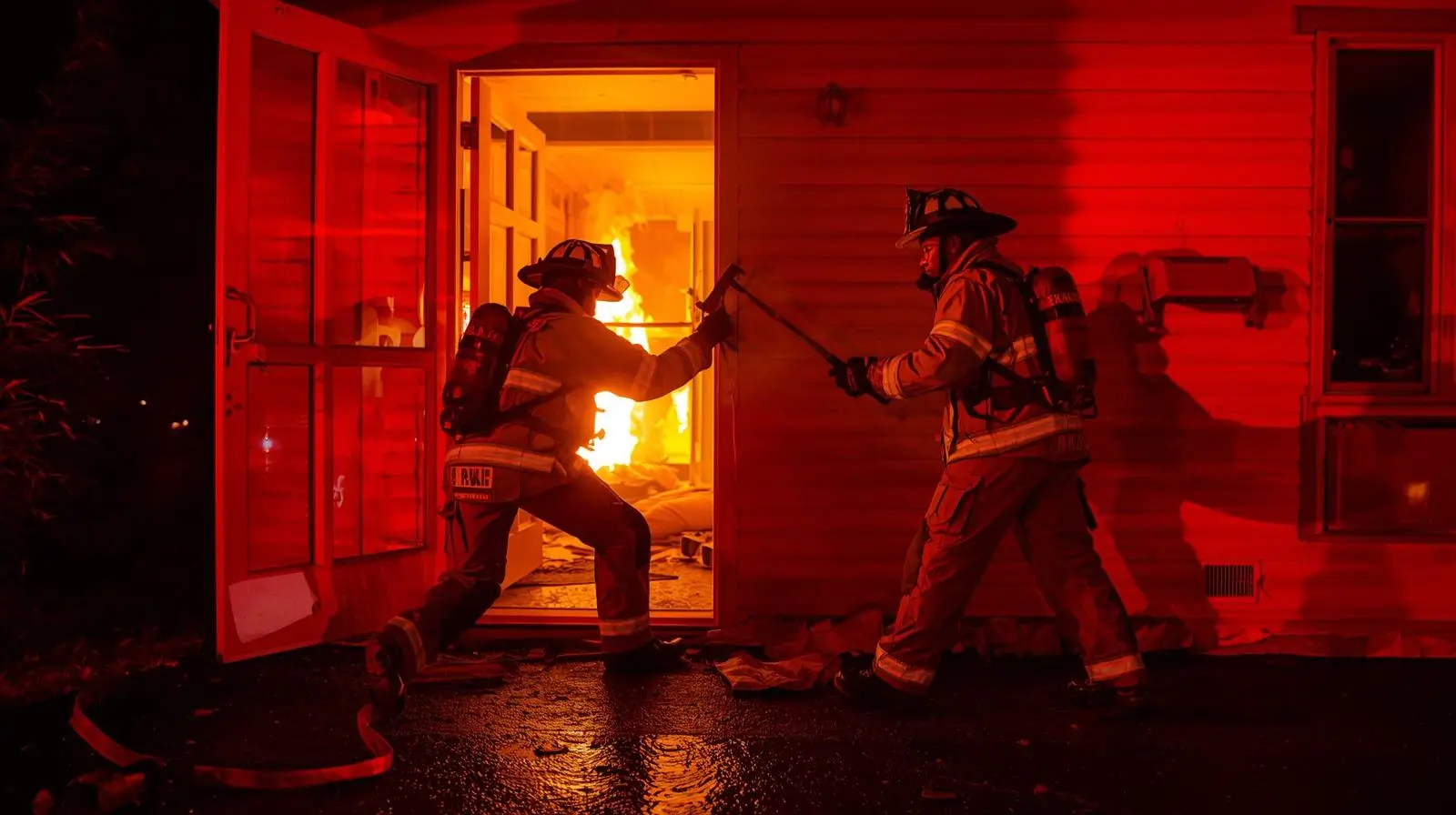
Stand to the latch side of the door, not directly in front of it. Opening from the side means any flash or fire movement out of the doorway does not travel directly into you. The door itself provides a partial shield. This positioning is standard for all fireground door operations.
Slow controlled opening with nozzle charged
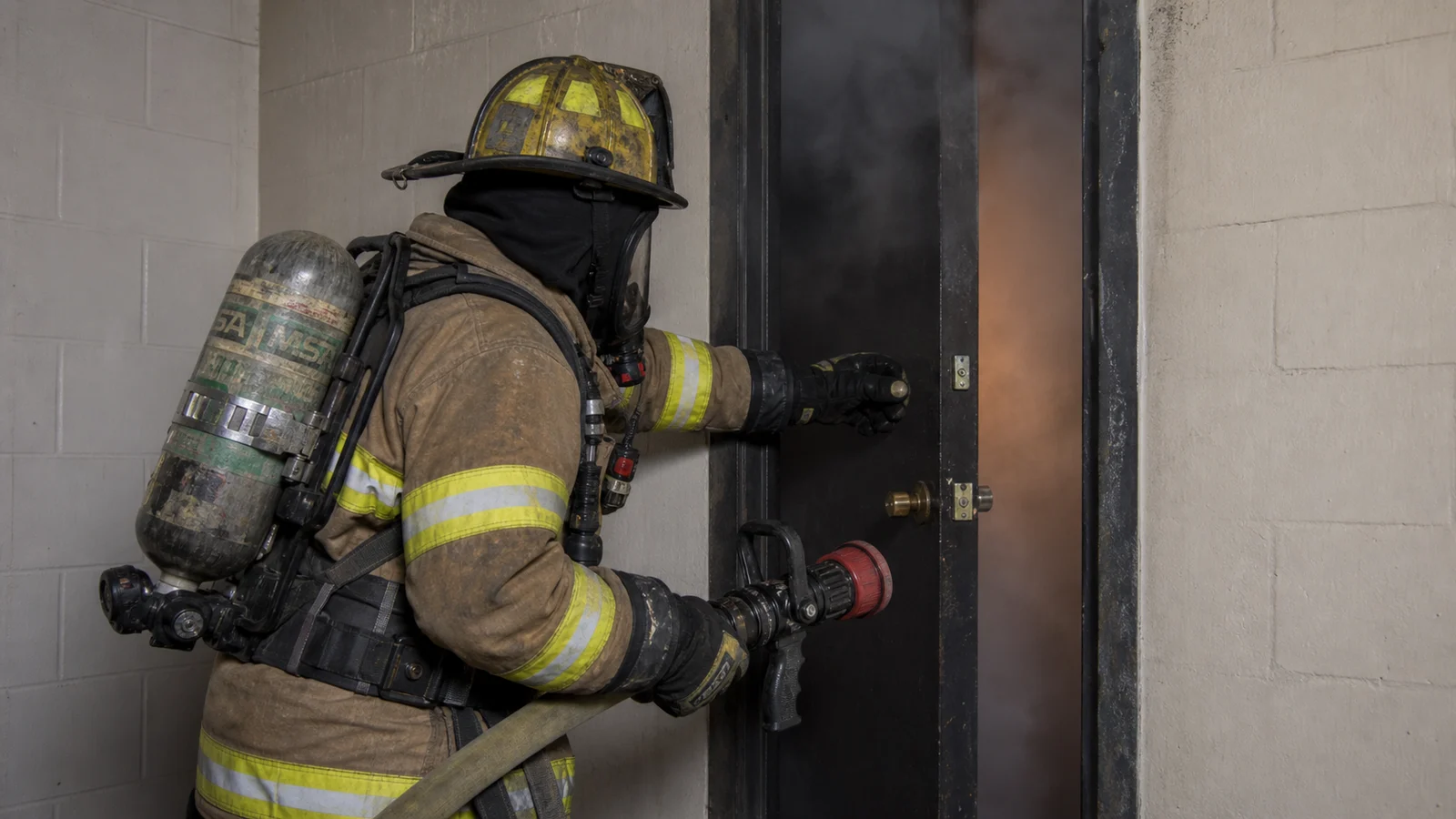
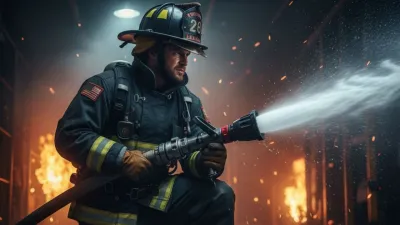
Open the door with one hand while controlling the nozzle with the other (or with the second firefighter on the line positioned and ready). Open to the minimum width needed for the hoseline to advance. Partial opening reduces the air supply the fire receives at the moment of entry.
The door as a control valve
Think of a door as a valve controlling air supply to the fire. Opening it wide opens the valve fully — maximum air, maximum fire response. Opening it partially, or pulsing it open and closed as you advance, controls the air supply and modulates the fire's response to your entry. This concept applies throughout the advance, not just at the initial opening.
Door Control During Hoseline Advance
The specific door control protocol for a hoseline advance:
- Line charged and crew ready before the door opens
- Nozzle firefighter positioned at the hinge side of the door; door control firefighter at the latch side
- Door control firefighter opens the door slowly, maintaining control throughout
- If conditions permit advance: nozzle firefighter moves in low, door control firefighter maintains partial closure against the hoseline to limit air supply during initial entry
- Officer at the rear monitors conditions and calls advance or retreat
- Door is never left fully open and unattended while fire is active in the structure
Designate a door control firefighter explicitly. On a two-person crew advancing a line, one person controls the nozzle and one controls the door. This is not assumed — it is assigned. Uncontrolled doors are one of the most common tactical failures in residential fire operations.
Closed Doors in Occupied Rooms: A Life Safety Message
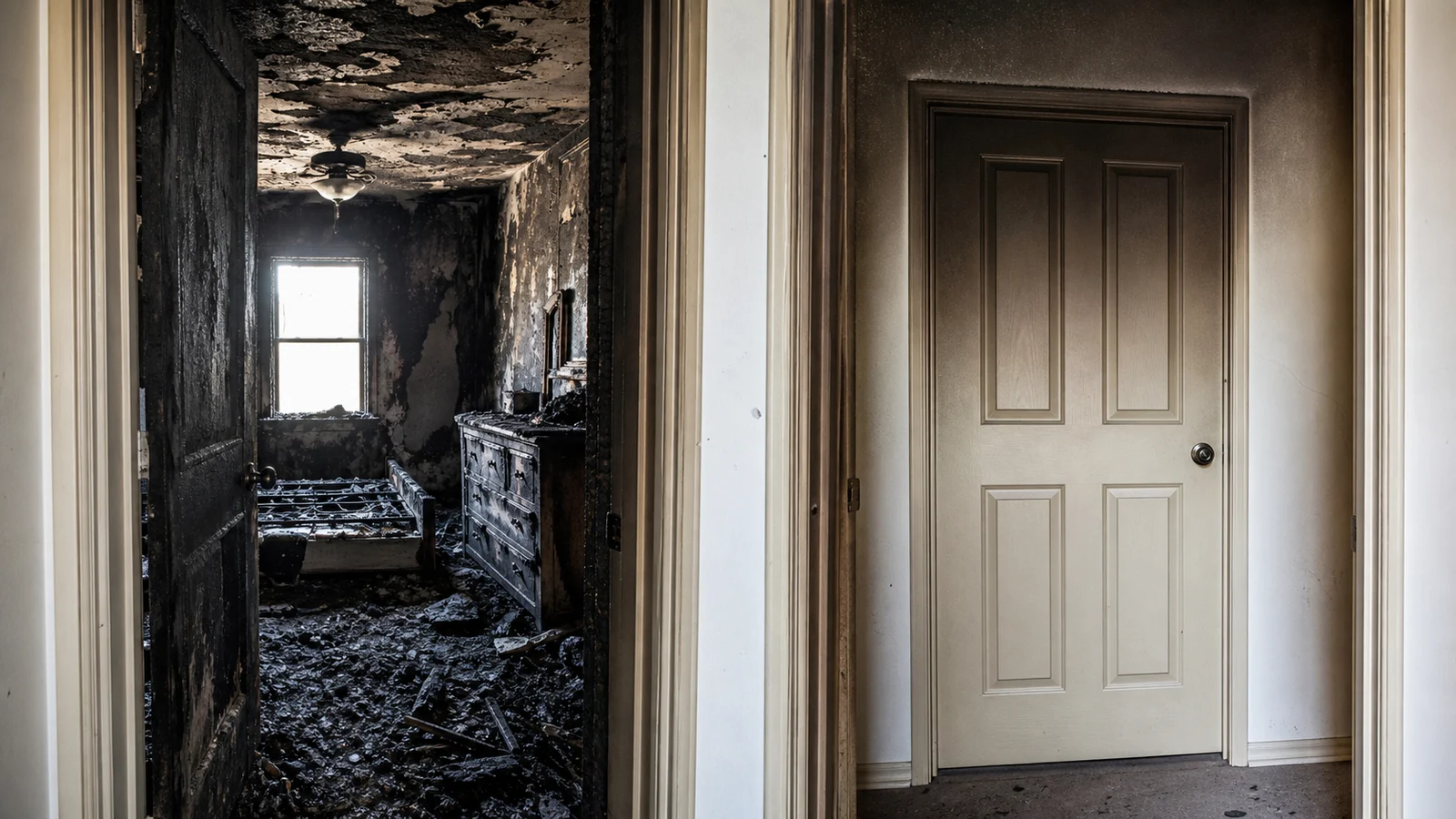
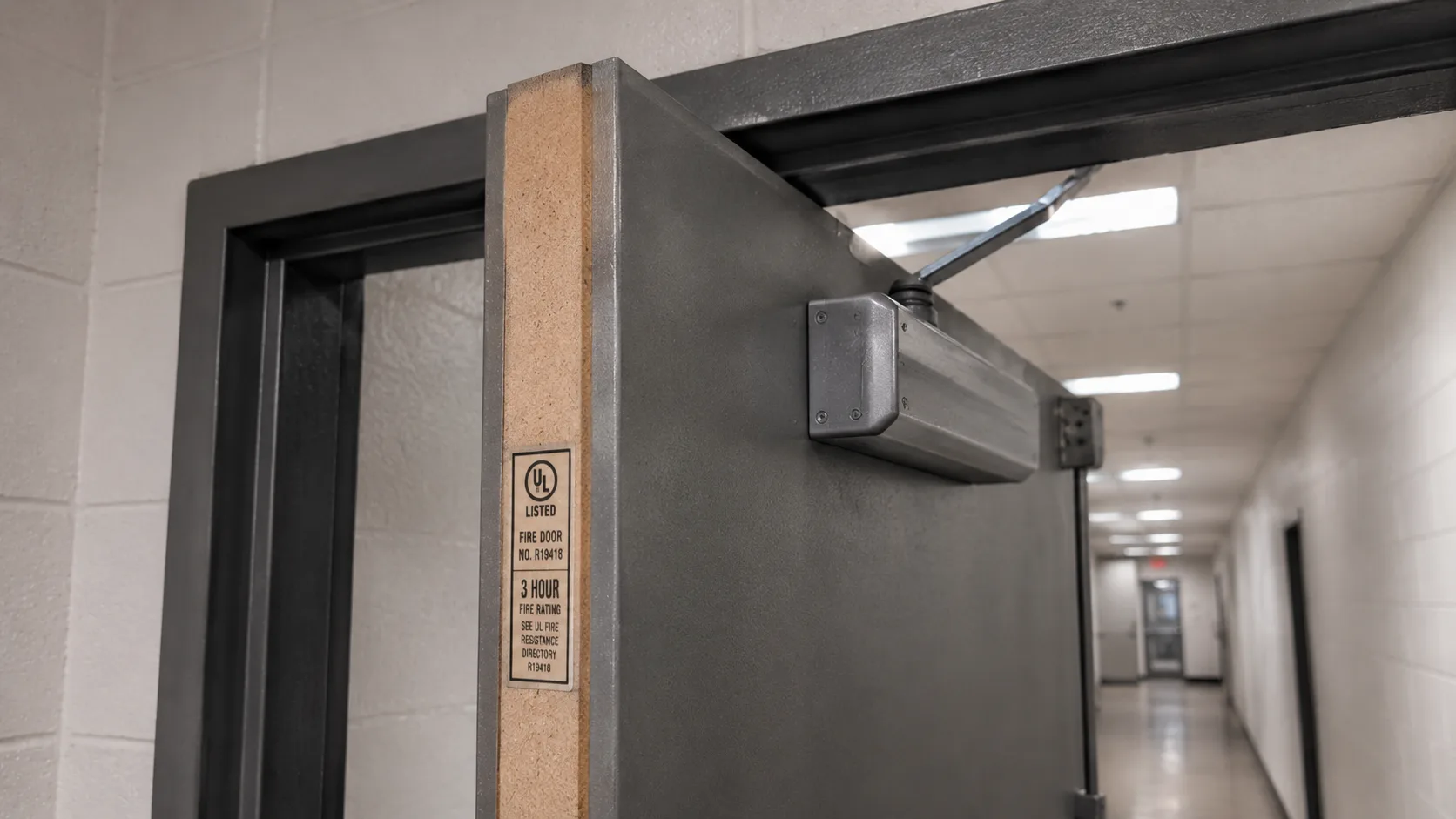
UL FSRI's "Close Before You Doze" research demonstrated that a closed bedroom door can reduce temperatures in a burning room from over 1,000°F to under 100°F in the adjacent room. For civilians, sleeping with the bedroom door closed is one of the highest-impact fire survival behaviors possible.
For firefighters, this research reinforces the door control principle: a closed door is a life safety tool for victims inside, not an obstacle. When conducting primary search, note which doors are closed — victims behind closed doors are more likely to be alive than victims in open-plan areas exposed to fire gases. Prioritize closed-door rooms in primary search for survivable victims.
Frequently Asked Questions
What is door control in firefighting?
Door control is the deliberate management of how and when doors are opened during fire attack — pre-entry assessment, controlled opening technique, maintaining partial door closure during hoseline advance, and using doors to limit air supply to the fire. It directly affects fire behavior at the moment of entry.
Why do firefighters check the door before opening it?
To assess fire conditions on the other side before committing to a full opening. A hot door, fast-moving smoke at the gap, or heat radiating through the top of the door indicates intense fire conditions. The pre-entry check takes seconds and provides information that changes the tactical approach.
Should bedroom doors be left open or closed during a house fire?
Closed. UL FSRI research demonstrated that a closed door can reduce temperatures in an adjacent room from over 1,000°F to under 100°F during a residential fire. Occupants in rooms with closed doors have dramatically better survival outcomes than those in open areas exposed to fire gases.
Comments 0
No comments yet. Be the first to share your thoughts!
Leave a Comment