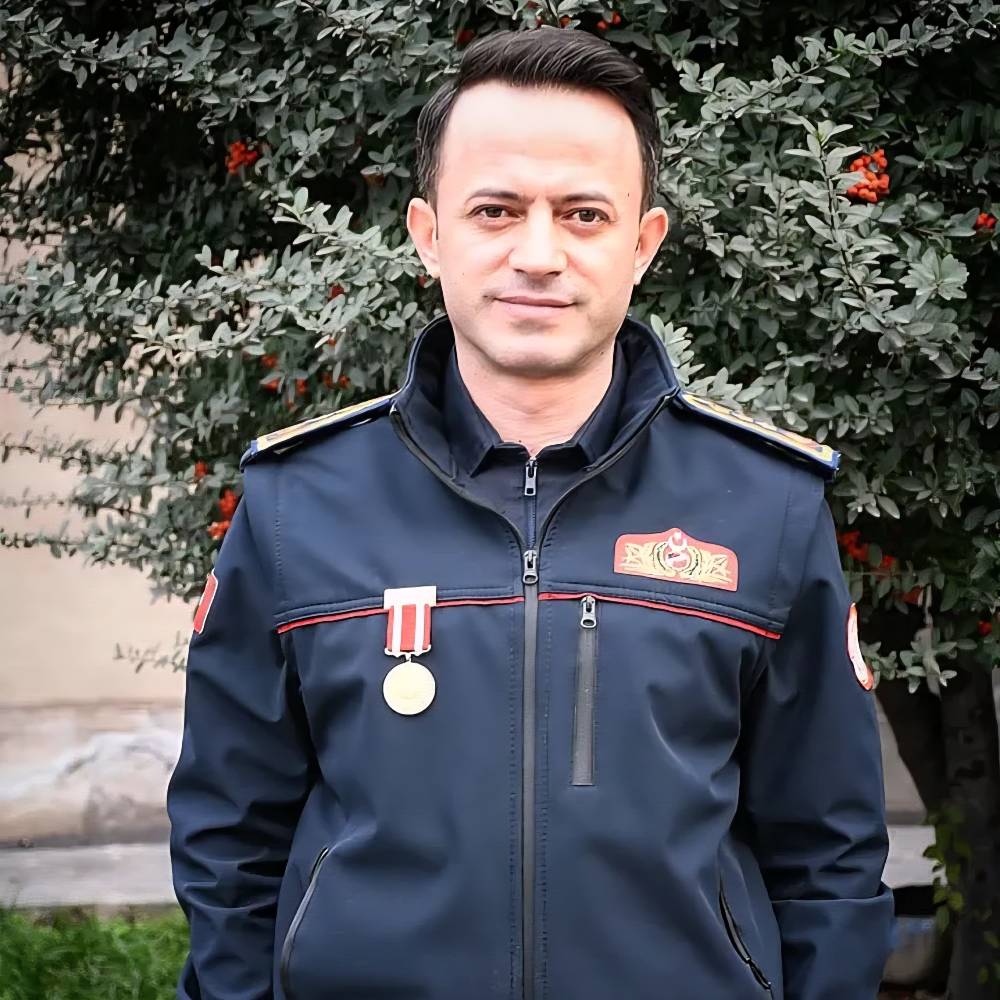
Koray Korkut is the Fire Department Director (İtfaiye Müdürü) of the Karabük Municipality Fire Department, appointed to the position in 2020. Born in 1984 in Karabük, Turkey, he began his career as a Firefighter with the Istanbul Metropolitan Municipality Fire Department in 2007, transferred to the Ankara Metropolitan Municipality Fire Department in 2010 where he served as Firefighter Sergeant and Fire Officer, and was appointed Fire Department Director at Karabük in 2020. He has responded to 1,000+ structural fires and 10+ major incidents including earthquakes, large wildland fires, and hazmat emergencies. He has been awarded the State Distinguished Service Medal of Turkey (Devlet Üstün Fedakarlık Madalyası). He holds an associate degree in Emergency and Disaster Management (Acil Durum ve Afet Yönetimi) and a bachelor\'s degree in Public Administration from Anadolu University. He is a certified Level 4 Fire Instructor and Level 2 Work at Heights Instructor.
Complete search and rescue guide: primary vs secondary search, oriented search techniques, TIC-assisted search, victim location priorities by scenario, victim care, drag and stairwell removal methods, and MAYDAY self-rescue.
Hugh Halligan, FDNY Deputy Chief, designed the tool that bears his name in 1948 to solve a specific problem: getting through doors faster with one tool that did multiple things, rather than three tools that each did one thing. Today every structural fire apparatus in the country carries one. This covers the three working ends, the set-and-hit technique with the flathead axe, through-the-lock entry, vehicle extrication applications, utility control, how to select the right size, and why no tool in the fire service is more versatile per pound of weight carried.
Not all hazardous materials responses are the same. This in-depth guide explains the difference between Hazmat Operations and Technician levels, what firefighters actually do on hazmat scenes, and how departments manage chemical, biological, and radiological emergencies.
Four hazmat protection levels, each appropriate for a different combination of hazard type and concentration. Level A fully encapsulates the body with SCBA inside the suit — the highest protection but least mobility. Level D is standard work clothes with safety glasses. The selection between them is driven by atmospheric monitoring, not visual assessment. This covers each level's construction and capability, the detection requirements that drive the choice, decontamination requirements, and why selecting the wrong level in either direction costs you.
Fire spreads through three mechanisms — conduction, convection, and radiation — and each one operates differently, creates different hazards, and requires different interventions. Conduction moves heat through solids and causes extension fires in adjacent rooms. Convection moves heat through gas and drives the thermal layer that kills people in room fires. Radiation heats objects at a distance and is the primary mechanism of structure ignition in wildfires. This covers the physics of each mechanism, what it looks like at a fire scene, how each threatens firefighters and occupants differently, and how suppression and ventilation tactics address each one.
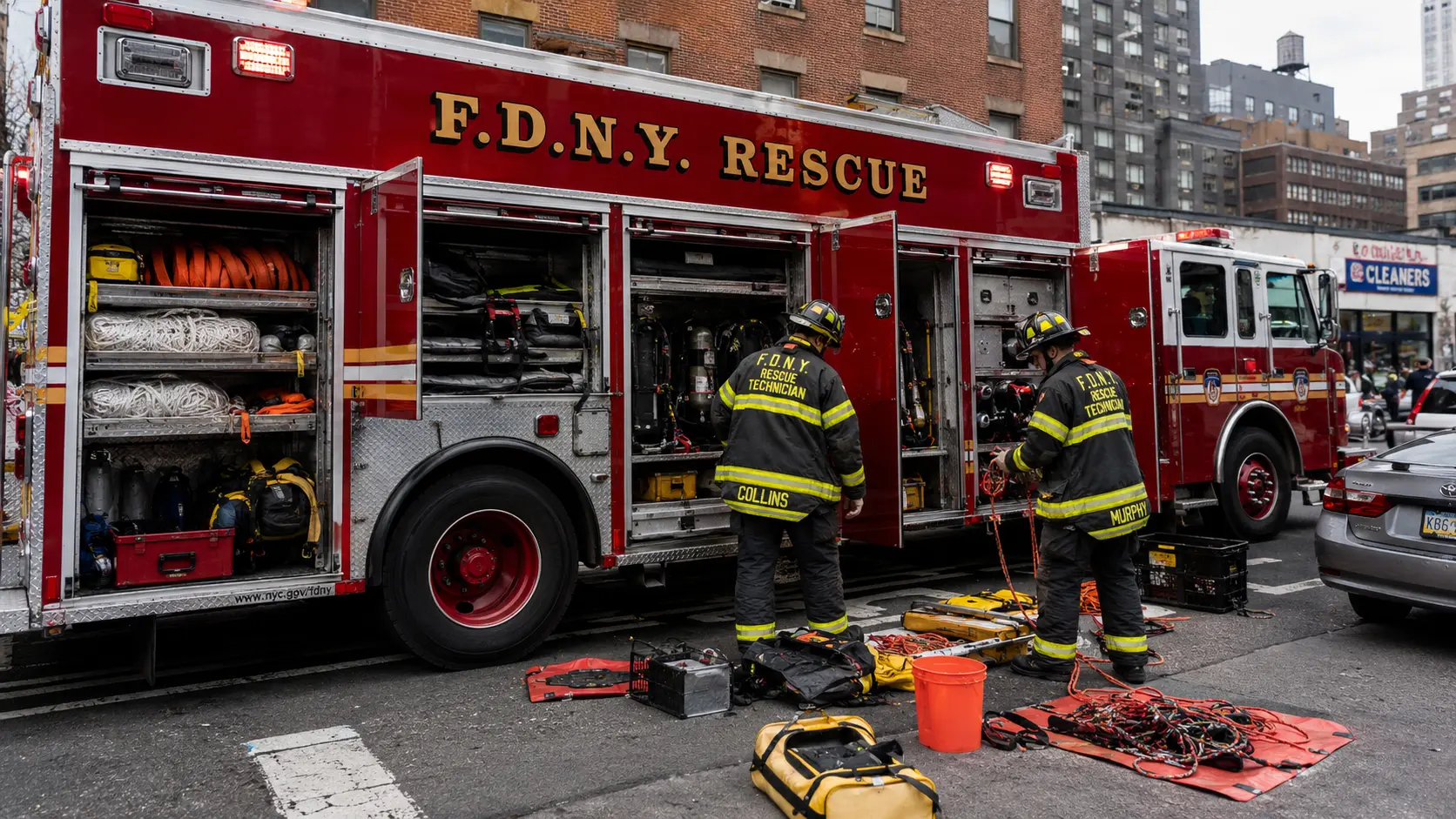
A heavy rescue unit is not a ladder truck with more tools. It is a purpose-built technical rescue cache on wheels — carrying equipment for vehicle extrication, structural collapse, confined space rescue, rope rescue, trench rescue, and underwater recovery, most of which no other apparatus in the department carries at all. This covers the specific tool inventory and why each category exists, the training requirements that make rescue company assignments competitive, how the rescue unit integrates with engine and ladder operations, and what happens at the incidents that trigger a rescue company response.
Hoarding fires kill occupants at five times the rate of standard residential fires and put firefighters in conditions that change every operational calculation — fuel load, egress, structural stability, thermal imaging, and the RIT response. This covers what actually happens inside a hoarding structure fire, how incident commanders adapt tactics, and when the no-go decision gets made.
Most families think they have a fire escape plan. Most of them don't. A real plan isn't a conversation you had once — it's a practiced route your kids can follow alone, in the dark, when the smoke alarm is screaming. Here's how to actually build one.
Most homeowners discover how their policy actually works for the first time after the fire. The four coverage components, the replacement cost vs. actual cash value distinction, how depreciation works on personal property, what is and is not excluded, and why 65% of homes are underinsured for rebuild cost — this covers the claims process in detail and what preparation makes the difference between a full recovery and a significant financial gap.
Every firefighter entering a burning building breathes from compressed air — not oxygen — at 4,500 psi. The rated 45-minute duration drops to 20–25 minutes under real working conditions. The facepiece seal is the most common failure point. This covers all four SCBA components, the gap between rated and actual duration, the one-third air rule, low-alarm procedure, the bypass valve, emergency breathing support, and what the protocol is when the SCBA fails inside a structure.