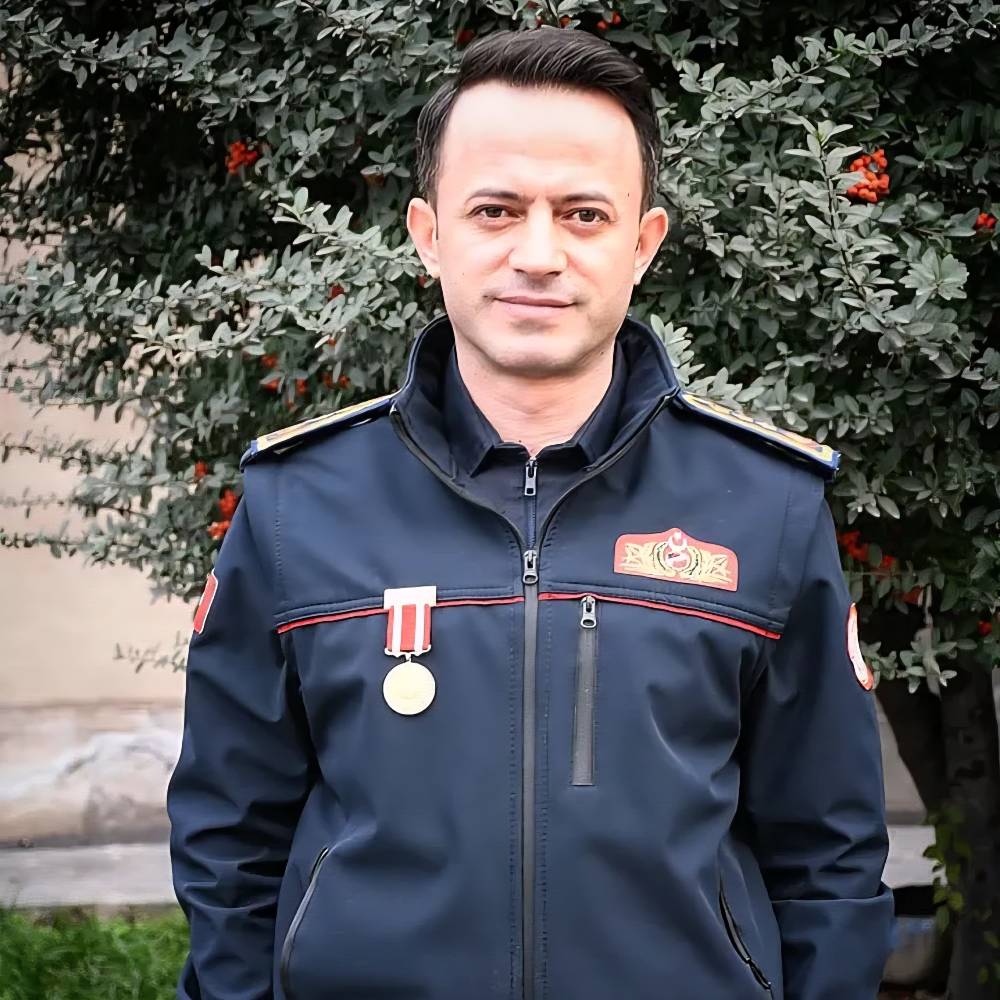
Koray Korkut is the Fire Department Director (İtfaiye Müdürü) of the Karabük Municipality Fire Department, appointed to the position in 2020. Born in 1984 in Karabük, Turkey, he began his career as a Firefighter with the Istanbul Metropolitan Municipality Fire Department in 2007, transferred to the Ankara Metropolitan Municipality Fire Department in 2010 where he served as Firefighter Sergeant and Fire Officer, and was appointed Fire Department Director at Karabük in 2020. He has responded to 1,000+ structural fires and 10+ major incidents including earthquakes, large wildland fires, and hazmat emergencies. He has been awarded the State Distinguished Service Medal of Turkey (Devlet Üstün Fedakarlık Madalyası). He holds an associate degree in Emergency and Disaster Management (Acil Durum ve Afet Yönetimi) and a bachelor\'s degree in Public Administration from Anadolu University. He is a certified Level 4 Fire Instructor and Level 2 Work at Heights Instructor.
Commercial building fires differ from residential fires in fuel load, structural failure mode, suppression systems, HVAC smoke spread, and egress complexity — and these differences change every tactical decision. Unprotected steel fails suddenly without the progressive warning signs that wood gives. High-rise fires require shelter-in-place protocols rather than simultaneous total evacuation. Warehouse fires transition to defensive exterior operations earlier than any residential scenario. This covers the full comparison and what occupants of commercial buildings should know.
A fireboat is not a fire truck that floats. It is a fundamentally different apparatus category — its draft capabilities, water supply, and access profile address scenarios that land-based apparatus cannot reach or cannot adequately address. A pier fire with 50 feet of water between the fire and the nearest land access point requires a boat. A vessel fire at anchorage requires a boat. A waterfront structure fire where the best suppression position is from the harbor side requires a boat. This covers what fireboats do, how they differ from land apparatus, FDNY's marine fleet, the mechanics of shipboard firefighting, and why most port cities still operate fireboats despite the significant operating costs.
The fire extinguisher that has been on your kitchen wall for eight years may or may not be functional. Recharging is the right call after use or low pressure, when the cylinder is in good condition and within its service life. Replacement is right when the unit is disposable, has visible damage, or has reached its hydrostatic test interval and replacement is cheaper. This covers the monthly inspection, when each option applies, hydrostatic testing intervals, the rechargeable vs. disposable distinction, and correct placement.
The nozzle at the end of a charged hoseline is not a fixed device — it is a variable tool that changes the water's behavior from a concentrated high-velocity stream to a wide dispersed fog, with significant tactical consequences at each setting. A smooth-bore tip delivers maximum reach and penetration. A straight stream on a combination nozzle delivers high flow with some pattern control. A wide fog cools the thermal layer and creates steam but sacrifices reach. This covers every nozzle type in structural fire service use, the physics of each stream pattern, what each accomplishes at a fire, and the specific scenarios where stream selection makes the tactical difference.
A Class 350 fire safe protects paper at 350°F — but hard drives fail at 125°F and USB drives at 150°F. Most people store digital backups in the wrong type of safe and discover this after the fire. This covers the UL 72 rating system, why paper, media, and digital contents need completely different safes, what happens inside during a fire, the water damage problem nobody mentions, and where the real price-to-protection breakpoints are.
The fire triangle — fuel, heat, oxygen — has been in textbooks since the 1940s. Fire scientists have used the fire tetrahedron for decades because the triangle fails to explain why some suppressants work and others don't, and why a fire can keep burning after oxygen is reduced. The fourth side — uninhibited chemical chain reaction — is what makes suppression science make sense. This covers combustion chemistry, free radicals, and exactly how each type of suppressant interrupts the tetrahedron.
Fire whirls are rotating columns of fire and hot gas that form when convective updrafts interact with horizontal wind shear — essentially tornadoes made of fire. They occur on a spectrum from small dust-devil-scale rotations at the fire's edge to the fire tornado documented during the 2018 Carr Fire near Redding, California, which produced winds above 140 mph and lofted debris miles from the fire. This covers the formation mechanics, the difference between fire whirl and fire tornado, why the Carr Fire event was the first documented true fire tornado, what they do to fire behavior and spotting, and the specific danger they create for crews who encounter them.
A firebreak interrupts the continuous fuel supply that a fire depends on to advance — but a cleared line is only effective if the fire reaches it under conditions where the break is wide enough, the fire's behavior is predictable enough, and spotting doesn't carry embers across before suppression resources can mop up. This covers the mechanics of hand lines and dozer lines, width requirements versus fire intensity, burnout operations that make the break defensible, the Black Line concept, and the three conditions — spotting, crowning, and wind shift — that cause a held line to fail in minutes.
Cancer is now the leading cause of firefighter line-of-duty deaths, accounting for roughly 66 percent of fatalities. NIOSH research on nearly 30,000 career firefighters found elevated rates across multiple cancer types. The mechanism involves both respiratory and dermal carcinogen exposure — and gross decontamination at the scene is the targeted intervention. This covers what the research shows, how exposure happens, what gross decontamination involves, gear contamination standards, station diesel exhaust, and what individual firefighters should be doing.
Should you get your EMT or paramedic before applying to fire departments? This guide compares both certifications, explains what departments actually require in 2026, shows the pay impact, and tells you when to upgrade.
A working firefighter's breakdown of foam operations: Class A vs Class B, concentration rates, eduction vs injection, AFFF phase-out and fluorine-free alternatives, compressed air foam systems, common mistakes in foam application, and what departments routinely misconfigure on their foam equipment.
Most fire department calls today are EMS emergencies. This in-depth guide explains how firefighter–paramedics respond to cardiac arrests, trauma calls, respiratory distress, overdose scenes, and more — including how modern fire departments integrate EMS into daily operations.