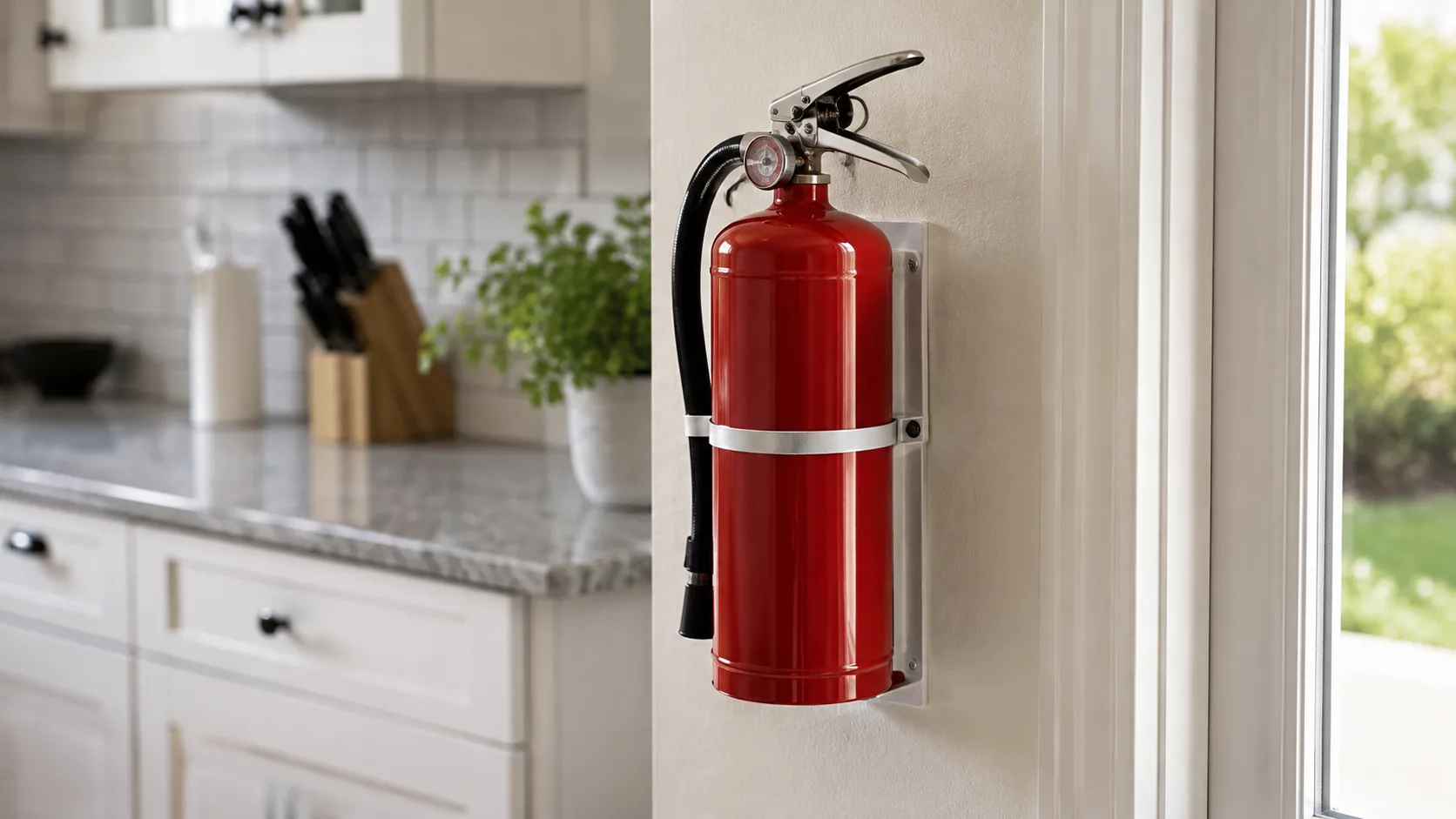

The short version: most homes need at least three extinguishers, not one. A 5 lb rechargeable ABC unit like the Amerex B500 or First Alert HOME1 for the kitchen, a second one near the bedrooms, and a 10-lb or vehicle-rated unit for the garage. Below is why, and which specific models are worth buying in 2026.
Most homes I've walked through as a firefighter have one fire extinguisher, if they have any at all — usually a small disposable can under the kitchen sink, expired, with the pressure gauge sitting in the red. That's not a fire safety plan, it's a false sense of one. A fire extinguisher only helps if it's the right type, the right size, mounted somewhere you can actually reach in the first 30 seconds, and something every adult in the house has practiced picking up. This guide covers what to actually buy, based on where a fire is most likely to start in your home.
What the Ratings on the Label Actually Mean
Before picking a model, it helps to know what you're reading on the label, because this is the part most people skip and it's the part that actually matters.
- Class A — ordinary combustibles: wood, paper, cloth, most household trash fires.
- Class B — flammable liquids and gases: gasoline, paint thinner, propane.
- Class C — energized electrical equipment: outlets, appliances, wiring.
- Class K — cooking oils and fats at high heat. This is a commercial restaurant rating; most home kitchen fires are handled by a Class B-rated unit, not a K-rated one.
An extinguisher rated ABC covers all three of the common household classes with one unit, which is why nearly every recommendation on this list is an ABC dry-chemical extinguisher. You'll also see a number-letter code like 3-A:40-B:C stamped on the label — the number in front of the A and B rates how much fire-fighting capacity that unit has for each class. Higher numbers mean more capacity, not a bigger class of fire it can fight.
Best Overall: Amerex B500 (5 lb ABC)
Amerex B500 — 5 lb ABC Dry Chemical, UL 3-A:40-B:C
This is the extinguisher fire departments and fire-protection professionals actually buy for their own buildings, and it's become the standard recommendation for homes as well. The all-metal valve and heavy-gauge steel cylinder are built to be professionally recharged and reused for years rather than thrown out after one discharge, and the rubber discharge hose makes it noticeably easier to aim under stress than the plastic nozzles on cheaper disposable units. At roughly 5 lb, it's light enough for most household members to lift and operate, and the 3-A:40-B:C rating gives it real capacity against both ordinary combustibles and flammable-liquid fires.
Mount it: kitchen or main hallway, 3–5 feet off the floor, away from the stove itself so you're not reaching over an active fire to grab it.
Best Budget Pick: Kidde FA110 (1-A:10-B:C)
Kidde FA110 — Multipurpose ABC, Disposable
The Kidde FA110 is the extinguisher worth buying as a second or third unit for rooms where a smaller, cheaper option makes sense — a bedroom closet, a home office, a boat or RV. It's a disposable unit, meaning it isn't designed to be professionally recharged after use or over time; when the gauge drops out of the green zone, it gets replaced rather than serviced. That tradeoff is fine for a backup unit, less ideal for the one extinguisher you're counting on near the stove.
Mount it: anywhere you want inexpensive backup coverage — a second bedroom, a home workshop, a boat.
Best for the Kitchen: First Alert HOME1
First Alert HOME1 — Rechargeable, All-Metal Construction
First Alert's HOME1 has become one of the most widely purchased home fire extinguishers in the country, and the reason is straightforward: it's rechargeable and metal-bodied like a commercial-grade unit, but priced and sized for a household kitchen. It carries a long manufacturer warranty compared to disposable competitors, and its ABC rating handles a grease fire that's gotten past the pan-and-lid stage, a stovetop electrical short, or a dish towel that caught fire on a burner.
Mount it: kitchen wall, near the exit path — not directly beside the stove, so you can grab it while backing away from the fire, not reaching toward it.
Best for the Garage or Workshop: Kidde Full Home (10 lb, 3-A:40-B:C)
Kidde Full Home — 10 lb ABC
Garages and workshops hold the highest concentration of Class B fuel in most homes — gasoline cans, solvents, a running lawn mower, a car battery — which is why they call for a bigger unit than a bedroom or hallway does. A 10 lb extinguisher carries meaningfully more agent than a 5 lb unit, at the cost of being heavier and harder to maneuver, which is a fair tradeoff in a space where you have room to brace and aren't operating one-handed while herding kids out a door.
Mount it: just inside the garage door you'd actually use to exit, not buried behind stored items.
Best for the Car: Amerex B417T / Kidde 10-B:C Vehicle Extinguisher
Compact 10-B:C Vehicle-Rated Extinguisher
A car fire is almost always electrical or fuel-related, so a small extinguisher rated specifically for Class B and C fires — without the weight of a full Class A rating — is the practical choice for a glovebox or trunk-mounted bracket. These units are built compact and light on purpose; a full-size 5 lb ABC canister rolling around loose in a trunk is more likely to become a hazard in a crash than to get used.
Mount it: secured with a bracket in the trunk or under a seat — never loose, where it can become a projectile in a collision.
Home Fire Extinguisher Comparison
| Model | Rating | Size | Type | Best For |
|---|---|---|---|---|
| Amerex B500 | 3-A:40-B:C | 5 lb | Rechargeable | Overall / kitchen / hallway |
| First Alert HOME1 | ABC | ~2.5–3 lb | Rechargeable | Kitchen, easiest to use |
| Kidde FA110 | 1-A:10-B:C | ~2.5 lb | Disposable | Budget backup unit |
| Kidde Full Home | 3-A:40-B:C | 10 lb | Rechargeable | Garage / workshop |
| Amerex B417T / Kidde 10-B:C | 10-B:C | ~2.5 lb | Disposable | Car / trunk |
Where Each Extinguisher Should Actually Go
Buying the right extinguisher only matters if it's somewhere you can reach it without thinking. As a rough rule for a typical single-family home:
- Kitchen — one 5 lb ABC unit, mounted near the exit path, not next to the stove.
- Garage — one 10 lb ABC unit near the door you'd use to leave.
- Each additional floor — one 5 lb unit in the hallway near the bedrooms.
- Each vehicle — one compact 10-B:C unit, bracketed, not loose.
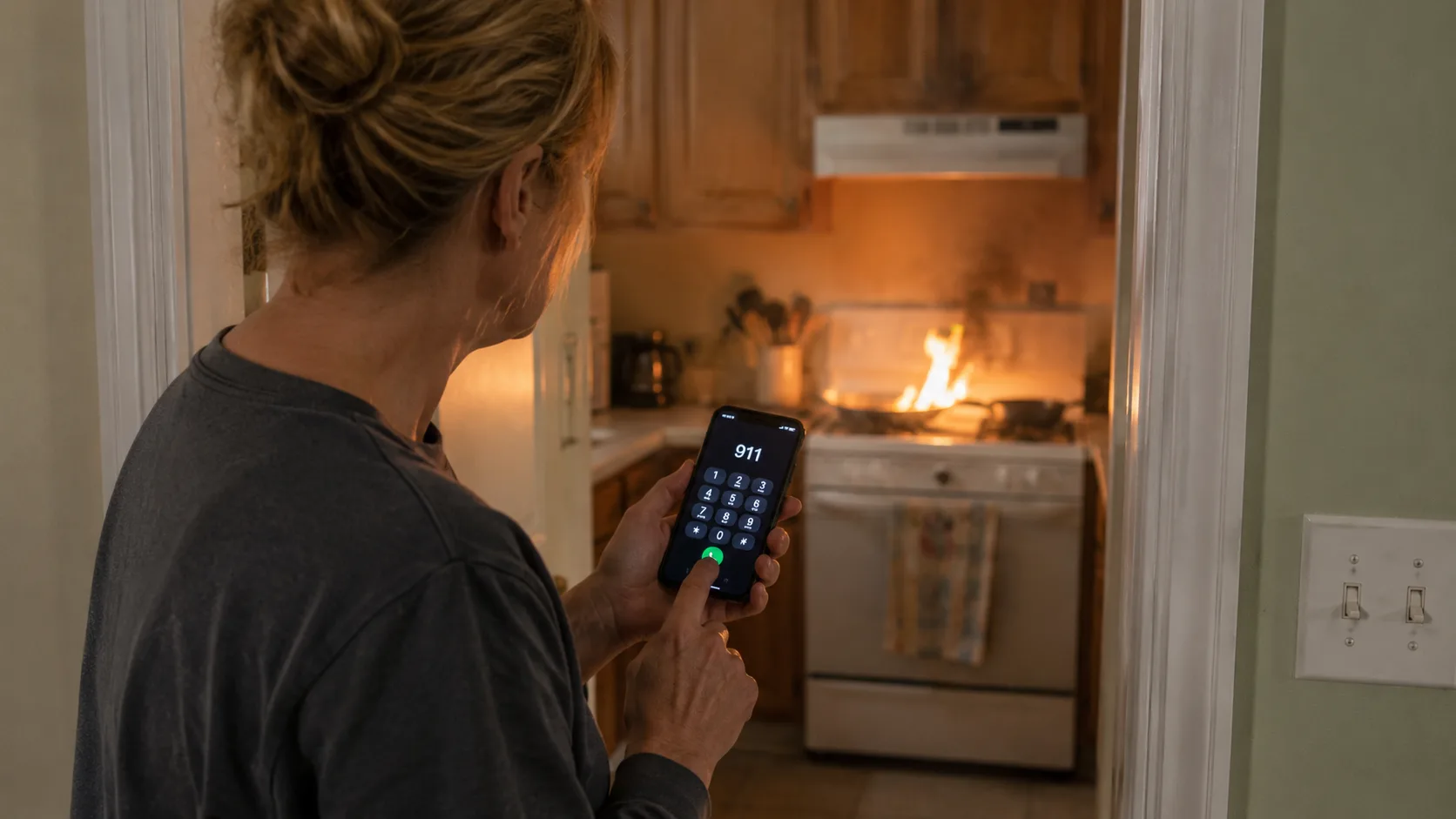
The extinguisher you own is worthless if nobody in the house knows how to grab it, pull the pin, and aim low at the base of the fire — not at the flames. Walk your household through it once. It takes about five minutes and it's the difference between a controlled scare and a 911 call.
Frequently Asked Questions
Do I really need more than one fire extinguisher in my house?
Yes. One extinguisher covers one location. A fire in the kitchen doesn't help you if your only extinguisher is in the garage. Most homes need at least three: kitchen, garage, and one per additional floor near a bedroom hallway.
What size fire extinguisher do I need for my house?
A 5 lb ABC unit is the right size for most rooms in a home — heavy enough to matter, light enough that anyone in the household can actually lift and aim it under stress. Save 10 lb units for the garage or workshop, where you have space to brace against the weight.
Should I buy a rechargeable or disposable fire extinguisher?
Disposable units are cheaper upfront and fine as a second, backup unit. A rechargeable, all-metal extinguisher costs more but can be professionally serviced and refilled after use instead of thrown away, which usually makes it the better primary unit for a kitchen or hallway.
Can I use a regular ABC extinguisher on a grease fire?
A dry-chemical ABC extinguisher will put out a small grease fire, but it isn't the ideal tool — the discharge can splatter burning grease. If the fire is still small and contained to a pan, sliding a lid over it or using baking soda is safer than reaching for any extinguisher. Never use water on a grease fire.
How do I know if my fire extinguisher still works?
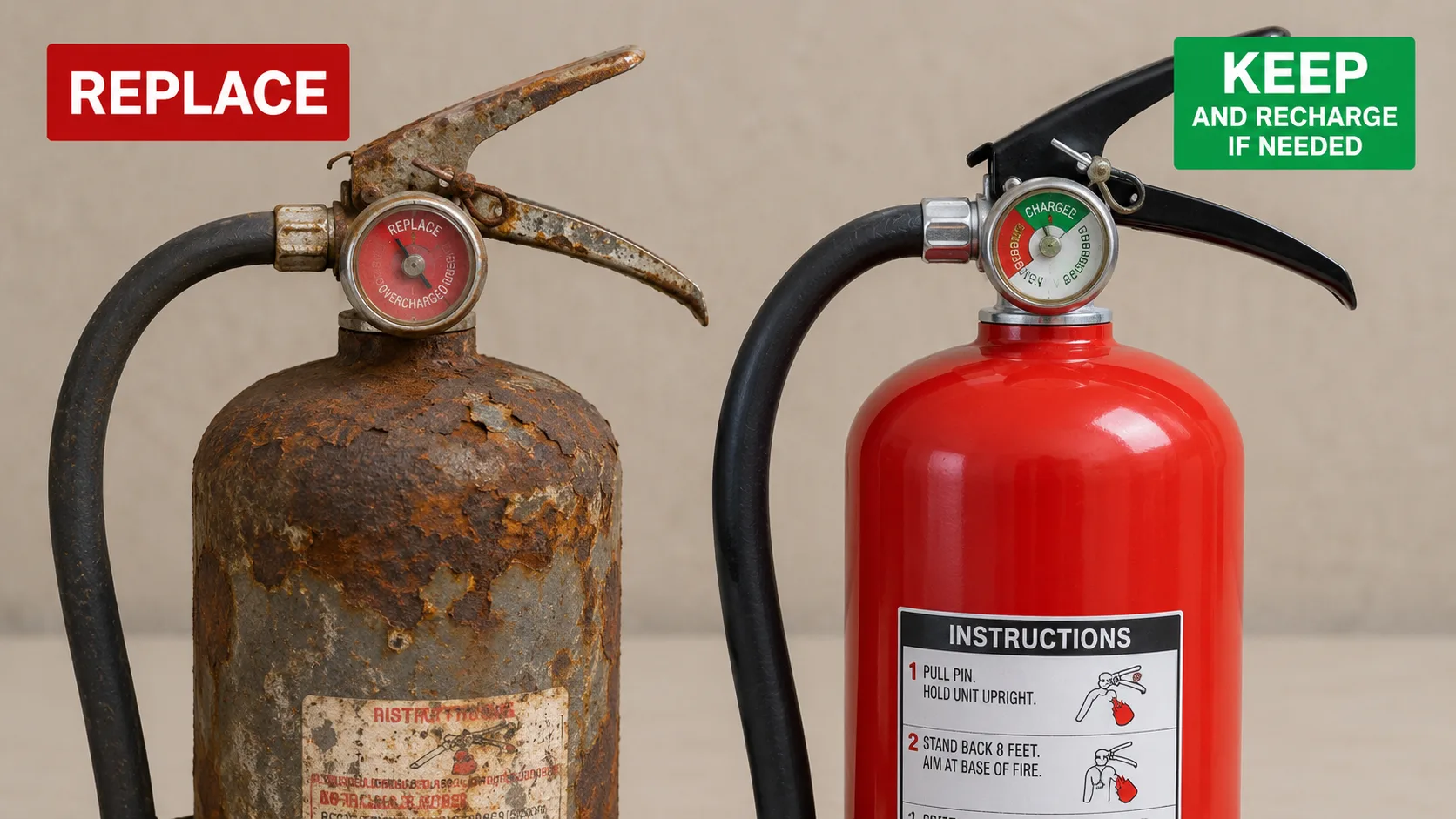
Check the pressure gauge monthly — the needle should sit in the green zone. Look for a bent pin, damaged hose, or corrosion on the cylinder. Disposable units are typically rated for 10–12 years; rechargeable units should be professionally inspected annually and recharged any time they're used, even briefly.
Fire Prevention Week 2026: Choosing an extinguisher is only one part of home fire readiness. See our safe-charging and lithium-ion battery safety guide for this year’s campaign.

Comments 0
No comments yet. Be the first to share your thoughts!
Leave a Comment