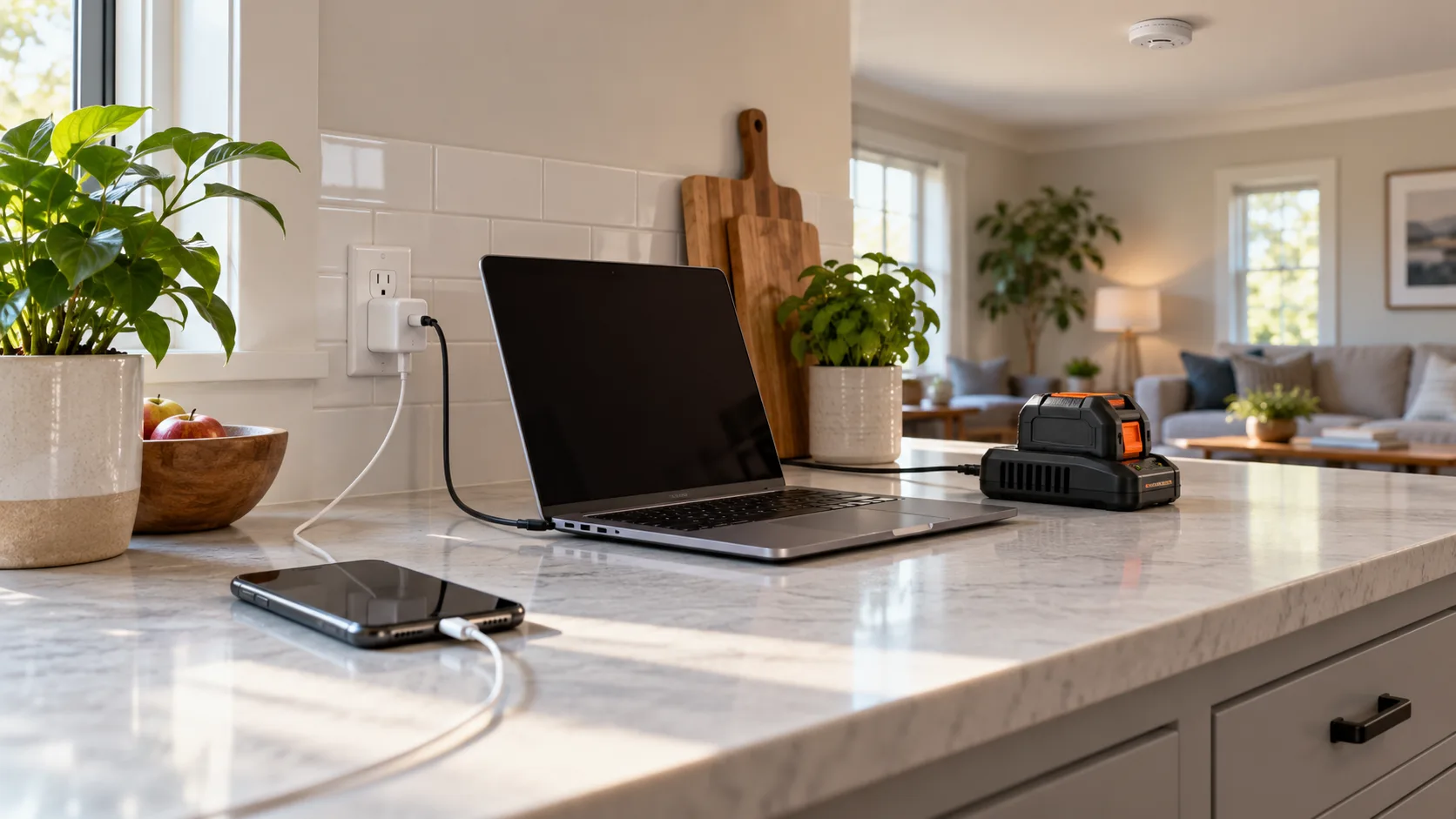

Fire Prevention Week 2026: Dates, Theme, Safe Charging Tips and Activity Ideas
Updated: September 15, 2026
Fire Prevention Week 2026 runs from October 4 through October 10, and this year's theme is "Charge into Fire Safety™: Safe Charging Is a Superpower", announced by the National Fire Protection Association (NFPA). The message is timely and practical. More homes than ever rely on rechargeable devices, power tools, e-bikes, scooters, and battery-powered toys. That convenience comes with a simple truth firefighters already know well: when lithium-ion batteries fail, the fire problem can escalate fast.
This year's campaign focuses on the everyday charging habits that reduce the risk of overheating, smoke, fire, and battery failure. That is a smart direction. Most preventable battery-fire problems do not begin with dramatic abuse. They begin with shortcuts: the wrong charger, a damaged cable, charging on a bed, leaving large battery-powered equipment plugged in near an exit, or ignoring early warning signs like swelling, heat, or a strange odor.
So if you are searching for the dates, theme, or the most useful public-safety takeaways for Fire Prevention Week 2026, this is the short version: October 4–10, 2026, with a major emphasis on safe charging and lithium-ion battery awareness.
What Is Fire Prevention Week?
Fire Prevention Week is the longest-running public health observance in the United States, commemorating the Great Chicago Fire of 1871. It's always held during the week that contains October 9, the anniversary of the fire's second and worst day — which is why the dates shift slightly from year to year. Each year, the campaign gives fire departments, schools, families, and community groups a focused safety message they can actually teach and use. Some years center on cooking, smoke alarms, or escape planning. This is the second year in a row that NFPA has built the theme around lithium-ion battery safety.
That makes sense in the current environment. Battery-powered products are everywhere, and many people still treat charging as if it is risk-free no matter the battery size, charger quality, or location. It is not. Good charging habits are simple, but they matter.
Fire Prevention Week 2026 Dates
Fire Prevention Week 2026 takes place October 4–10. If you run a station open house, school visit, classroom activity, or community safety event, that is the window most people will be searching for.
In practice, however, good departments start talking about the theme before the first week of October. That gives families and teachers time to prepare activities, print handouts, and tie the message into fall community events.
The 2026 Theme: "Charge into Fire Safety™: Safe Charging Is a Superpower"
This year's theme is direct and easy to understand. NFPA's Lorraine Carli, vice president of outreach and advocacy, has said that charging devices properly can meaningfully cut fire risk, and that simple, informed habits are what make the difference. The campaign is built around the idea that everyday charging choices can either reduce or increase fire risk. That includes the small devices people carry daily, but it also includes larger products like e-bikes, scooters, power tools, and other rechargeable equipment.
What I like about this year's message is that it is practical. It does not depend on scare tactics. It gives people simple habits they can remember:
- Use the correct charger
- Charge on a hard, flat surface
- Do not overcharge or leave devices plugged in unnecessarily
- Pay attention to heat, swelling, smoke, or odd smells
- Be extra careful with larger batteries
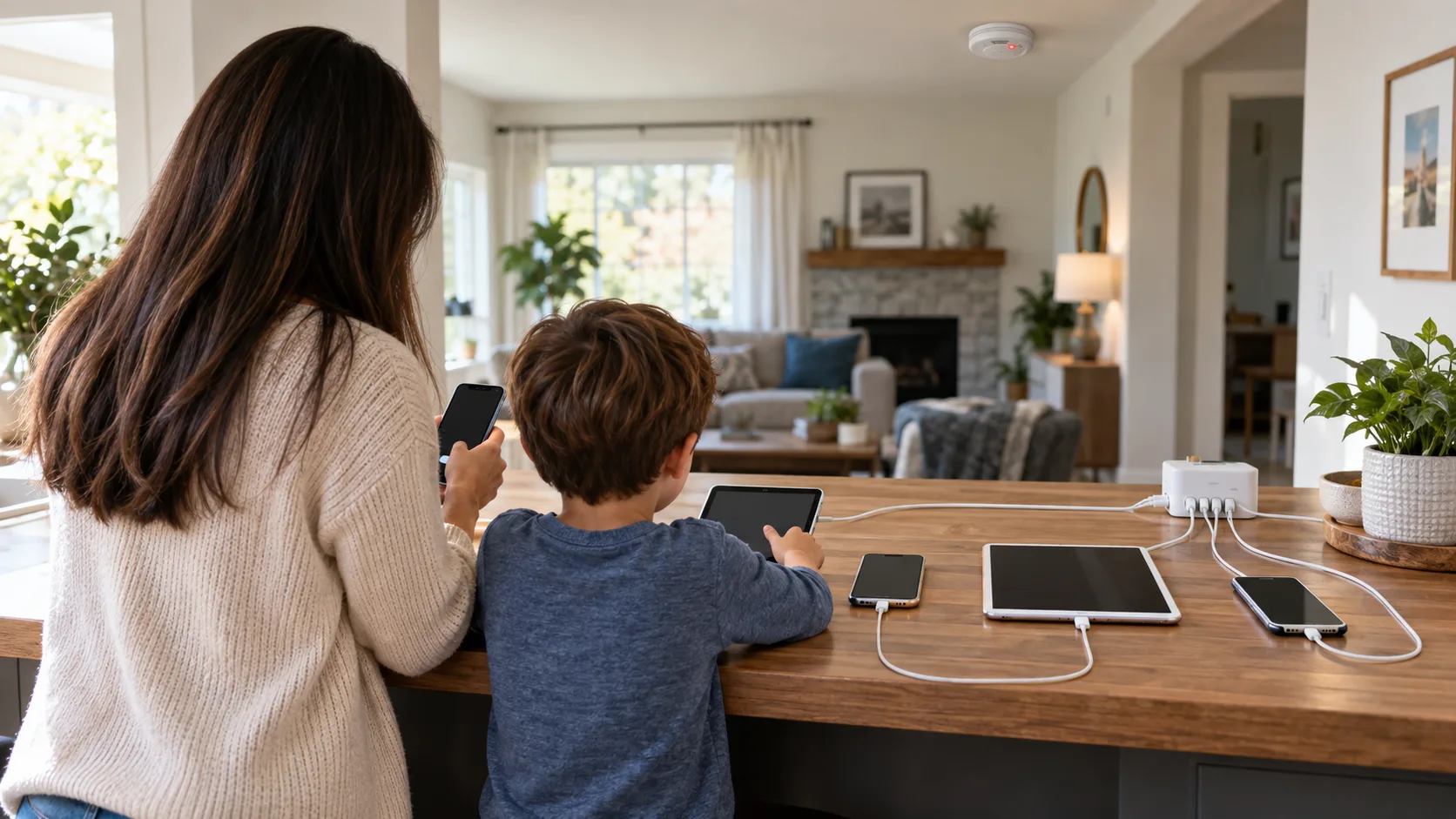
Safe charging habits are usually simple, but they matter because so many daily-use devices now rely on lithium-ion batteries.
Why Safe Charging Matters
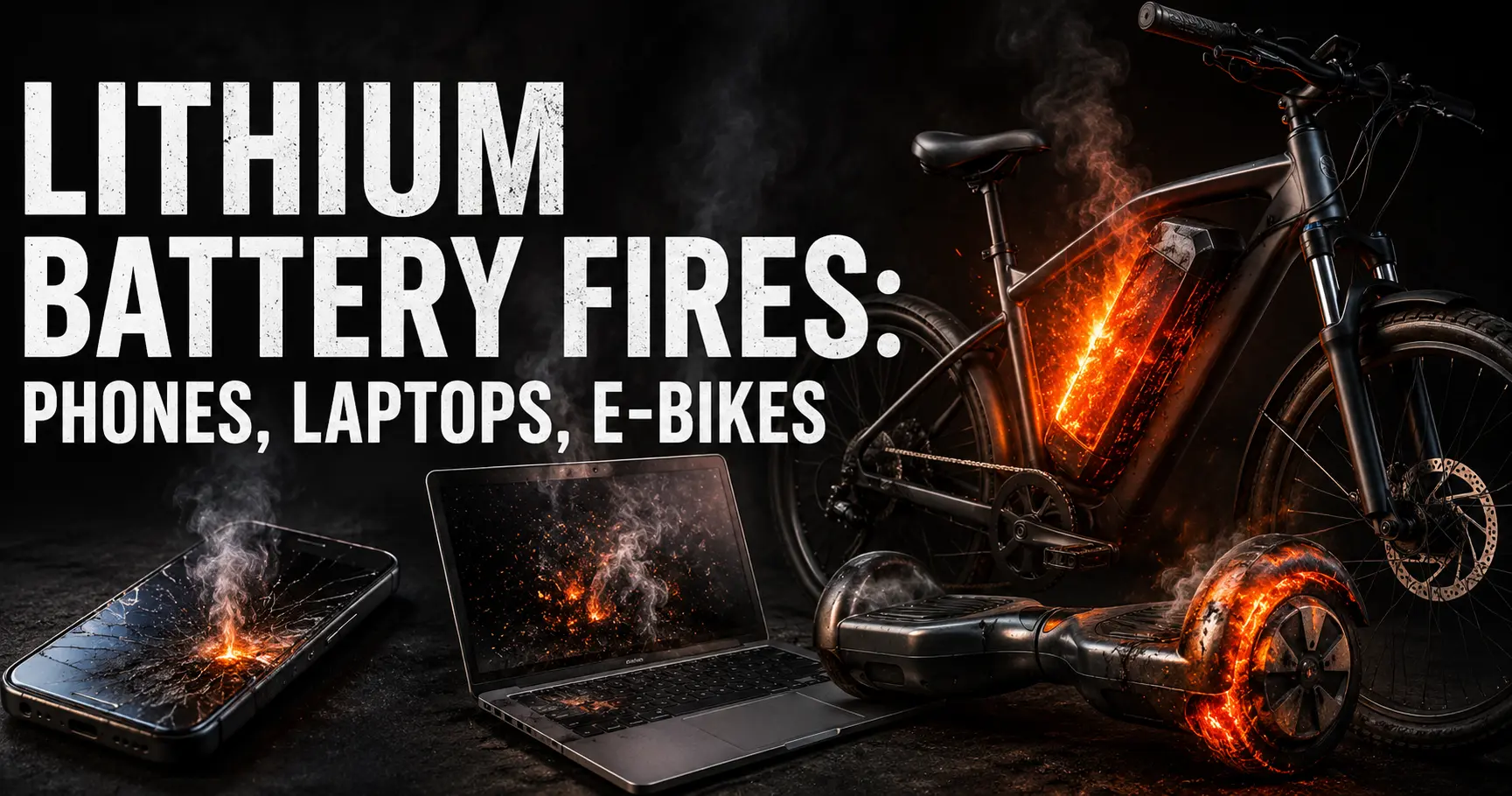
Lithium-ion batteries store a lot of energy in a small space. That is why they are so useful. It is also why damaged or poorly charged batteries can become dangerous. Firefighters increasingly see battery incidents involving phones, laptops, tools, scooters, e-bikes, and other consumer products. A failing battery may overheat, vent, ignite, or create a fast-moving fire problem in a room, hallway, garage, or apartment entry path. NFPA notes it doesn't yet track national data specifically isolating lithium-ion battery fires, but points to a rising number of incidents reported by fire departments and media as the reason this is the campaign's second straight year on the topic.
One reason these fires concern the fire service is that the danger is not always obvious at first. People may notice a device feels hotter than normal, or a battery pack looks swollen, or a cheap charger gets unusually warm. Those are exactly the moments when habits matter. If people stop using the device, unplug it, move it away from combustibles when safe to do so, and replace damaged components with approved ones, they can prevent a larger problem.
Best Safe Charging Tips for Fire Prevention Week 2026
Here are the most useful public-facing takeaways to share during this year's campaign:
1. Use the charger that came with the device — or one approved by the manufacturer
Cheap or mismatched chargers may not control heat and power properly. That can damage the battery over time or create immediate overheating issues.
2. Charge on a hard, flat surface
Tables, desks, counters, and bare floors are better than beds, couches, pillows, or piles of clothing. Soft surfaces trap heat and reduce airflow.
3. Unplug when charging is complete
People often leave devices plugged in because it feels harmless. It is better to disconnect them when fully charged instead of leaving them energized longer than necessary.
4. Stop using any device that feels very hot, swells, smokes, leaks, or smells strange
Those are warning signs, not annoyances. A device showing those symptoms needs attention immediately.
5. Charge larger battery-powered items with extra care
E-bikes, scooters, and power tools deserve more caution because larger batteries can fail more violently and create bigger fire problems. When possible, charge them outside or in a safer area, and never block an exit.
6. Recycle batteries correctly
Do not toss lithium-ion batteries into household trash or normal recycling bins. Improper disposal creates another preventable fire risk.
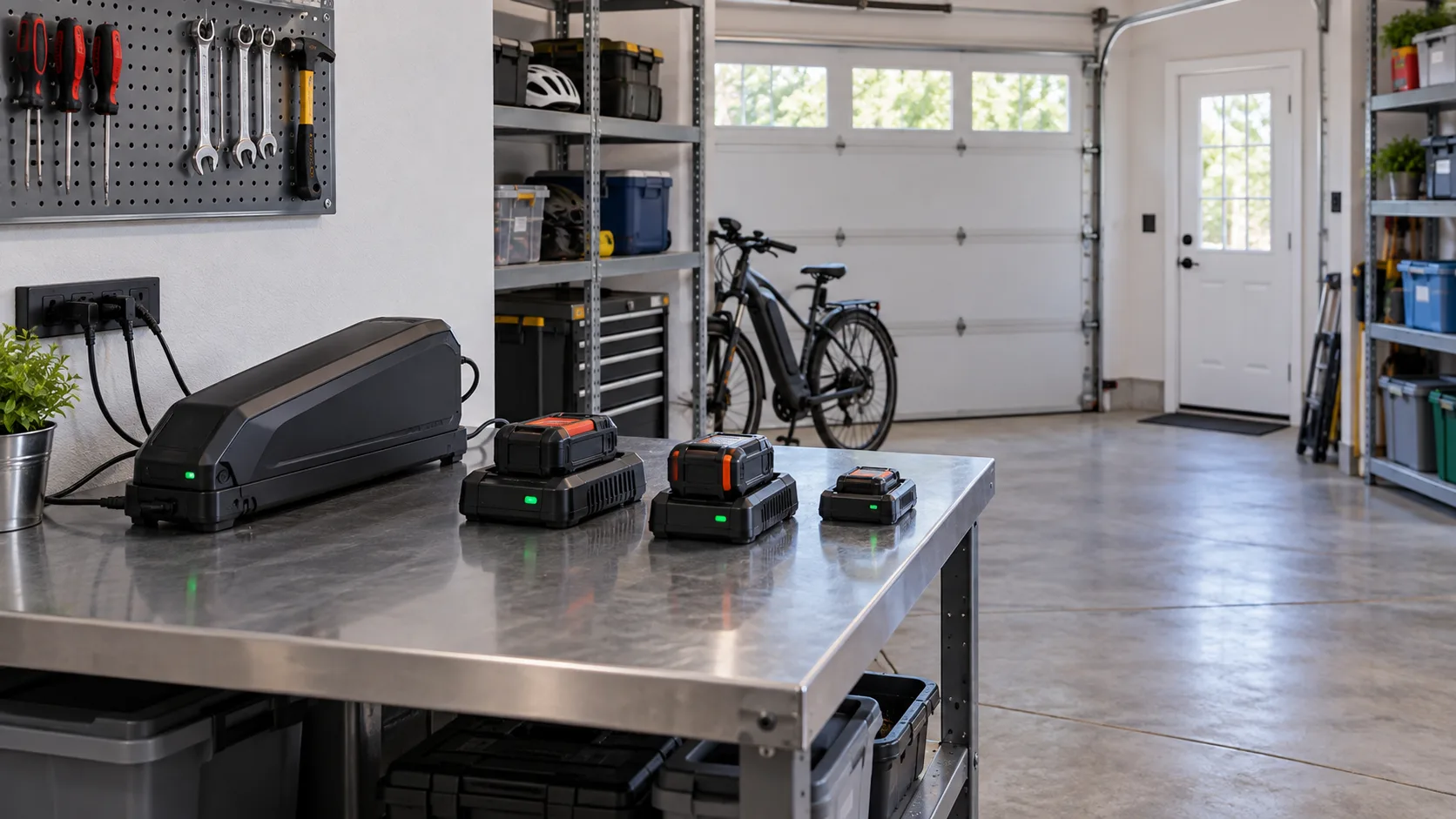
Larger batteries deserve more attention because a failure can grow fast and create a serious life-safety problem near doors or hallways.
Warning Signs Families Should Not Ignore
Most people do not need a technical lecture. They need a clear checklist. If a rechargeable device or battery pack:
- Feels unusually hot
- Starts swelling or bulging
- Produces smoke
- Leaks
- Makes popping or hissing sounds
- Has a sharp or unusual odor
stop using it. Do not keep charging it just because "it still works." A battery that is behaving abnormally is telling you something.
Practical Fire Prevention Week Activity Ideas
If you are a teacher, parent, fire company, or fire marshal's office, here are realistic ways to use the 2026 theme:
- Family charging check: Walk through the house and find where devices are charged. Move charging away from beds, couches, and clutter.
- School discussion: Use tablets, laptops, and chargers as real-world examples to teach warning signs and safe habits.
- Open house station demo: Show the difference between safe charging on a clear surface and unsafe charging in a blocked egress path.
- Community handout: Give residents a short checklist: correct charger, hard surface, unplug when done, do not ignore heat or swelling.
- Youth activity: Pair battery safety with a home escape-plan reminder and smoke-alarm check.
That last point matters. A strong Fire Prevention Week message works best when it connects to broader home fire readiness, not just one hazard.
Internal Resources Worth Pairing With This Topic
If you want to extend the 2026 theme into a full home-safety cluster, pair this article with:
- Lithium battery fire safety at home
- How to use a fire extinguisher
- Recharge vs. replace a fire extinguisher
- Best fire extinguishers for home use
That internal linking makes sense editorially because the reader searching Fire Prevention Week is usually looking for action, not just the event dates.
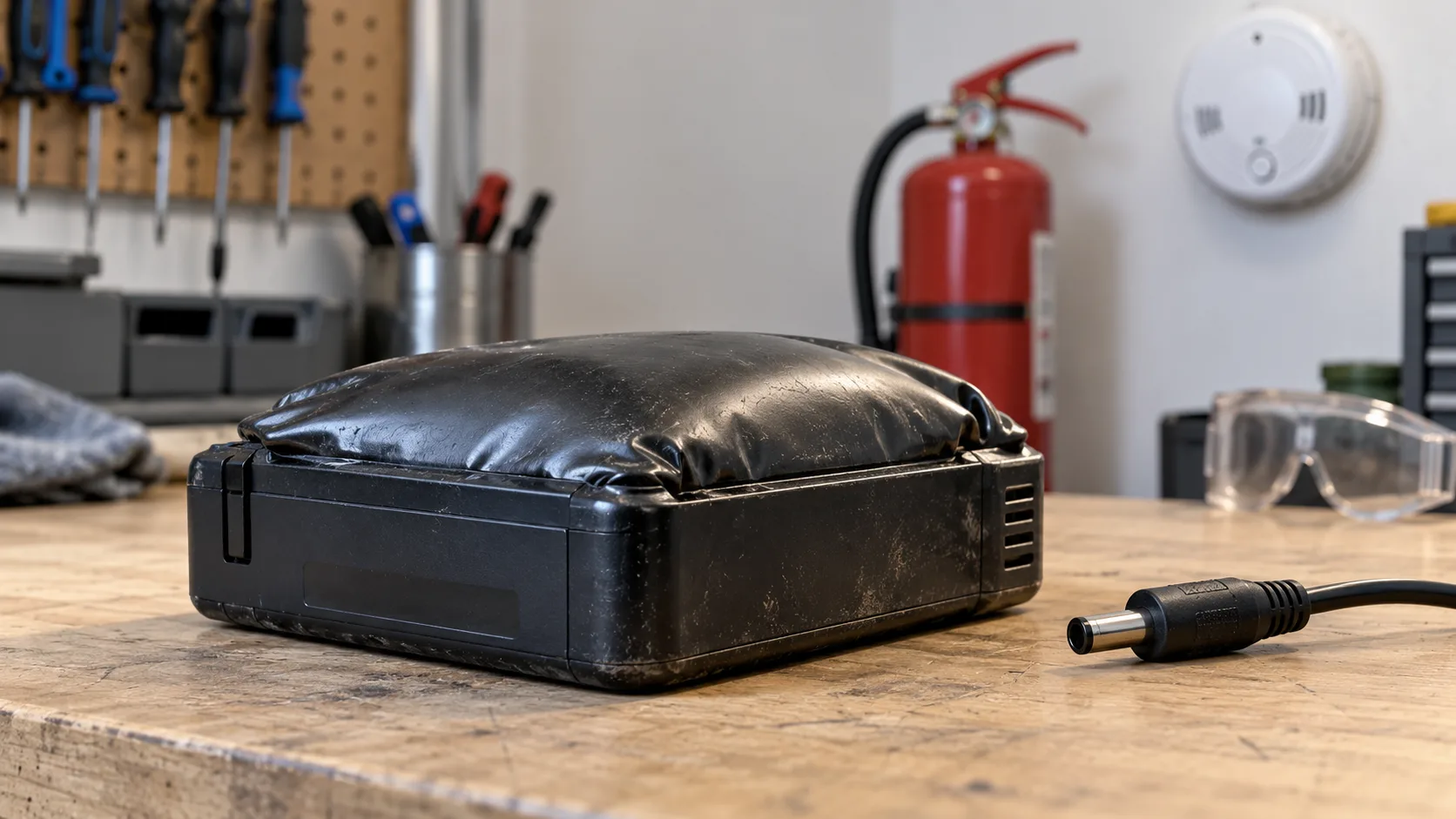
Heat, swelling, smoke, and strange smells are warning signs people should take seriously, not delay until later.
Bottom Line
Fire Prevention Week 2026 is October 4–10, and the message is one the fire service can use immediately: "Charge into Fire Safety™: Safe Charging Is a Superpower." It is a practical campaign built around something millions of people do every day without much thought. That is exactly why it matters.
If this year's theme gets more people to stop charging devices on beds, stop using damaged chargers, treat heat and swelling as warning signs, and handle larger batteries more carefully, then it will do real good — which is exactly what Fire Prevention Week is supposed to do.
Frequently Asked Questions
When is Fire Prevention Week 2026?
Fire Prevention Week 2026 runs from October 4 through October 10.
What is the Fire Prevention Week 2026 theme?
The 2026 theme is "Charge into Fire Safety™: Safe Charging Is a Superpower," as announced by the NFPA.
Why is the 2026 campaign focused on battery charging?
Because rechargeable lithium-ion batteries are now common in phones, tablets, laptops, tools, scooters, e-bikes, toys, and other everyday products, and this is the second year in a row NFPA has centered Fire Prevention Week on that risk. Charging mistakes and damaged batteries can increase fire risk.
What is the simplest safe charging advice to remember?
Use the correct charger, charge on a hard flat surface, unplug when fully charged, and stop using devices that overheat, swell, smoke, leak, or smell strange.

Comments 0
No comments yet. Be the first to share your thoughts!
Leave a Comment