The question of what to do when something catches fire at home sounds like it should have a simple answer. It does not. The correct response depends on the size of the fire, the location, what is burning, whether anyone is in danger, whether you have the right equipment, and whether you can keep an exit behind you. Getting any of those factors wrong changes the outcome from a contained kitchen incident to a house fire with casualties.
Most people either overestimate their ability to handle a fire themselves — staying too long, trying to fight something that has already grown beyond what a handheld extinguisher can address — or they underestimate it, evacuating from a smoking toaster and calling 911 for something that did not require a fire department response. This covers where those lines actually are and how to read a situation correctly in the seconds you have to make the call.
In this article:
911 vs. the Fire Department's Non-Emergency Line
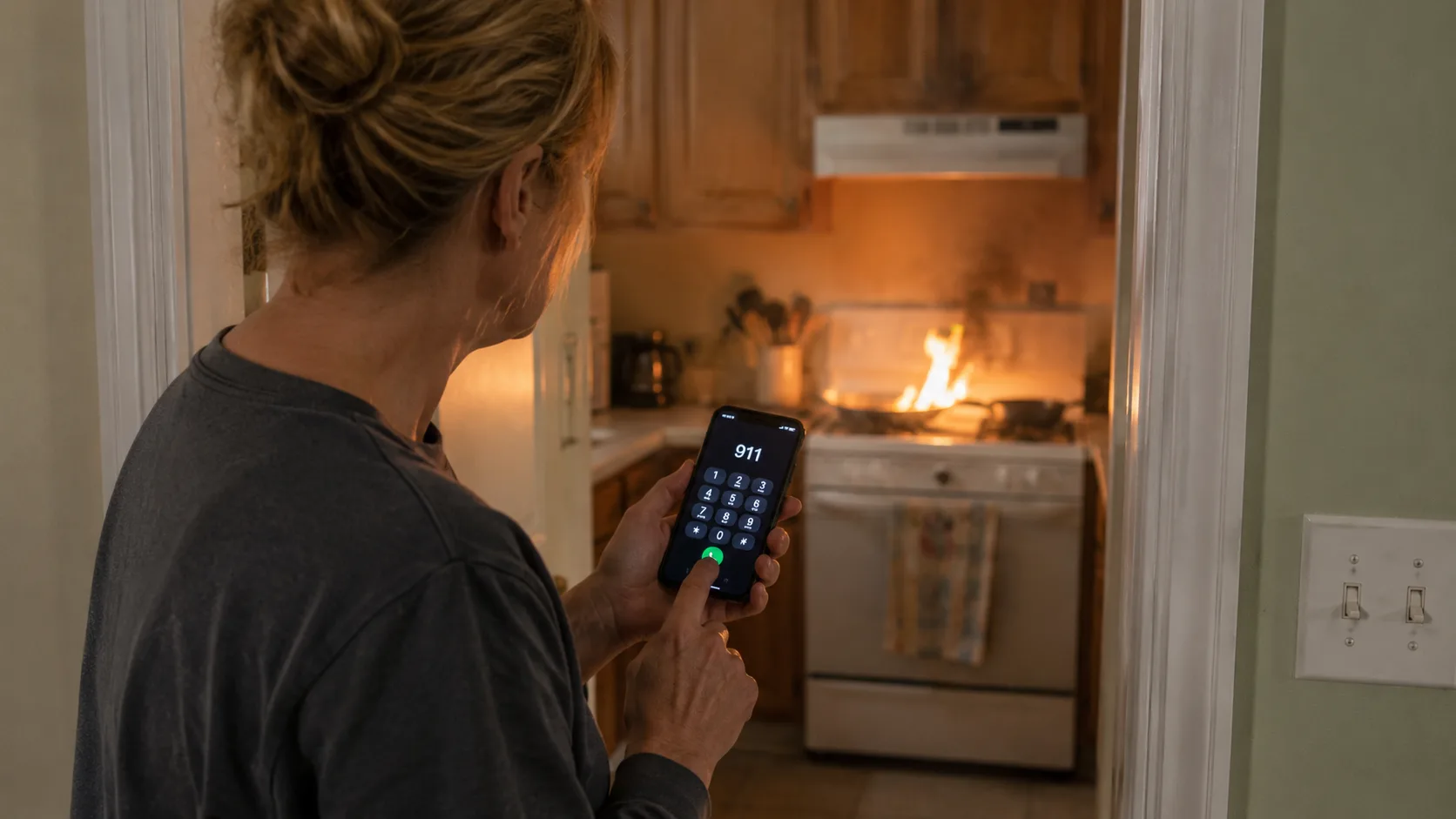
In the United States, calling 911 dispatches the fire department. There is no separate "fire department emergency number" that you call instead of 911 — 911 is the dispatch center, and they route the call to the appropriate response. Calling the fire station directly in an emergency is slower and less reliable because the station phones may not be monitored at all times and are not the dispatch system.
The fire department's non-emergency line — a separate published number — is for situations that do not require an emergency response: reporting a hazard, asking a safety question, scheduling an inspection, reporting a non-urgent concern about a neighbor's fire practices. If anything is on fire and you are uncertain whether it is contained, call 911, not the non-emergency line. The decision about whether to send an emergency response is the dispatcher's job. Your job is to call and describe what you see.
There is no penalty for calling 911 about a fire that turns out to not need a response — fire crews are sent on nuisance and precautionary calls routinely, and they prefer a confirmed-safe unnecessary response to a delayed response for something real. Do not talk yourself out of calling 911 because you think the situation might not be serious enough.
When You Can Handle It Yourself
A fire is potentially manageable without 911 if all of the following are simultaneously true:
- The fire is small — contained to one object or one surface, not spread to adjacent fuel
- The fire has been burning for less than 30 seconds
- The room is not filling with smoke
- You have the correct type of extinguisher immediately at hand and know how to use it
- You have a clear exit behind you that is not threatened by the fire
- Everyone else is already out of the house or does not need your assistance to exit
If any of those conditions is not met, the fire is not manageable at your level and the correct decision is to get everyone out and call 911 from outside. These are not arbitrary criteria — they reflect the actual decision boundaries where a handheld extinguisher can be effective versus where its use delays a necessary evacuation.
When You Should Never Try
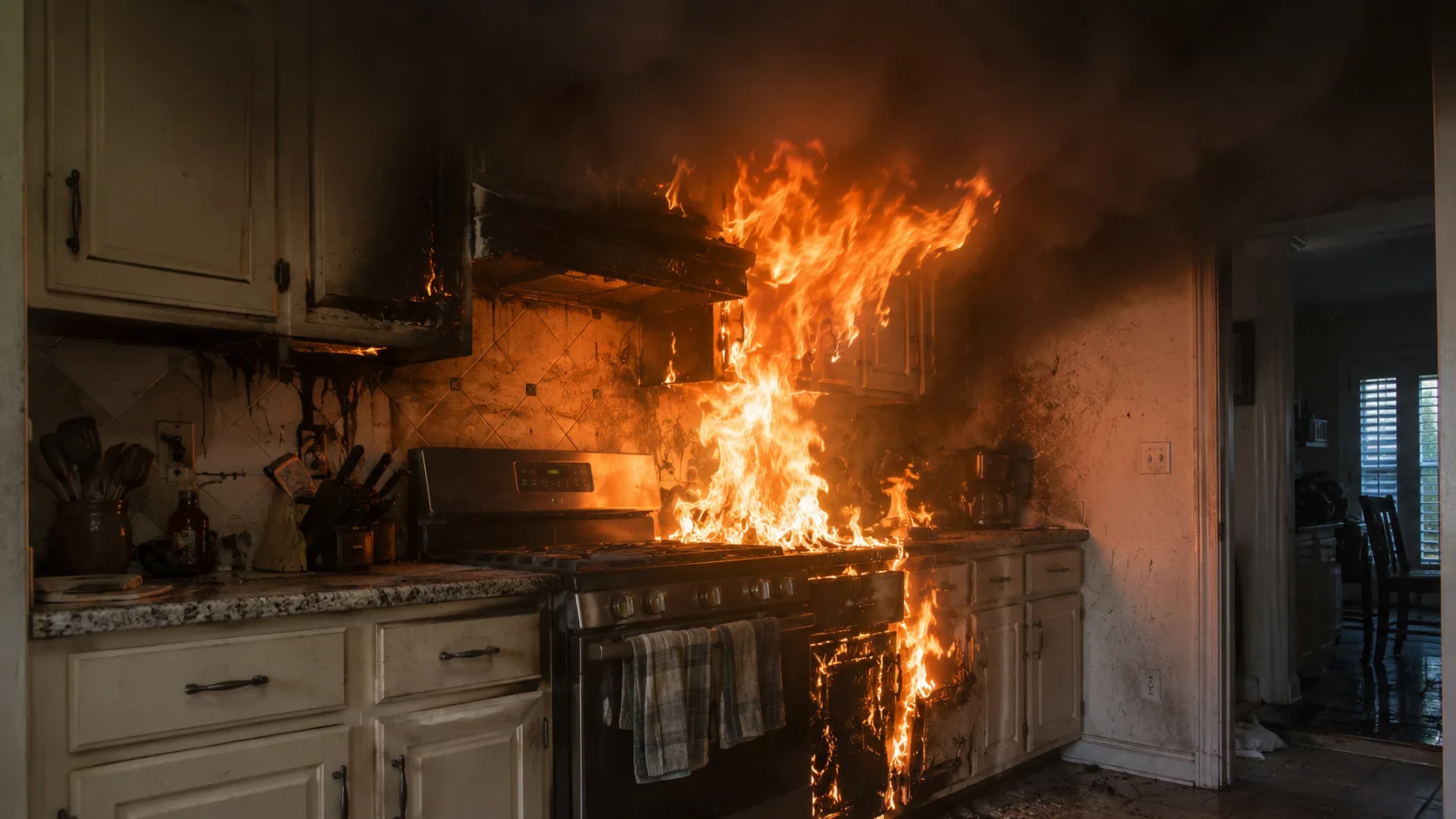
Do not attempt to fight the fire yourself under any of the following conditions — call 911 and evacuate instead:
- The fire has spread beyond the object it started on — from a pan to the cabinets, from a piece of furniture to the wall, from a trash can to the adjacent material
- The room has smoke accumulating at ceiling level
- You do not have a fire extinguisher rated for the type of fire — using a water extinguisher on a grease fire or an electrical fire causes injuries
- Anyone in the home needs your help to exit — your priority is getting them out, not fighting fire
- Your exit path is between you and the fire
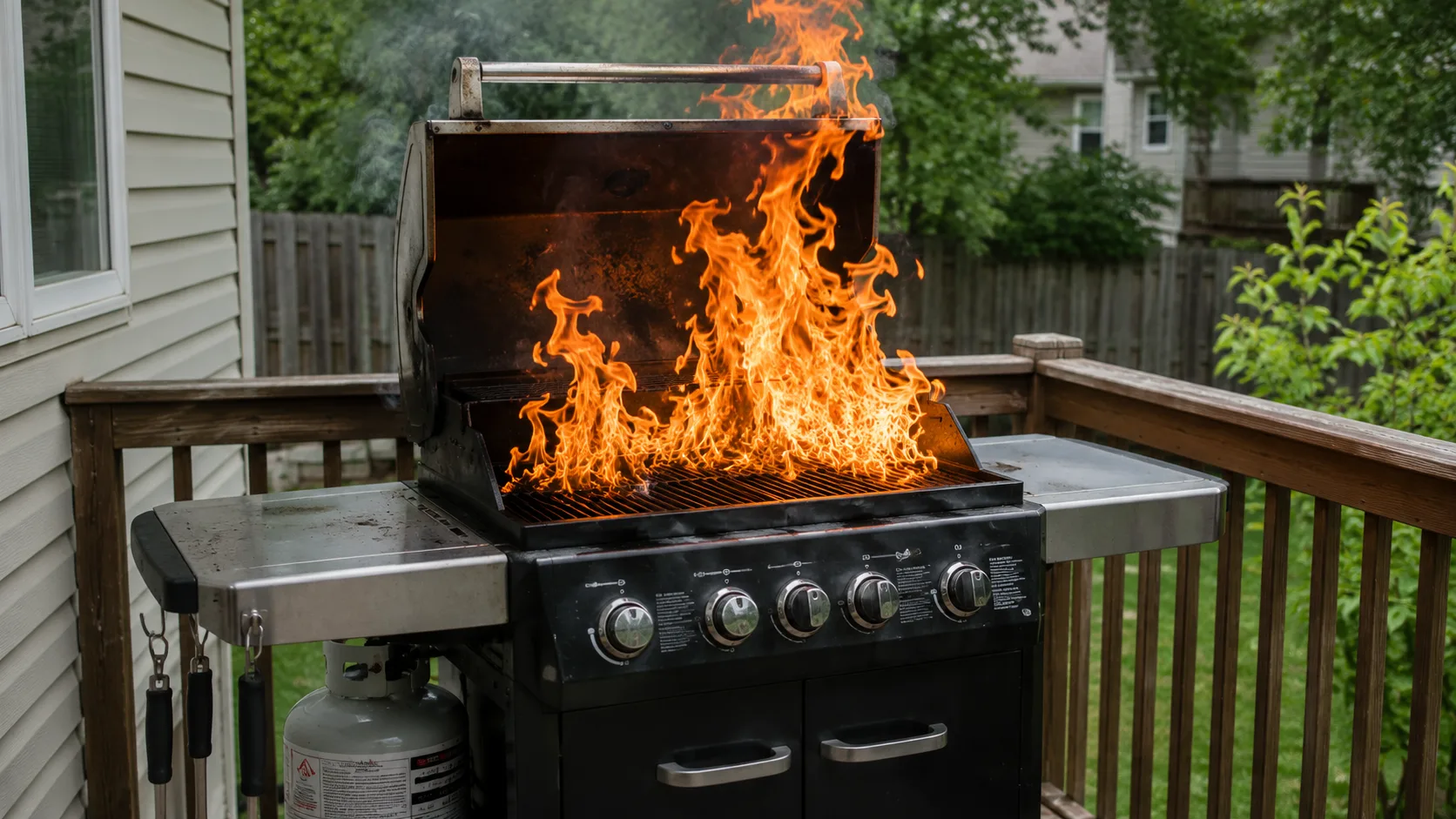
- The fire involves a gas line, a propane cylinder, or a pressurized container
- You can feel the heat from where you are standing before you have started to engage the fire
The most common fatal decision in residential fire scenarios is staying to fight a fire that has exceeded the manageable threshold. The fire grows faster than most people expect. The smoke accumulates faster than most people expect. The person who stayed to fight is now in a smoke-filled room with an empty extinguisher and compromised egress. Call 911 first, always — even if you are going to attempt extinguishment, because if the attempt fails, you want the fire department already dispatched.
Kitchen Fires: The Specific Decision Tree
Kitchen fires account for nearly half of all residential fires, which is why they warrant a specific protocol rather than a general one.
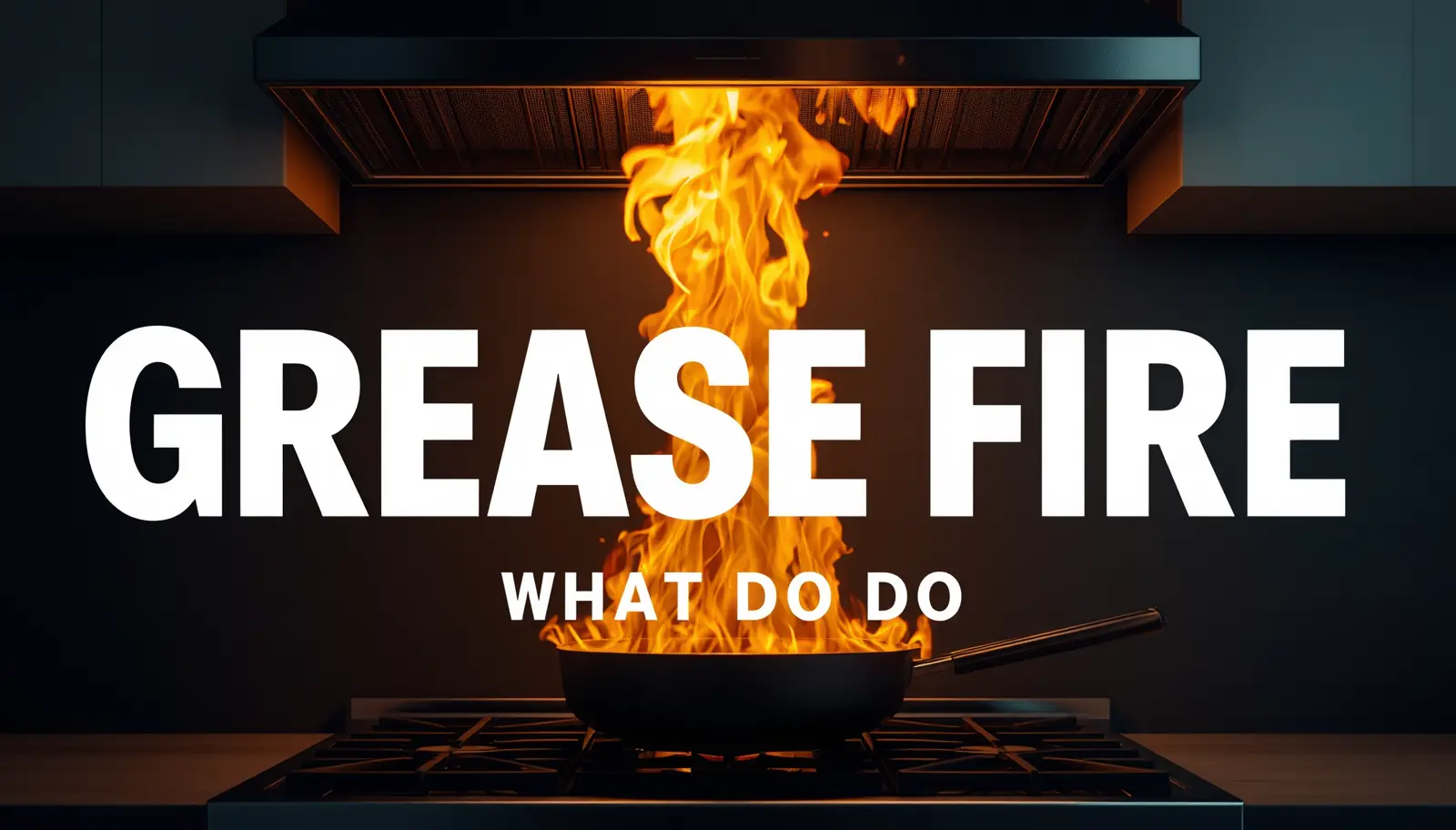
Grease fire in a pan
If the fire is confined to a pan: slide a metal lid over the pan (do not lift the lid once placed), turn off the burner, and leave the lid on for at least 15 minutes. Do not move the pan. Do not use water. Do not use a glass lid — glass can shatter under thermal shock. If a lid is not immediately at hand and the fire is small, a baking sheet can substitute. If the fire does not respond to the lid within 5 seconds, leave and call 911.
Grease fire that has spread beyond the pan
Once grease fire has left the pan — onto the stovetop, the range hood, the wall — it has exceeded the lid-over-pan response. If you have a Class K or dry chemical ABC extinguisher within immediate reach: PASS technique, one attempt. If the fire does not respond immediately, leave. If you do not have an appropriate extinguisher: leave and call 911. A garden hose on a grease fire produces a steam-and-burning-fat explosion. Do not use it.
Oven fire
Close the oven door. Turn off the oven. The closed oven compartment limits oxygen. Most small oven fires self-extinguish within a few minutes. Do not open the oven to check. If smoke is significant or if the fire continues beyond 5 minutes, call 911. Do not use an extinguisher inside an oven — the chemical residue is corrosive and the oven will require professional cleaning or replacement.
Microwave fire
Keep the door closed. Unplug the microwave. The sealed compartment limits oxygen. If the fire continues or the microwave housing is compromised, call 911. Do not open the door while fire is visible inside.
Chimney Fires
A chimney fire sounds unmistakable — a loud roaring or rushing sound from the chimney, sometimes visible flames or sparks from the top, and significant heat radiating from the chimney exterior. The correct response is to call 911 immediately. Chimney fires are not manageable by homeowners.
While waiting for the fire department: close the fireplace damper if you can do so safely (this limits air supply to the chimney), close all air intake vents on a wood stove, and get everyone out of the house. Do not use water on the fire — pouring water into a chimney can cause thermal shock that cracks the flue liner and allows fire to extend into the wall cavity.
After a chimney fire, the chimney must be professionally inspected before use, even if the fire appeared to self-extinguish. Chimney fires routinely cause damage to the flue liner that is not visible from the exterior and that creates conditions for fire extension into the structure on subsequent use.
Car Fires
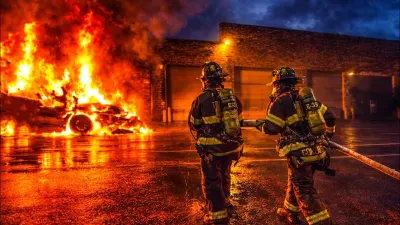
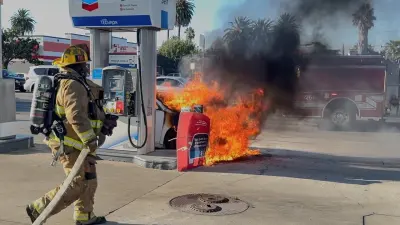
A car fire is not a situation where you should attempt firefighting. The vehicle contains fuel, electrical systems, hydraulic fluids, and increasingly in modern vehicles, high-voltage lithium-ion battery systems — all of which make a car fire substantially more hazardous than a kitchen fire of similar visible size.
The correct response: pull over safely, turn off the engine, get everyone out of the vehicle, move at least 100 feet away from the car (larger distance for electric vehicles due to battery fire behavior), and call 911. Do not open the hood — increasing air supply to an underhood fire accelerates it and risks burns from escaping heat and flame. Do not attempt to retrieve belongings from the vehicle.
For electric vehicles specifically: the lithium-ion battery can reignite hours after appearing to be extinguished, and the battery fire produces toxic hydrogen fluoride gas. Maintaining significant distance and keeping everyone away until fire department personnel confirm the fire is fully suppressed is more conservative than for conventional vehicle fires. The fire department will assess when it is safe to approach.
Electrical Fires
An electrical fire — from wiring, an outlet, an appliance connection, or a panel — introduces a specific hazard: the fire source remains energized until the circuit is cut. Fighting an electrical fire with water while the circuit is live creates electrocution risk. The first step for a small, accessible electrical fire is to cut power to that circuit at the panel if you can do so safely without passing through the fire area. Once power is cut, the fire loses its ignition source and an ABC dry chemical extinguisher can be used if the fire is still in the manageable-size window.
If cutting power requires passing through the fire area, or if the panel itself is involved, or if the fire has spread beyond the immediate electrical component: leave and call 911. Do not use a water extinguisher on an electrical fire under any circumstances — the conductive water path creates electrocution risk regardless of whether the power appears to be off.
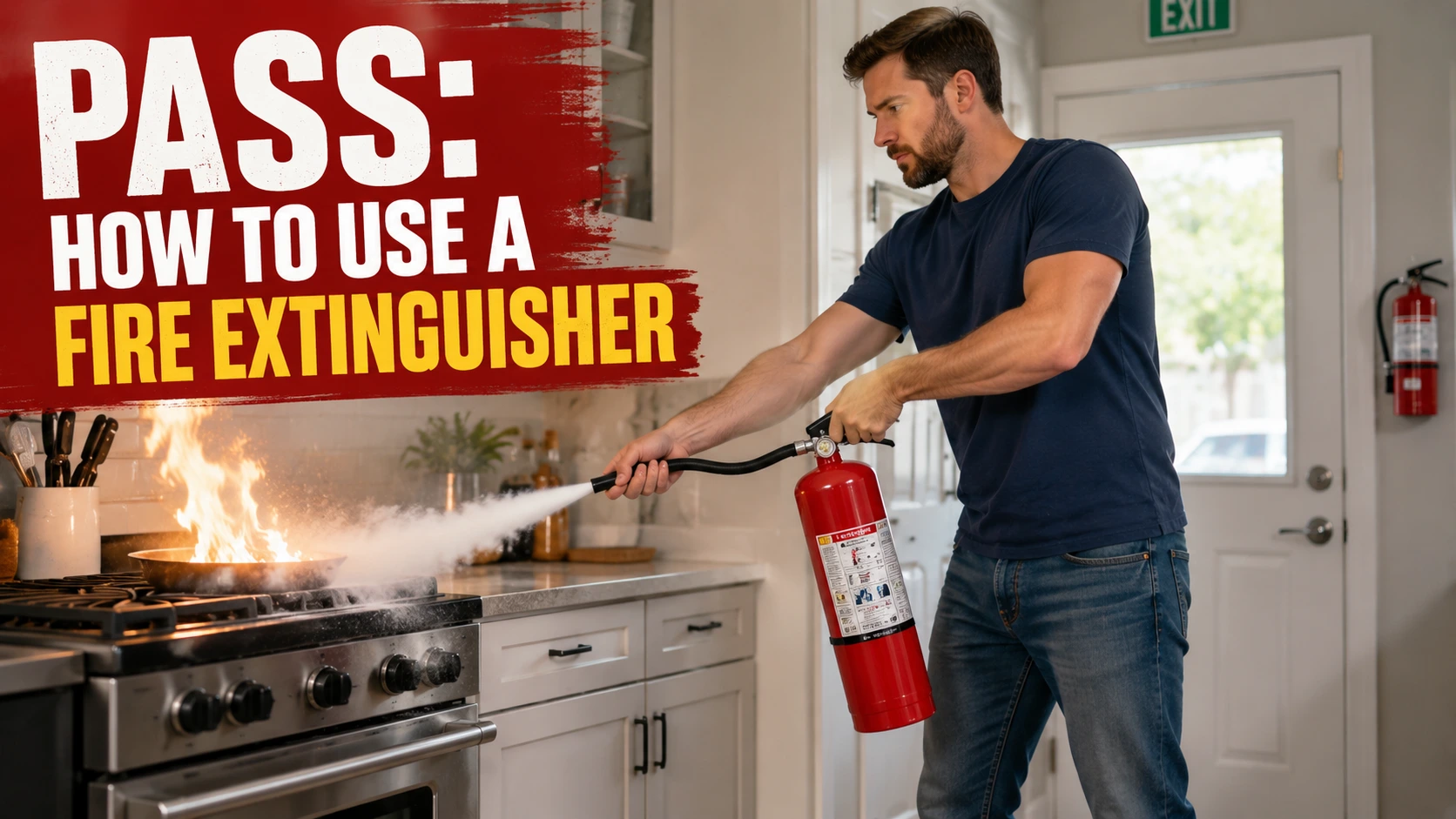
Using an Extinguisher: PASS and the One-Attempt Rule
PASS is the operating technique for a fire extinguisher:
- Pull the pin from the handle
- Aim the nozzle at the base of the fire — not the flames, the base
- Squeeze the handle to discharge
- Sweep the nozzle side to side across the base of the fire
A standard residential ABC dry chemical extinguisher has 8 to 15 seconds of discharge time. That is the entire operational window. Use it fully directed at the base of the fire, sweeping continuously. If the fire is not out or clearly diminishing at the end of the discharge: leave. Do not go find another extinguisher, do not try a different approach, do not stay to see if the chemical suppressant finishes the job on its own. Leave and call 911 if you have not already done so.
The one-attempt rule is not about pessimism — it is about the time cost of a failed attempt. A 15-second extinguisher discharge that does not suppress a fire means that fire has had 15 more seconds to grow, and the person operating the extinguisher has had 15 more seconds of smoke exposure, and their exit may be less clear than when they started. Leave after one failed attempt.
What 911 Dispatch Needs from You
When you call 911 for a fire, dispatch needs specific information to send the right resources and brief arriving crews. In order:
- The address. Give the full address including apartment number and cross street if the address is ambiguous. Do not assume they already know your location — cell phone location data is not always precise.
- What is on fire. "My kitchen stove" is different from "my house" — it tells dispatch whether this is a contained appliance fire or a structure fire, affecting what resources are sent.
- Whether anyone is inside. If people are still in the structure, say so immediately and give their location if you know it — floor, room, any mobility limitations.
- Whether anyone is injured. If medical response is needed, dispatch can add it to the response.
- Your location. If you are outside the structure, tell them where you are so arriving crews can find you immediately for a situation report.
Stay on the line if the dispatcher asks you to. They may have specific questions about access, about the building, or about the location of people inside that affect how the response is managed. If you need to move for safety while on the phone, tell the dispatcher and keep the call connected.
Comments 0
No comments yet. Be the first to share your thoughts!
Leave a Comment