
Latest update: Nepal Police said Friday morning that the confirmed death toll has climbed to 469, with more than 1,300 people now reported missing — up sharply from Thursday's count of 389 dead and 910 missing. Three people remain confirmed dead and 558 missing on the Chinese side of the border in Tibet's Gyirong County. U.N. humanitarian chief Tom Fletcher said the immediate priority is reaching the hardest-hit districts of Rasuwa, Nuwakot, and Dhading to save lives, calling the response "a massive job," and said the U.N. is using satellite technology to help anticipate further danger. Nepali and Chinese authorities continue to warn that a newly formed glacial lake near the border is at "high risk" of bursting and triggering a second surge; Fletcher said those warnings should be taken "very, very seriously." Nepal has opened an online registry of unidentified and unclaimed remains, now running more than 80 pages, to help families search for missing relatives.
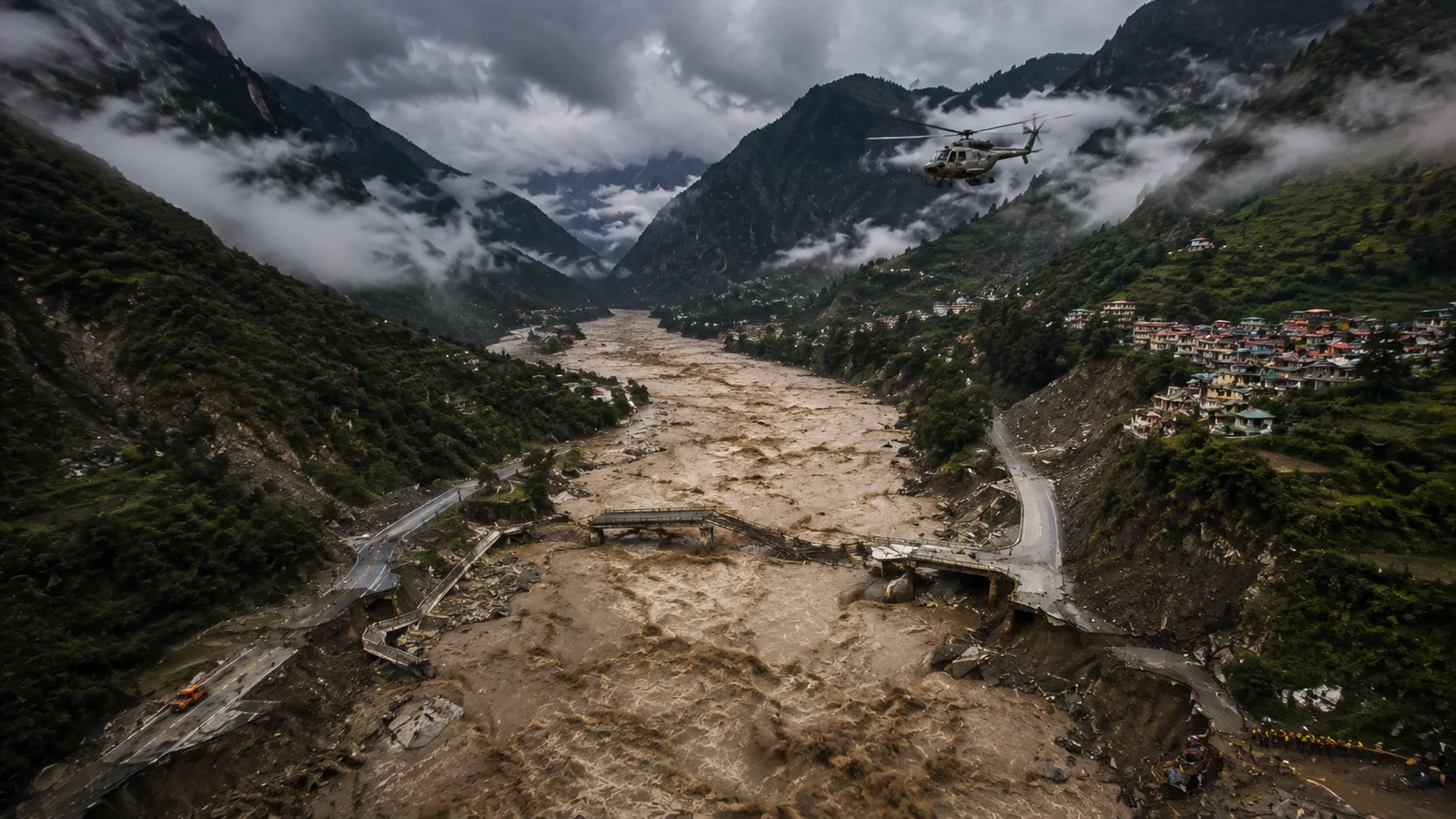
A wall of mud, rock, and water tore through the Himalayan border area shared by Nepal and China's Tibet region on Wednesday, August 26, flattening villages, sweeping away bridges, and burying roads under debris. The disaster struck the Rasuwa and Nuwakot districts of Nepal and Gyirong County on the Chinese side, an area popular with trekkers and pilgrims heading toward Mount Kailash, a peak sacred to Hindus, Buddhists, and followers of the Tibetan Bon tradition. Below is what's known so far, updated as new figures and warnings come in.
Where Is Nepal, and Where Did the Flood Happen?
Nepal is a landlocked country in South Asia, wedged between India to the south and China's Tibet Autonomous Region to the north along the Himalayan mountain range. This week's flooding centered on Rasuwa district, roughly 100 kilometers north of the capital, Kathmandu, where the Bhote Koshi River (also called the Bhotekoshi) flows down from Tibet and joins the Trishuli River. That combined river system eventually flows into India as the Gandak River. The flood tore through the towns of Betrabati, Timure, and Syafrubesi, and disrupted the Rasuwagadhi crossing, a key overland trade and pilgrimage corridor with China. Emergency alerts were also issued for communities much further downstream, as far as Narayanghat.
What Caused the Nepal Flash Flood?
Rasuwa's chief district officer said there was no rainfall reported in the district headquarters at the moment the flood struck around 8:40 a.m., pointing investigators toward an upstream trigger rather than a local storm. A team of international scientists reviewing satellite data told CNN they are focusing on the theory that a massive chunk of glacier sheared off a mountainside on the Tibetan side of the border and plunged into the valley below, though the precise cause is still under investigation. The U.S. Geological Survey has said a glacial collapse triggered the flood, after initially logging the event differently before more data came in. Authorities in both countries suspect a glacial lake outburst flood (GLOF) played a role, the same phenomenon behind a smaller but similar disaster on the same river in July 2025, when a glacial lake outburst that originated in Tibet swept away the Nepal-China Friendship Bridge and killed at least eleven people.
BBC News: early coverage of the missing tourists and mudslide along the border.
New Warning: A Second Lake Is at Risk of Bursting
Nepali and Chinese authorities have both flagged a newly formed lake on the Nepal side of the border that appears at risk of bursting and triggering a second flood surge. Nepal's disaster agency has urged residents and rescue workers in the Rasuwa area to remain alert and stay in safe locations rather than return to riverside homes and hydropower sites while search operations continue. Nepal's mountain-research institute, the Kathmandu-based International Centre for Integrated Mountain Development (ICIMOD), has separately identified glacial lakes across the country as a growing hazard, tracking more than 2,000 glacial lakes nationwide, with dozens flagged as potentially dangerous even before this week's disaster.
Death Toll and Missing: The Numbers So Far
Nepal Police say 469 bodies have been recovered and 466 people have been injured, while more than 1,300 people remain missing, according to a Friday morning update — a toll that has climbed repeatedly since Wednesday, moving from 270 to 353 to 389 and now to 469 confirmed dead. Twenty-eight police officers are themselves among the missing, out of more than 4,300 personnel Nepal has deployed to the response. On the Chinese side, state media report three confirmed deaths and 558 people missing after the mudslide struck the Gyirong County border crossing, bringing the combined regional toll to more than 392 dead and upward of 1,400 missing, though Nepali and Chinese figures are reported separately and the missing count has fluctuated as recovery efforts accelerate and some people are confirmed safe. A CNN team in Nuwakot district observed the Trishuli River still running high and black with silt and debris, with several bridges along it warped and twisted by the force of the water. A health worker in Rasuwa described the scene to Reuters as devastation everywhere he looked, with riverside settlements completely swept away and several of his own relatives among the missing. Nepal has also launched a public online registry of unidentified and unclaimed remains to help families search for missing loved ones, which had grown to more than 80 pages of entries by Thursday.
News18: ground footage from Rasuwa district as rescue teams began search operations.
Americans and Other Foreign Nationals Missing
More than 500 foreign nationals from over 30 countries remain unaccounted for, a toll made worse by the fact that Rasuwa sits on a major pilgrimage route to Mount Kailash. The U.S. State Department now says 90 Americans are missing, up from an earlier count of 65. Malaysia's foreign ministry says 55 of its citizens cannot be reached, Ukraine's foreign ministry has reported 56 Ukrainians missing, and Canadian Foreign Minister Anita Anand said at least 30 Canadian citizens and permanent residents are unaccounted for in Nepal and Tibet, adding that she is sending five more consular officials to Kathmandu to help locate them. The Nepal Tourism Board says 178 Indian nationals, 35 Australians, and 33 British citizens are also among the missing, along with 127 missing Nepali travelers. On the Chinese side, officials say 260 of the 558 people missing in Tibet are foreign nationals. Many of the missing are Hindu pilgrims who were traveling to Kailash Manasarovar, a high-altitude site in Tibet revered by Hindus, Buddhists, and followers of the Bon tradition. The Nepali Army says it has rescued more than 100 people by helicopter, with at least eight foreign nationals airlifted directly to Kathmandu, and officials say that number is expected to grow as crews reach cut-off areas along the Langtang trekking route, including guesthouses near Gosaikunda. The U.S. State Department has said it is deploying a disaster response advisor to the region and pledged $500,000 in emergency shelter, relief supplies, and water and sanitation assistance for flood-affected communities.
Roads, Bridges, and Hydropower: The Infrastructure Damage
Beyond the human toll, the flood has knocked out large parts of the region's infrastructure. Nepali officials say dozens of bridges have been destroyed and roughly 40 kilometers (25 miles) of roads have been damaged, badly complicating rescue efforts. Multiple bridges along the Trishuli and Bhote Koshi rivers have been warped or swept away entirely, and the Rasuwagadhi border crossing — a major trade route between Nepal and China — has been disrupted just ahead of Nepal's Dashain festival season, raising concerns about supply shortages. More than ten hydropower projects along the Bhote Koshi River have been damaged or knocked offline, according to Nepal's Independent Power Producers' Association, including the 111-megawatt Rasuwagadhi plant, along with the Chilime and Trishuli-3A facilities. Nepal's finance minister has been coordinating directly with customs officials at the Timure crossing on the emergency response.
Rescue Operations and the International Response
Nepal's government has formally asked both India and China for help with search and rescue, and Nepali army units have been working alongside police to pull survivors from debris-choked riverbanks in Nuwakot and Rasuwa. On the Chinese side, the first emergency responders did not reach the core disaster zone at the Gyirong border crossing until roughly 22 hours after the flood hit, delayed by blocked roads and poor weather. China's Premier Li Qiang has since visited Gyirong Town to meet rescue workers and displaced residents. In a statement, Nepal's prime minister's office said it was offering condolences to the families of those who lost their lives and confirmed the Nepali Army's search and rescue operations would continue. Both governments have declared local states of emergency, and officials in Kathmandu have warned residents in flood-prone valleys downstream to stay alert as search teams continue combing the wreckage.
The moment the mudslide struck a village near the border crossing, captured on surveillance and phone cameras.
Frequently Asked Questions
How many people have died in the Nepal flood?
As of Friday morning, Nepal Police had confirmed 469 deaths and 466 injuries, with more than 1,300 people still listed as missing. Including three confirmed deaths and 558 missing in Tibet, both figures continue to change as search crews reach more areas.
What caused the Nepal-Tibet flood?
There was no rainfall in the immediate area when the flood hit, which pointed investigators toward an upstream cause. The leading theory, supported by satellite analysis and the U.S. Geological Survey, is a glacier collapse combined with a glacial lake outburst flood (GLOF) originating on the Tibetan side of the border.
How many Americans are missing in Nepal?
The U.S. State Department says 90 Americans are currently unaccounted for, part of more than 500 foreign nationals from over 30 countries still missing. The State Department has deployed a disaster response advisor to the region to help locate them.
Is the flooding in Nepal over?
No. Authorities in Nepal and China have warned that a newly formed glacial lake near the border is at risk of bursting and could trigger a second flood surge, and residents and rescue crews have been told to remain alert rather than treat the disaster as finished.
How can I find a missing family member in Nepal?
Nepal has opened an online registry of unidentified and unclaimed remains that is updated regularly. Families can also contact Nepal Police's emergency helpline, the nearest District Administration Office, or, for foreign nationals, their country's embassy in Kathmandu.
- ✓Looking for a missing family member in Nepal: Check Nepal Police's registry of unidentified and unclaimed remains, and register missing-person details with the nearest District Administration Office; foreign nationals should also contact their embassy in Kathmandu.
- ✓U.S. citizens with concerns: The State Department has urged families to contact the U.S. Embassy in Kathmandu directly for the latest on missing Americans.
- ✓Traveling or trekking in the region: Roads through Rasuwa, the Rasuwagadhi border crossing, and parts of the Langtang trekking route remain closed or disrupted; avoid the Bhote Koshi and Trishuli river valleys until authorities lift advisories.
- ✓Second-flood risk: Authorities have warned of a newly formed glacial lake at risk of bursting on the Nepal side of the border — residents and trekkers downstream should follow local evacuation guidance and stay off riverbanks.
- ✓Want to help: Established international relief organizations are coordinating shelter, water, and sanitation aid for displaced communities in Rasuwa and Nuwakot districts.
This is a developing story. We'll continue updating the death toll, missing-persons count, second-flood warning, and cause investigation as Nepal Police, Chinese state media, and international agencies release further information.
Comments 0
No comments yet. Be the first to share your thoughts!
Leave a Comment