Ladder Company Operations: The Four Duties of TBE, Vent, Entry & Search
The ladder company is the force multiplier of the structural firefighting team. While the engine company advances the attack line, the ladder company is simultaneously performing four critical functions: truck-based entry, ventilation, search and rescue, and utility control. In well-trained departments, these four duties happen at the same time the first water hits the fire. This guide covers ladder company operations, apparatus positioning, and the functions that define the truck company mission.
Jump to:Truck-based entry (TBE) · Aerial positioning · The four duties · Ventilation operations · Search assignments · Forcible entry · Utility control · Salvage and overhaul · Ladder company tools · FAQ
The Truck Company Mission
In its simplest form, the ladder company exists to do everything the engine company cannot do while it is advancing the hoseline. The engine company is committed to water — positioning, supply, and attack. The truck company is committed to access, life safety, and tactical support. Neither function is secondary to the other. A working fire without a coordinated truck company assignment is a fire being fought with one hand tied behind your back.
The truck company mission varies by department structure. In departments without a dedicated ladder truck, engine companies must divide truck functions among themselves. In departments with full truck companies, the division of labor is clear. Either way, the functions must be assigned and performed.
Aerial Apparatus Positioning
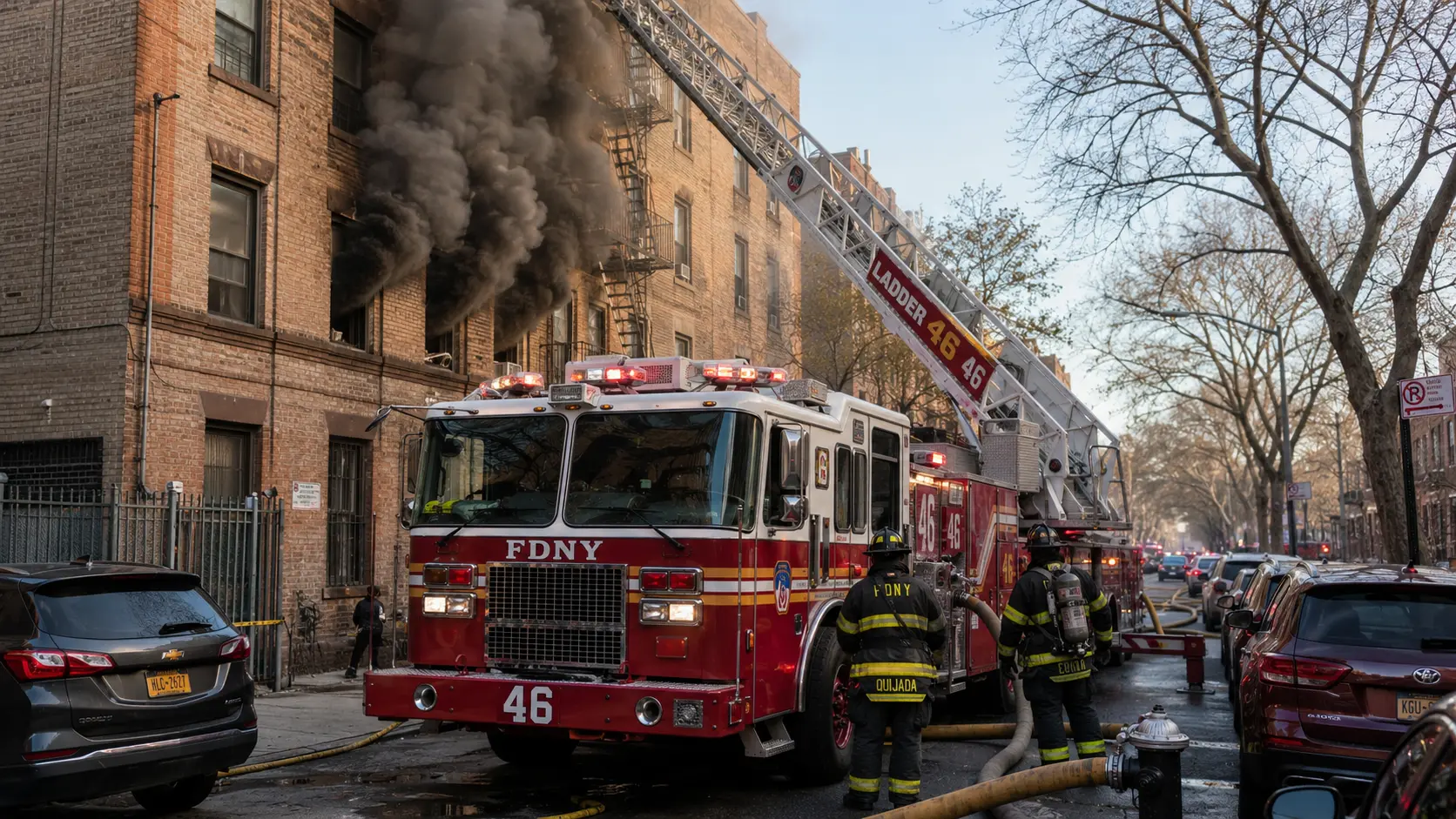
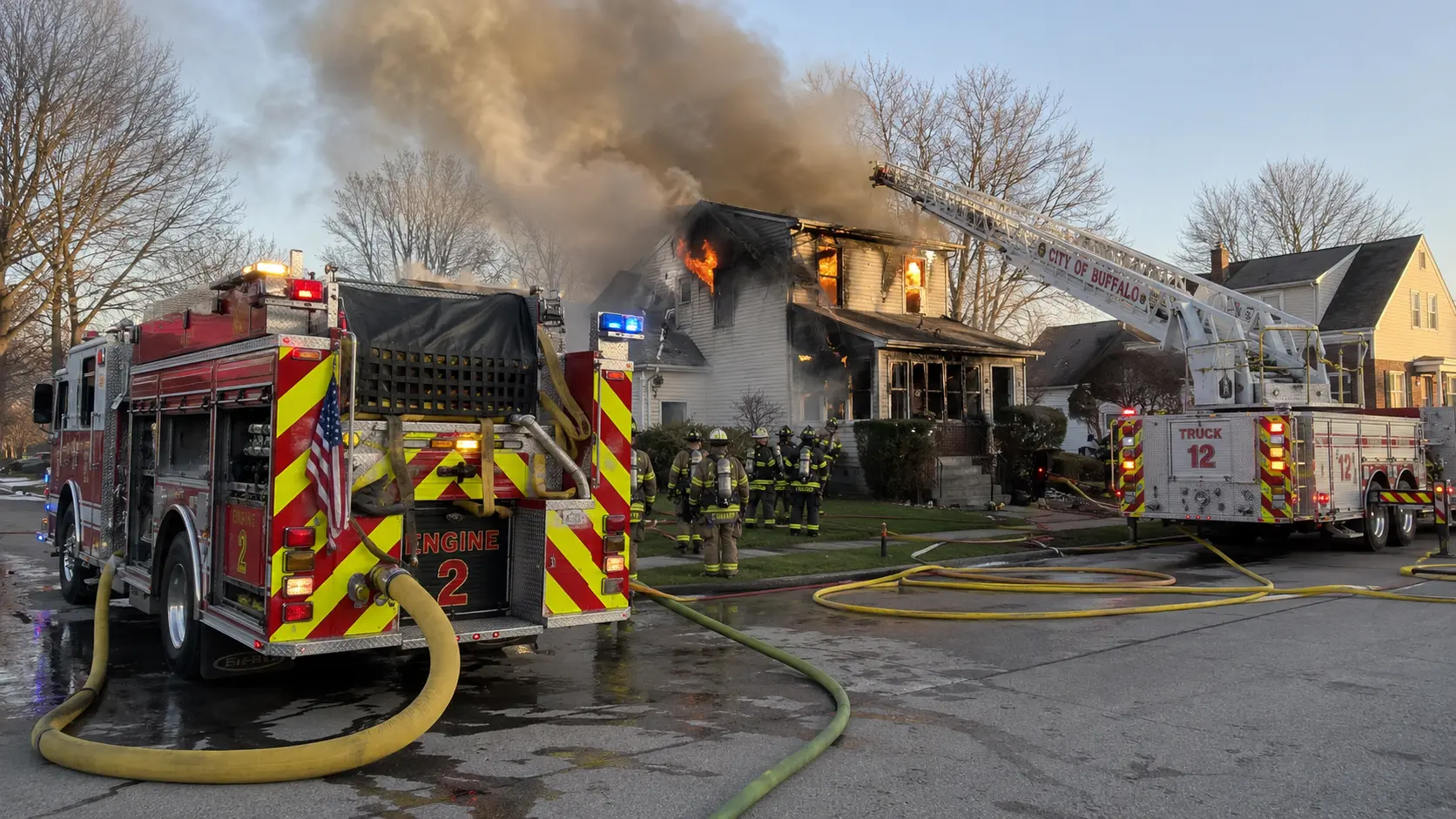
Correct aerial positioning takes priority over proximity to the front door. An aerial that cannot reach its operating position because it is blocked or too close to the building is useless.
General positioning principles
- Leave the front of the building for the aerial. The first-due engine should pull past the structure or take an offset position to leave the sweet spot in front available for the aerial apparatus.
- Spot for the worst-case need. Position for the floor with the most people at risk, or the highest floor involved. You can always reach lower floors; you cannot extend beyond the aerial's maximum reach from a bad spot.
- Ground conditions must support outrigger deployment. Soil, slopes, covers over vaults or utilities, and soft shoulders can all compromise outrigger stability. Never deploy outriggers over suspected underground utilities without verification.
- Consider overhead obstructions. Power lines, trees, and overhead structures can limit or eliminate aerial operation. Survey the overhead before spotting.
- Leave an escape route for the apparatus. Do not box the aerial in. If conditions deteriorate, the apparatus must be able to move.
Aerial reach and scrub area
The aerial's working envelope (the area it can reach from its spotted position) is defined by its maximum working length, horizontal rotation, and elevation angle. The "scrub area" is the window on the building face that the aerial can cover from a given spot. Use the Aerial Ladder Reach Calculator to determine reach and optimal spotting distance for your specific apparatus and building height.
The Four Duties: VEIS and Beyond
Different departments use different acronyms for truck functions. The most common is LOVERS (Ladders, Overhaul, Ventilation, Entry/Forcible Entry, Rescue, Salvage) or the simplified four-function model: Truck-Based Entry, Ventilation, Entry/Search, and Utility Control. Regardless of the framework, these functions must be assigned at every working fire.
| Function | Mission | Priority timing |
|---|---|---|
| Forcible entry | Open the building for attack crew and search crew access | First — nothing else happens without access |
| Search | Primary search of all occupied areas simultaneously with attack | First — simultaneous with attack if possible |
| Ventilation | Remove heat and smoke to improve attack and search conditions | Coordinated with attack — not before water is ready |
| Utility control | Shut off gas, electricity, and other utilities to prevent secondary hazards | Early — but not before life safety functions are initiated |
| Salvage | Protect property from fire, water, and smoke damage | After life safety and stabilization |
| Overhaul | Confirm complete extinguishment; find and eliminate hidden fire | After knockdown and primary search complete |
Ventilation Operations
See the Fireground Ventilation Guide for complete coverage. The truck company's specific role:
Vertical ventilation
Cutting the roof is a truck company function. The saw goes on the truck. The truck crew goes to the roof. The critical requirements:
- The roof must be sounded before committing personnel to it
- The cut must be directly over the fire room, not over an uninvolved area
- Ladder placement for roof operations requires one ladder at the cut location and a second ladder for an alternate egress route
- The engine company must have water ready and be positioned to advance immediately when ventilation is established
Horizontal ventilation from aerial
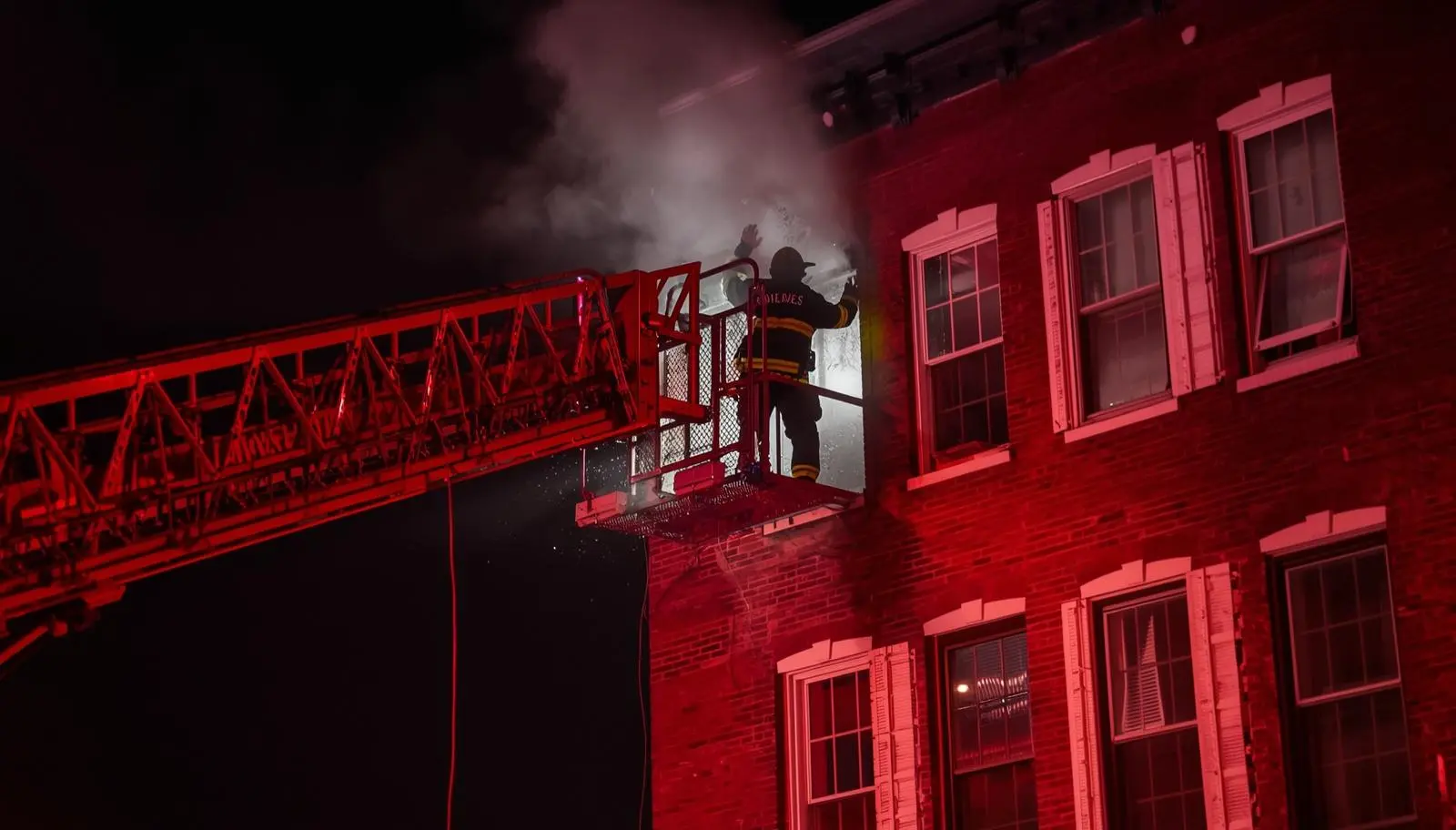
The aerial can be used to break upper-floor windows for horizontal ventilation without requiring personnel on the roof. This is the preferred ventilation method when roof conditions are uncertain, when the fire floor is accessible by aerial, or when speed is more critical than precision of the vent opening.
Search Assignments
The truck company conducts primary search simultaneously with the engine company's attack, not after it. The priority areas for truck search depend on the fire location and life hazard:
VEIS (Vent-Enter-Isolate-Search)
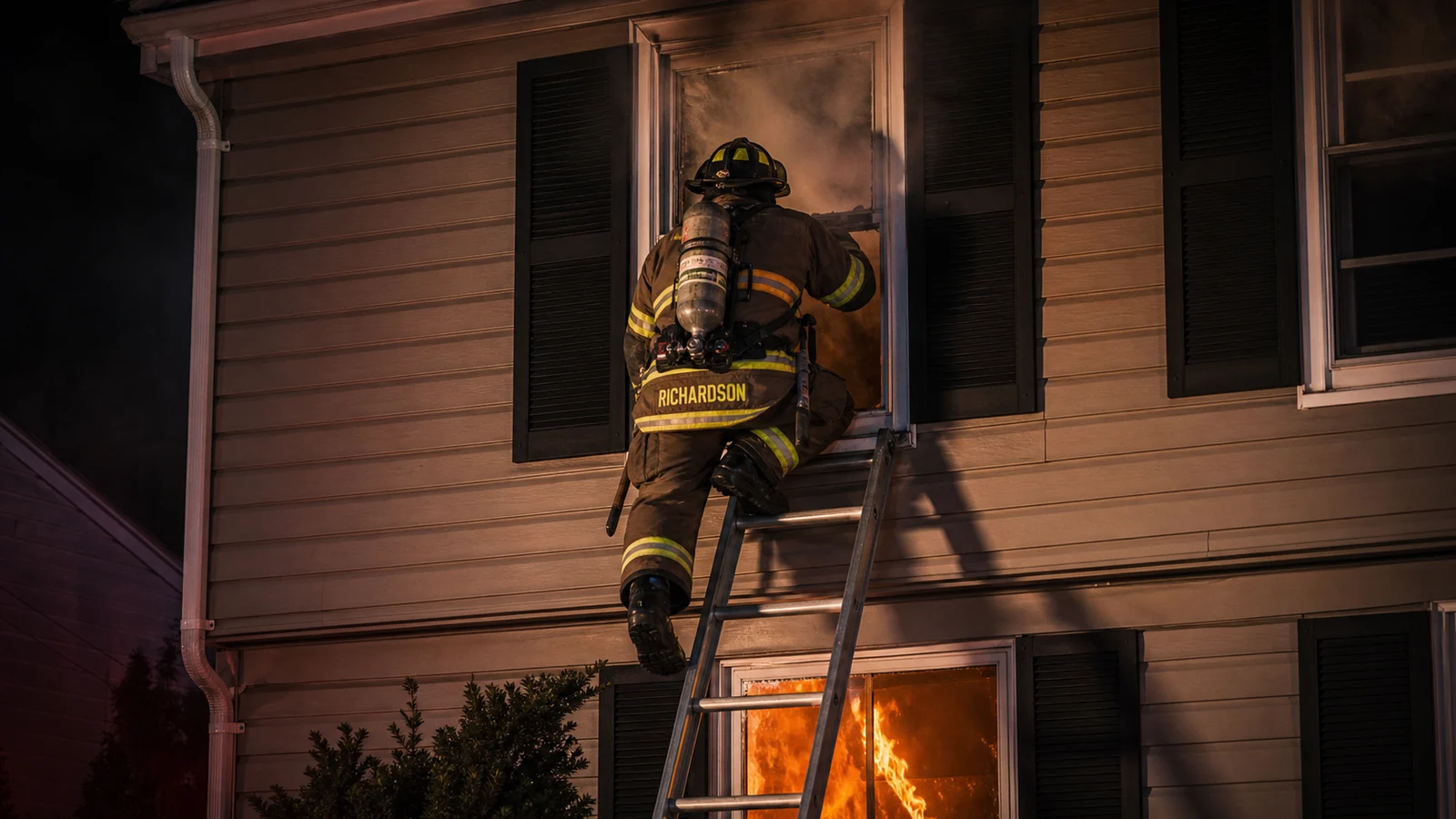
VEIS is a technique used to access and search individual rooms quickly via a window, independent of the main entry point. It is particularly useful for upper-floor bedrooms where victims are most likely to be found in nighttime fires:
- Vent: Break or open the window to the target room from the aerial or ladder
- Enter: One firefighter enters the room through the window
- Isolate: The interior door of the target room is immediately closed to prevent fire from tracking into the room during the search
- Search: Rapid, systematic search of the target room; victim removed through the window if found
Isolate is the most critical and most skipped step. Closing the interior door before searching prevents fire that may be in the corridor from entering the search room during the operation. A firefighter who enters a room through a window and leaves the door open may be cut off by fire entering from the corridor within seconds if conditions on that floor are advanced.
Search assignment priorities
- Floor above the fire — heat and smoke rise; occupants above the fire have the most immediate risk
- Fire floor bedrooms — highest probability of finding victims in nighttime fires
- Adjacent floors below the fire
- All remaining areas until primary search is complete
Forcible Entry: The Truck Company Task
In departments with dedicated truck companies, forcible entry is a truck function. The officer controls the door; the firefighter handles the irons. Entry is made for two simultaneous purposes: attack crew access and search crew access. These are not always the same door.
See the complete Forcible Entry Guide for full tool and technique coverage. Truck company-specific consideration: the truck crew may need to make entry at multiple points simultaneously — the front entry for attack, a rear or side entry for search, and upper-floor access via aerial for VEIS. Crew assignments at the beginning of the incident must account for multiple entry points.
Utility Control
Utility control prevents secondary emergencies during and after fire suppression. The sequence:
Gas shutoff
- Locate the gas meter (typically at the exterior of the structure near the foundation)
- Use a gas shutoff tool (curb key or universal gas tool) to turn the gas valve perpendicular to the pipe (closed position)
- Do not attempt to relight pilots or restore gas to the structure — this requires the utility company
- In commercial structures with large gas services, the utility company may need to be called for the shutoff
Electrical shutoff
- Locate the electrical panel (service entrance, typically at the exterior or in the basement)
- Turn off the main breaker at the panel if electrical involvement is suspected or if suppression will require water near electrical components
- Do not touch service entrance wiring above the meter — this is utility company responsibility and remains live even with the panel main breaker off
- If the panel is involved in fire or inaccessible, request utility company response and treat all wiring as live
Salvage and Overhaul
Salvage
Salvage reduces water and smoke damage to occupant property. Truck company salvage operations:
- Deploy salvage covers over furniture and electronics before suppression water reaches them
- Create water chutes to direct runoff out of the building and prevent it from spreading through floors
- Remove wet materials (carpets, padding) that will continue causing damage and mold after the fire
- Secure the building after operations — board up broken windows and doors to prevent secondary intrusion and weather damage
Overhaul
Overhaul confirms complete extinguishment and identifies hidden fire that could reignite after companies leave. The TIC is essential for overhaul:
- Scan all walls, ceilings, and floors adjacent to the fire area for residual heat
- Open walls and ceilings where the TIC shows hot spots — don't guess that a hot spot will self-extinguish
- Check structural members: smoldering wood can appear extinguished on the surface while continuing to burn internally
- Document all opened areas in overhaul so the structure can be properly secured after companies leave
Standard Ladder Company Tools
| Tool | Primary use |
|---|---|
| Halligan bar | Forcible entry; prying; utility shutoffs |
| Flat-head axe | Driving Halligan; chopping; breaking glass |
| Pike pole / NY hook | Pulling ceilings and walls for overhaul; sounding roofs |
| Power saw (chainsaw, rotary) | Vertical ventilation roof cuts; bars and gates; heavy timber |
| Thermal imaging camera (TIC) | Search; fire location; overhaul; structural monitoring |
| Search rope bag | Oriented search in large spaces |
| K-tool / A-tool | Through-the-lock entry; cylinder removal |
| Salvage covers | Protecting property from water and smoke damage |
| Gas shutoff tool | Utility control at gas meters |
| Water vacuum | Salvage water removal from floors |
| Ladder set (various) | Roof access; window entry; rescue |
Frequently Asked Questions
What does a ladder company do at a fire?
The ladder company performs the functions that the engine company cannot while advancing the attack line: forcible entry to open the building, primary search for victims, ventilation to remove heat and smoke, utility shutoff to prevent secondary hazards, and salvage and overhaul after knockdown. In well-staffed departments, these functions happen simultaneously with the engine company's attack.
What is VEIS in firefighting?
VEIS stands for Vent-Enter-Isolate-Search. It is a technique for rapidly accessing and searching individual rooms through a window, independent of the main entry point. The critical step is Isolate — closing the interior door of the search room before searching to prevent fire from tracking in from the corridor.
What is the difference between an engine company and a ladder company?
An engine company carries hose, water, and a pump; its primary mission is water supply and fire suppression. A ladder company carries aerial and ground ladders, forcible entry tools, ventilation equipment, and salvage equipment; its primary mission is access, search, ventilation, and property conservation. Both are required for effective structural firefighting.
How do you position an aerial ladder at a fire?
Position to reach the highest floor at risk from the front or accessible side of the building. Leave the front position for the aerial by having the engine pull past or offset. Check overhead for power lines and obstructions. Verify ground conditions can support outrigger deployment. Leave an escape route for the apparatus. Use the Aerial Ladder Reach Calculator to confirm working envelope from a given spot.

Comments 0
No comments yet. Be the first to share your thoughts!
Leave a Comment