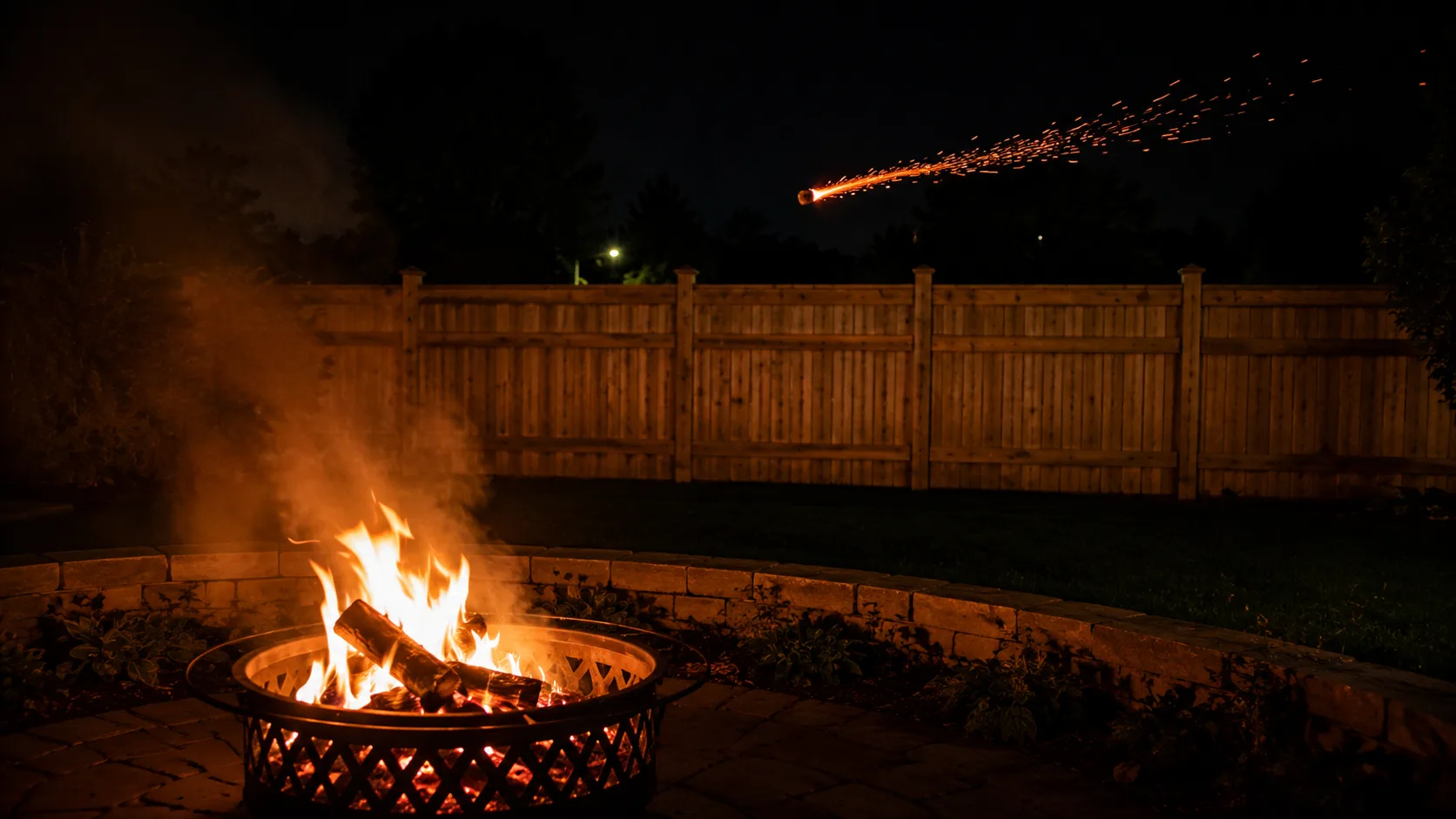
A backyard fire pit has a profile that does not suggest danger. It is recreational, slow-paced, and involves fire that is deliberately contained in one spot. People sit around it with drinks. Kids roast marshmallows. Nobody is doing anything that feels inherently risky. That relaxed context is part of why fire pits send people to emergency rooms and occasionally to the hospital burn unit — the attention level drops in inverse proportion to how comfortable everything feels.
The hazards are specific and they are not the ones most people think about. The immediate visible fire is the part everyone watches. The embers that travel 20 feet on a light wind are the part nobody is watching. The fire that seems out at 11pm when everyone goes to bed is the part that is still hot enough to reignite at 6am. And the person who decides to add a little lighter fluid to revive a fire that has burned down — that is the scenario that produces the most serious injuries from fire pits by a significant margin.
In this article:
- Clearance and placement: the rules and what they are based on
- Wind and fire pits: the underappreciated hazard
- What to burn and what not to burn
- Alcohol and fire pits: the specific injury mechanism
- Extinguishing properly: what "dead" actually means
- Portable vs. permanent pits: different risk profiles
- Local burning laws and permit requirements
- Fire pit safety checklist
Clearance and Placement: The Rules and What They Are Based On
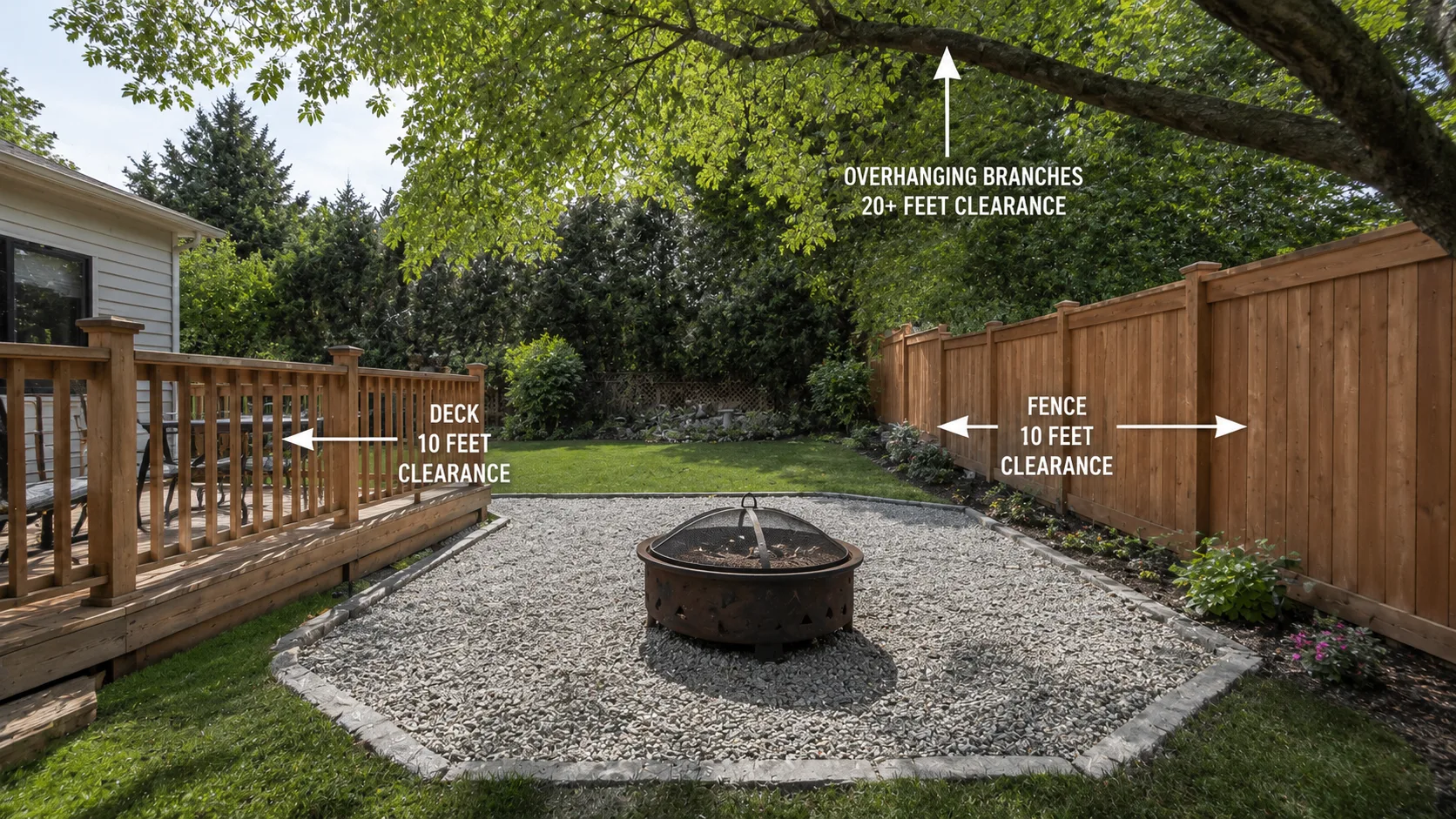
Most fire codes and fire pit manufacturer guidelines specify a minimum of 10 feet between the fire pit and any structure — the house, a fence, a deck, a shed, a pergola. Some jurisdictions require 25 feet. The 10-foot number is derived from two measurements: the distance at which radiant heat from an open fire is sufficient to begin warming untreated wood toward its ignition temperature, and the distance that burning embers typically travel in calm-air conditions.
Ten feet is a minimum, and it assumes relatively calm conditions. At 15 mph wind — a moderate breeze that most people would describe as pleasant on a warm evening — embers from a wood fire can travel 20 to 30 feet before landing. A fire pit that is 10 feet from a cedar fence is within that ember travel range on a breezy evening. The clearance minimum was not designed with 15 mph winds as the baseline condition.
Overhanging branches
The vertical clearance requirement — typically 21 feet above the fire pit to any overhanging branch — addresses a different hazard from horizontal clearance. Rising heat and embers travel vertically before being carried horizontally by wind. A branch 15 feet above the fire pit can be heated by direct convection, dried over repeated fires, and eventually reach ignition temperature on a night when the fire is burning hot. Tree fires that originate from fire pits directly below them are documented events, and they spread rapidly to adjacent trees and structures.
Surface under the pit
A fire pit placed on a wooden deck is placed on combustible material. Ash and ember droppings from the fire pit land on the deck boards. Grease from food cooked near the pit accumulates on the boards. The deck surface dries from the heat. Over multiple uses, a wooden deck under or immediately adjacent to a fire pit becomes primed for ignition. Non-combustible surfaces — concrete, brick, gravel, pavers — under and around the pit are the correct choice. If the fire pit is on a deck, a non-combustible pad of appropriate size (at least 18 inches beyond the pit perimeter in all directions) is the minimum protective measure.
Wind and Fire Pits: The Underappreciated Hazard
The decision to light or continue a fire pit should include a wind assessment that most people never make. Wind affects fire pits in three ways: it increases the fire's burn rate and heat output, it carries embers outside the immediate fire area, and it can shift direction unpredictably, redirecting both embers and radiant heat toward people or structures that were previously not in the path of the fire.
The practical wind threshold: most fire safety guidelines recommend not using an open fire pit when sustained winds exceed 15 mph. At that wind speed, embers travel beyond typical clearance distances, fire behavior becomes less predictable, and controlling the fire with water or a fire extinguisher if something ignites becomes more difficult because the wind aids combustion. A portable weather app will give current wind speed in a few seconds. Using it before lighting is not excessive caution — it is the same check a boat captain makes before leaving the dock.
Wind direction change is the specific scenario that catches people off guard. You positioned your chairs on the downwind side of the fire — away from the smoke and embers. The wind shifts 45 degrees. The embers are now traveling toward the chairs, the people in them, and the fence that was not previously downwind. This happens quickly and without warning. Keeping a water source within immediate reach at all times — a garden hose charged and ready, or a bucket of water — addresses this by providing an immediate response when conditions change.
What to Burn and What Not to Burn
| Fuel | Safe to burn? | Why |
|---|---|---|
| Seasoned hardwood (oak, maple, ash) | ✓ Yes | Low moisture content, burns cleanly, manageable ember production |
| Kiln-dried firewood | ✓ Yes | Lowest moisture, most predictable burn, least smoke |
| Green or unseasoned wood | Caution | High moisture causes heavy smoke and incomplete combustion; not a fire hazard but produces significant nuisance smoke and creosote |
| Treated or painted wood | ✗ No | Pressure-treated lumber contains copper compounds and arsenic; burning releases toxic compounds. Not a fire hazard — a poisoning hazard. |
| Pallet wood | Caution | Some pallets are pressure-treated (marked HT for heat-treated is safe; MB marking indicates methyl bromide treatment — do not burn) |
| Cardboard and paper | Caution | Large pieces of burning paper become airborne embers. Small amounts for fire starting are acceptable; sustained cardboard burning is not. |
| Trash, plastic, rubber | ✗ No | Illegal in most jurisdictions; produces toxic combustion products including dioxins and hydrogen chloride |
| Leaves and yard waste | Check local laws | Often prohibited in residential areas; produces heavy smoke and abundant embers; fire spread risk is high in dry conditions |
Alcohol and Fire Pits: The Specific Injury Mechanism
Alcohol and fire pits are a documented combination in emergency room burn injury data. The mechanism is not just impaired judgment in general — it is a specific sequence that produces a specific type of injury.
The fire has burned down to coals. Someone decides to revive it. They pour an accelerant — lighter fluid, alcohol, a flammable liquid — onto hot coals that look gray and dead. The coals are not dead. The liquid vaporizes instantly on contact with the residual heat. The vapor cloud ignites a fraction of a second later with a fireball that extends well beyond the pit. The person pouring is standing over the pit. Face, hair, and upper body burns result.
This is not a scenario unique to obviously intoxicated people. It happens to people who have had two or three drinks and whose risk assessment is slightly but consequentially impaired. The combination of relaxed social context, a small amount of alcohol lowering inhibition, and the routine-feeling task of "just adding a little something to get the fire going" produces the conditions for a serious burn.
The prevention: never add any accelerant to a fire that has been burning. If the fire has died down and you want to rebuild it, add smaller pieces of dry wood to catch from existing coals. If the coals are too dead to catch new wood, the fire is done for the evening. A chimney starter used to prepare a new batch of charcoal — separately, away from the pit — is the correct way to restart a dead fire, not fluid on hot coals.
Extinguishing Properly: What "Dead" Actually Means
A fire pit that looks out is not necessarily a fire pit that is out. Glowing embers — visible in darkness as orange points of light — are obvious heat sources. Ash-covered coals that appear gray and dead are less obvious but can retain sufficient heat to reignite with oxygen for 12 to 24 hours after the visible fire is out.
The correct extinguishing procedure: pour water on the coals slowly, stirring the ash as you pour to reach buried hot spots. The ash and water will produce steam and hissing — which continues until the water is reaching coals that are hot enough to vaporize it. Continue adding water until the hissing stops and the ash is cool to the touch at least 6 inches down. This typically takes several minutes and more water than most people apply. The fire pit should feel cool to the back of your hand held a few inches above the ash before it is considered extinguished.
Never leave a fire pit unattended until it is completely extinguished by this standard — not "probably out," not "it will go out on its own." Backyard fires that reignite after occupants have gone to bed and spread to adjacent structures while the household sleeps are documented events. The extra five minutes of extinguishing at the end of the evening is the entire cost of preventing that scenario.
Do not use sand to extinguish a fire pit. Sand retains heat extremely efficiently — a sand-extinguished fire pit can have coals burning at temperatures above 600°F just inches below the surface while the top feels cool. Children and pets who step into a sand-extinguished fire pit are at significant burn risk. Water extinguishment followed by touch confirmation is the only reliable method.
Portable vs. Permanent Pits: Different Risk Profiles
Portable fire pits — the steel bowl or ring designs that sit on legs — introduce a stability hazard that permanent in-ground or masonry pits do not have. A portable fire pit that is tipped — by a child, a dog, a tripping adult, or uneven ground settling — dumps burning wood, coals, and ash onto whatever surface it lands on. On grass, on a deck, or near furniture, a tipped portable pit is an immediate fire spread event.
Portable pits should be placed on level, stable ground, away from any area where the path of tipping would land burning material on a combustible surface. The legs should be fully extended and stable before lighting. Checking stability with a light push before use — while the pit is empty — takes five seconds and identifies any ground unevenness before it matters.
Portable pits also cool faster than masonry or in-ground permanent pits, which means they are more quickly moveable after use — but also means that children who encounter them an hour after use may find them at a temperature that appears safe but is still sufficient to cause contact burns. Covering a cooled portable pit or moving it to a location where it cannot be accessed by children or pets is part of post-use procedure.
Local Burning Laws and Permit Requirements
Outdoor burning regulations vary by municipality, county, and state — and they change with conditions. Many jurisdictions issue burn bans during dry weather, high wind periods, or fire weather watch conditions. These bans apply to fire pits as well as agricultural burning and debris burning. Operating a fire pit during a declared burn ban is typically a misdemeanor with escalating fines and, in the event of a fire that escapes, potentially significant civil liability.
Some jurisdictions require a permit for outdoor burning at all. Others require fire pits to be registered with the local fire department, particularly for propane or natural gas fire pits that involve permanent gas lines. The local fire marshal's office is the correct contact for determining applicable regulations — a five-minute call before installation avoids compliance issues after the pit is in the ground.
Fire Pit Safety Checklist
- ✓10-foot minimum clearance from all structures, fences, and overhanging branches (21 feet vertical).
- ✓Non-combustible surface under and around the pit — gravel, pavers, concrete. No wood decks.
- ✓Check wind speed before lighting — postpone if sustained winds exceed 15 mph.
- ✓Charged garden hose or bucket of water within reach at all times during use.
- ✓Burn seasoned hardwood or kiln-dried wood only — no treated lumber, pallets with MB markings, trash, or plastic.
- ✓Extinguish completely with water — pour, stir, repeat until hissing stops and ash is cool to the touch 6 inches down.
- ✓Check local burn regulations before use, especially during dry conditions.
- ✗Never add lighter fluid, alcohol, or any accelerant to a fire that has been burning.
- ✗Never leave a fire pit unattended until confirmed extinguished.
- ✗Do not use sand to extinguish — it retains dangerous heat below the surface.
- ✗Do not burn during declared burn bans regardless of conditions at your property.
Comments 0
No comments yet. Be the first to share your thoughts!
Leave a Comment