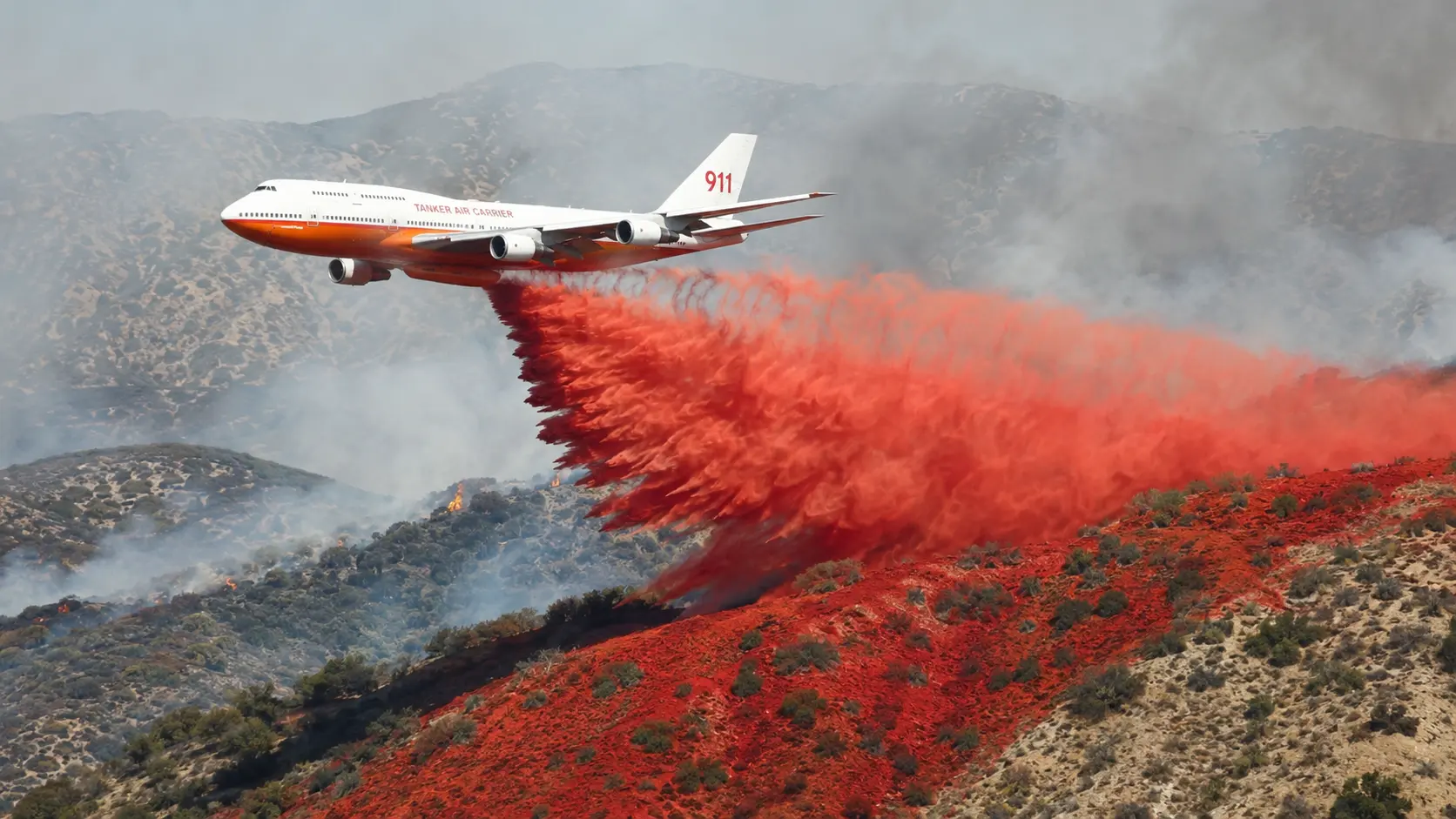
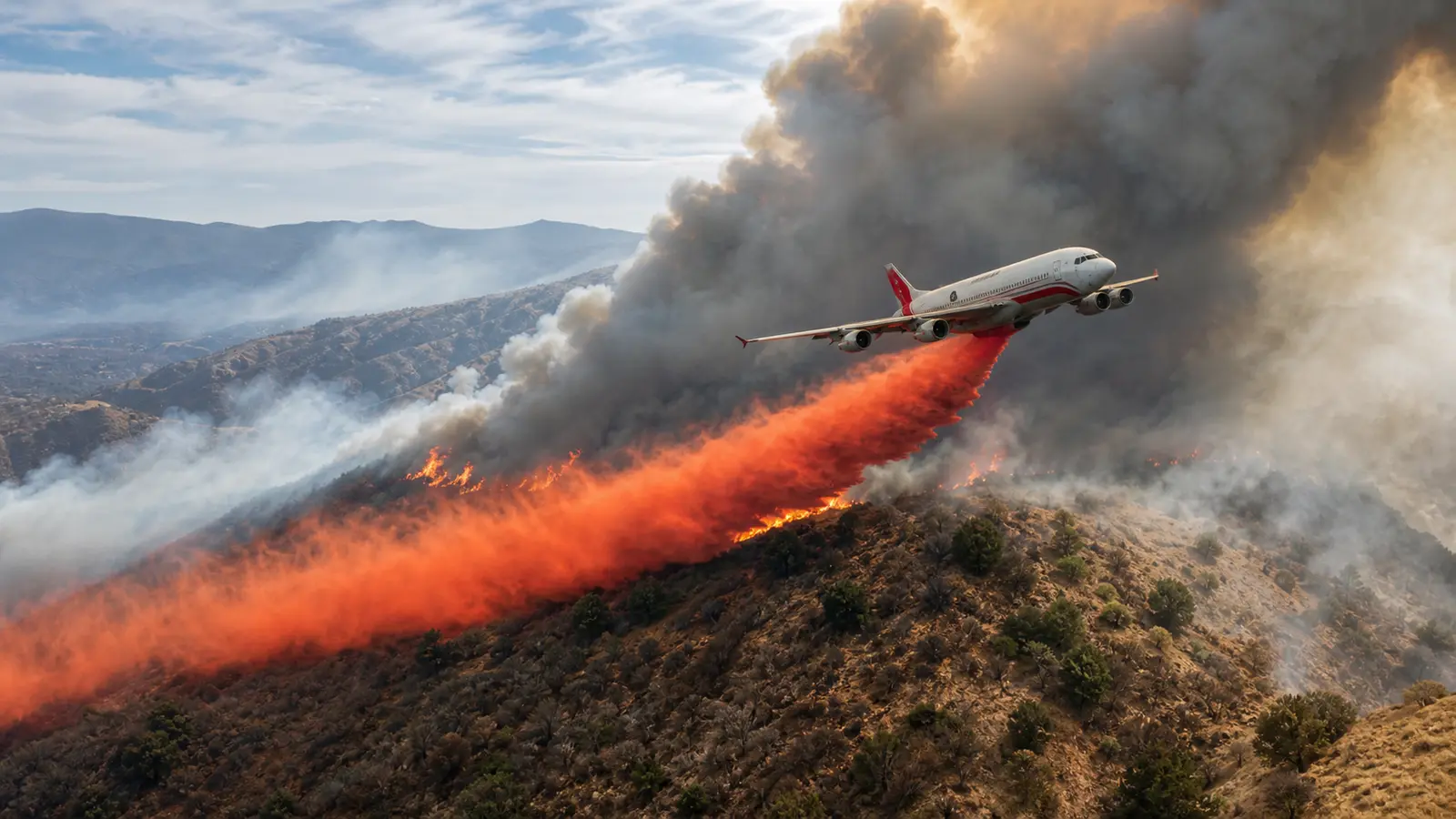
The aerial retardant drop — a large fixed-wing aircraft flying low over a hillside fire and releasing a red cloud of slurry — is the most photographed image in wildland firefighting. It is also the most misunderstood. The drop looks like suppression. It looks like the fire is being extinguished from above. In reality, the retardant is slowing the fire's spread on the vegetation it coats, buying time for ground crews to construct control lines and for the fire to be contained — not extinguished — at a location the retardant helps define.
That is a real contribution. When retardant is applied correctly, in the right conditions, in support of ground operations that can take advantage of the slowed spread, it changes outcomes. When it is applied in conditions where the fire behavior exceeds what retardant can address — high wind, extreme slope, critical fuel moisture — the red-stained hillside looks like effective action while the fire continues past it.
In this article:
Aircraft Types: SEAT, LAT, VLAT, and Helicopters
Wildland air resources are classified by capacity and capability:
- Single Engine Air Tanker (SEAT): A single-engine agricultural spray aircraft modified for fire retardant delivery. Capacity: 800 to 1,000 gallons of retardant. Fast reload time (15 to 20 minutes at an airbase with a retardant mixing system). Best suited for initial attack on small fires and for precision drops in areas where larger aircraft cannot safely operate due to terrain. The SEAT is the agricultural tractor of aerial firefighting — lower capacity but maneuverable and fast-turnaround.
- Large Air Tanker (LAT): Multi-engine fixed-wing aircraft with retardant capacity of 2,000 to 3,000 gallons. Includes aircraft types such as the P2V Neptune, P3 Orion, and various purpose-designed tanker aircraft. The LAT is the primary workhorse for extended retardant operations on major fires. Reload time is 45 to 60 minutes from an airbase with retardant mixing capability.
- Very Large Air Tanker (VLAT): Large transport aircraft converted for retardant delivery. The DC-10 Air Tanker delivers 9,400 gallons per load. The 747 Supertanker delivers 19,200 gallons. VLATs are used for high-priority fires threatening communities where the maximum-volume drop provides maximum benefit, and for situations where the sheer volume of a single pass is the relevant variable. Reload time is significantly longer than smaller tankers due to the volume.
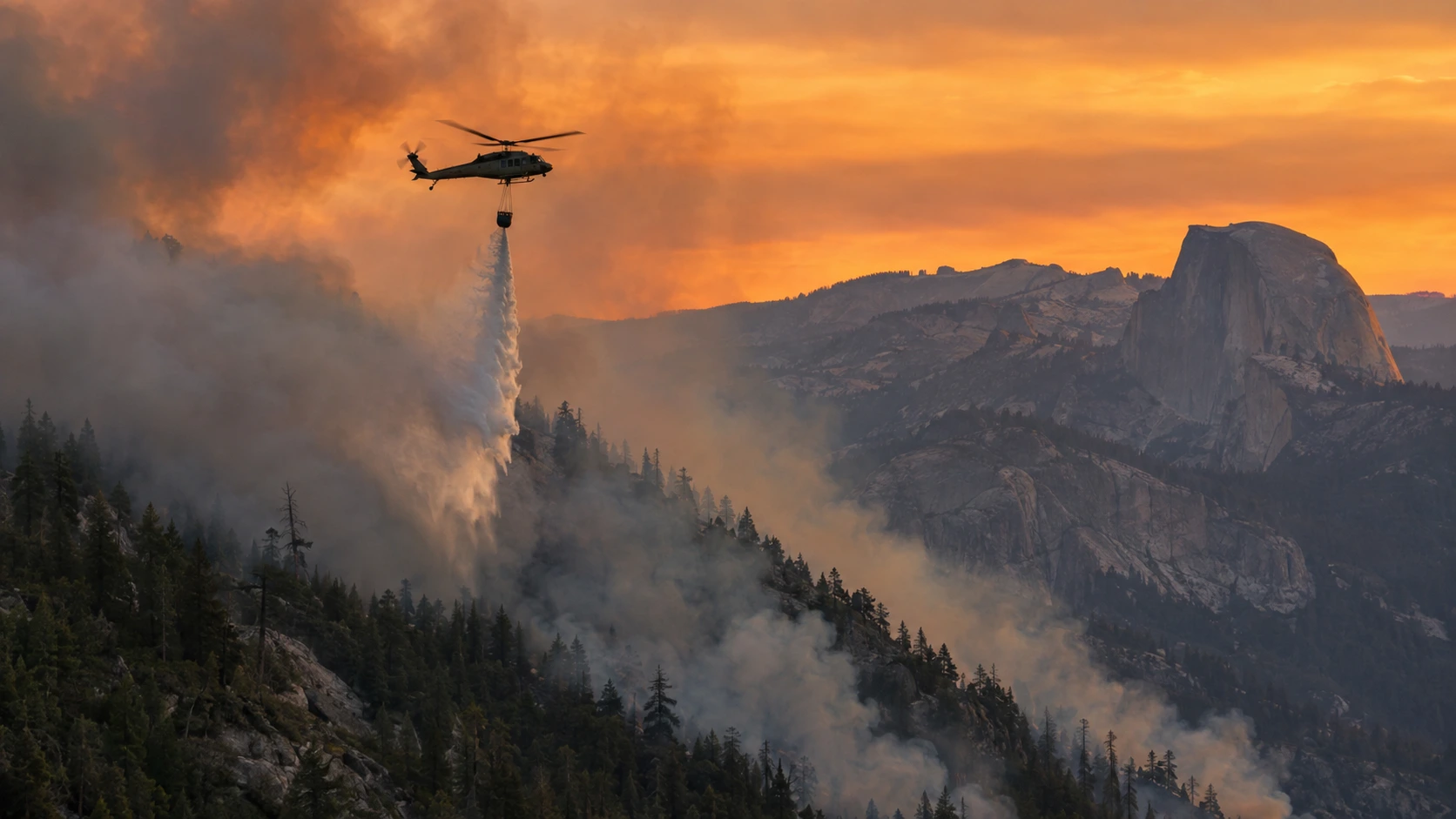
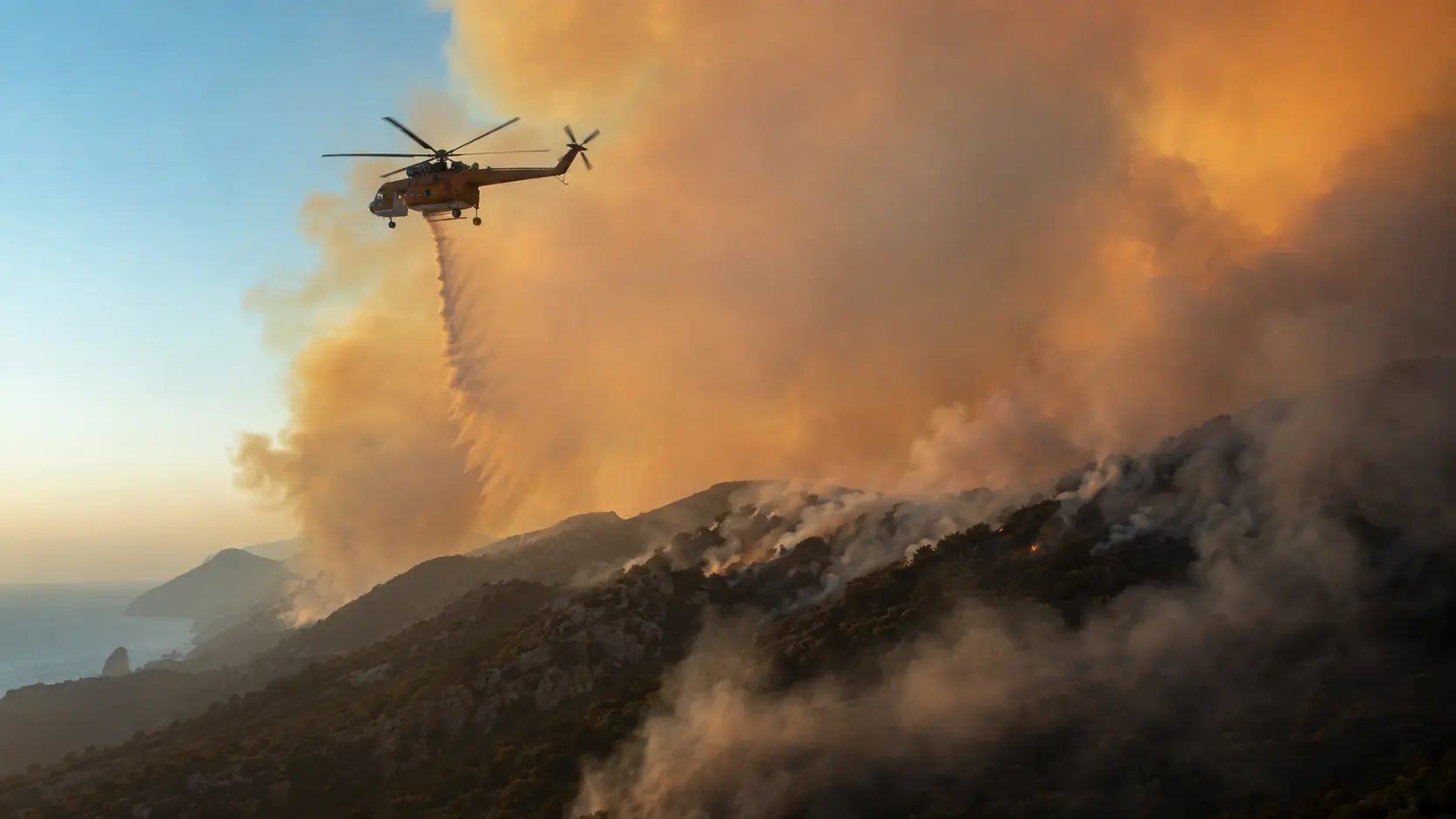
- Helicopter: Helicopters serve multiple air operations functions: initial attack with water from a bucket or fixed tank, reconnaissance, crew transport, cargo resupply, and rescues. Their hover capability and the ability to dip-fill a bucket from lakes, rivers, and swimming pools make them effective in terrain where fixed-wing aircraft cannot safely maneuver for a drop.
What Retardant Actually Does
Fire retardant — the red slurry dropped by air tankers — is a water-based solution containing ammonium salts (primarily ammonium phosphate) that reduce the flammability of vegetation it coats. The red color is from an iron oxide dye added so that the pilots and ground crews can see where the retardant has been applied.
The mechanism of action: the retardant coats plant surfaces and inhibits combustion by two pathways. The ammonium salts react with cellulose in the plant material when heated, producing a char barrier that insulates the underlying material from further heat. The water in the slurry provides immediate evaporative cooling when the retardant lands on hot or burning vegetation.
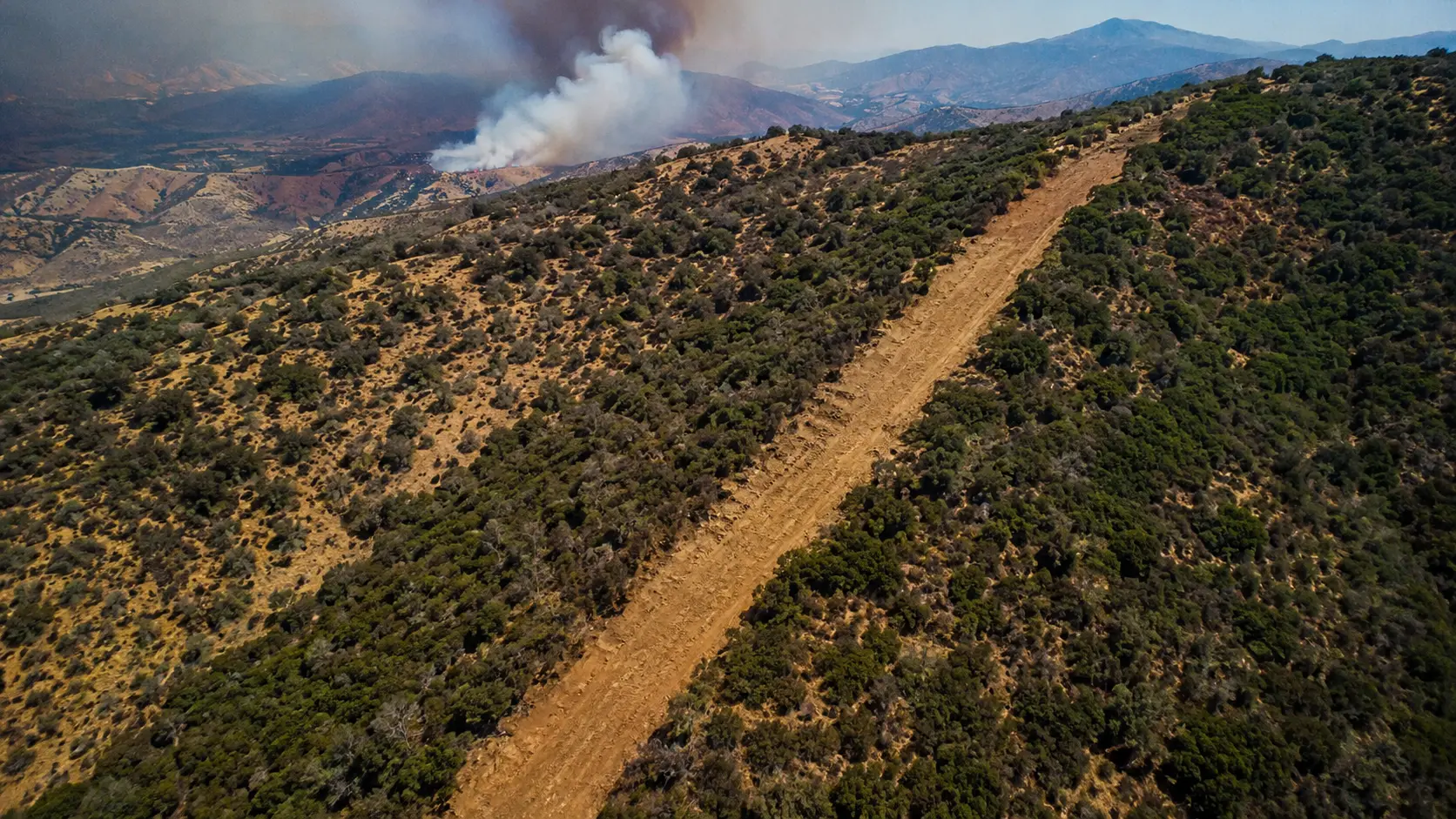
Critically: retardant does not extinguish active fire. A retardant drop on actively burning vegetation reduces fire intensity briefly through the water's cooling effect, but the ammonium salts' long-term retardant function requires the vegetation to be coated before the fire reaches it. The tactical use of retardant is therefore as a pre-treatment of unburned fuel in the fire's path — applied ahead of the fire front to slow or stop spread through the treated area — not as a suppression agent applied to the fire itself.
Drop Accuracy and Its Limits
A retardant drop from a fixed-wing aircraft is executed while the aircraft is flying at 150 to 300 feet above ground at 120 to 150 knots airspeed. The pilot has a 2 to 4 second window to initiate and complete the drop sequence while crossing the intended drop zone. Wind, turbulence from the fire's convection column, terrain-induced airflow, and the aircraft's speed all affect where the retardant actually lands relative to the intended target.
In ideal conditions — calm wind, flat terrain, no fire turbulence — drop accuracy is excellent: the retardant falls within a predictable pattern relative to the intended center line. In conditions typical of major wildfire operations — sustained winds above 15 mph, active fire turbulence, complex terrain with induced airflows — the retardant pattern can deviate significantly from the intended placement. Ground crews evaluating retardant drop effectiveness will observe the actual pattern and communicate corrections to the air tactical group supervisor for subsequent drops.
The retardant pattern on the ground is typically an elongated ellipse — wide at the aircraft entry point and narrowing as speed carries the retardant further downhill during the drop. The width and coverage density depend on the aircraft's drop speed, the retardant viscosity, and the height above ground. Drops from too high an altitude produce a dispersed, low-coverage pattern. Drops from too low an altitude may overstress the aircraft in the thermal environment near the fire.
Helicopter Operations: Buckets vs. Fixed Tanks
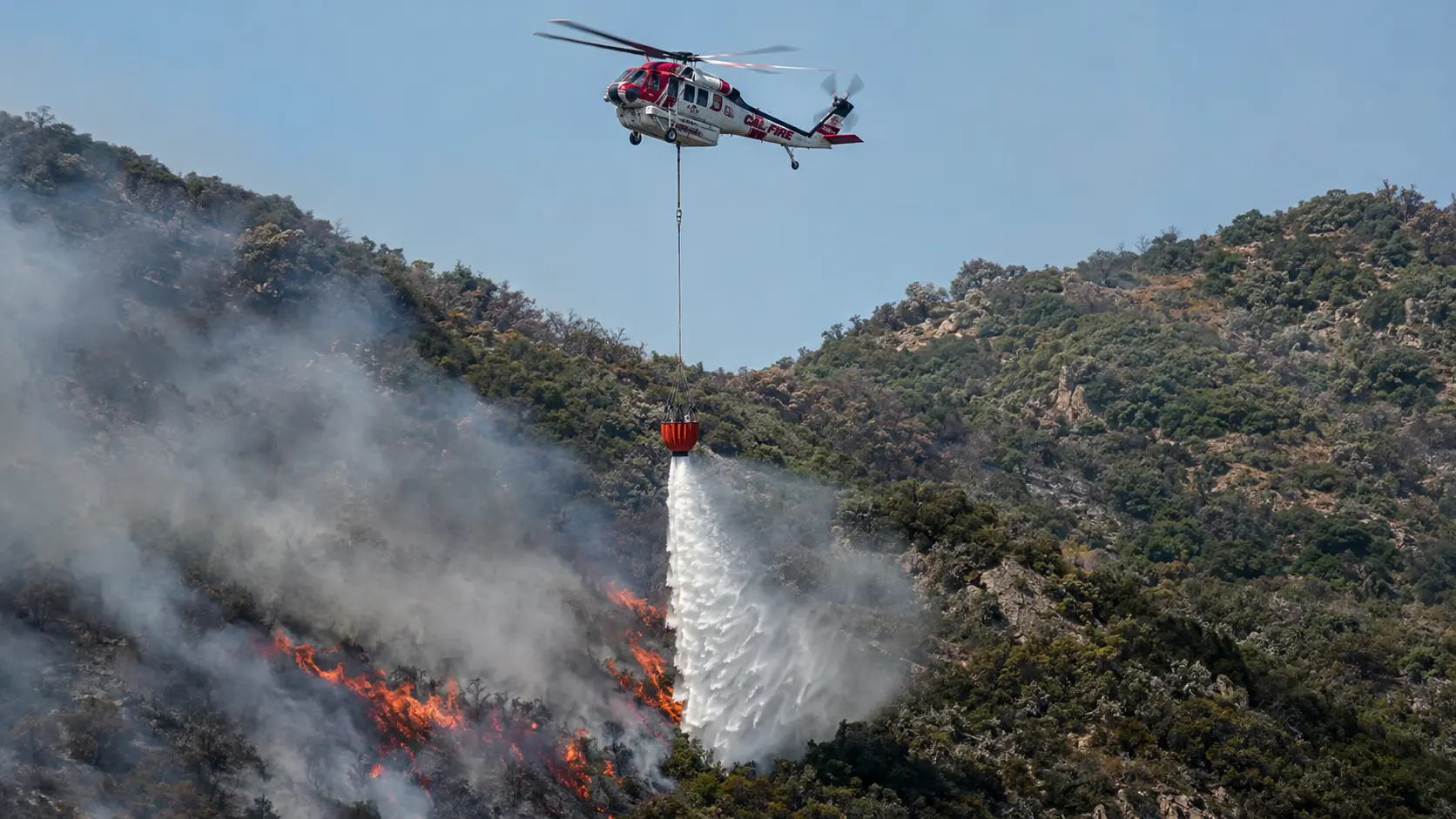
Wildland helicopters operate with two water delivery systems:
Bambi Bucket or similar collapsible bucket: A flexible bucket suspended on a long line below the helicopter, filled by hovering over a water source while the bucket dips into the water. Capacity ranges from 100 gallons (smaller helicopters) to 2,000+ gallons (heavy helicopters like the Sikorsky S-64 Skycrane). The bucket system's advantage is operational flexibility — the helicopter can source water from any body of water within flight range, making it effective in remote areas without an airbase. Reload cycle is determined by how far the helicopter must fly to the water source.
Fixed tank (Helitanker): A helicopter with a fixed retardant or water tank mounted on the fuselage or belly, filled at an airbase or from a hovering connection to a water tank. Fixed tanks can carry more precisely than a swinging bucket (which can sway and spill in flight), and some fixed-tank systems allow multiple selective drops from the same load. The trade-off is that the tank requires an airbase for filling, limiting the helicopter's operational flexibility in remote areas.
Helicopters are classified by size and capacity into Type 1 (heavy — Skycrane, Chinook, capable of 2,000+ gallons), Type 2 (medium — Bell 205, Bell 212, 700 to 1,200 gallons), and Type 3 (light — smaller utility helicopters, 100 to 300 gallons). The type determines what missions the helicopter is assigned and what fire intensity levels it can safely work near.
The Air Tactical Group Supervisor
All air operations over a wildfire are coordinated by the Air Tactical Group Supervisor (ATGS) — an experienced aircraft observer who flies in a fixed-wing aircraft at higher altitude above the fire, observing fire behavior, directing individual tanker and helicopter drops to specific locations, and managing the airspace to prevent conflicts between multiple aircraft operating simultaneously over the fire.
The ATGS is the air equivalent of the ground operations section chief — they have authority over all air resources operating in the fire's airspace, they communicate fire behavior observations to the incident commander, and they make the drop-by-drop decisions about where retardant is placed based on current fire conditions. A tanker pilot who receives a drop instruction from the ATGS executes it — the ATGS has the situational awareness from elevation that the low-flying tanker pilot does not have during the drop sequence.
When multiple air tankers are operating simultaneously over a major fire, the ATGS manages a complex airspace: tankers at drop altitude, the ATGS aircraft at higher altitude, helicopters at intermediate altitude, and possibly lead planes (smaller aircraft that fly the intended drop path before the tanker to verify the approach and identify hazards). The ATGS coordinates these aircraft to prevent conflicts while maintaining a continuous dropping operation on the fire.
Night Operations and Flight Restrictions
Most air tanker operations are suspended at night — the combination of poor visibility, thermal conditions that change after sunset, and the inability to see terrain features that affect drop accuracy makes night retardant drops impractical and unsafe for most aircraft. Night flight over a fire without the visual references available in daylight requires instrument flight rules capability and specific training that most fire attack aircraft do not have for low-altitude terrain operations.
Helicopters with Night Vision Goggle (NVG) equipped pilots can operate at night for specific missions — crew transport, reconnaissance, water drops on high-priority fires near structures — but the reduced visibility relative to daylight operations limits effectiveness and increases risk. Night helicopter operations on major fires are restricted to essential missions rather than routine fire suppression.
The cessation of air operations at night allows ground crews to work through the night hours without competing for airspace, which matters for multi-day operations where hand crew line construction continues around the clock. The night hours when air operations are suspended are typically the cooler, more manageable fire behavior hours — when ground crew work is most effective and when the loss of aerial water delivery is least consequential.
Scooper Aircraft
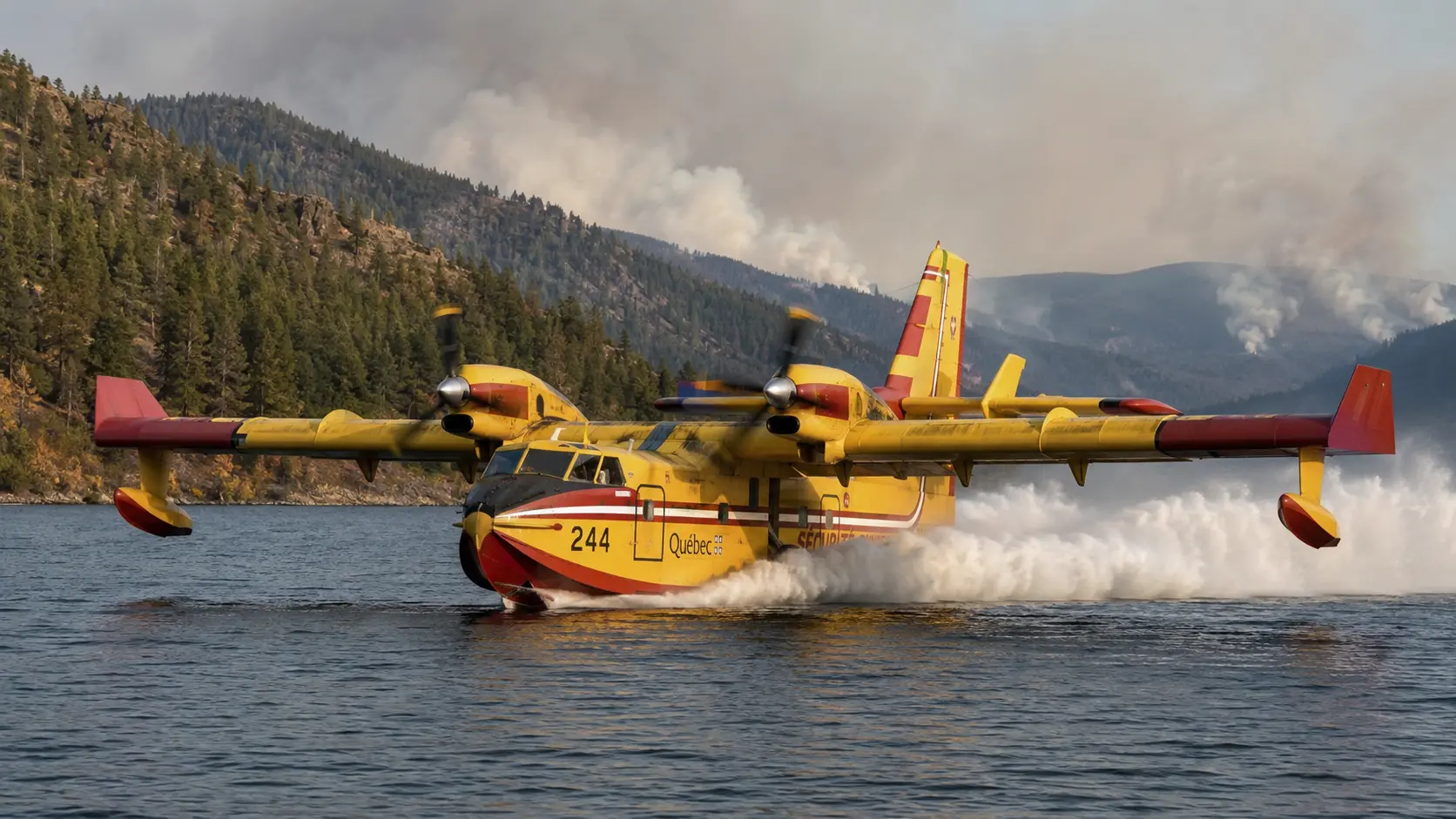
Scooper aircraft — primarily the Bombardier (formerly Canadair) CL-415 Superscooper and its predecessors — are amphibious fixed-wing aircraft that can collect water by skimming across a lake or river surface during a 12-second water pickup run. The aircraft's hull-mounted scoops fill the tanks with approximately 1,500 gallons of water during each scoop run, then the aircraft immediately returns to the fire for a drop.
The operational advantage over land-based tankers is dramatic when a suitable water body is close to the fire: the reload cycle is determined by the distance to the lake, not by the distance to an airbase. A lake 2 miles from the fire can support a scooper with a 5 to 7-minute reload cycle — significantly faster than the 45 to 60-minute cycle for a land-based tanker reloading at an airbase 30 to 50 miles away.
The limitation is geographic: scoopers require a water body of sufficient size, depth, and surface run length to safely execute the scoop pass. Not all fire areas have accessible lakes or rivers that meet these requirements. Scoopers are most effective in regions with abundant natural water bodies — the Mediterranean coast, Canadian lake country, coastal Pacific Northwest — and less effective in arid regions where fires are most frequent and water bodies are scarce.
When Air Resources Change Outcomes vs. When They Don't
Air resources change fire outcomes most effectively when: the fire is small enough that a retardant line ahead of it creates a meaningful barrier that ground crews can reinforce, weather conditions are below Red Flag thresholds so that retardant remains where it is placed and fire behavior is within the range that retardant can address, and ground resources are positioned to exploit the slowed spread that the retardant produces.
Air resources have less effect on outcomes when: fire behavior is extreme and exceeds the suppressive capacity of any retardant application, wind moves the fire past the treated area faster than the reload cycle allows repositioning, the fire is so large that the aircraft capacity is insufficient relative to the perimeter length requiring treatment, or no ground resources are available to hold the retardant line after the aircraft departs.
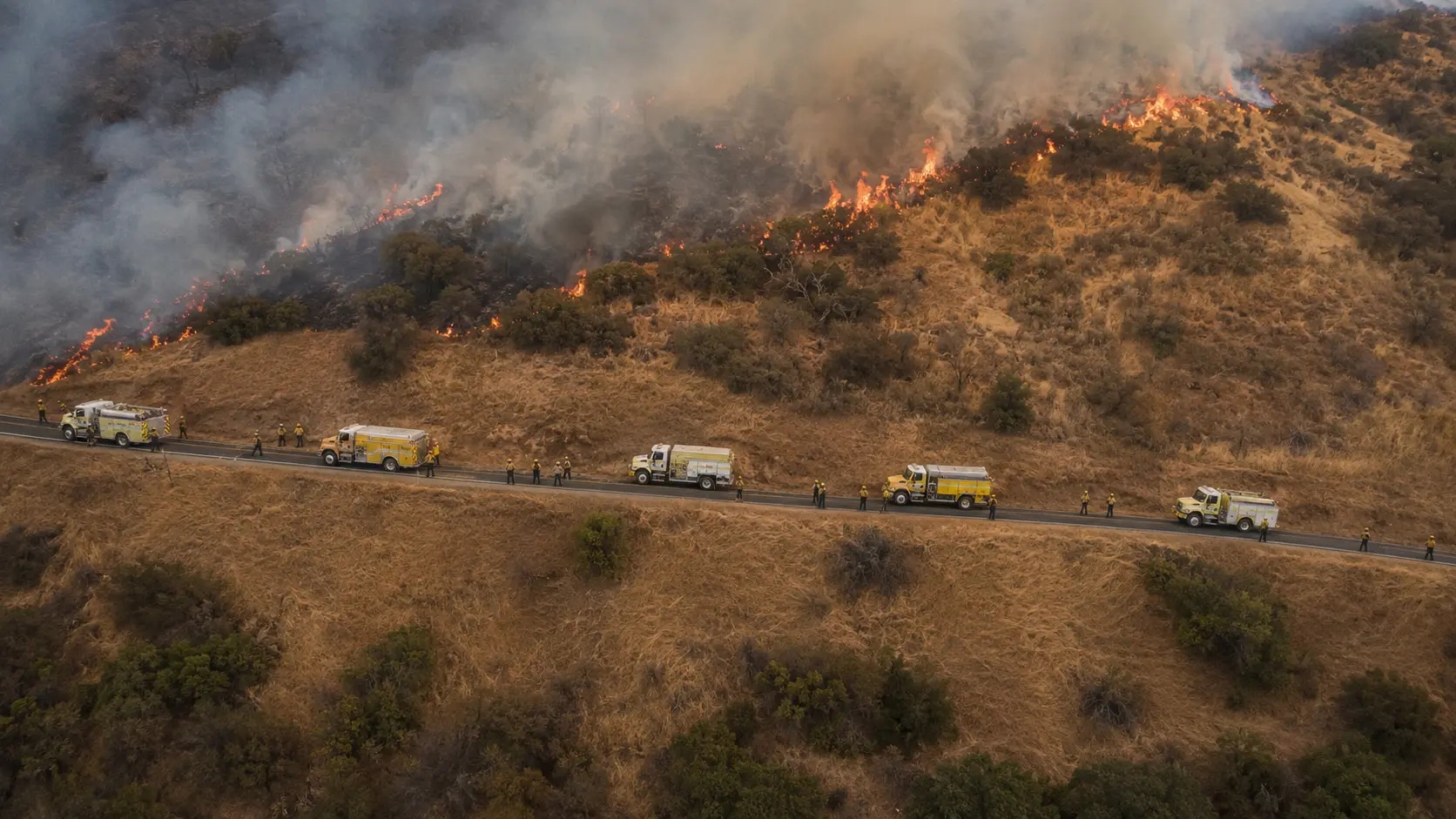
The consistent finding from fire behavior research and post-incident analysis is that air resources are force multipliers for ground operations — they extend the reach and speed of what ground crews can do — but they are not substitutes for ground operations. A fire managed entirely by air resources with no ground crew presence is a fire being watched from above, not a fire being contained. The retardant and water that air resources deliver create conditions for containment; ground crews deliver the containment.
Comments 0
No comments yet. Be the first to share your thoughts!
Leave a Comment