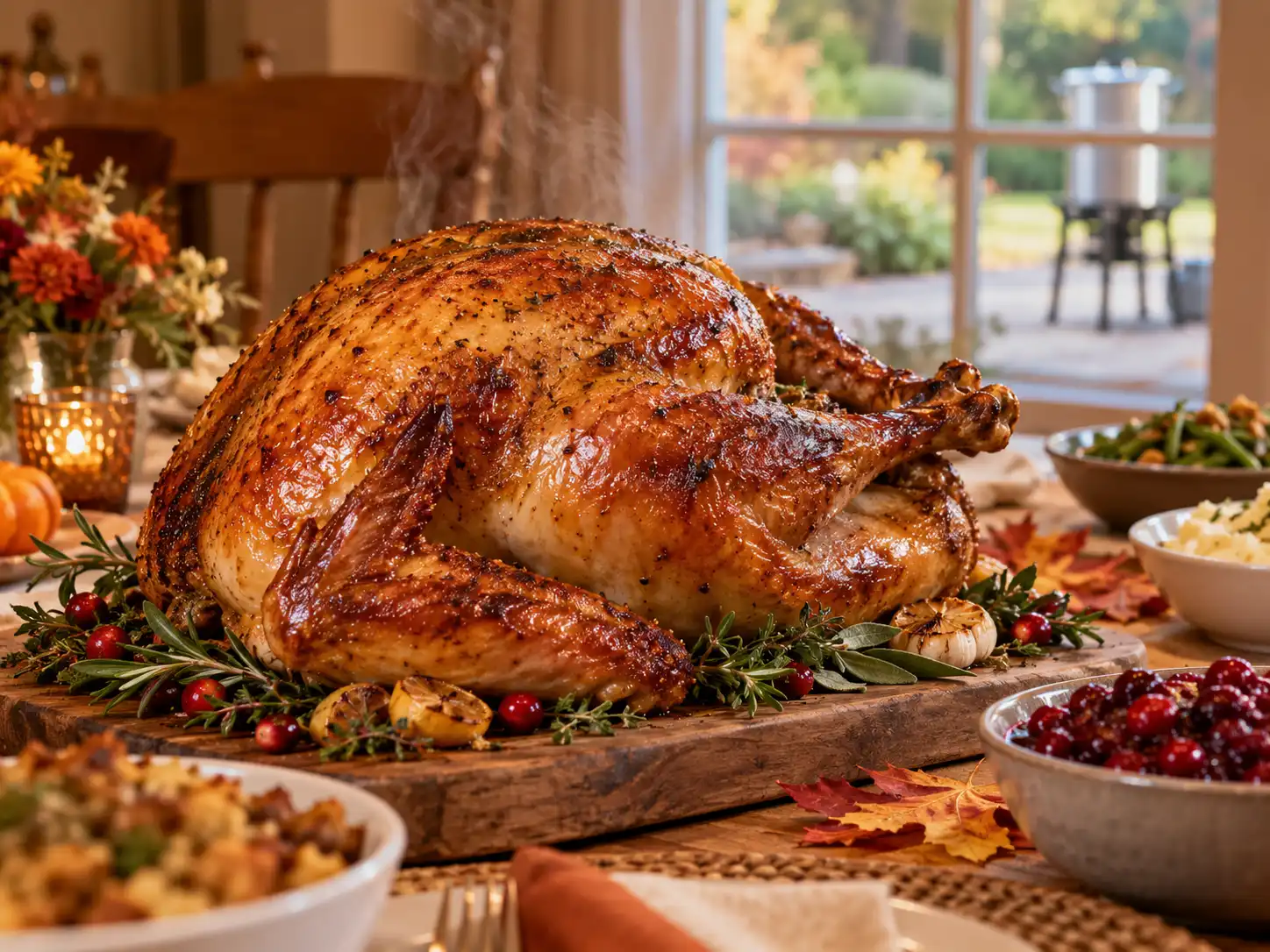

The short answer: The National Fire Protection Association strongly discourages turkey fryers that use cooking oil, and Underwriters Laboratories has said it does not certify any turkey fryer for home use. Most turkey fryer fires come from the same few mistakes: a turkey that is still frozen or wet, too much oil in the pot, an unstable setup, or a burner left running unattended. If you are going to fry a turkey anyway, the safest versions of those steps are below. The safest option is an oil-less fryer, the oven, or a turkey someone else already fried.
A turkey fryer is a pot holding several gallons of oil at around 350 degrees, sitting over an open flame, usually on a driveway or a patio, with a cold, heavy bird about to be lowered into it. Anyone who has worked a few holiday shifts has seen what happens when one of those steps goes wrong. This guide explains why the fires start, what the numbers say, and what to do when it happens, so the day ends with dinner and not with a fire engine at the curb.
In this article:
Why Thanksgiving Is the Worst Day for Kitchen Fires
According to the NFPA, Thanksgiving Day is by far the leading day of the year for home cooking fires, with roughly three to four times the number of fires on an ordinary day. Christmas Day and Christmas Eve rank second and third. Cooking caused about 80 percent of home fires on Thanksgiving in recent NFPA averages, and unattended cooking is the leading contributing factor in cooking fires and in the deaths they cause. Over the whole year, cooking is the leading cause of home fires and home fire injuries.
| Thanksgiving Day | Estimated home cooking fires reported to U.S. fire departments |
|---|---|
| 2022 | 1,610 |
| 2023 | 1,446 |
| 2024 | 1,139 |
Source: NFPA estimates. NFPA revises these figures as new data comes in, so the counts differ slightly between reports. The pattern does not change: Thanksgiving is the peak day every year.
Deep-fryer fires specifically add up to an average of about five deaths, 60 injuries, and more than $15 million in property damage a year, a figure widely cited from NFPA data. Those numbers are small next to the total, but fryer incidents are unusually severe per fire, and the injuries are mostly serious burns.
The Five Ways a Turkey Fryer Fire Starts
1. The turkey is frozen, or only partly thawed
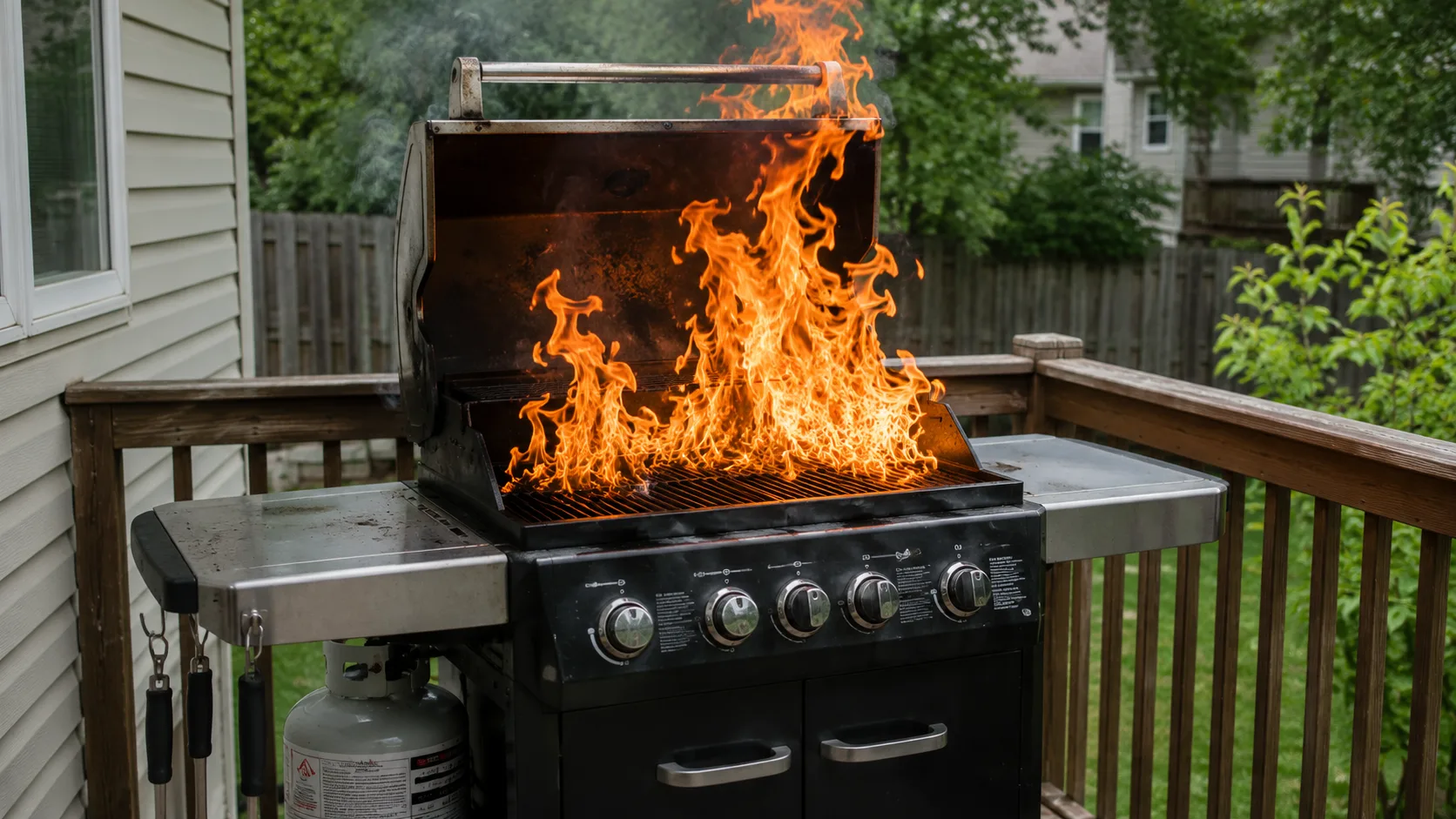
This is the classic. Ice and water trapped in or on the bird turn to steam instantly when they hit hot oil, and steam expands violently. The oil foams up and over the rim of the pot, and it lands on the burner flame. A frozen or wet bird does not just splash. It can throw a wave of burning oil across the whole setup. Even a turkey that looks thawed can hold ice in the cavity.
2. There is too much oil in the pot
The turkey displaces oil when it goes in. If the pot was filled to the line before the bird, the oil level rises over the edge and runs onto the flame. Guessing the amount is the most common cause of this, and it is the easiest one to prevent. The test is below.
3. The oil gets too hot
Cooking oil keeps heating as long as the burner runs. Past its cooking temperature it begins to smoke, and if it keeps going it can ignite on its own. Many outdoor fryers have no thermostat to shut the burner off. A thermometer that stays in the oil, and a habit of watching it, are the only protection.
4. The setup is unstable
Outdoor fryers with stands can tip, especially on soft ground, a slope, or a deck, or when someone bumps a leg. A tipped pot spills several gallons of near-boiling oil across a wide area, usually onto the flame.
5. It is in the wrong place
Fryers get used in garages, under porch roofs, on wooden decks, or beside the house, because that is where it is sheltered from wind. Those are the places where a fire spreads to the building within seconds. Fire departments say the same thing everywhere: a fryer belongs outdoors, in the open, well away from anything that can burn.
The Water Test That Tells You How Much Oil to Use
Do this before you ever heat anything. It takes five minutes and it removes the most common mistake.
- Place the turkey in the empty fryer pot, in the basket or on the hook it will actually use.
- Fill the pot with water until the turkey is just covered, with a few inches of room below the rim.
- Take the turkey out and mark the water level, or measure how much water is left. That is the amount of oil you need.
- Pour out the water and dry the pot completely. Any water left in the pot is a hazard once the oil goes in.
Where and How to Set Up a Fryer
- ✓Thaw the turkey completely. In the refrigerator, plan on about 24 hours for every 4 to 5 pounds. Then dry it inside and out with paper towels.
- ✓Use the fryer outdoors only, on flat, firm, level ground, such as bare dirt or concrete, well away from the house, fences, and trees. Many departments cite at least 10 feet from the building as a minimum.
- ✓Keep a thermometer in the oil and shut the burner off if the oil starts to smoke.
- ✓Lower the turkey slowly, with the burner turned off or very low while you do it, using the hook or basket that came with the fryer. Wear long, heavy gloves and eye protection.
- ✓Keep children and pets back, well away from the fryer, and keep an eye on the area where guests walk.
- ✗Never leave the fryer unattended while it is heating or cooking.
- ✗Never use it in a garage, under a porch or carport, on a wooden deck, or under any structure.
- ✗Don't overfill the pot or drop a wet or frozen bird in.
One more thing people overlook: the oil stays dangerously hot for hours after you turn the burner off. Leave the pot where it is until it has cooled completely, and keep kids and pets away from it the whole time.
What to Do If the Fryer Catches Fire
Never put water on a grease or oil fire. Water sinks below the oil, flashes to steam, and throws burning oil outward in a fireball. This is the single most dangerous reaction people have, because it feels like the obvious thing to do.
- Get everyone away. Move people back first, especially children and anyone close to the fryer.
- Turn off the fuel only if you can do it safely and quickly. If shutting the burner or the propane valve means reaching into the flames, don't.
- Call 911 right away. Don't wait to see whether it burns out. A fryer fire can reach the house in seconds, and calling early costs nothing.
- Do not try to carry or move the pot. Several gallons of burning oil is not something you can pick up.
- Stay back and meet the crews with the address, the fuel source, and whether anyone is hurt. Treat burns from hot oil as serious: cool them with running water and get medical help for anything large or deep.
A standard home extinguisher is not designed for a deep pot of burning oil, and a poorly aimed blast can scatter the oil. Without training, the right move is to get clear and let the fire department handle it. If you want to know which extinguisher covers which kind of fire, see our guide on how to use a fire extinguisher.
Safer Ways to Get a Crispy Turkey
The NFPA's recommendation is plain: if you want fried turkey, buy one that a grocery store or restaurant has already fried, or buy a fryer that does not use oil. The choices, from least to most risky:
- ✓Order a fried turkey. No oil, no flame, and no risk at your house.
- ✓Use an oil-less (infrared) fryer. It mimics the crispy skin without a pot of hot oil. It still gets very hot, so the outdoor and unattended rules still apply.
- ✓Roast it, with a dry brine. Salting the turkey a day or two ahead and leaving it uncovered in the refrigerator dries the skin, which is most of what makes a fried bird feel crispy.
- ✗Oil-filled outdoor fryer. The one the NFPA discourages.
And the rest of the kitchen matters as much as the fryer. Most Thanksgiving fires come from ordinary cooking, so stay in the home whenever something is on the stove or in the oven, check on the bird often, keep towels and packaging away from burners, make sure your smoke alarms work before guests arrive, and keep candles clear of anything that can burn. See our candle fire safety guide, and if an alarm starts chirping, here is what each beeping pattern means.
Common Questions
Is it safe to deep fry a turkey?
Not according to the NFPA, which strongly discourages turkey fryers that use cooking oil. UL has said it does not certify any turkey fryer for home use. If you do it anyway, a completely thawed, dry turkey, the right amount of oil, a level outdoor spot, and constant supervision remove most of the common causes.
Can you fry a frozen turkey?
No. A frozen or partly frozen turkey causes hot oil to boil over and splatter. This is one of the leading causes of turkey fryer fires.
How much oil do you need to fry a turkey?
It depends on the pot and the bird, which is why you measure with the water test instead of guessing. Put the turkey in the pot, cover it with water, then remove the turkey and measure the water that remains.
Can you use a turkey fryer in the garage or on a porch?
No. A turkey fryer should never be used in a garage, breezeway, porch, deck, or under any structure that can catch fire. Use it outdoors, in the open, on level ground away from the house.
How do you put out a turkey fryer fire?
Don't use water. Get everyone back, shut off the fuel only if it is safe, and call 911. Without training, don't try to fight a pot of burning oil yourself.
What day is Thanksgiving in 2026?
Thanksgiving falls on Thursday, November 26, 2026, the fourth Thursday of the month.
The best Thanksgiving, from a fire department's point of view, is the one where the phone does not ring. A few minutes with a pot of water and a thermometer is a small price for that.

Comments 0
No comments yet. Be the first to share your thoughts!
Leave a Comment