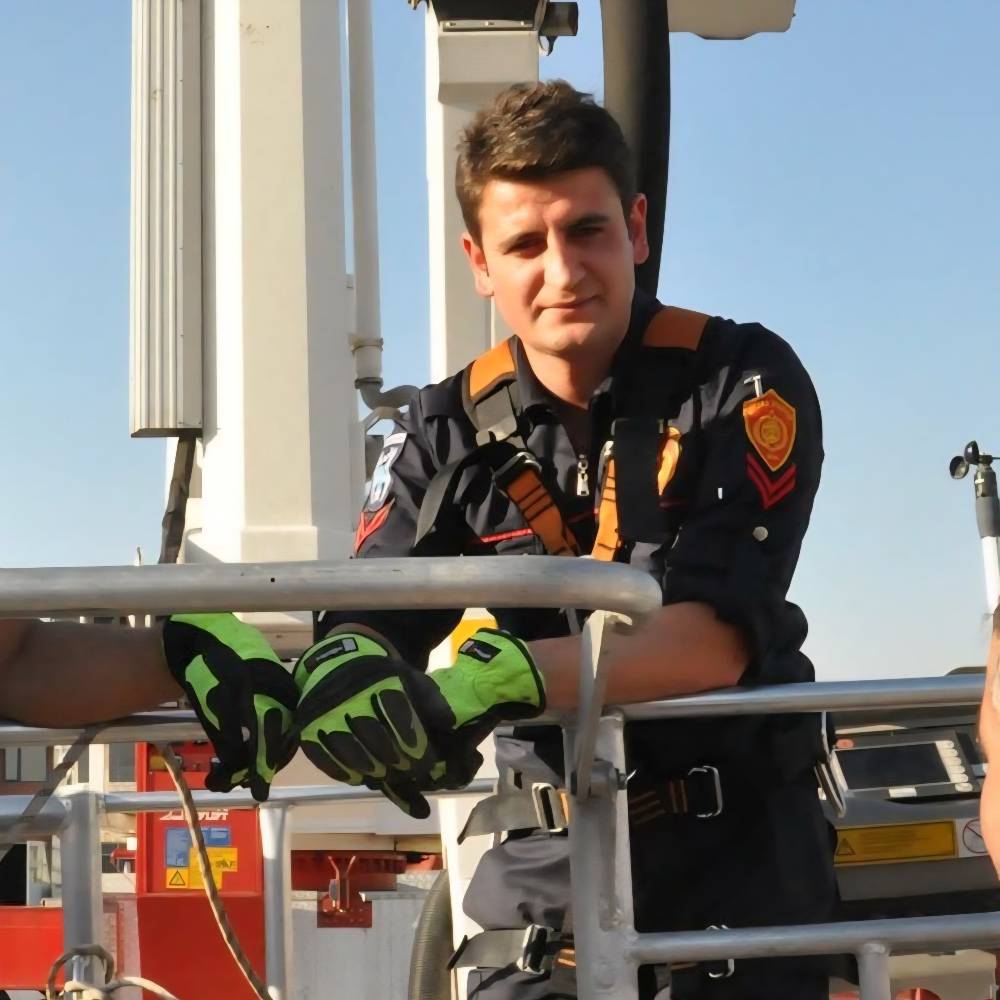
Ertuğrul Öz is a career firefighter serving with the Ankara Metropolitan Municipality Fire Department since 2011, currently holding the rank of Firefighter Sergeant (İtfaiye Çavuşu). He has responded to more than 1,000 structural fire incidents and served across three major earthquake response operations in Turkey, as well as numerous flood and water rescue deployments. He holds an associate degree in Civil Defense and Firefighting from Çankırı Karatekin University (on-campus program) and a bachelor\'s degree in Public Administration from Anadolu University (open education). His certifications include Basic Firefighter, Intermediate Search and Rescue (USAR), Hazmat/CBRN Response, First Aid, and Fire Instructor Levels 1 through 4. He has delivered 50+ firefighter training courses and serves as one of AllFirefighter\'s two editorial leads.
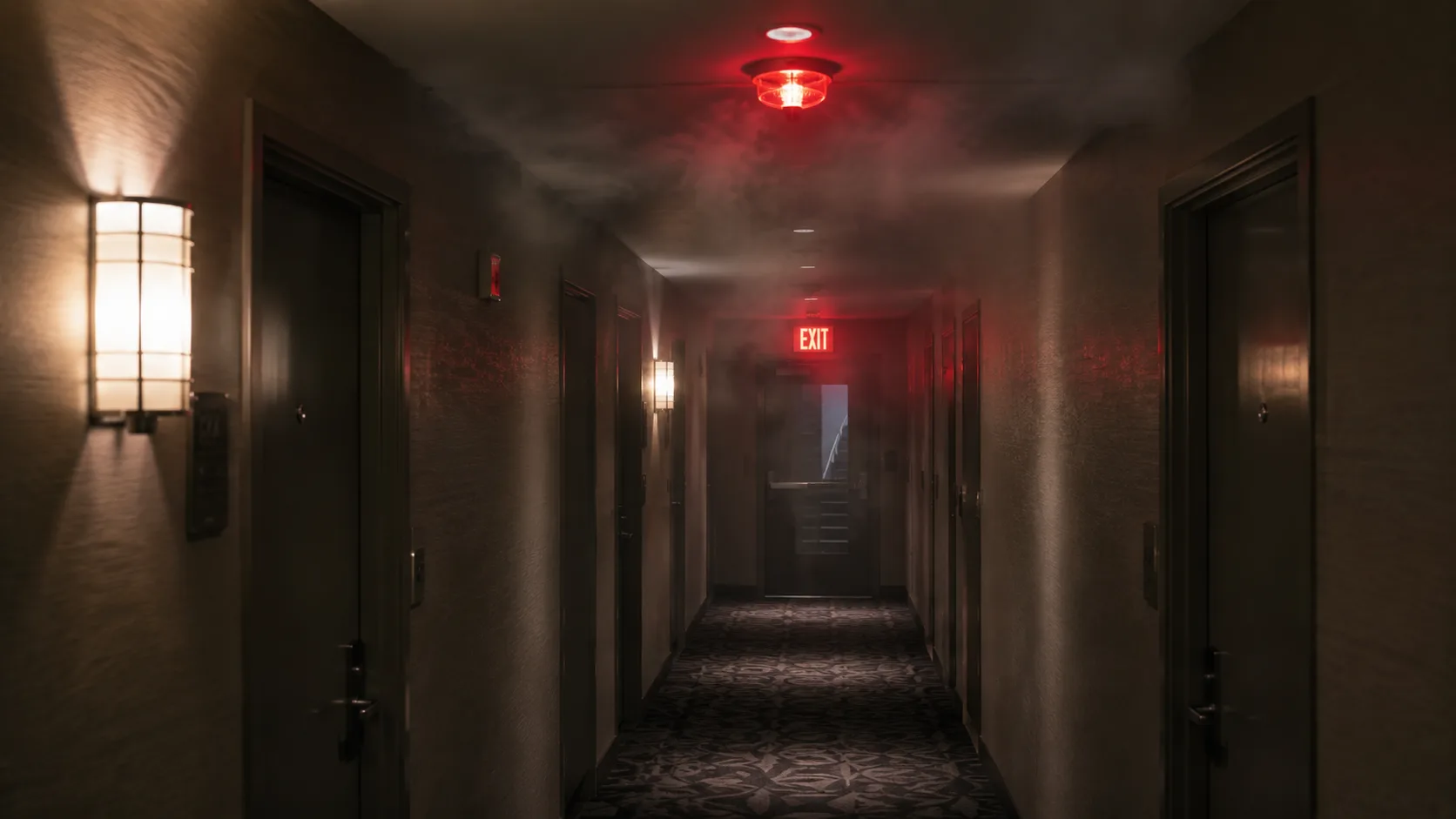
Zero-visibility interior firefighting is not an edge case — it is the standard condition in any working structural fire once smoke fills the building. This covers what absolute zero-visibility actually feels like inside a burning structure, the navigation techniques that replace visual reference (wall following, floor probing, door counting, guideline deployment), how disorientation happens even to experienced firefighters, what thermal imaging cameras do and do not solve, and why nighttime residential fires are specifically more dangerous for everyone involved.
Fire pits send roughly 5,300 people to emergency rooms every year. The serious injuries are not from the obvious fire — they are from embers that travel 20+ feet in a light wind, accelerant added to what looked like dead coals, a fire that seemed out but was not, and a portable pit that tipped onto a deck. This covers the clearance rules and what they are based on, wind thresholds, what to burn and not burn, the alcohol-plus-fire-pit injury mechanism, and how to actually extinguish a fire pit rather than just leave it.
A practical guide to Pump Discharge Pressure (PDP): what each component means, how to combine nozzle pressure, friction loss, elevation, and appliance loss, and how to standardize your results with pump charts.
A personal escape system (PES) is a compact rope and descent device that an individual firefighter carries as personal equipment and deploys from a window or other elevated opening when normal egress is cut off and no ladder is in position. NFPA 1983 defines the Life Safety Rope standard these systems must meet. The deployment is taught in training — hook the anchor, connect the descent device, step out the window, lower yourself. The gap between that training sequence and successful deployment under actual fire conditions — disoriented, in the dark, in full gear, with heat and urgency — is what the ongoing fire service debate about PES effectiveness is actually about.
Complete guide to reading smoke using the CVVL framework: what black, gray, white, and pulsing smoke means, tactical implications for size-up and entry decisions, and how to distinguish pre-flashover from pre-backdraft conditions.
A Red Flag Warning is issued when a specific combination of weather conditions — low relative humidity, high sustained wind, and low fuel moisture — create an environment where any fire that starts will spread rapidly and be difficult to control. It is not a forecast of fire. It is a forecast of fire behavior: any fire that ignites during these conditions will behave differently from a fire in normal conditions. This covers the specific NWS criteria, the RAWS network that feeds the system, the Burning Index and Spread Component, what happens operationally when a Red Flag Warning is in effect, and how the public typically misunderstands what it means.
A practical guide to SCBA air management: how air time estimates work, why RMV and reserve pressure matter, and how to use the SCBA Air Time Calculator for training, pre-plans, and crew briefings. Includes quick links for MSA, Dräger, 3M Scott, Honeywell, Interspiro, Spasciani, and Ocenco.
A practical SCBA air management guide: how air time estimates work, why RMV and reserve pressure matter, and how to use the SCBA Air Time Calculator for training and crew briefings. Includes quick links to major SCBA brands for faster, consistent planning.
Complete SCBA selection guide: NFPA 1981 requirements, MSA G1 vs Scott Air-Pak X3 Pro vs Dräger PSS 7000 side-by-side comparison, facepiece fit, HUD, telemetry, cylinder options, maintenance requirements, and how to run a proper department field trial.