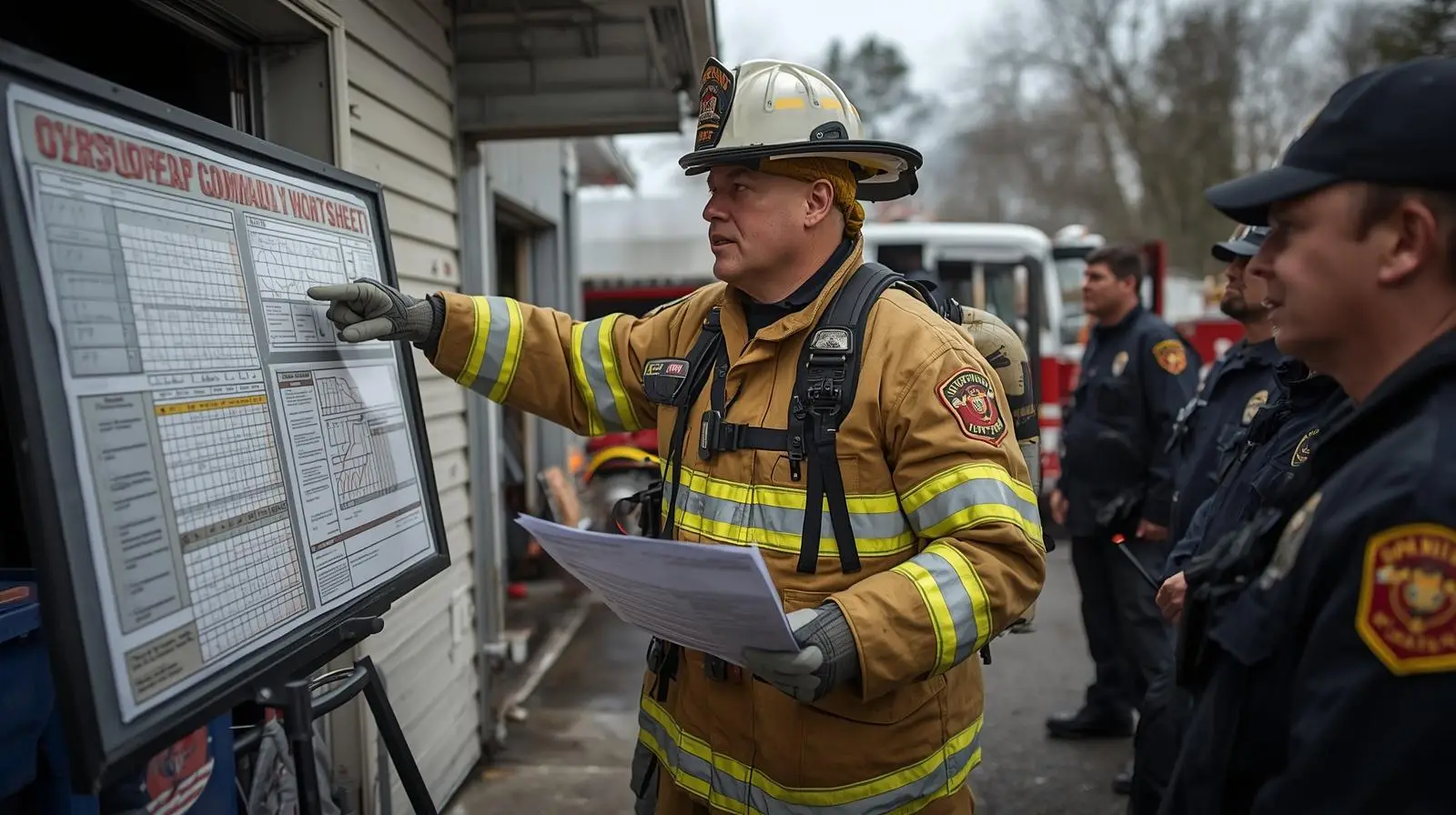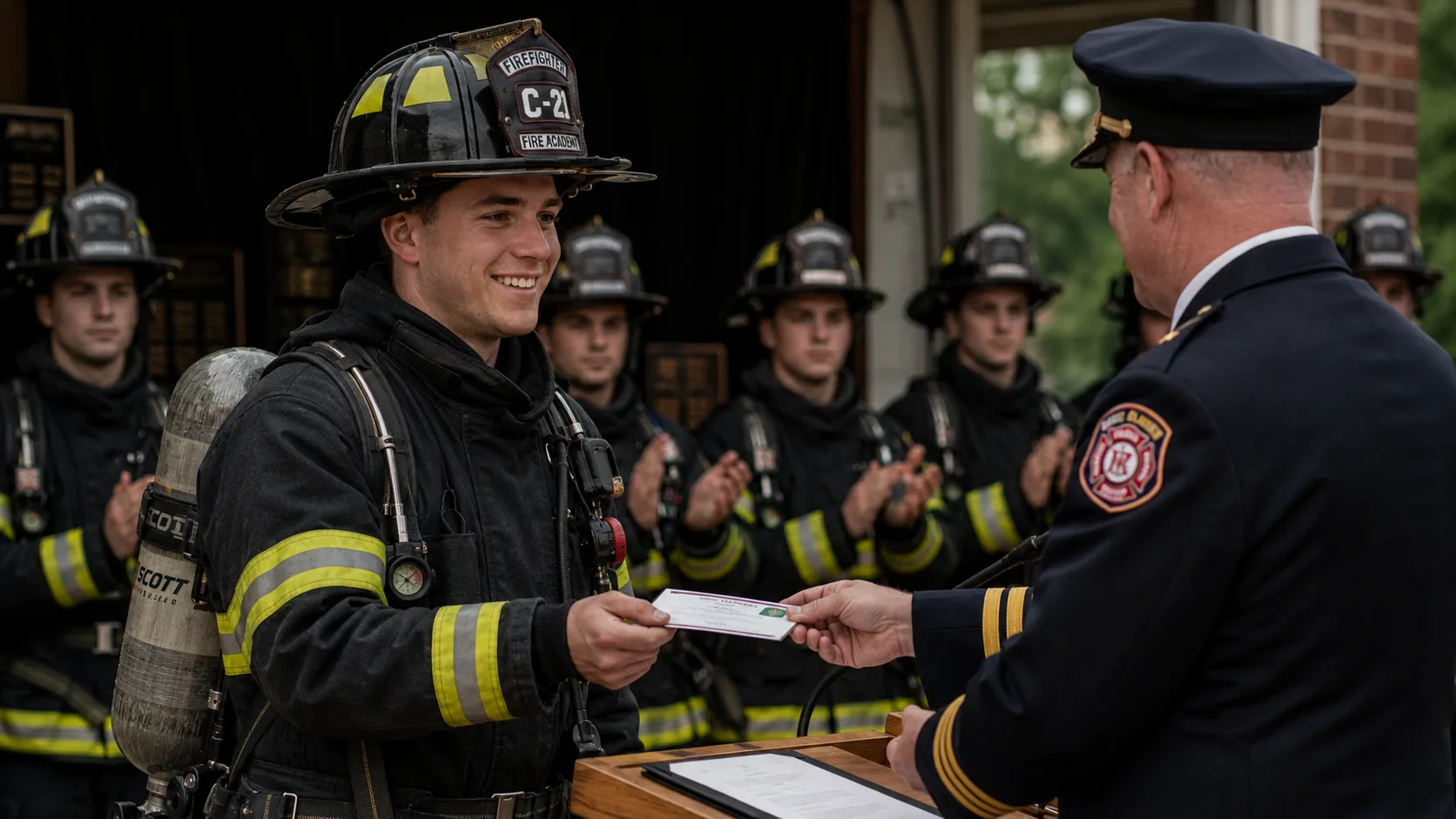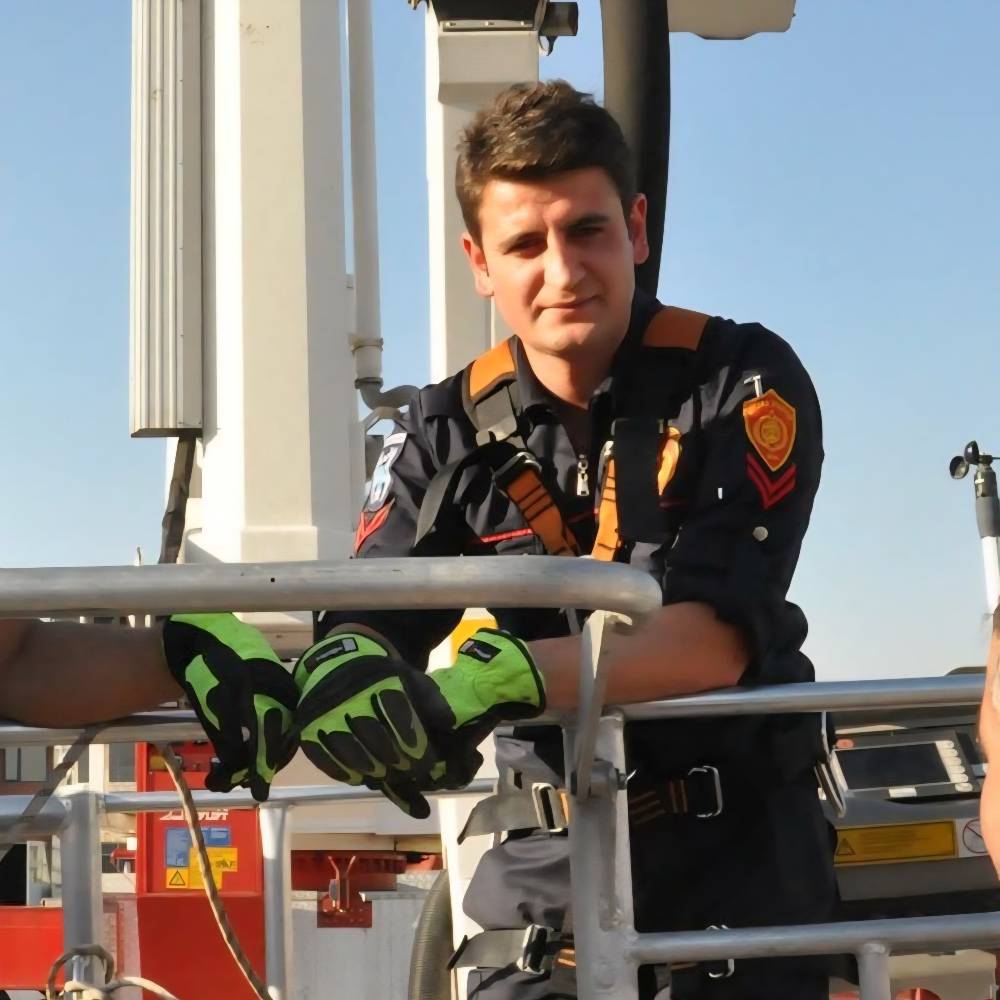
Ertuğrul Öz is a career firefighter serving with the Ankara Metropolitan Municipality Fire Department since 2011, currently holding the rank of Firefighter Sergeant (İtfaiye Çavuşu). He has responded to more than 1,000 structural fire incidents and served across three major earthquake response operations in Turkey, as well as numerous flood and water rescue deployments. He holds an associate degree in Civil Defense and Firefighting from Çankırı Karatekin University (on-campus program) and a bachelor\'s degree in Public Administration from Anadolu University (open education). His certifications include Basic Firefighter, Intermediate Search and Rescue (USAR), Hazmat/CBRN Response, First Aid, and Fire Instructor Levels 1 through 4. He has delivered 50+ firefighter training courses and serves as one of AllFirefighter\'s two editorial leads.
If you smell gas inside your home, every second of hesitation increases the risk. Here's the specific sequence — what to do first, what will make it worse, why you should not turn any switch on or off, and when the building is actually safe to re-enter. Written by a career firefighter who has responded to gas leak emergencies.
Your smoke alarm is trying to tell you something specific. One beep every 30 seconds means something completely different from three beeps in a row. This breaks down every beeping and chirping pattern, why your alarm goes off when you cook, why a new battery doesn't always stop the chirping, and the one mistake that gets people killed.
Complete smoke alarm guide: ionization vs photoelectric sensing technology comparison, which type is best for which fire scenario, NFPA 72 placement requirements (inside-bedroom rule), interconnection options, monthly testing, nuisance alarm management, and 10-year replacement schedule.
Space heaters cause more than 1,700 house fires every year in the U.S. Most of them start when the heater is left unattended, placed too close to something flammable, or plugged into the wrong outlet. Here's what actually causes space heater fires and the specific habits that stop them.
Post-wildfire investigations produce consistent data: certain construction features determine survival with remarkable reliability. Wood shake roofing burns. Unscreened attic vents admit embers that ignite from inside. Single-pane windows crack from radiant heat and allow fire entry. Open wood eaves collect embers. Defensible space without structure hardening leaves the structure vulnerable at its edges. This covers the IBHS research on home ignition patterns, what each building component does in a wildfire exposure, the specific materials and assemblies that perform vs. fail, and the cost-to-protection analysis that makes some upgrades clearly worth it.
Roughly 70 percent of the United States has no municipal water system with fire hydrants. In those areas, the water for a structural fire comes from the back of a tanker — and from the second tanker, and the third, running a shuttle to keep the attack pumper continuously supplied. This covers the two tanker configurations (water tender and nurse tanker), how shuttle operations are calculated, the portable tank system, drafting from ponds and streams, the water supply math for a residential structure fire, and why rural departments with excellent tanker operations lose more structures than urban departments with hydrants regardless of response time.
Thermal imaging cameras detect infrared radiation and display it as a temperature map — hot objects appear bright, cool objects dark. In a structure fire, this allows firefighters to see heat signatures through smoke and identify victim locations, fire extension, and structural hot spots that are invisible to the naked eye. But TICs have specific failure modes that are not widely understood: glass blocks infrared radiation entirely, some materials mask temperature differences, and the 'see through smoke' capability has important limits. This covers how TICs work, correct reading of the display, white hot vs. black hot settings, what TICs can and cannot detect, operational search techniques, and post-fire overhaul use.